







Interior Heat

Thread Starter
Melting Slicks


Joined: Sep 2011
Posts: 3,372
Likes: 215
From: Peoria Arizona
 Interior Heat
I've read many, many threads on different types of insulation that people have used on their C3 cars to cut down on the interior heat issues.
Here is my question - is it worth it? If you have gone through this process, did it help? How much did it help? Is it still hot inside, but just "better" or were you really able to dramatically cut back or maybe eliminate the heat issues completely?
I know you may not have temp readings to share , but what is your impression after driving it?
Thanks,
Adam
Here is my question - is it worth it? If you have gone through this process, did it help? How much did it help? Is it still hot inside, but just "better" or were you really able to dramatically cut back or maybe eliminate the heat issues completely?
I know you may not have temp readings to share
, but what is your impression after driving it? Thanks,
Adam
Thread Starter
Melting Slicks
Joined: Sep 2011
Posts: 3,372
Likes: 215
From: Peoria Arizona
Hey Mike,
Not at all - I'm debating on going through this given the heat we have here in AZ, but I was hoping to hear some feedback from those who have.
Adam
Not at all - I'm debating on going through this given the heat we have here in AZ, but I was hoping to hear some feedback from those who have.
Adam
Last edited by AdamMeh; Aug 30, 2013 at 09:49 AM.

Race Director


Joined: Feb 2006
Posts: 12,239
Likes: 19
From: Chino CA
I just completed my interior project on my '74.
Completely covered in dynomat, then reflexit, then carpet with juke backing. Sealed up the firewall and replaced the weather stripping.
Upgraded my ac to a standen 134 unit and did the c4 blower fan upgrade too.
STILL HOTTER THAN A WITCHES TIT IN THERE.


But I'm not giving up......
Any suggestions would be helpful! !!!!!
Completely covered in dynomat, then reflexit, then carpet with juke backing. Sealed up the firewall and replaced the weather stripping.
Upgraded my ac to a standen 134 unit and did the c4 blower fan upgrade too.
STILL HOTTER THAN A WITCHES TIT IN THERE.
But I'm not giving up......
Any suggestions would be helpful! !!!!!

Drifting

Joined: May 2002
Posts: 1,546
Likes: 5
From: Sacramento California
I just completed my interior project on my '74.
Completely covered in dynomat, then reflexit, then carpet with juke backing. Sealed up the firewall and replaced the weather stripping.
Upgraded my ac to a standen 134 unit and did the c4 blower fan upgrade too.
STILL HOTTER THAN A WITCHES TIT IN THERE.
But I'm not giving up......
Any suggestions would be helpful! !!!!!
Completely covered in dynomat, then reflexit, then carpet with juke backing. Sealed up the firewall and replaced the weather stripping.
Upgraded my ac to a standen 134 unit and did the c4 blower fan upgrade too.
STILL HOTTER THAN A WITCHES TIT IN THERE.
But I'm not giving up......
Any suggestions would be helpful! !!!!!
I guess it's better to prevent the heat in the first place, instead of trying to deal with it afterwards.
Race Director
Joined: Feb 2006
Posts: 12,239
Likes: 19
From: Chino CA

Racer

Joined: Jul 2013
Posts: 385
Likes: 3
From: Leesburg VA
I had contacted Bob Chadwick, who did several articles on tackling the C3 heat issue. I contacted him via e-mail and he was very helpful, but did confess that he sold his C3 because he just could not take the heat any longer. Here is the link to the stuff he did:
http://home.comcast.net/~chadwick.ro..._substance.htm
It was a bit disheartening to hear he had given up and sold his corvette...
John
http://home.comcast.net/~chadwick.ro..._substance.htm
It was a bit disheartening to hear he had given up and sold his corvette...
John

Drifting


Joined: Jul 2006
Posts: 1,259
Likes: 154
From: Deplorableville Nebraska
That's quite an write-up. I've never seen it before. Bookmarked for my interior restoration scheduled for this winter. Thanks!
Corvette Stories
The Best of Corvette for Corvette Enthusiasts

Top 10 Most Expensive Corvettes Ever Sold on Bring A Trailer
Brett Foote
10 Things Every Corvette Owner Needs (2026 Edition)
Michael S. Palmer
8 Most "Only Corvette Owners Understand" Quirks and Problems
Pouria Savadkouei
10 Reasons the C6 Z06 is Still A Performance Benchmark After 20 Years
Joe Kucinski
How Much Horsepower Every Corvette Engine "LOST" in 1972
Joe Kucinski
Top 10 DOs and DON'Ts for Protecting Your Convertible Top!
Michael S. Palmer
Top 10 Most Explosive Corvettes Ever Made: Power-to-Weight Ratio Ranked!
Joe Kucinski
150 hp to 1,250 hp: Every Corvette Generation Compared by the Specs That Matter
Joe Kucinski
8 Coolest Corvette Pace Cars (and Replicas) of All Time
Verdad Gallardo
Instructor
Joined: Jun 2010
Posts: 170
Likes: 8
From: Bastrop Texas
Dave, I found Bob Chadwick's information very informative and helpful, and have taken action on several of them. My problem was hot air coming out of the A/C vents. The outlet vents were hot to the touch and hot air would blow out when traveling down the road which I assumed meant that outside air was being forced into the system. First, I sealed the plenum, which had a wide crack where it attached to the passenger's side fender. This resulted in no hot air coming out of the vents when traveling down the road with the windows up, but when I lowered them it was like I had turned on the blower. I knew outside air was coming in through another source, and that by sealing the aforementioned plenum, I assumed a vacuum had been created. I then sealed where the heater hoses enter the firewall,and this fix the problem of hot air blowing out of the A/C vents. However, the plenum that runs the length of the cabin under the dash still gets hot, which I assume results from heat from the firewall, and radiates heat unless I run the A/C. One other suggestion I acted on was installing the blower motor Chad suggested. Although I live in central Texas where we have triple digit heat, my A/C keeps the cabin cool and comfortable. I hope this may help you.

Racer
Joined: Jul 2013
Posts: 385
Likes: 3
From: Leesburg VA
I concur with PRIrish on the symptoms. It sounds exactly like my 74. One of the few longish road trips my wife and I took was nearly unbearable with the t-tops off and the windows down. It honestly does feel like the more you open the car up, the hotter the interior gets...if my A/C worked even marginally well, it would be cooler in the summer with the windows up. It may even be cooler right now with the windows up without A/C. My wife said that that was the hottest she has ever been...it felt like it was 140 degrees or better in the footwells...UNBELIEVABLE!
It is a shame our cars are best suited for the winter when most are locked away in the garage getting rebuilt. Maybe we should start doing our work in the summer and drive all winter.
John
It is a shame our cars are best suited for the winter when most are locked away in the garage getting rebuilt. Maybe we should start doing our work in the summer and drive all winter.
John
Thread Starter
Melting Slicks
Joined: Sep 2011
Posts: 3,372
Likes: 215
From: Peoria Arizona
No AC in our car (at this point) and I'm not noticing any heat from the vents - just the footwell area. I'm wondering about the trans tunnel seal and insulation. Both are missing from our '77. It's hard to judge at this point because it's just HOT here right now.
I am running headers, but they are ceramic coated inside and out and it's amazing how cool they run - and how quickly they cool off when you shut the car off.
I am running headers, but they are ceramic coated inside and out and it's amazing how cool they run - and how quickly they cool off when you shut the car off.
Drifting


Joined: May 2005
Posts: 1,968
Likes: 44
From: East TN
I used to feel like the soles of my shoes were melting to the pedals. Here's a what I did that resolved my heat issues completely. Fixed any issues with my heat/ ac control system and made sure everything was functioning properly. Fortunately for me, I had my vette completely apart for a frame off, so it made things a bit easier to get to. This is the product I chose to use for insulation because I heard it works very well, is fire resistant, and most importantly, light weight. I purchased 200 sq. ft. and have plenty left over for other projects. http://www.lobucrod.com/
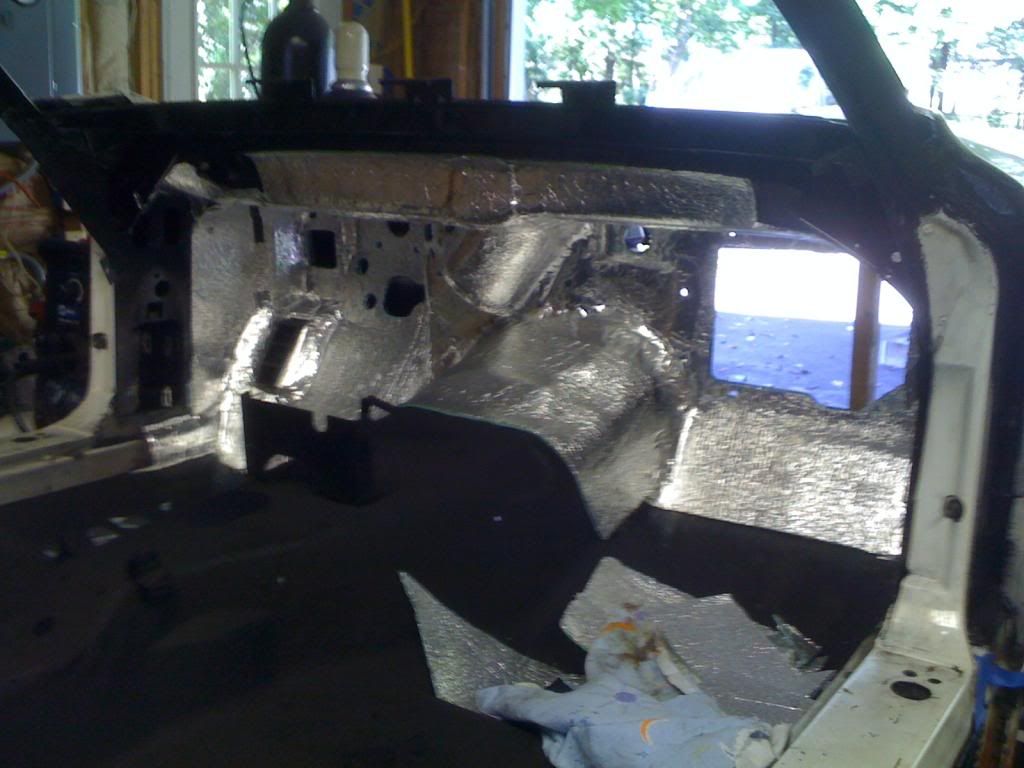
I started by insulating the entire interior front to back. I double layered the floor on both sides.
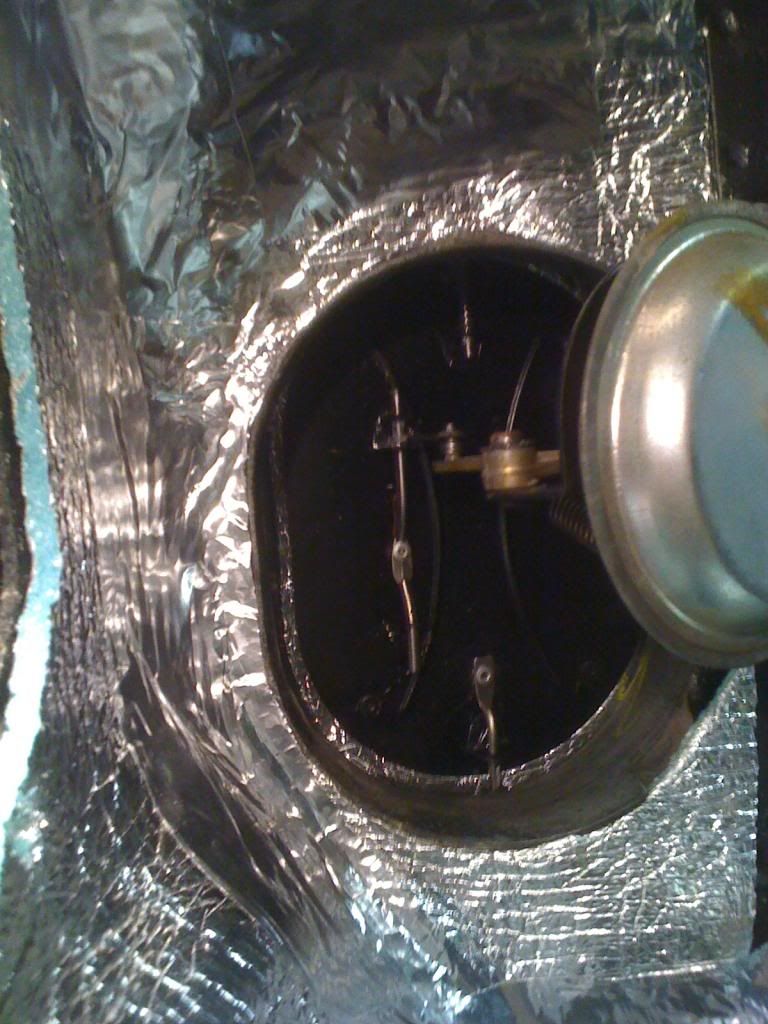
The vent door on the right kick panel is made up of 2 metal panels with a seal sandwiched in between, that seal was shot so I took it apart and sandwiched it with a piece of the insulation to act as the seal instead.
I had the heat/ac box out so I insulated the inside and outside firewall areas. I also made sure the box was totally sealed up.
I added manual cut-off brass ball valves to both heater hoses to eliminate any transfer of heat to the heater core. Also, the headers are Jet-Hot coated inside and out.
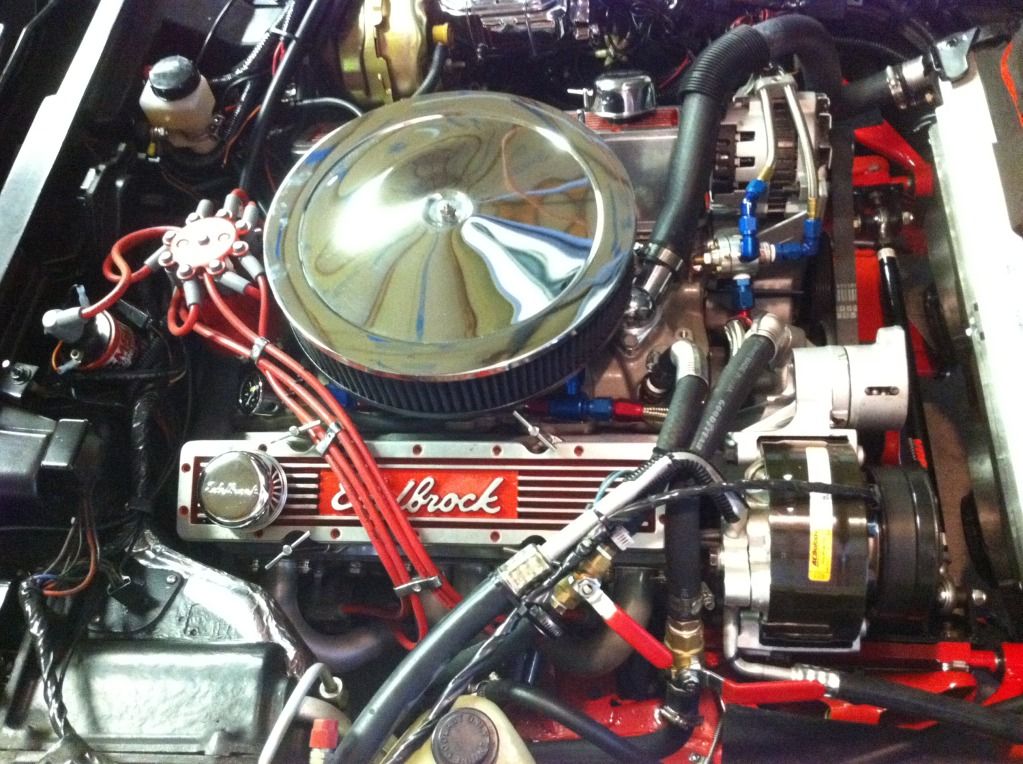
On the outside I insulated the forward firewall and floorboard foot well areas. I also insulated the tunnel area during my T56 trans swap.
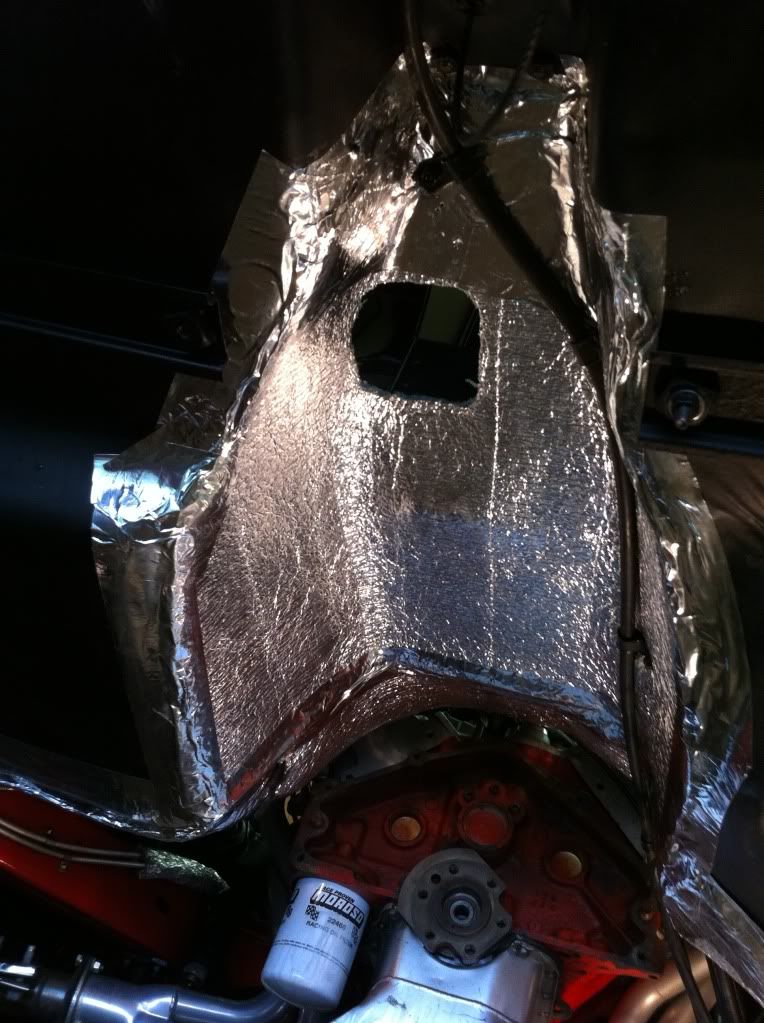
I have also added cold air induction to the engine that is also thermal insulated, and have installed a Dewitt's aluminum radiator with dual Spal fans to keep the engine cool.

I started by insulating the entire interior front to back. I double layered the floor on both sides.

The vent door on the right kick panel is made up of 2 metal panels with a seal sandwiched in between, that seal was shot so I took it apart and sandwiched it with a piece of the insulation to act as the seal instead.

I had the heat/ac box out so I insulated the inside and outside firewall areas. I also made sure the box was totally sealed up.
I added manual cut-off brass ball valves to both heater hoses to eliminate any transfer of heat to the heater core. Also, the headers are Jet-Hot coated inside and out.

On the outside I insulated the forward firewall and floorboard foot well areas. I also insulated the tunnel area during my T56 trans swap.

I have also added cold air induction to the engine that is also thermal insulated, and have installed a Dewitt's aluminum radiator with dual Spal fans to keep the engine cool.


Melting Slicks
Joined: Aug 2012
Posts: 3,487
Likes: 83
From: Titusville Florida
No AC in our car (at this point) and I'm not noticing any heat from the vents - just the footwell area. I'm wondering about the trans tunnel seal and insulation. Both are missing from our '77. It's hard to judge at this point because it's just HOT here right now.
I am running headers, but they are ceramic coated inside and out and it's amazing how cool they run - and how quickly they cool off when you shut the car off.
I am running headers, but they are ceramic coated inside and out and it's amazing how cool they run - and how quickly they cool off when you shut the car off.


Drifting
Joined: Aug 2012
Posts: 1,650
Likes: 2
From: Tulsa Oklahoma
My wife and I took the 78 out this summer in the evening and the thing got so got she had her feet up in the seat. The next day I tore the seats and carpet out put in a double layer of Reflectix I got at lowes put it back together and it made a dramatic difference. Cost me about $20 and 6 hours labor...

Racer
Joined: May 2010
Posts: 448
Likes: 3
From: Olathe KS
I used to feel like the soles of my shoes were melting to the pedals. Here's a what I did that resolved my heat issues completely. Fixed any issues with my heat/ ac control system and made sure everything was functioning properly. Fortunately for me, I had my vette completely apart for a frame off, so it made things a bit easier to get to. This is the product I chose to use for insulation because I heard it works very well, is fire resistant, and most importantly, light weight. I purchased 200 sq. ft. and have plenty left over for other projects.
Drifting
Joined: May 2005
Posts: 1,968
Likes: 44
From: East TN
 Just do what I did and tear it apart and rebuild it over a 7 year period.

Le Mans Master


Joined: May 2003
Posts: 8,877
Likes: 3,556
From: Fernandina Beach FL
2023 Restomod of the Year finalist
2020 C3 of the Year Winner - Modified
This type of post pops up every few months...
Here's my thoughts...FWIW
What I am doing for is HEAT only- Sound is a moot point w/ a convertible and sidepipes...
The best...in my humble opinion...is to use Lizard skin on the INTERIOR-and a reflective metal/aluminum shielding on the OUTSIDE (Zero Clearance) ...and obviously make sure all the holes are filled/covered.
WHY do I think this?...Not because I LIKE to go against the grain but because I have looked at how high end car makers do it. Even Chevrolet did it with the metal heat shields on the footwells and the transmission insulation...reflect and use an air gap to keep the heat from being stored....
Ever touch a piece of aluminum foil after you take the leftover pizza out of the toaster oven- same idea.
You want to keep the heat out NOT store it inside the car...look at ANY HVAC duct work- Now tell me where the conditioned air is?
Have you looked at a space shuttle? Did they (Rocket Scientists) put the heat-shield INSIDE the space capsule...Just sayin...
To stop heated air from getting into the cabin-I got rid of the useless astro ventilation-I am adding Vintage Air- albeit I'm using an electric compressor and not connecting up the heater. I made a couple of fiberglass pieces and actually fiberglassed in the top vent- will also help keep water out...
Richard
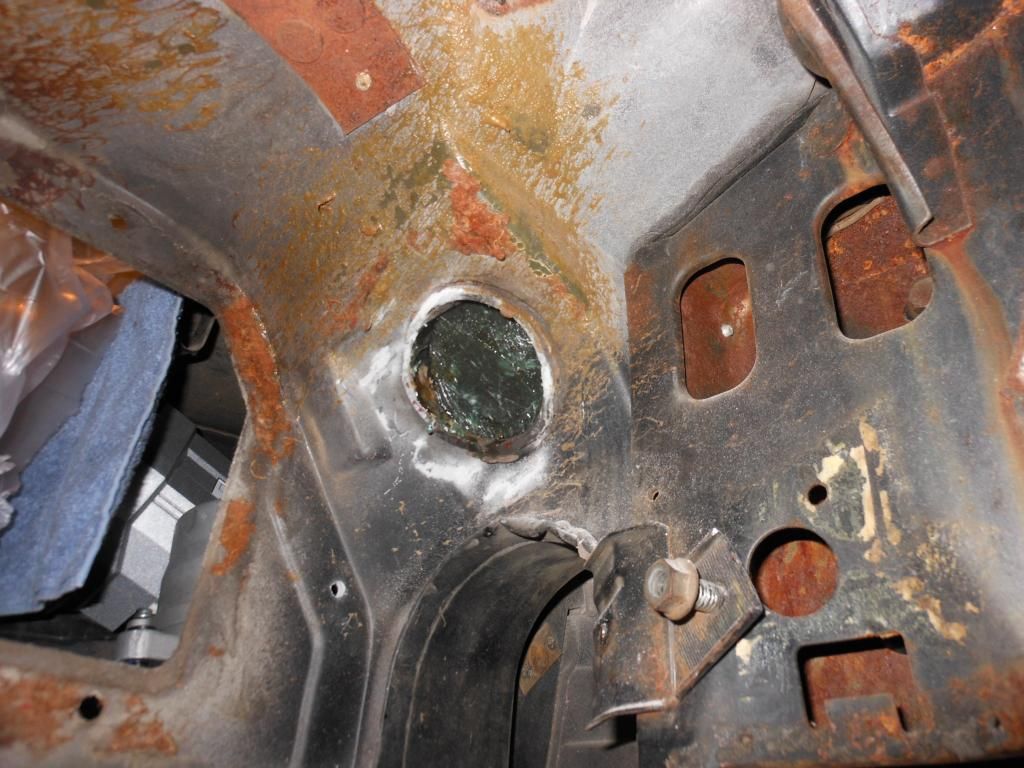
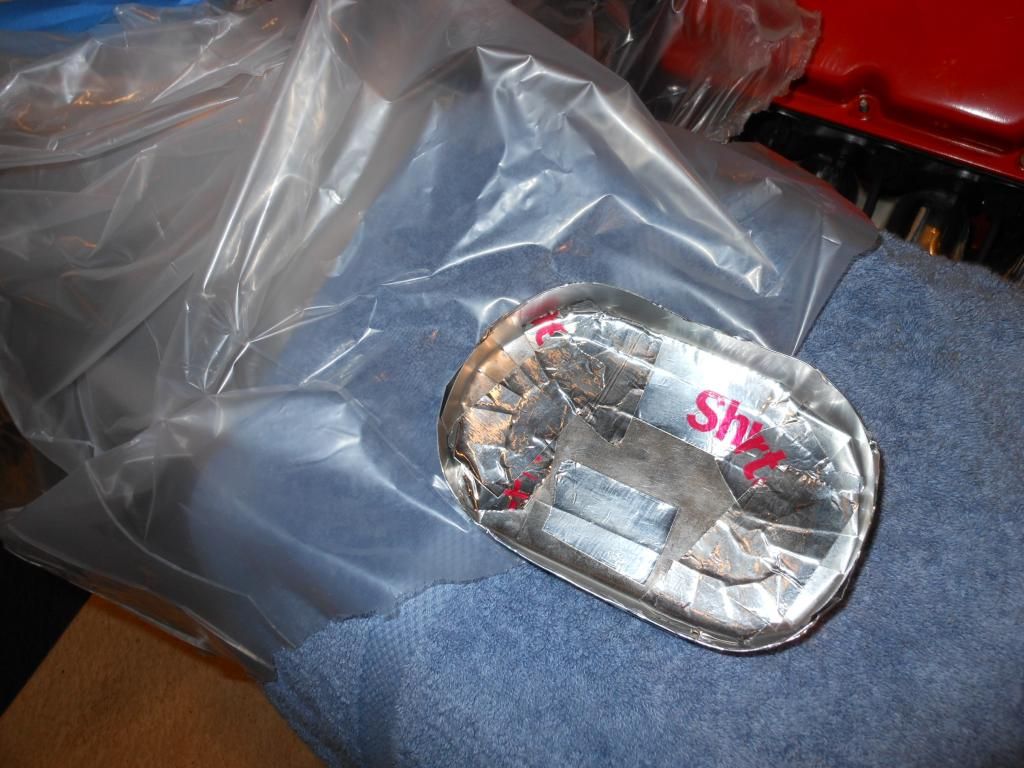
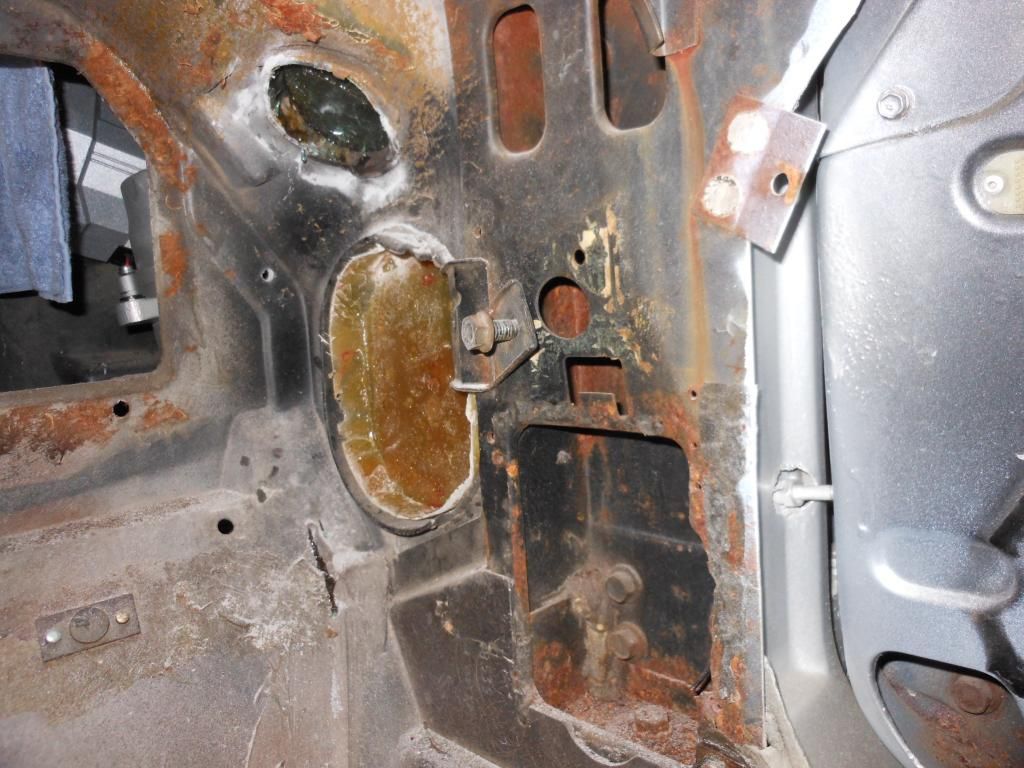
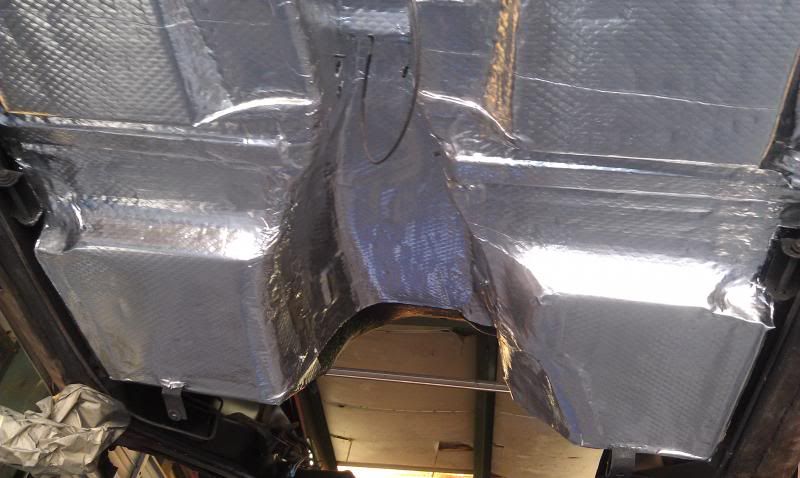
I think this is the way to do it-I bought some off eBay- not that expensive. He(Bill) used "Zero clearance heat shield"-to reflect the heat AWAY....
Here's my thoughts...FWIW
What I am doing for is HEAT only- Sound is a moot point w/ a convertible and sidepipes...
The best...in my humble opinion...is to use Lizard skin on the INTERIOR-and a reflective metal/aluminum shielding on the OUTSIDE (Zero Clearance) ...and obviously make sure all the holes are filled/covered.
WHY do I think this?...Not because I LIKE to go against the grain but because I have looked at how high end car makers do it. Even Chevrolet did it with the metal heat shields on the footwells and the transmission insulation...reflect and use an air gap to keep the heat from being stored....
Ever touch a piece of aluminum foil after you take the leftover pizza out of the toaster oven- same idea.
You want to keep the heat out NOT store it inside the car...look at ANY HVAC duct work- Now tell me where the conditioned air is?
Have you looked at a space shuttle? Did they (Rocket Scientists) put the heat-shield INSIDE the space capsule...Just sayin...
To stop heated air from getting into the cabin-I got rid of the useless astro ventilation-I am adding Vintage Air- albeit I'm using an electric compressor and not connecting up the heater. I made a couple of fiberglass pieces and actually fiberglassed in the top vent- will also help keep water out...
Richard


I think this is the way to do it-I bought some off eBay- not that expensive. He(Bill) used "Zero clearance heat shield"-to reflect the heat AWAY....
Last edited by Richard454; Aug 30, 2013 at 06:24 PM.

Drifting
Joined: Jun 2013
Posts: 1,269
Likes: 226
From: Cocoa FL
While I understand your theory, the heat shield on the space shuttle is not sticky backed aluminum foil. How long do you think that heat shield stuff will last on the outside? It seems that stuff is a bit fragile to be in the elements. I think that is why you see that stuff put on the inside and not the outside. Just my 2 cents.
