




Serious Question..

Thread Starter
Pro


Joined: Jul 2011
Posts: 683
Likes: 3
 Serious Question..
I've heard that the 1968 Corvette's quality wasn't all too great when they came out with fit and finish, and rattles, and even a man I know who had a 1965 Corvette back in the 1970's has said that the late 60's 1968-69, maybe even 1970 Corvette's were rattle traps and tend to not have held up like the generation before. Does this have any truth to it? I've always thought my dad's corvette was a bit of a rattling interior loosely constructed fit and finish car. I've driven many 1950's and a couple 1960's cars/trucks and they even felt more solid and better in the fit and finish department.
I'm not looking to offend anyone with this question but I'd like to know if anyone else has the same opinion or thoughts.
The corvette in question is not an original or a survivor, it is a beautiful restored (over a period of time) Car. it does have 200k+ documented miles but if its restored it should drive the same as new am I not correct? the car is in excellent shape. mechanically and physically.
Is it due to the way the body's are on these cars?
I'd love to own a 1968-1970 but hearing and experiencing the quality of them has left me only liking the way they look but I'd never want to spend 25k+ on one.
I'm not looking to offend anyone with this question but I'd like to know if anyone else has the same opinion or thoughts.
The corvette in question is not an original or a survivor, it is a beautiful restored (over a period of time) Car. it does have 200k+ documented miles but if its restored it should drive the same as new am I not correct? the car is in excellent shape. mechanically and physically.
Is it due to the way the body's are on these cars?
I'd love to own a 1968-1970 but hearing and experiencing the quality of them has left me only liking the way they look but I'd never want to spend 25k+ on one.
Last edited by 69cvette; Mar 10, 2015 at 11:23 AM.

Administrator


Joined: Jul 2000
Posts: 53,988
Likes: 6,212
From: About 1100 miles from where I call home.
The obvious answer, I think, is: drive the car in question and see for yourself.
If you are expecting the car to "drive as new" it's possible you have an unrealistic expectation of old Corvettes, even restored ones, and maybe they aren't for you. Especially if you are comparing them to other model cars and trucks.
PS: I love how my 69 drives. It might depend on the car and your personal tastes.
If you are expecting the car to "drive as new" it's possible you have an unrealistic expectation of old Corvettes, even restored ones, and maybe they aren't for you. Especially if you are comparing them to other model cars and trucks.
PS: I love how my 69 drives. It might depend on the car and your personal tastes.
Last edited by vettebuyer6369; Mar 10, 2015 at 11:34 AM.

Team Owner


Joined: Jan 2006
Posts: 37,637
Likes: 3,118
From: Crossville TN
The design quality of the late '60s thru '70s GM cars was fine (other than considerations for disassembly/repair  ). But, the assembly quality was always 'suspect'. The Big 3 were in their "Heyday" period, and all that mattered was producing them fast so they could sell the cr@p out of them.
New cars usually had a few assembly/installation problems that got dealt with at the dealer in [reasonably] short order. The '68s were a bit different deal because that was a MAJOR model changeover from C2 to C3 configuration. Most all of the body and interior components were completely redesigned and the long-term functional/operational bugs were not known at that time. After the first year, some features got changed (map pocket, interior door pulls, ignition switch, availability of tilt/tele column, etc.) and some had minor redesigns for better durability/function. By '69, most of those problems were overcome. There was really nothing in a '68 that should keep you from getting one, other than it had some one-year-only parts. General function of them was fine.
All of the rattle-type issues were due to minimizing costs...therefore eliminating 'extras' to keep screws tight and vibration from transferring around. Today, rattle causes (once you actually find them ) are overcome with Loctite, rubber pads/bumpers, damping materials; but you need to disassemble 'things' to find the problems.
So, whenever you need to disassemble interior 'stuff', just make sure to look around and identify where improvements can be made to "tighten things up" while you have access. Over time, and with good weatherstipping that is maintained, you can have a rattle-free, squeek-free Corvette. But, you have to be willing to work at it a little at a time.
). But, the assembly quality was always 'suspect'. The Big 3 were in their "Heyday" period, and all that mattered was producing them fast so they could sell the cr@p out of them.New cars usually had a few assembly/installation problems that got dealt with at the dealer in [reasonably] short order. The '68s were a bit different deal because that was a MAJOR model changeover from C2 to C3 configuration. Most all of the body and interior components were completely redesigned and the long-term functional/operational bugs were not known at that time. After the first year, some features got changed (map pocket, interior door pulls, ignition switch, availability of tilt/tele column, etc.) and some had minor redesigns for better durability/function. By '69, most of those problems were overcome. There was really nothing in a '68 that should keep you from getting one, other than it had some one-year-only parts. General function of them was fine.
All of the rattle-type issues were due to minimizing costs...therefore eliminating 'extras' to keep screws tight and vibration from transferring around. Today, rattle causes (once you actually find them
) are overcome with Loctite, rubber pads/bumpers, damping materials; but you need to disassemble 'things' to find the problems.So, whenever you need to disassemble interior 'stuff', just make sure to look around and identify where improvements can be made to "tighten things up" while you have access. Over time, and with good weatherstipping that is maintained, you can have a rattle-free, squeek-free Corvette. But, you have to be willing to work at it a little at a time.
Last edited by 7T1vette; Mar 10, 2015 at 11:47 AM.

Le Mans Master


Joined: May 2006
Posts: 5,814
Likes: 414
From: Pittsburgh suburbs Pa.
The discussion about flaws in the 68 has been gone through so many times on here that you would think that everyone has heard it before and realize that the 68's are as good as any other year C3 . I have owned a couple 68's and they are my favorite because of their unique one year only items . Parts are a little more expensive but worth the extra in my opinion. One of a kind cars always become collector cars as time goes on. If anyone wants to give their 68 away, I'll take it.

Race Director

Joined: Oct 2000
Posts: 12,683
Likes: 3,137
From: Shamong, NJ
Build quality of most cars of the 60's and 70's, was somewhat lacking. Issues with fit, finish and rattles, were quite common, and not limited to Corvettes.
The 68 was a first model year design, and first year models of most new designs, usually have some "teething" issues. The 63 and 68 Corvettes both have first year quirks, and suffered from ongoing changes and "improvements" during the model year.
The main issue with 68's, is that there are many one year only parts on them. Some parts were re-designed two or three times during 68. Some of those parts can be hard to find, or considerably more expensive then the same part for a 69.
If your buying a properly restored Corvette, chances are pretty good that the fit and finish is going to be far superior to anything built in 68. The creaks and rattles that 68's suffered from (door glass, T-tops, the dash/gauge cluster, etc), were also common in 76's, and are often still present today. Creaks and rattles are just part of the character of old cars, and even Corvettes.
The 68 was a first model year design, and first year models of most new designs, usually have some "teething" issues. The 63 and 68 Corvettes both have first year quirks, and suffered from ongoing changes and "improvements" during the model year.
The main issue with 68's, is that there are many one year only parts on them. Some parts were re-designed two or three times during 68. Some of those parts can be hard to find, or considerably more expensive then the same part for a 69.
If your buying a properly restored Corvette, chances are pretty good that the fit and finish is going to be far superior to anything built in 68. The creaks and rattles that 68's suffered from (door glass, T-tops, the dash/gauge cluster, etc), were also common in 76's, and are often still present today. Creaks and rattles are just part of the character of old cars, and even Corvettes.
Racer


Joined: Feb 2013
Posts: 269
Likes: 7
From: carpentersville ill.
ratties
I've heard that the 1968 Corvette's quality wasn't all too great when they came out with fit and finish, and rattles, and even a man I know who had a 1965 Corvette back in the 1970's has said that the late 60's 1968-69, maybe even 1970 Corvette's were rattle traps and tend to not have held up like the generation before. Does this have any truth to it? I've always thought my dad's corvette was a bit of a rattling interior loosely constructed fit and finish car. I've driven many 1950's and a couple 1960's cars/trucks and they even felt more solid and better in the fit and finish department.
I'm not looking to offend anyone with this question but I'd like to know if anyone else has the same opinion or thoughts.
The corvette in question is not an original or a survivor, it is a beautiful restored (over a period of time) Car. it does have 200k+ documented miles but if its restored it should drive the same as new am I not correct? the car is in excellent shape. mechanically and physically.
Is it due to the way the body's are on these cars?
I'd love to own a 1968-1970 but hearing and experiencing the quality of them has left me only liking the way they look but I'd never want to spend 25k+ on one.
I'm not looking to offend anyone with this question but I'd like to know if anyone else has the same opinion or thoughts.
The corvette in question is not an original or a survivor, it is a beautiful restored (over a period of time) Car. it does have 200k+ documented miles but if its restored it should drive the same as new am I not correct? the car is in excellent shape. mechanically and physically.
Is it due to the way the body's are on these cars?
I'd love to own a 1968-1970 but hearing and experiencing the quality of them has left me only liking the way they look but I'd never want to spend 25k+ on one.


Racer
Joined: Jan 2014
Posts: 407
Likes: 14
From: Mulberry Florida
Build quality of most cars of the 60's and 70's, was somewhat lacking. Issues with fit, finish and rattles, were quite common, and not limited to Corvettes.
The 68 was a first model year design, and first year models of most new designs, usually have some "teething" issues. The 63 and 68 Corvettes both have first year quirks, and suffered from ongoing changes and "improvements" during the model year.
The main issue with 68's, is that there are many one year only parts on them. Some parts were re-designed two or three times during 68. Some of those parts can be hard to find, or considerably more expensive then the same part for a 69.
If your buying a properly restored Corvette, chances are pretty good that the fit and finish is going to be far superior to anything built in 68. The creaks and rattles that 68's suffered from (door glass, T-tops, the dash/gauge cluster, etc), were also common in 76's, and are often still present today. Creaks and rattles are just part of the character of old cars, and even Corvettes.
The 68 was a first model year design, and first year models of most new designs, usually have some "teething" issues. The 63 and 68 Corvettes both have first year quirks, and suffered from ongoing changes and "improvements" during the model year.
The main issue with 68's, is that there are many one year only parts on them. Some parts were re-designed two or three times during 68. Some of those parts can be hard to find, or considerably more expensive then the same part for a 69.
If your buying a properly restored Corvette, chances are pretty good that the fit and finish is going to be far superior to anything built in 68. The creaks and rattles that 68's suffered from (door glass, T-tops, the dash/gauge cluster, etc), were also common in 76's, and are often still present today. Creaks and rattles are just part of the character of old cars, and even Corvettes.
Again it was good to meet you this year at NCRS.
Larry

2026 Loser of the Year


Joined: Sep 2013
Posts: 36,601
Likes: 7,048
From: New Or-leens Loo-z-anna
If you buy a turn-key car it may or may not have squeeks/rattles.
My '68 project car literally was a rattle-trap from the front bumper to the loose tail lights. I completely rebuilt the suspension/brakes/(transmission & differential were rebuilt by previous owner)/driveshaft/trailing arms......the car is 90% rattle-free now. New weatherstrip will solve the sqeek-rub sounds on the doors and roof, and going through the door mechanisms will end the remaining rattles.
As for rain drips/leaks......I have always ridden Harleys, so a drip here and there is no problem for me (My new '69 Camaro convertible NEVER leaked a drop/other friends convertible dripped all the time in heavy rains). I WILL solve any leak problems though (silicone sealer is a great invention!)
I'm a rookie, but the forum members are helping me solve every problem I run across on the '68.....the last challenge will be installing '68 front and rear bumpers---since a previous owner grafted '76 bumpers onto the car
I'm currently de-bugging the dash/installing wiring-quick-disconnects/lots of ty-wraps--zip ties/alarm-remote start.
SO......all we need to do on the '68s is "do correctly" what GM was in too much of a hurry to do.
My '68 project car literally was a rattle-trap from the front bumper to the loose tail lights. I completely rebuilt the suspension/brakes/(transmission & differential were rebuilt by previous owner)/driveshaft/trailing arms......the car is 90% rattle-free now. New weatherstrip will solve the sqeek-rub sounds on the doors and roof, and going through the door mechanisms will end the remaining rattles.
As for rain drips/leaks......I have always ridden Harleys, so a drip here and there is no problem for me (My new '69 Camaro convertible NEVER leaked a drop/other friends convertible dripped all the time in heavy rains). I WILL solve any leak problems though (silicone sealer is a great invention!)
I'm a rookie, but the forum members are helping me solve every problem I run across on the '68.....the last challenge will be installing '68 front and rear bumpers---since a previous owner grafted '76 bumpers onto the car
I'm currently de-bugging the dash/installing wiring-quick-disconnects/lots of ty-wraps--zip ties/alarm-remote start.
SO......all we need to do on the '68s is "do correctly" what GM was in too much of a hurry to do.
Last edited by doorgunner; Mar 10, 2015 at 01:26 PM.
Corvette Stories
The Best of Corvette for Corvette Enthusiasts

Top 10 Most Expensive Corvettes Ever Sold on Bring A Trailer
Brett Foote
10 Things Every Corvette Owner Needs (2026 Edition)
Michael S. Palmer
8 Most "Only Corvette Owners Understand" Quirks and Problems
Pouria Savadkouei
10 Reasons the C6 Z06 is Still A Performance Benchmark After 20 Years
Joe Kucinski
How Much Horsepower Every Corvette Engine "LOST" in 1972
Joe Kucinski
Top 10 DOs and DON'Ts for Protecting Your Convertible Top!
Michael S. Palmer
Top 10 Most Explosive Corvettes Ever Made: Power-to-Weight Ratio Ranked!
Joe Kucinski
150 hp to 1,250 hp: Every Corvette Generation Compared by the Specs That Matter
Joe Kucinski
8 Coolest Corvette Pace Cars (and Replicas) of All Time
Verdad Gallardo
Safety Car

Joined: Sep 2013
Posts: 4,355
Likes: 2,633
From: Draper Utah
New weatherstripping is by far the biggest improvement you can make to silencing the squeaks and rattles in an older C3 Corvette, particularly if it's a coupe, as the new weather strip does wonders for the T-top noise.

Instructor
Joined: Apr 2012
Posts: 224
Likes: 2
From: St. Charles Missouri
P.S. Chrome Bumpers Rule!


Pro
Joined: Nov 2007
Posts: 721
Likes: 105
From: hernando fl
cars of that era were notorious for squeaking , rattling and wind noise , I had a 65 mustang that was a noisy , rattling squeaking and wind noise machine.....and that was something that always bothered me. the solution was , during the restoration I took great care with anything that could possibly drive me crazy when it was back on the road.
sound deadener everywhere , weatherstrips were installed with great care for fit , foam between anything that could possibly rub or rattle and the list goes on. the end result was a very quiet , squeak ,rattle and wind noise free car. it can be done , all it takes is time and effort.....same goes for door , hood and fender fit.....attention to detail , time and effort
sound deadener everywhere , weatherstrips were installed with great care for fit , foam between anything that could possibly rub or rattle and the list goes on. the end result was a very quiet , squeak ,rattle and wind noise free car. it can be done , all it takes is time and effort.....same goes for door , hood and fender fit.....attention to detail , time and effort
Team Owner
Joined: Jan 2006
Posts: 37,637
Likes: 3,118
From: Crossville TN
Quiet interiors with no rattles, squeeks, nor wind noise were not availble in the U.S. until the Japanese cars of the '80s demonstrated that it could be done without excessive overcost.

Melting Slicks

Joined: Jan 2012
Posts: 3,039
Likes: 504
From: myrtle beach sc
Army
The 68-72 Corvettes are the only Corvettes ever made with solid aluminum body mounts. So yes they squeak and rattle because they are solidly mounted to their frame. This was done for handling and road racing. They DO NOT LEAN in a corner! I will have had my 68 coupe for 43 years this coming July. Do you have any idea how good it feels to pass by a dead new car on the side of the road in my 47 year old car!!! If you want a cushy ride, you need to purchase a later year C-3. Lou.

Race Director
Joined: Nov 2002
Posts: 12,142
Likes: 54
From: Taylor Michigan
One owner vette
Are these gaps to your liking? I find its not the Vette, but the fact most have had several owners...So this is a unhit unrestored 68.
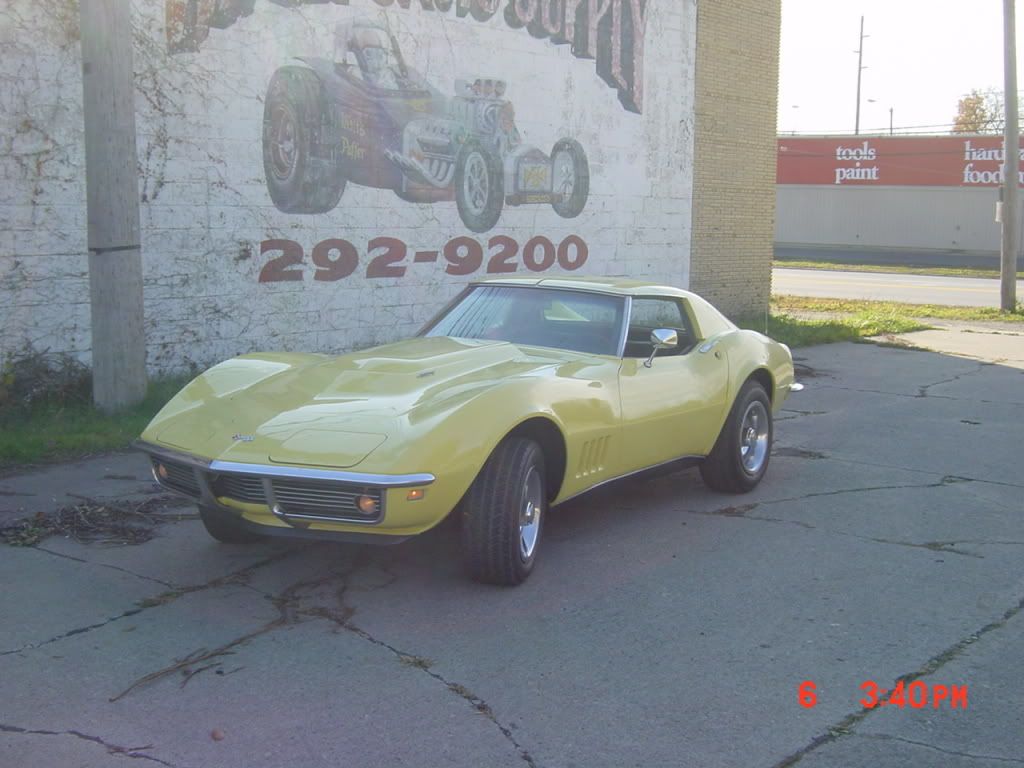
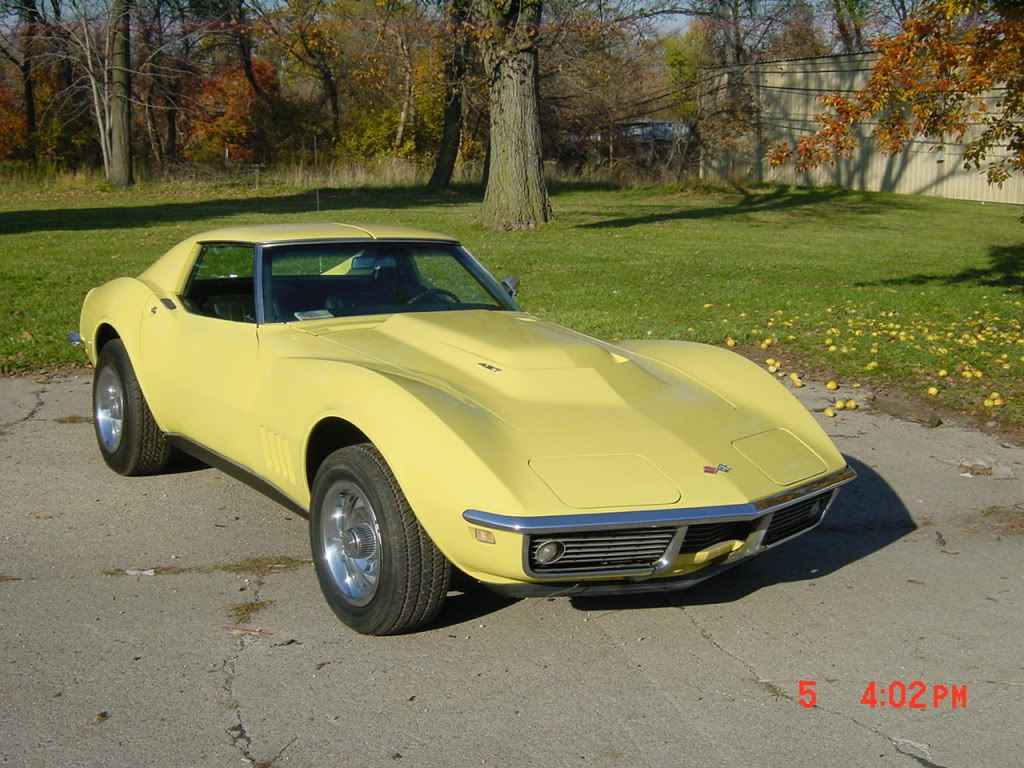
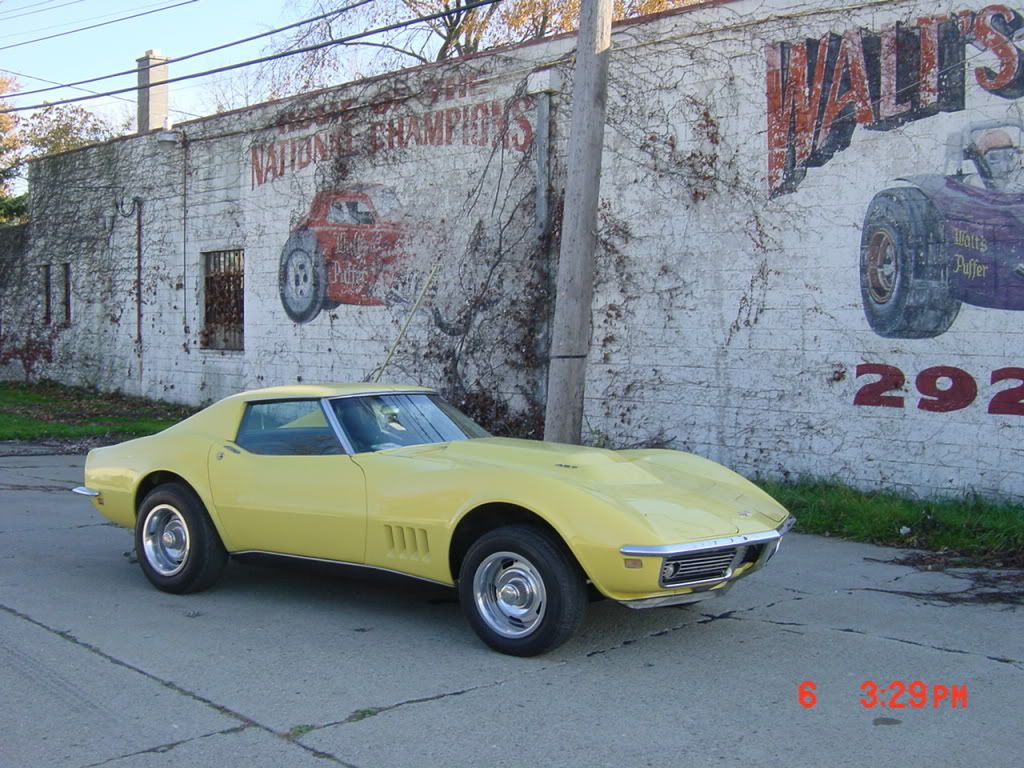

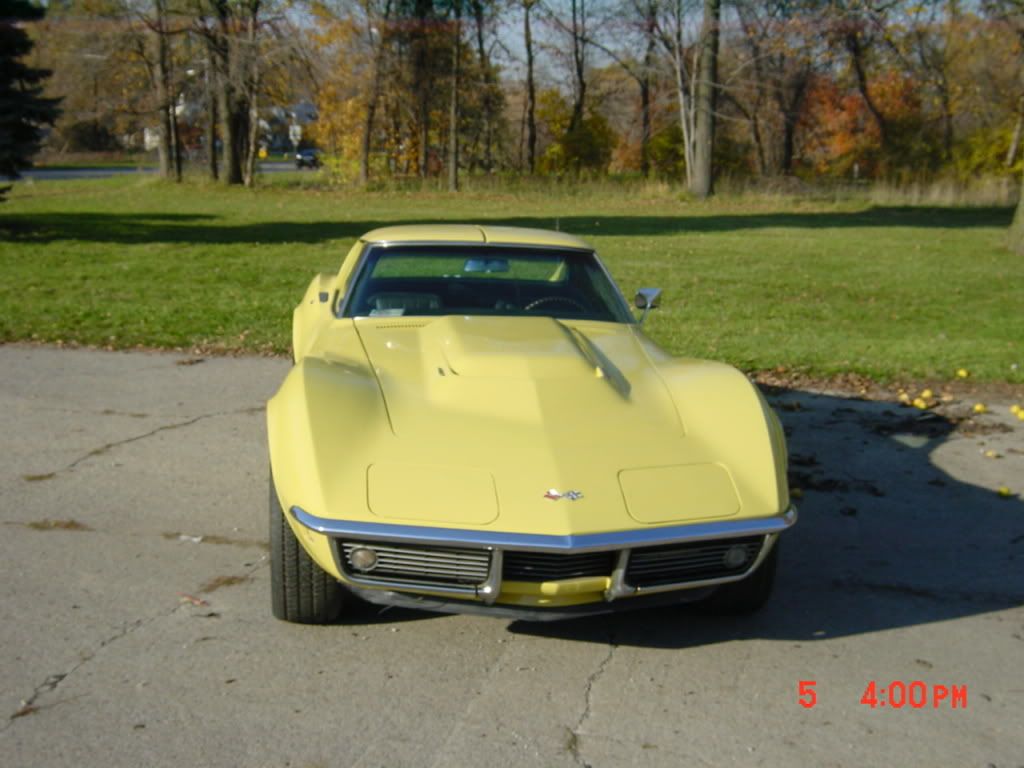
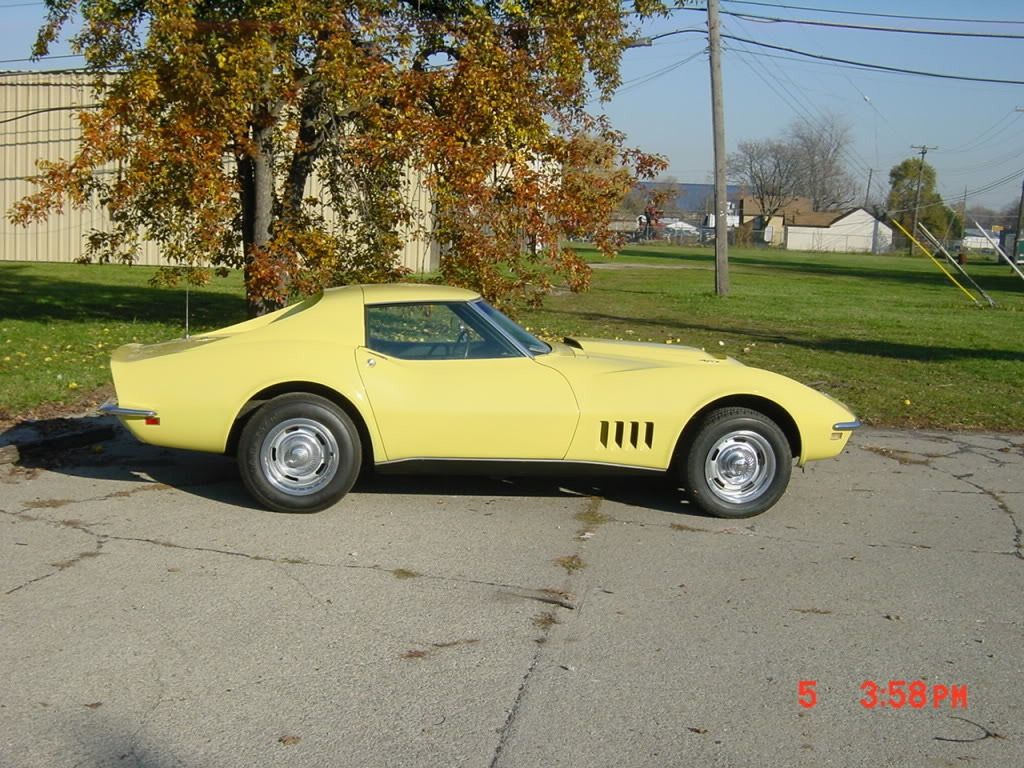
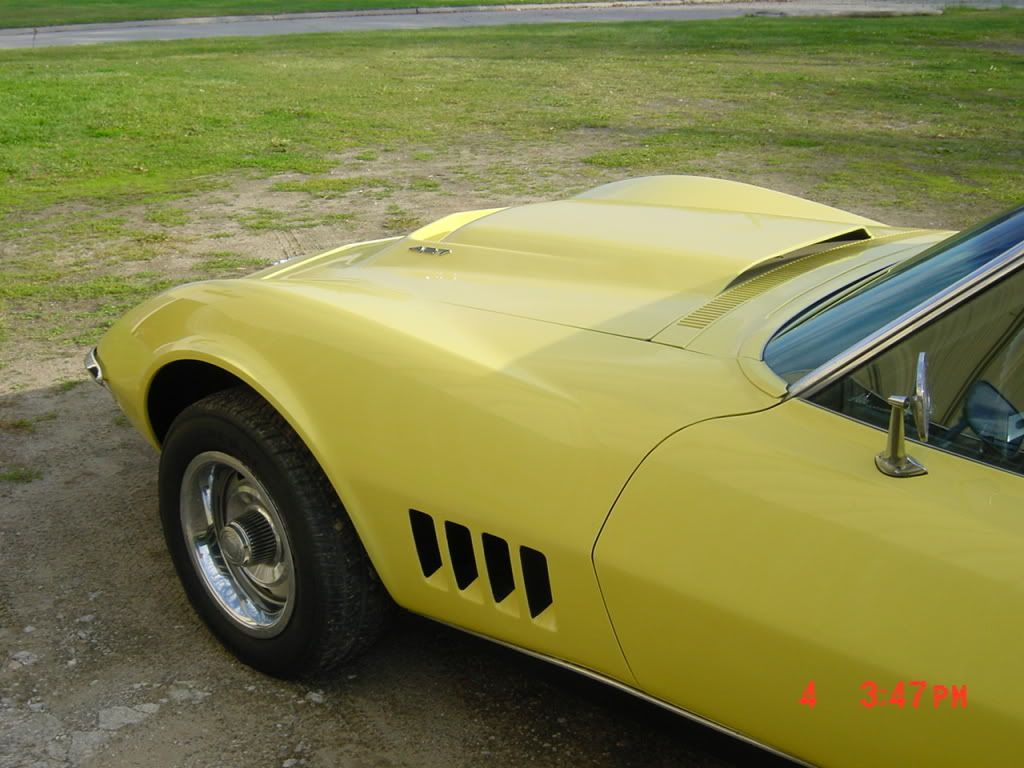
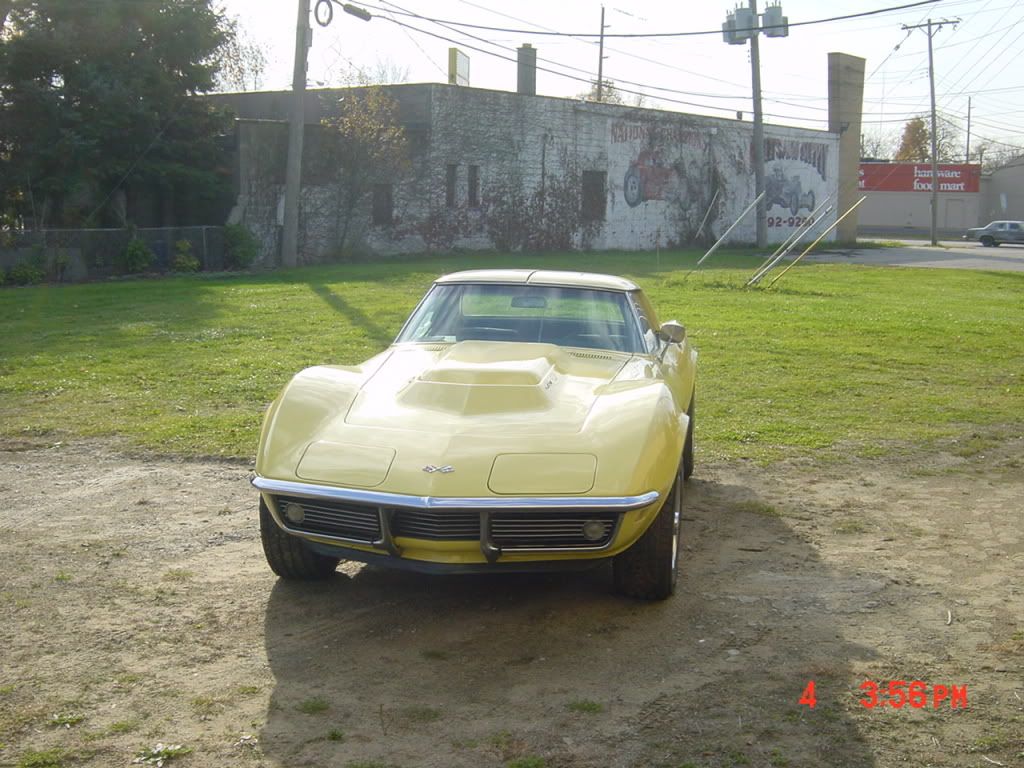

Day one, March 1968
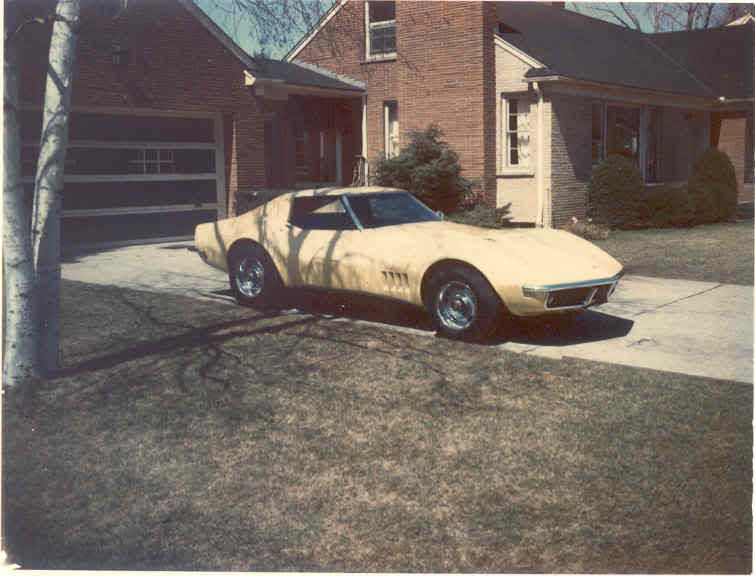


Day one, March 1968

Last edited by Ironcross; Mar 10, 2015 at 09:58 PM.


Burning Brakes


Joined: Apr 2007
Posts: 1,186
Likes: 41
From: Pinecrest FL
2015 C3 of the Year Finalist
My 69 doesnt rattle at all, but it has never really been apart.
I have driven in a few c3s that did rattle like hell, one was a recent restoration. Could have something to do with the car in question being taken apart.
Gary
I have driven in a few c3s that did rattle like hell, one was a recent restoration. Could have something to do with the car in question being taken apart.
Gary
Racer
Joined: May 2011
Posts: 484
Likes: 10
From: Newcastle NSW
My previous '71 was a bit of a rattle-trap, but my present '69 is almost perfect. I do get a very small amount of rattling from the passenger's side door lock rods, which I'll fix when I can be bothered getting around to it.