




Help Gas leaking

Thread Starter
Advanced

Joined: Apr 2016
Posts: 78
Likes: 5
From: Clifton New Jersey
 Help Gas leaking
I took my 71 out for a ride this morning. When I got home and pulled in the garage I found gas leaking from the left front fender right behind the wheel. I quickly removed the vent and saw the gas. It looked like it is comming a plastic canister. What is this and should there be gas in it?

Melting Slicks


Joined: Nov 2000
Posts: 2,507
Likes: 114
From: St. Louis Mo
I took my 71 out for a ride this morning. When I got home and pulled in the garage I found gas leaking from the left front fender right behind the wheel. I quickly removed the vent and saw the gas. It looked like it is comming a plastic canister. What is this and should there be gas in it?
Thread Starter
Advanced
Joined: Apr 2016
Posts: 78
Likes: 5
From: Clifton New Jersey

Burning Brakes


Joined: Mar 2006
Posts: 829
Likes: 131
From: Spartanburg SC
Or, you can rebuild the thing for $20+. The charcoal is saturated and no longer effective. Google how to rebuild evap. Cannnister. There is an excellent write up with photos on the web. Not hard to do. I rebuilt mine last summer.

Team Owner


Joined: Sep 2006
Posts: 31,287
Likes: 4,375
From: Westminster Maryland
Hi Mb,
Starting with the 71 model year, Corvettes had an 'Evaporative Emissions Control' system.
The gas tank started using a 'sealed' cap. There was a 'vapor separator' mounted on the driver's side of the tank and a steel line that ran forward along the frame rail to the charcoal canister mounted behind the left side rear apron.
The volatile gas fumes from the gas tank bonded to the charcoal in the canister when the engine wasn't running.
When the the engine was running the large rubber line from the canister lid ran to the engine's pcv valve and on to the carburetor. The vacuum created pulled the volatile fumes from the charcoal bond and they were burned in the engine.
It's difficult to say what's going on with your canister without knowing what parts of the system are in place and in what condition they are.
So do you know what parts of the system are in place on your car?
Regards,
Alan
The Vapor Separator & Hoses
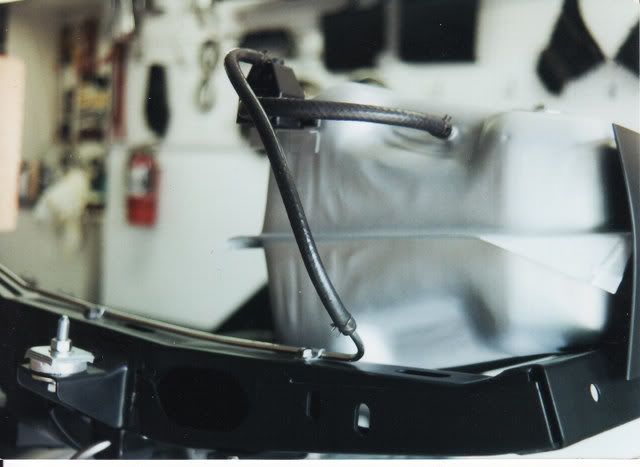
The Vapor Separator
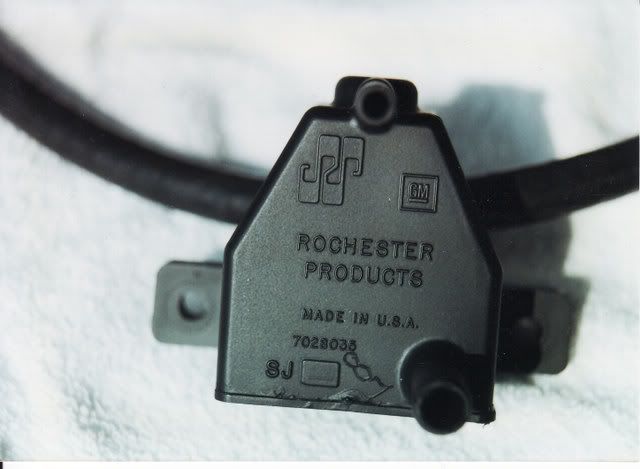
The canister and it's bracket
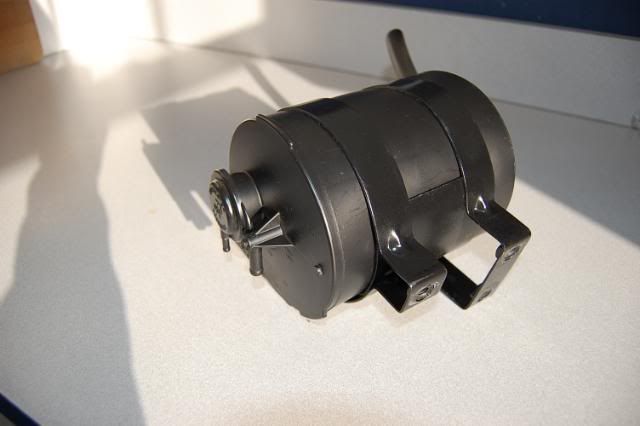
The canister top and the 3 hose connections
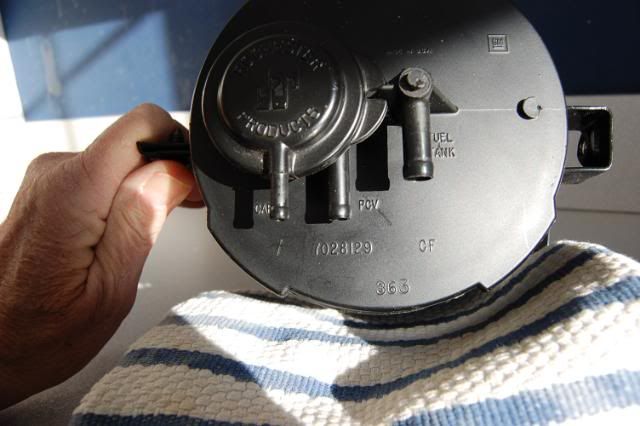
The bottom drain on the canister

Starting with the 71 model year, Corvettes had an 'Evaporative Emissions Control' system.
The gas tank started using a 'sealed' cap. There was a 'vapor separator' mounted on the driver's side of the tank and a steel line that ran forward along the frame rail to the charcoal canister mounted behind the left side rear apron.
The volatile gas fumes from the gas tank bonded to the charcoal in the canister when the engine wasn't running.
When the the engine was running the large rubber line from the canister lid ran to the engine's pcv valve and on to the carburetor. The vacuum created pulled the volatile fumes from the charcoal bond and they were burned in the engine.
It's difficult to say what's going on with your canister without knowing what parts of the system are in place and in what condition they are.
So do you know what parts of the system are in place on your car?
Regards,
Alan
The Vapor Separator & Hoses
The Vapor Separator
The canister and it's bracket
The canister top and the 3 hose connections
The bottom drain on the canister
Last edited by Alan 71; May 14, 2016 at 04:01 PM.

Le Mans Master

Joined: Aug 2006
Posts: 7,427
Likes: 1,560
From: mount holly NC
2025 c3 ('74-'82) of the Year Finalist - Unmodified
2019 C3 of Year Finalist (appearance mods)
Hi and welcome.
This 'vapor separator' is located on the top left side of your fuel tank.
Its function is to allow gas fumes to enter the vapor canister but not raw gas.
You might check that part.
https://willcoxcorvette.com/corvette...or-valve-70-74
Never mind, Alan explained it while I was looking for the part.
Its function is to allow gas fumes to enter the vapor canister but not raw gas.
You might check that part.
https://willcoxcorvette.com/corvette...or-valve-70-74
Never mind, Alan explained it while I was looking for the part.
Last edited by Peterbuilt; May 14, 2016 at 03:55 PM.
Thread Starter
Advanced
Joined: Apr 2016
Posts: 78
Likes: 5
From: Clifton New Jersey
Hi Mb,
Starting with the 71 model year, Corvettes had an 'Evaporative Emissions Control' system.
The gas tank started using a 'sealed' cap. There was a 'vapor separator' mounted on the driver's side of the tank and a steel line that ran forward along the frame rail to the charcoal canister mounted behind the left side rear apron.
The volatile gas fumes from the gas tank bonded to the charcoal in the canister when the engine wasn't running.
When the the engine was running the large rubber line from the canister lid ran to the engine's pcv valve and on to the carburetor. The vacuum created pulled the volatile fumes from the charcoal bond and they were burned in the engine.
It's difficult to say what's going on with your canister without knowing what parts of the system are in place and in what condition they are.
So do you know what parts of the system are in place on your car?
Regards,
Alan
The Vapor Separator & Hoses
The Vapor Separator
The canister and it's bracket
The canister top and the 3 hose connections
The bottom drain on the canister
Starting with the 71 model year, Corvettes had an 'Evaporative Emissions Control' system.
The gas tank started using a 'sealed' cap. There was a 'vapor separator' mounted on the driver's side of the tank and a steel line that ran forward along the frame rail to the charcoal canister mounted behind the left side rear apron.
The volatile gas fumes from the gas tank bonded to the charcoal in the canister when the engine wasn't running.
When the the engine was running the large rubber line from the canister lid ran to the engine's pcv valve and on to the carburetor. The vacuum created pulled the volatile fumes from the charcoal bond and they were burned in the engine.
It's difficult to say what's going on with your canister without knowing what parts of the system are in place and in what condition they are.
So do you know what parts of the system are in place on your car?
Regards,
Alan
The Vapor Separator & Hoses
The Vapor Separator
The canister and it's bracket
The canister top and the 3 hose connections
The bottom drain on the canister

Team Owner

Joined: Jan 2006
Posts: 37,637
Likes: 3,118
From: Crossville TN
The vapor separator is likely the problem. It is designed to prevent liquid fuel from getting passed to the vapor recovery canister. Obviously, it is no longer doing that task. Replacement is not fun, being located high on the left side of the fuel tank.
The separator also serves a safety function, so it would be best to replace it rather than just cap it off.
P.S. Raw fuel passing through the recovery canister is not [necessarily] a problem. Once the separator is replaced, the fuel captured by the charcoal in the canister will be vaporized and sucked into the intake charge is fairly short order.
The separator also serves a safety function, so it would be best to replace it rather than just cap it off.
P.S. Raw fuel passing through the recovery canister is not [necessarily] a problem. Once the separator is replaced, the fuel captured by the charcoal in the canister will be vaporized and sucked into the intake charge is fairly short order.
Last edited by 7T1vette; May 14, 2016 at 11:24 PM.
Corvette Stories
The Best of Corvette for Corvette Enthusiasts

Top 10 Most Expensive Corvettes Ever Sold on Bring A Trailer
Brett Foote
10 Things Every Corvette Owner Needs (2026 Edition)
Michael S. Palmer
8 Most "Only Corvette Owners Understand" Quirks and Problems
Pouria Savadkouei
10 Reasons the C6 Z06 is Still A Performance Benchmark After 20 Years
Joe Kucinski
How Much Horsepower Every Corvette Engine "LOST" in 1972
Joe Kucinski
Top 10 DOs and DON'Ts for Protecting Your Convertible Top!
Michael S. Palmer
Top 10 Most Explosive Corvettes Ever Made: Power-to-Weight Ratio Ranked!
Joe Kucinski
150 hp to 1,250 hp: Every Corvette Generation Compared by the Specs That Matter
Joe Kucinski
8 Coolest Corvette Pace Cars (and Replicas) of All Time
Verdad Gallardo
Team Owner
Joined: Sep 2006
Posts: 31,287
Likes: 4,375
From: Westminster Maryland
Hi Mb,
I don't think it's ever an acceptable situation to have had any amount of fuel travel to the canister.
The vapor separator can be reached but it's not easy. You might have to drop the muffler on that side to gain some access room.
Once removed the separator can be tested by shaking it. If you hear a 'rattle' that indicates the valve is operational.
Here are a couple pictures showing the rubber hoses (1 large , 1 small) running from the canister to the carburetor.
Regards,
Alan
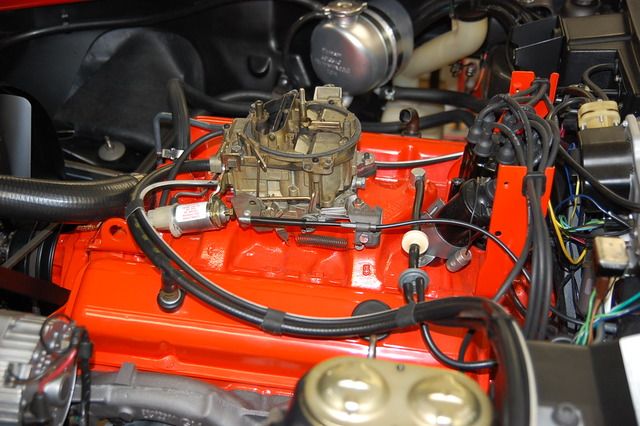
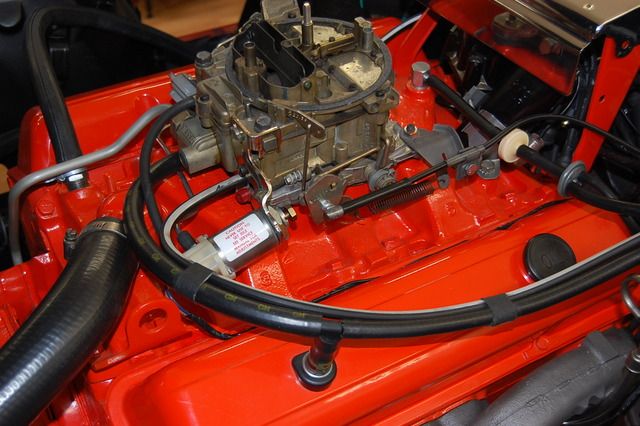

I don't think it's ever an acceptable situation to have had any amount of fuel travel to the canister.
The vapor separator can be reached but it's not easy. You might have to drop the muffler on that side to gain some access room.
Once removed the separator can be tested by shaking it. If you hear a 'rattle' that indicates the valve is operational.
Here are a couple pictures showing the rubber hoses (1 large , 1 small) running from the canister to the carburetor.
Regards,
Alan
Last edited by Alan 71; May 15, 2016 at 08:18 AM.

Drifting

Joined: Jul 2008
Posts: 1,873
Likes: 27
From: Sonora CA
Yes it can, a little tricky but it can be done . . . I replaced mine without removing the tank. However, I do believe that I did remove the muffler.
This same thing happened to me a while back. Every time I would fill the tank and then make a right hand turn, the engine would start to stall out. On one of these occasions, it actually did, when I got out, I noticed gas on the ground right under the vapor cannister.
This same thing happened to me a while back. Every time I would fill the tank and then make a right hand turn, the engine would start to stall out. On one of these occasions, it actually did, when I got out, I noticed gas on the ground right under the vapor cannister.
Drifting
Joined: Jul 2008
Posts: 1,873
Likes: 27
From: Sonora CA
Hi Mb,
I don't think it's ever an acceptable situation to have had any amount of fuel travel to the canister.
The vapor separator can be reached but it's not easy. You might have to drop the muffler on that side to gain some access room.
One removed the separator can be tested by shaking it. If you hear a 'rattle' that indicates the valve is operational.
Here are a couple pictures showing the rubber hoses (1 large , 1 small) running from the canister to the carburetor.
Regards,
Alan
I don't think it's ever an acceptable situation to have had any amount of fuel travel to the canister.
The vapor separator can be reached but it's not easy. You might have to drop the muffler on that side to gain some access room.
One removed the separator can be tested by shaking it. If you hear a 'rattle' that indicates the valve is operational.
Here are a couple pictures showing the rubber hoses (1 large , 1 small) running from the canister to the carburetor.
Regards,
Alan
Team Owner
Joined: Sep 2006
Posts: 31,287
Likes: 4,375
From: Westminster Maryland
Hi I,
You're right it's a pretty simple concept… one moving part…. the ball (?) in the valve in the separator.
The fact that the charcoal is now 40+ years old and that sometimes the hoses to the carb have been disconnected for years, seem to be the causes of most of the trouble folks usually have with it.
Regards,
Alan
You're right it's a pretty simple concept… one moving part…. the ball (?) in the valve in the separator.
The fact that the charcoal is now 40+ years old and that sometimes the hoses to the carb have been disconnected for years, seem to be the causes of most of the trouble folks usually have with it.
Regards,
Alan
Last edited by Alan 71; May 15, 2016 at 08:29 AM.
Team Owner
Joined: Jan 2006
Posts: 37,637
Likes: 3,118
From: Crossville TN
The activated charcoal in the vapor canister can become contaminated....but not from fuel in either vapor or liquid form. If necessary, the charcoal CAN be replaced. But liquid fuel coming from the bottom of it is clear indication of a separator unit failure.

Race Director


Joined: Jul 2004
Posts: 12,706
Likes: 329
From: Scottsdale Arizona
Yes it can, a little tricky but it can be done . . . I replaced mine without removing the tank. However, I do believe that I did remove the muffler.
This same thing happened to me a while back. Every time I would fill the tank and then make a right hand turn, the engine would start to stall out. On one of these occasions, it actually did, when I got out, I noticed gas on the ground right under the vapor cannister.
This same thing happened to me a while back. Every time I would fill the tank and then make a right hand turn, the engine would start to stall out. On one of these occasions, it actually did, when I got out, I noticed gas on the ground right under the vapor cannister.
Alan, your pics never cease to amaze me. The separator on my tank looked so brittle that I was afraid to touch it. I know it would have dissolved if I unbolted it or tried to remove the hose. Couldn't even read the part number

Thread Starter
Advanced
Joined: Apr 2016
Posts: 78
Likes: 5
From: Clifton New Jersey
Thanks All ,
I have checked my car out and it all seams to be there. Except the T fitting at the PVC , that's the hose sitting on the manifold . I will be ordering the new separator valve this week.
Alan, the pictures you posted were a big help. But I must say make me a lot envious. Your car is beautiful .
I have checked my car out and it all seams to be there. Except the T fitting at the PVC , that's the hose sitting on the manifold . I will be ordering the new separator valve this week.
Alan, the pictures you posted were a big help. But I must say make me a lot envious. Your car is beautiful .

Burning Brakes


Joined: May 2013
Posts: 789
Likes: 129
From: Los Banos CA


Thread Starter
Advanced
Joined: Apr 2016
Posts: 78
Likes: 5
From: Clifton New Jersey
Hi Mb,
I don't think it's ever an acceptable situation to have had any amount of fuel travel to the canister.
The vapor separator can be reached but it's not easy. You might have to drop the muffler on that side to gain some access room.
Once removed the separator can be tested by shaking it. If you hear a 'rattle' that indicates the valve is operational.
Here are a couple pictures showing the rubber hoses (1 large , 1 small) running from the canister to the carburetor.
Regards,
Alan
I don't think it's ever an acceptable situation to have had any amount of fuel travel to the canister.
The vapor separator can be reached but it's not easy. You might have to drop the muffler on that side to gain some access room.
Once removed the separator can be tested by shaking it. If you hear a 'rattle' that indicates the valve is operational.
Here are a couple pictures showing the rubber hoses (1 large , 1 small) running from the canister to the carburetor.
Regards,
Alan
Team Owner
Joined: Sep 2006
Posts: 31,287
Likes: 4,375
From: Westminster Maryland
Hi Mb,
A change in idle speed often does indicate a vacuum leak.
Is the rest of the EEC system in place and the hoses/lines run?
I'd think the idle should be re-set with everything in place that you're going to use after checking for vacuum leaks.
Regards,
Alan
A change in idle speed often does indicate a vacuum leak.
Is the rest of the EEC system in place and the hoses/lines run?
I'd think the idle should be re-set with everything in place that you're going to use after checking for vacuum leaks.
Regards,
Alan