When you click on links to various merchants on this site and make a purchase, this can result in this site earning a commission. Affiliate programs and affiliations include, but are not limited to, the eBay Partner Network.
I'll document what I am doing to my street car, because it could be directly relevant for anyone doing their own engine build.
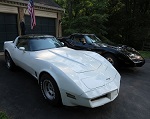
The "Caddy that Zigs" with a manual shift 6 speed. Comfort and great handling!
It's so rare, and such a great driver, I figured it's worth some effort to save, even if it has 210k miles on it.
The engine sidelined the car due to excessive oil consumption, 300 miles per qt. One qt per gas tank.
Can't get inspected, won't pass emissions, check engine light, ruined the convertors, bla bla.
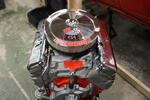
So I took the engine apart. I've done a few engines, but always on an engine stand.
First one I have ever done in the chassis.
Pain in the neck this way, but I just don't have the room to do it the easier way, and just pull the motor. Awful lot to take apart in the chassis
This V-6 is was a new design in 04 and is built like an LS block.
After 210k miles it still had great ring compression, leak down and oil pressure.
Measurements:
Block bore wear: 1.2 thou after 200k miles
Hone pattern still very good
Valve guide wear: 1/2 thou
Ring Gaps: wore 10-17 thou, and are out of spec
So after measuring everything in the entire engine, the rings are the only thing that are really out of spec and worn out.
I noticed the last piston practically slid down the bore on it's own, so that led me to ring friction.
The oil rings only had 7# of drag while doing a sliding friction test. They are just worn out. I later learned they will not seal at this level without a vacuum pump.
I spent years doing scientific research, so I dug deep into this issue.
Ring friction Research:
I learned these 3.6 GM have known oil consumption problems. But so do some others. Like 5 years worth of Hondas, and early LS engines.
They all blame it on low friction oil rings, actually going too low. In both cases the rings were redesigned by the mfgr a few # stronger.
The auto MFGRS are doing this to squeek more gas mileage out of these.
The Honda info I found said they were fine at first, no oil burning, then once the rings wore as little as 2 thou, they suddenly turned into oil burners. Thousands of them were re-ringed under warranty.
GM had an issue with the early '93 LS motors. The oil rings were only spec'd at 9-10# tension. And there were many reports of oil burning, not all of them, but a lot. They later raised the oil ring tension to 12#.
The aftermarket engine builders are using low tension rings to gain HP.
The downside is at what level do you lose oil control?
I visited several engine builder forums, and got recommendations: chevelles.com, yellow bullet, speed talk. They all sort of agree:
ultra low tension oil rings: 4-8# should only be used with a vacuum pump
low tension oil rings: 9-12# vac pump or pan evacuation, not with street car & mufflers (note this was the level where GM & Honda had issues)
std rings: 16-18#
old fashioned std rings: 20-26# old SBC std etc.
Also phone calls with Keith Black pistons, Hastings, Mahle, and Total Seal oil rings tech service
All the above agreed I would have less oil consumption with stronger oil rings.
My new set of Hastings rings spec out at the high end of GM specs at 13#
Still seemed marginal, and several agreed I could do better.
Total Seal came up with 2 custom oil ring packages for me to test & try.
One I tested at 15#, the other at 22#.
So I picked the 15# set. If they drop 2# with use, as some say, or a few thou wear, I will still have 13# and be at the top end of GM's specs.
So if anyone is building an engine, you may not want the latest & greatest low friction rings.
They are all the rage now among builders. So Beware!
You might gain a few HP.
But if it burns oil, is that a good trade-off?
You are very likely will be better off with std tension rings, for a street car.
Say 13-18# oil rings.
Ask first! Or you may be sorry.
Last edited by leigh1322; Jul 17, 2024 at 06:28 PM.
More pics: Perfect factory hone pattern even after 200k miles. This engine is built like an LS and now I see why those engines can run 300k or more. Well they will if they have better rings.
New pistons, new Total Seal Piston rings, all freshly gapped, ready to go
Two handy installation tools. This is my third ring compressor. The adjustable ones did not work on the very thin 3 piece oil rings in todays builds. One piece tapered unit from BTR even has a small lip to prevent that thin oil ring from sneaking out. Piston installation guides are GM tool, extremely long, but worked very well. They would go around the journal while the piston was still out of the block.
All six pistons are now in! Hoo-Ray!
Last edited by leigh1322; Jul 17, 2024 at 09:48 PM.
A good friend of mine had a Cadillac with a 500 cu in engine.
He had the same engine in his 69 Sanger flat bottom.
He used it to tow his Sanger with his Cadi when we went to the Colorado River and Carlsbad Lagoon.
One day he bent a pushrod in his boat so he popped open the hood on his Cadi and had his boat running within a half hour.
Next day we went to a local salvage yard where he bought a push rod and installed it in his car for the drive home.
Since I have to torque some rod nuts, I thought I should check & calibrate my 40 year old Sears torque wrenches.
At home!
You could too.
I calibrated chemistry lab balances for 40 years, and these are actually much simpler.
I had the lock nut slip on one of these many years ago and the handle almost fell off. That was when I saw the calibration nut inside. Set that one with a hundred lb weight and checked it with a Snap-On wrench back then. Good to go.
That was 12 years ago and that one is still good today.
The smaller 3/8" clicker was a little off and needed an adjustment.
I did not have a slim enough socket to undo the lock nut, and fix the handle dial calibration on that one, so I just taped it on! LOL
The beams do not really age and go bad. They are just a PITA to use. The springs in the clicker ones can weaken, or the adjustment/handle/dial can slip. But for engine work you need to be able to trust them!
I just compared the four of them together. I attached two of them together at a time with a short extension on one, and found a 12pt socket that would fit on the 3/8" or 1/2" square end. Then I compared one to another, at 3-4 different TQ levels. One wrench was off from the other three. Notice my fancy correction note.
Hidden locknut and calibration screw hiding inside the handle. All twisting the handle/dial does is tighten the spring. Springs are linear. My one wrench was always 4-5# lower than the others at several different points, on it's scale. 5# off at 100# is not bad, but 5# off on an 18# rod nut could be a disaster!
Somehow I remember years ago when the cops had their calibrated speedometer correction numbers hand-written and taped to their inside windshield pillar.
Not going to admit why I would know that!
If anyone cares about my 200k mile 3.6L Caddy engine re-ring / re-build, the new rings really helped the oil consumption. A LOT!
The old 200k mile rings, with only 6# of tension, used 1 qt per 300 miles.
The new Total Seal oil rings, with 15# tension, oil consumption is not even measurable at 2000 miles. I would have used 7 QUARTS by now with the old rings, and now the level has not even budged. It should go 5000-6000 miles or more per qt. That is a TWENTY TIME improvement! And I did not even touch the hone job in the block.
So yeah I'm happy.
Now back to the Corvette.
I have a couple of side projects going on in the background, til I get the garage reset.
Here is my tilt steering column shaft. LOL
Thought you might get a kick out of it!
Just keep parking that Cadi outside so I can keep topping off the oil at night while you’re sleeping..
I had to do something to get you back on track on the Corvette!
There sure are a lot of parts inside of a tilt column!
It turns out that three of the parts are "collapsible". The long main shaft, the outer tube, and the shift interlock tube. Fortunately mine are all OK. The shift interlock tube is sticking for some reason, have to figure that out. And will need to collpase the main shaft 2-1/2" for the borgeson. And still need to get the main shaft straightened.
Yes I agree on the bore wear.
The short block is built exactly like a 6 cyl LS motor.
I can see now why those blocks are so strong, and live 300k+ miles.
And the first few years of them also had random oil consumption issues as well.
My word of advice: Anyone building an engine, of any kind, with today's thin style rings, should check the tension of their oil rings, before assembly.
8# was factory on some of them, and is too low.
12# is common, and may be marginal, for oil control, depending on how good your hone job is.
That may require a crankcase vacuum pump for the best oil control.
15# is much safer.
[QUOTE=leigh1322;1599970991]Let's call this my "72 Big Block Rescue".
Follow along on my build of my dream car if you like. It was a cheap BB project car, and I think most of the bones are pretty good. But the more I looked into it, it quickly went from being a daily driver / fixer-upper into a full frame-off restoration before I'll really trust it.
It's a 72 BB 4spd, with 3.23 rear. It was (will be again) Ontario Orange with Dark Saddle Leather. It was a real he mans car: a BB, with manual steering and brakes.
Along the way it'll gain a few updates to accommodate me in my retirement: PS/PB/AC.
There are way too many parts missing to ever try to make it a numbers matching car, so I'll add a few modern upgrades underneath like: Borgenson box, smart struts, QA1 adjustable shocks, etc. From a few feet it should still look 100% stock.
Since this engine is a NOM, and I don't trust it, I am building another one, much stronger. A 100% stock appearing LS6 is mostly complete in another thread.
A lot of my repairs seem like they are going to go towards undoing whatever Bubba did to it for the last 47 years.
I wanted "a project" and I got it. A Big One.
Project Links:
There are some separate threads, so I will add them all here as a Index for DIY how-to guidance.
Distributor Rebuild: Rebuild, blue-printing, setting timing curve and vac advance, at home, without a running engine, or a Sun Machine Distributor Tuning at Home
Jan 2018 I drove it one whole block before sticking it in the garage. All the way into 2nd gear Whoa!
The velour seat covers may have been 1970's period correct but were the first things out. Anyone want them before I tear the covers off?
The windshield frame was the first big ugly Bubba surprise that immediately killed the daily-driver and fix-it-up as you go plan:
I was suspicious of the six different kinds of glues and sealers around the windshield. Little rust was visible until the (loose) windshield was pulled. Then this surprise reared it's ugly head.
So that committed me to a frame-off and nose-off restore plan.
Now that I have recovered from my hand surgery, and the garage update is complete, the disassembly commences.
I didn't trust the engine either, just because I didn't build it, and a pan-pull proved me justified.
Existing 1978 dated engine block sports the correct 72 bottom end hardware. And it shows signs of being rebuilt, but what if Bubba did it? It did not run that well anyway.Flat cam?
Oil pan contains evidence of an earlier major engine issue, or a rebuild issue, or just bad hammer work. There are 100's of hammer dents in the oil pan. The rod nut scrapes look very fresh.
Look how nicely Bubba made this small block fan shroud fit on a BB radiator. !?
Bubba thinks a May 1968 expansion tank is perfect for a 72.
The radiator core support looked solid, until you look under the seal....
Another surprise LOL. The radiator not only leaks, it's a replacement, and for an automatic.
The old lump is almost ready to come out.
It's nothing short of amazing how far back the engine sits, even a BB. If the entire engine, except for the fan, sits behind the front spindles, doesn't that really make this series a mid-engined vette?
Oh well it's all fixable. I did say I wanted a
Last edited by Cam33; May 10, 2025 at 09:52 AM.
Reason: Po request
Umm ... not really sure what happened on the post above.
But it is time to get back on thisC3 project. Got a few other things out of the way.
So first order of business is to re-set up my workshop.
I have been dealing with a 4-1/2 ft work bench space, and well .... you can never have too much counter space!
I need a solid and larger work table for suspension parts, interior pieces, seat frames, etc.
I have this 5 ft by 10 ft area in front of one of my two garage bays.
It was never fully utilized, mostly filled with storage shelves, which need to go ...somewhere.
I "rescued" this solid butcher block work bench from the high school when they were tearing down the 50 year old wood shop.
27" wide and 7 ft long and 2" thick. Really solid!
So on with the new-old work bench installation! Old and too crowded counter space
My workshop corner 5ft x 10ft just jammed up with storage shelves - all cleared out now
Solid and heavy butcher block work table from my old High School. Decorated by 50 years of teenagers. LOL. I already have my TV companion for my shop, and the floor mounted winch for dragging the car uphill 8 inches all by myself.
I am still figuring all this out.
So I just started, and am planning as I go.
But I can't wait to see how it all turns out, and to put it to work!
Last edited by leigh1322; May 28, 2025 at 11:32 AM.
Progress is being made!
I now have a nice solid U-shaped workbench, with 16ft of counter space.
Woo-hoo! The basics are done. Now for a backboard and some electric work.
Still updating my workbench / shop area that I have wanted since we moved into this house 27 years ago!
In the meantime I thought I would order possibly the last of my chassis parts. It was like Christmas in July today! Yes. I gave up on the whole lip seal vs o-ring seal debate. I was not convinced either way. These have very modern square cut o-rings. I went with anodized grey for that not so obvious mod look (flat grey) SPC adjustable control arms. 1/2" longer ball joint for more camber curve, and rear setback for 5* caster, with zero shims. Optional delrin bushings vs rubber for zero friction.
Last edited by leigh1322; Jul 13, 2025 at 05:58 PM.