




Pulled the Cam/Valvetrain: Results

Thread Starter
Melting Slicks


Joined: Apr 2000
Posts: 2,145
Likes: 1
From: Ft. Walton Beach, Fl USA

Originally Posted by moosie982
Have I missed the solution??? Peace,,,Moosie 
Advanced

Joined: Sep 2005
Posts: 74
Likes: 0
From: Seattle WA
I ahve to agree with a couple of other posts that your cam is 180 degrees out. My manual says that your timing marks should be at 6 and 12 when the #1 cylinder is at the top of the compression stroke (TDC) in 1963-79 vehicles and at 12 and 12 in 1980-82. any updates?
Thread Starter
Melting Slicks
Joined: Apr 2000
Posts: 2,145
Likes: 1
From: Ft. Walton Beach, Fl USA
Originally Posted by mdarney
I ahve to agree with a couple of other posts that your cam is 180 degrees out. My manual says that your timing marks should be at 6 and 12 when the #1 cylinder is at the top of the compression stroke (TDC) in 1963-79 vehicles and at 12 and 12 in 1980-82. any updates?
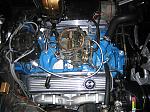
By the way, I appreciate all the responses given when this thread was very active. I haven't forgotten, I just haven't done much lately to give updates. I have an engine dyno date which should give me some answers or at least show me if it'll start outside the vehicle. I plan on hitting it hard again after the holidays. And I WILL post results. Anyway, here is the subject motor.


Le Mans Master


Joined: Feb 1999
Posts: 8,351
Likes: 75
From: Tampa Bay FL
Originally Posted by nastee383
Its a coil-in-cap HEI, no coil wire like you're talking about, the plug wires are brand new ACCEL 300+. I tested 3 of them for resistance. I don't remember the exact readings now but it was LOW. The wires appear to be good.

Le Mans Master
Joined: Sep 2001
Posts: 7,739
Likes: 630
From: Unreconstructed, South Carolina
Originally Posted by nastee383
By the way, I appreciate all the responses given when this thread was very active. I haven't forgotten, I just haven't done much lately to give updates. I have an engine dyno date which should give me some answers or at least show me if it'll start outside the vehicle. I plan on hitting it hard again after the holidays. And I WILL post results.
Alotta guys who can't reliably spell chevrolet corvette do know motors really well ... the reverse is just as true. True as well is that I don't & can't know everything. Here is who I often go to when I'm stumped: a friend who swaps motors for a junkyard ... customer goes to junkyard & needs a motor for his 94 Taurus ... junkyard gets my friend's shop to R&R the 94 Taurus motor with a 96 ... vast majority of my friend's work is that kinda swap ... often takes alotta troubleshooting. Go ask local junkyard which shop does the most swaps. Again ... go to that shop ... with hat-in-hand tell 'em you're stumped ... and offer one of the pros there $50-$100 to come over one evening & help you crank it.
Once you get the right fellow to help ... don't distract him from his course or argue with him when he seems to be covering the same old ground you're "certain" you've addressed.
Last edited by jackson; Dec 22, 2005 at 10:51 AM.
Thread Starter
Melting Slicks
Joined: Apr 2000
Posts: 2,145
Likes: 1
From: Ft. Walton Beach, Fl USA
Originally Posted by jackson
Truly, I don't mean any disrepect ... but do offer this to help you get going again: Many of us have posted possible tech solutions (me too) ... but you're still DOA. Nothing, NOTHING beats a REAL extra pair of eyes. Get someone nearby who puts motors together on a routine basis to come over to your place and help you get it cranked. Heck if you have to ... bite the bullet and go to a garage or dyno shop ... with hat-in-hand tell 'em you're stumped ... and offer one of the pros there $50-$100 to come over one evening & help you crank it.
Alotta guys who can't reliably spell chevrolet corvette do know motors really well ... the reverse is just as true. True as well is that I don't & can't know everything. Here is who I often go to when I'm stumped: a friend who swaps motors for a junkyard ... customer goes to junkyard & needs a motor for his 94 Taurus ... junkyard gets my friend's shop to R&R the 94 Taurus motor with a 96 ... vast majority of my friend's work is that kinda swap ... often takes alotta troubleshooting. Go ask local junkyard which shop does the most swaps. Again ... go to that shop ... with hat-in-hand tell 'em you're stumped ... and offer one of the pros there $50-$100 to come over one evening & help you crank it.
Once you get the right fellow to help ... don't distract him from his course or argue with him when he seems to be covering the same old ground you're "certain" you've addressed.
Alotta guys who can't reliably spell chevrolet corvette do know motors really well ... the reverse is just as true. True as well is that I don't & can't know everything. Here is who I often go to when I'm stumped: a friend who swaps motors for a junkyard ... customer goes to junkyard & needs a motor for his 94 Taurus ... junkyard gets my friend's shop to R&R the 94 Taurus motor with a 96 ... vast majority of my friend's work is that kinda swap ... often takes alotta troubleshooting. Go ask local junkyard which shop does the most swaps. Again ... go to that shop ... with hat-in-hand tell 'em you're stumped ... and offer one of the pros there $50-$100 to come over one evening & help you crank it.
Once you get the right fellow to help ... don't distract him from his course or argue with him when he seems to be covering the same old ground you're "certain" you've addressed.
Advanced
Joined: Sep 2005
Posts: 74
Likes: 0
From: Seattle WA
I just reread both my chevrolet service manual and my chiltons manual and both say that the cam should be at 6 and the crank sprocket should be at 12 with the #1 cylinder at TDC. I don't know what references you are using and I don't know what year or how a 383 stroker motor would differ. It is the only thing that makes sense with the thought of the dist. rotor pointing at the #1 cylinder wire because that is when you want the cylinder to fire at TDC. I am just trying to help and I am replacing my camshaft as well. Mark. Merry Christmas
Race Director


Joined: Nov 2000
Posts: 11,872
Likes: 12
From: Waterloo ontario Canada
Originally Posted by mdarney
I just reread both my chevrolet service manual and my chiltons manual and both say that the cam should be at 6 and the crank sprocket should be at 12 with the #1 cylinder at TDC. I don't know what references you are using and I don't know what year or how a 383 stroker motor would differ. It is the only thing that makes sense with the thought of the dist. rotor pointing at the #1 cylinder wire because that is when you want the cylinder to fire at TDC. I am just trying to help and I am replacing my camshaft as well. Mark. Merry Christmas
 I agree with you and would bet money on it. I am just going to resay it to make sure we understand each other and I am agreeing with the above.
The crank mark has to be at 12 oclock. It must be. The cam gear mark must be at 6 oclock. Or put another way the 2 timing marks must be almost touching each other and when a ruler is put between the centers of the crank and cam both marks are in line.
If you have the marks anyway else but this way you are wrong. You and your friends are wrong. Cam mark at 6, crank mark at 12.
I will bet my reputation on this.
Correct the problem. Put the piston at TDC on the compression stroke and align the mark like I say.
I never never install a cam without degreeing.
Your problem if I am reading it right is in the cam timing.
Corvette Stories
The Best of Corvette for Corvette Enthusiasts

Top 10 Most Expensive Corvettes Ever Sold on Bring A Trailer
Brett Foote
10 Things Every Corvette Owner Needs (2026 Edition)
Michael S. Palmer
8 Most "Only Corvette Owners Understand" Quirks and Problems
Pouria Savadkouei
10 Reasons the C6 Z06 is Still A Performance Benchmark After 20 Years
Joe Kucinski
How Much Horsepower Every Corvette Engine "LOST" in 1972
Joe Kucinski
Top 10 DOs and DON'Ts for Protecting Your Convertible Top!
Michael S. Palmer
Top 10 Most Explosive Corvettes Ever Made: Power-to-Weight Ratio Ranked!
Joe Kucinski
150 hp to 1,250 hp: Every Corvette Generation Compared by the Specs That Matter
Joe Kucinski
8 Coolest Corvette Pace Cars (and Replicas) of All Time
Verdad Gallardo
Race Director
Joined: Nov 2000
Posts: 11,872
Likes: 12
From: Waterloo ontario Canada
That's contradictory to everything I've read and the advice I've been given here on the forum. 12 (crank) and 12 (cam) equates to TDC, compression stroke on #1. 12 (crank) and 6 (cam) is TDC on #6 and is primarily used to line up the marks since the're closest to each other at that position and easier to line up. Rotate the motor to the 12 and 12 position and you're on TDC #1, compression stroke.
This is all nonsense. I am not trying to be a smart ***. Some of us just see your problem and want you to take our advice. I have never ever had a motor that wouldn't run.
Correct the cam timing like we say and it will run.
This is all nonsense. I am not trying to be a smart ***. Some of us just see your problem and want you to take our advice. I have never ever had a motor that wouldn't run.
Correct the cam timing like we say and it will run.

Melting Slicks
Joined: Feb 2003
Posts: 3,053
Likes: 4
St. Jude Donor '03,'11
Originally Posted by nastee383
I have a slip-fit balacer so that made it much easier to check the positions of everything after each rotation.
Thread Starter
Melting Slicks
Joined: Apr 2000
Posts: 2,145
Likes: 1
From: Ft. Walton Beach, Fl USA
Originally Posted by norvalwilhelm
That's contradictory to everything I've read and the advice I've been given here on the forum. 12 (crank) and 12 (cam) equates to TDC, compression stroke on #1. 12 (crank) and 6 (cam) is TDC on #6 and is primarily used to line up the marks since the're closest to each other at that position and easier to line up. Rotate the motor to the 12 and 12 position and you're on TDC #1, compression stroke.
This is all nonsense. I am not trying to be a smart ***. Some of us just see your problem and want you to take our advice. I have never ever had a motor that wouldn't run.
Correct the cam timing like we say and it will run.
This is all nonsense. I am not trying to be a smart ***. Some of us just see your problem and want you to take our advice. I have never ever had a motor that wouldn't run.
Correct the cam timing like we say and it will run.

Burning Brakes

Joined: Sep 2004
Posts: 1,167
Likes: 2
From: Ft.Worth Texas
Well, I don't understand the "after each rotation" comment.
Norvel is ABSOLUTELY correct.
1) Take the chain off.
2) Rotate the cam until the mark on sprocket is at six.
3) Rotate the crank until the mark on sprocket is at twelve.
4) Assemble with chain so they remain this way when you slip crank sprocket on with key and cam sprocket on with dowel.
5) Slowly rotate the assembly until you feel with your finger pressure blowing out of number one sparkplug hole. You are near TDC.
6) Install distributer making sure oil pump driver is engaged. Dist will not go fully down if it is not. If it wont go down you can reach in with a long screwdriver and turn the pump shaft.
7) Where ever the rotor is pointing it is where your number one wire goes. Obviously, if this is not where you want the #1 wire to be you can re-engage the dist. where you wish, making sure to engage the pump shaft too.

Norvel is ABSOLUTELY correct.
1) Take the chain off.
2) Rotate the cam until the mark on sprocket is at six.
3) Rotate the crank until the mark on sprocket is at twelve.
4) Assemble with chain so they remain this way when you slip crank sprocket on with key and cam sprocket on with dowel.
5) Slowly rotate the assembly until you feel with your finger pressure blowing out of number one sparkplug hole. You are near TDC.
6) Install distributer making sure oil pump driver is engaged. Dist will not go fully down if it is not. If it wont go down you can reach in with a long screwdriver and turn the pump shaft.
7) Where ever the rotor is pointing it is where your number one wire goes. Obviously, if this is not where you want the #1 wire to be you can re-engage the dist. where you wish, making sure to engage the pump shaft too.
Thread Starter
Melting Slicks
Joined: Apr 2000
Posts: 2,145
Likes: 1
From: Ft. Walton Beach, Fl USA
Originally Posted by mdarney
I just reread both my chevrolet service manual and my chiltons manual and both say that the cam should be at 6 and the crank sprocket should be at 12 with the #1 cylinder at TDC. I don't know what references you are using and I don't know what year or how a 383 stroker motor would differ. It is the only thing that makes sense with the thought of the dist. rotor pointing at the #1 cylinder wire because that is when you want the cylinder to fire at TDC. I am just trying to help and I am replacing my camshaft as well. Mark. Merry Christmas

Melting Slicks
Joined: Feb 2003
Posts: 3,053
Likes: 4
St. Jude Donor '03,'11
why go through all this BS crap and tear the engine down if it was running before???
you people blow me away. You have this guy rebuilding his whole engine because it won't start. Get a f-ing can of starting fluid and whale away. It has to be something to do with the carb or ignition.
you people blow me away. You have this guy rebuilding his whole engine because it won't start. Get a f-ing can of starting fluid and whale away. It has to be something to do with the carb or ignition.

Race Director

Joined: Feb 1999
Posts: 16,978
Likes: 7
From: In Dreams There Is Truth Ohio
The critical thing is to install the distributor when the cam gear is at 6 and crank gear at 12, where the rotor falls, who cares as long as the rotor is pointing to the #1 plug wire and the other wires are in timing sequence.
As Norval stated, the two marks HAVE to be perfectly vertical to each other.
As Norval stated, the two marks HAVE to be perfectly vertical to each other.
Last edited by GDaina; Dec 23, 2005 at 11:38 PM.
Burning Brakes
Joined: Sep 2004
Posts: 1,167
Likes: 2
From: Ft.Worth Texas
Originally Posted by David Ey
Well, I don't understand the "after each rotation" comment.
Norval is ABSOLUTELY correct.
1) Take the chain off.
2) Rotate the cam until the mark on sprocket is at six.
3) Rotate the crank until the mark on sprocket is at twelve.
4) Assemble with chain so they remain this way when you slip crank sprocket on with key and cam sprocket on with dowel.
5) Slowly rotate the assembly until you feel with your finger pressure blowing out of number one sparkplug hole. You are near TDC.
6) Install distributer making sure oil pump driver is engaged. Dist will not go fully down if it is not. If it wont go down you can reach in with a long screwdriver and turn the pump shaft.
7) Where ever the rotor is pointing it is where your number one wire goes. Obviously, if this is not where you want the #1 wire to be you can re-engage the dist. where you wish, making sure to engage the pump shaft too.
Norval is ABSOLUTELY correct.
1) Take the chain off.
2) Rotate the cam until the mark on sprocket is at six.
3) Rotate the crank until the mark on sprocket is at twelve.
4) Assemble with chain so they remain this way when you slip crank sprocket on with key and cam sprocket on with dowel.
5) Slowly rotate the assembly until you feel with your finger pressure blowing out of number one sparkplug hole. You are near TDC.
6) Install distributer making sure oil pump driver is engaged. Dist will not go fully down if it is not. If it wont go down you can reach in with a long screwdriver and turn the pump shaft.
7) Where ever the rotor is pointing it is where your number one wire goes. Obviously, if this is not where you want the #1 wire to be you can re-engage the dist. where you wish, making sure to engage the pump shaft too.
Thats what it takes...fuel, compression and spark at the right time.

I know you said you wanted to dyno it before you install it. The dyno guys will want the crank/cam/dist. relation to be right when they get the motor. I doubt they will want to fix any of those kinds of problems. But maybe they will. Good Luck

BTW, what was that "scraaaannking" noise ?
Last edited by David Ey; Dec 24, 2005 at 02:50 PM.
Race Director
Joined: Nov 2000
Posts: 11,872
Likes: 12
From: Waterloo ontario Canada
Originally Posted by hawgn68
Wow, I'm honored that Norval backs up what I posted top of page 4. The cam is 180 out and the plugs are firing at the end of the exhaust stroke, hence no backfire (or grinding).
Jimbo
Jimbo
Race Director
Joined: Nov 2000
Posts: 11,872
Likes: 12
From: Waterloo ontario Canada
Originally Posted by turtlevette
why go through all this BS crap and tear the engine down if it was running before???
you people blow me away. You have this guy rebuilding his whole engine because it won't start. Get a f-ing can of starting fluid and whale away. It has to be something to do with the carb or ignition.
you people blow me away. You have this guy rebuilding his whole engine because it won't start. Get a f-ing can of starting fluid and whale away. It has to be something to do with the carb or ignition.
From his description the cam is 180 degrees out.
Race Director
Joined: Nov 2000
Posts: 11,872
Likes: 12
From: Waterloo ontario Canada
Originally Posted by David Ey
Now, you are correct about the two to one ratio. For every rotation of the crank the cam makes a half rotation. Also, a piston comes UP for each crank rotation. When the piston comes up it is either compressing or exhausting. On the compressing stroke the cylinder will
fire BEFORE it reaches TDC.(advanced timing) Feel the compression and look at the harmonic balancer mark. It will be aproaching the zero mark on the tab. The dist. rotor will be pointing at the #1 plug wire. If it isn't, re-stab the dist. as described above, or move the wires. Leave the dist. clamp loose enough you can still twist it. Pump a bit of gas in and start cranking. If it does not start, twist the dist. a bit in one direction or the other until it does start. If you wish, you can watch the timing mark with a light to see where you are and what happens when you move the dist. It will start at about 10 degrees before tdc if it has fuel and spark. You will already know there is compression because you felt it when you set up the dist. at step 5 above.
Thats what it takes...fuel, compression and spark at the right time.
I know you said you wanted to dyno it before you install it. The dyno guys will want the crank/cam/dist. relation to be right when they get the motor. I doubt they will want to fix any of those kinds of problems. But maybe they will. Good Luck
BTW, what was that "scraaaannking" noise ?
fire BEFORE it reaches TDC.(advanced timing) Feel the compression and look at the harmonic balancer mark. It will be aproaching the zero mark on the tab. The dist. rotor will be pointing at the #1 plug wire. If it isn't, re-stab the dist. as described above, or move the wires. Leave the dist. clamp loose enough you can still twist it. Pump a bit of gas in and start cranking. If it does not start, twist the dist. a bit in one direction or the other until it does start. If you wish, you can watch the timing mark with a light to see where you are and what happens when you move the dist. It will start at about 10 degrees before tdc if it has fuel and spark. You will already know there is compression because you felt it when you set up the dist. at step 5 above.
Thats what it takes...fuel, compression and spark at the right time.
I know you said you wanted to dyno it before you install it. The dyno guys will want the crank/cam/dist. relation to be right when they get the motor. I doubt they will want to fix any of those kinds of problems. But maybe they will. Good Luck
BTW, what was that "scraaaannking" noise ?
If the motor has a hard time turning over move the distributer housing in the clockwise positon to remove timing.
You can also check the distributor for proper working by just turning it in your hands with a plug put in on the coil wire and check for spark
If I suspect a distributer problem I don't just grind away with the starter, I pull the distributer after carefully marking it's position, I put a plug in the coil wire, lay the plug on the motor and just spin the distributer by hand watching for a good spark.