




Do I need manifold vacuum?

Thread Starter
Pro


Joined: Mar 2004
Posts: 686
Likes: 0
From: Southeast
 Do I need manifold vacuum?
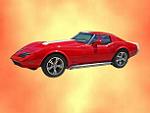
I have a 71 with the base 350 that's had a little work done to it...bored .020, flat top pistons, edelbrock performer intake, #1401 600cfm carb, hooker headers out through 2.5" exh., comp cams .462 int .482 exh with 219 229 (i think) at duration, stock heads (gonna be changed in the near future along with intake), and that's about it. There have been several threads about manifold vs. ported vacuum. I have my vacuum advance hooked up to my carburetor right now. Do I need to put a new fitting on the intake and use manifold vacuum with my set-up? Will it run better? After doing it, will I need to readjust everything? I know it's a lot of questions but I'm curious about this.
Pro

Joined: Aug 2005
Posts: 613
Likes: 2
From: West Central Florida
Manifold vacuum is on at idle and at crusing rpm, ported is on when you hit the gas (when the carb butterflies are open). You have to run you distributor on ported vacuum or you wont have any advance when you stab the gas, but it will be at full advance sitting at idle and run like doo doo. Just follow the stock vacuum diagram and youll be okay.
vic
vic
Race Director


Joined: Sep 1999
Posts: 11,361
Likes: 383
From: Plano TX
I had an engine similar to yours at one time (350, 214/224 cam, ported 442 heads, headers etc) and it ran much better on manifold vacuum. Idled smoother and throttle response was crisper.
So yes, I'd say go ahead and try it. As a test you can hook the distributor to the headlight port and see how it runs. If it runs better you can add the new fitting.
So yes, I'd say go ahead and try it. As a test you can hook the distributor to the headlight port and see how it runs. If it runs better you can add the new fitting.
Race Director
Joined: Sep 1999
Posts: 11,361
Likes: 383
From: Plano TX
Originally Posted by VETTEVIC
Manifold vacuum is on at idle and at crusing rpm, ported is on when you hit the gas (when the carb butterflies are open). You have to run you distributor on ported vacuum or you wont have any advance when you stab the gas, but it will be at full advance sitting at idle and run like doo doo. Just follow the stock vacuum diagram and youll be okay.
vic
vic

Tech Contributor


Joined: Aug 1999
Posts: 14,380
Likes: 6,390
From: At my Bar drinking and wrenching in Lafayette Colorado
 Zwede is correct.
Originally Posted by Fubba
I have my vacuum advance hooked up to my carburetor right now. Do I need to put a new fitting on the intake and use manifold vacuum with my set-up?
Pro
Joined: Aug 2005
Posts: 613
Likes: 2
From: West Central Florida
Originally Posted by zwede
This is not correct. Manifold vacuum is below the throttle plates, ported is just above. Over about 10% throttle the ported is below the plates and is identical to manifold vacuum. Only difference is at very low throttle. Most engines run better on manifold vacuum. The factory used ported in the 70's as a crutch to lower emissions. New cars run much more advance at idle and cruise because they don't need retarded timing as an emissions crutch.
Corvette Stories
The Best of Corvette for Corvette Enthusiasts

Top 10 Most Expensive Corvettes Ever Sold on Bring A Trailer
Brett Foote
10 Things Every Corvette Owner Needs (2026 Edition)
Michael S. Palmer
8 Most "Only Corvette Owners Understand" Quirks and Problems
Pouria Savadkouei
10 Reasons the C6 Z06 is Still A Performance Benchmark After 20 Years
Joe Kucinski
How Much Horsepower Every Corvette Engine "LOST" in 1972
Joe Kucinski
Top 10 DOs and DON'Ts for Protecting Your Convertible Top!
Michael S. Palmer
Top 10 Most Explosive Corvettes Ever Made: Power-to-Weight Ratio Ranked!
Joe Kucinski
150 hp to 1,250 hp: Every Corvette Generation Compared by the Specs That Matter
Joe Kucinski
8 Coolest Corvette Pace Cars (and Replicas) of All Time
Verdad Gallardo
Race Director

Joined: Dec 1999
Posts: 19,610
Likes: 778
From: Forked River NJ
Originally Posted by VETTEVIC
The reason I said it is when you hit the gas is because at open throttle, the manifold is at plate pressure (or vacuum) but the air flow over the vacuum ports in the plates creates an area of lower pressure which is where the ported vacuum comes in. Just like a sand blaster sucks by blowing over a port creating an area of low pressure. So, this is actually lower pressure than the manifold itself. The reason for the ign adv being ported is not a crutch for emissions as most people believe its because you are more prone to detonate at lower rpms and need less timing and ported vacuum is directly proportional to change in engine rpm. (no change- no vacuum) This is also why we have springs on our mechanical advance mechanisms. Newer engines are better designed to handle this idle advance but it is computer controlled and changes constantly and it is still around 10-14 degrees at idle just like older engines. Your car will run with the ign on manifold vacuum but you will lose vacuum and therefore advance when you hit the gas until the engine rpm increases.
Tech Contributor
Joined: Aug 1999
Posts: 14,380
Likes: 6,390
From: At my Bar drinking and wrenching in Lafayette Colorado
Not to be argumentative, but VETTEVICs information is factually incorrect. Too much to type, and no point in arguing this - the correct info is readily available from many sources. But to summarize:
Ported vacuum acts simply as an on/off switch to eliminate vacuum signal at idle. The throttle blades block the port at idle, and expose it once cracked open - as zwede stated. Once the throttles are cracked open beyond a given amount, ported vacuum is the same as manifold vacuum. Exactly the same. There is no venturi effect or lower pressure area for the ported signal.
Ported vacuum is used solely for emissions purposes to reduce timing at idle, producing a sharp reduction in hydrocarbon emissions. Pre-emission GM cars (high compression engines) used straight manifold vacuum for the vacuum advance - there is no issue with detonation if the correct vacuum advance control unit is used. EGR-equipped vehicles use ported vacuum to trigger the EGR: Since ported vacuum produces no signal at idle and normal (manifold vacuum) signal at cruise, it acts as an on/off switch for the EGR to prevent it from opening at idle. EGR-equipped cars (70s-era Vettes) use ported vacuum for the EGR. Pre-EGR cars use ported vacuum to the distributor. Pre-emissions cars use manifold vacuum to the vacuum advance, and most cars will benefit from this if emissions are not a concern.
Ported vacuum is not proportional to engine rpm. Ported vacuum is the same as manifold vacuum when the throttle blade exposes the port. It is relative to engine load - not proportional to rpm or rpm change.
Ported vacuum acts simply as an on/off switch to eliminate vacuum signal at idle. The throttle blades block the port at idle, and expose it once cracked open - as zwede stated. Once the throttles are cracked open beyond a given amount, ported vacuum is the same as manifold vacuum. Exactly the same. There is no venturi effect or lower pressure area for the ported signal.
Ported vacuum is used solely for emissions purposes to reduce timing at idle, producing a sharp reduction in hydrocarbon emissions. Pre-emission GM cars (high compression engines) used straight manifold vacuum for the vacuum advance - there is no issue with detonation if the correct vacuum advance control unit is used. EGR-equipped vehicles use ported vacuum to trigger the EGR: Since ported vacuum produces no signal at idle and normal (manifold vacuum) signal at cruise, it acts as an on/off switch for the EGR to prevent it from opening at idle. EGR-equipped cars (70s-era Vettes) use ported vacuum for the EGR. Pre-EGR cars use ported vacuum to the distributor. Pre-emissions cars use manifold vacuum to the vacuum advance, and most cars will benefit from this if emissions are not a concern.
Ported vacuum is not proportional to engine rpm. Ported vacuum is the same as manifold vacuum when the throttle blade exposes the port. It is relative to engine load - not proportional to rpm or rpm change.