






Current Project: Beehive Valve Springs
Thread Starter
Race Director


Joined: Sep 1999
Posts: 11,361
Likes: 383
From: Plano TX
 Current Project: Beehive Valve Springs
Currently replacing the Edelbrock valve springs on my 454. The Edelbrock springs are pretty good for a flat tappet cam and spec out at 120 lbs closed, 339 open (0.575 lift). But I have a hydraulic roller so these springs are marginal at best. I put 40K miles on them which probably loosened them further. So I figured I'd try something fancy and went with the new Beehive style springs, titanium retainers and 10 degree locks. Overkill, but I found a good deal on the whole setup. The new springs are 155 lbs closed, 368 lbs open.
But the big difference is in the weight. The dual springs are about 140 grams and the new ones 99 grams. The old steel retainer 44 grams vs the new titanium ones at only 8 grams. Total difference of 77 grams, most of it at the upper part of the spring that moves.
I'll hit the dyno some time after new years to see if it lets the engine rev more.
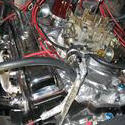
Here's a shot showing how the new springs in the foreground compare to the old springs.

But the big difference is in the weight. The dual springs are about 140 grams and the new ones 99 grams. The old steel retainer 44 grams vs the new titanium ones at only 8 grams. Total difference of 77 grams, most of it at the upper part of the spring that moves.
I'll hit the dyno some time after new years to see if it lets the engine rev more.
Here's a shot showing how the new springs in the foreground compare to the old springs.
Le Mans Master


Joined: Oct 2002
Posts: 7,098
Likes: 378
From: Las Vegas - Just stop perpetuating myths please.
Thx for sharing as those new BH springs are becoming popular. From what i understand they reduce weight by subsituting 1 spring for 2 by they're shape characteristics - something like better harmonic vibration control and provides a greater press/higher bind for same size spring.
I assume the weight reduction to play its part when the cam rpm is limited by the current spring size and pressure - and not the cam. The lower recipricating weight helps only if the cam duration is enough to keep the eng breathing - but was limited by recipricating weight and low spring press/control. Otherwise i could just pop on new BH springs on my short cam (266* full duration/210*@.050") and rev higher making more power like a larger cam but retain the good low end of short duration/low overlap. Please tell me this is possible but i suspect not.
Now if compared to BH springs with identical pressures, i expect the power to be the same.
But i'm guessing here that the higher spring pressures will actualy reduce pwr - added friction - unless original springs where inadequate or reved into vlv foat and the springs distorted. Well ok, maybe if reciprocating weight is the cause of deteriorating vlv control.
Where i'm going here is that springs should be choosen to provide lifter control through the expected range of the camshaft - where the cam stops breathing which should be lower rpm than that which the selected springs float.
Ok i'm done pressurate'n & guesstimatet'n springs now and hope to catch the results once posted.
Good luck. cardo0
I assume the weight reduction to play its part when the cam rpm is limited by the current spring size and pressure - and not the cam. The lower recipricating weight helps only if the cam duration is enough to keep the eng breathing - but was limited by recipricating weight and low spring press/control. Otherwise i could just pop on new BH springs on my short cam (266* full duration/210*@.050") and rev higher making more power like a larger cam but retain the good low end of short duration/low overlap. Please tell me this is possible but i suspect not.
Now if compared to BH springs with identical pressures, i expect the power to be the same.
But i'm guessing here that the higher spring pressures will actualy reduce pwr - added friction - unless original springs where inadequate or reved into vlv foat and the springs distorted. Well ok, maybe if reciprocating weight is the cause of deteriorating vlv control.
Where i'm going here is that springs should be choosen to provide lifter control through the expected range of the camshaft - where the cam stops breathing which should be lower rpm than that which the selected springs float.
Ok i'm done pressurate'n & guesstimatet'n springs now and hope to catch the results once posted.
Good luck.
cardo0
Thread Starter
Race Director
Joined: Sep 1999
Posts: 11,361
Likes: 383
From: Plano TX
You are very much correct. My old springs are not ideal for a hydraulic roller. They are intended more towards a hydraulic flat tappet. So I needed higher pressure but have to be carefull not to collapse the lifter. 150-160 closed, 360-370 open is pretty much where you want a hydraulic roller.
The big block hydraulic rollers fight valve float due to the heavy lifters and valve train. Unless you pick the right parts you're limited to 5700-5900 rpm. My setup should rev to 6000, maybe even a little higher. We'll see. Due to the heavy valve train of the BB, reducing reciprocating weight is very important. I already have the thinner 11/32 valve stems, and now another 70+ grams reduction so I'm hoping for a 6200-6300 rpm redline, although I expect power peak a little lower due to my small cam. The cam is only 224/230 so peak will be maybe 5600 or so. Previously when I dynoed it the peak was at 5300 which I felt was a little lower than expected. The springs could have played a part in that. We shall see...
The big block hydraulic rollers fight valve float due to the heavy lifters and valve train. Unless you pick the right parts you're limited to 5700-5900 rpm. My setup should rev to 6000, maybe even a little higher. We'll see. Due to the heavy valve train of the BB, reducing reciprocating weight is very important. I already have the thinner 11/32 valve stems, and now another 70+ grams reduction so I'm hoping for a 6200-6300 rpm redline, although I expect power peak a little lower due to my small cam. The cam is only 224/230 so peak will be maybe 5600 or so. Previously when I dynoed it the peak was at 5300 which I felt was a little lower than expected. The springs could have played a part in that. We shall see...
Thread Starter
Race Director
Joined: Sep 1999
Posts: 11,361
Likes: 383
From: Plano TX
Another note: at first glance it seems logical that stiffer springs would cost power, but in reality the difference is very small. The reason is that the it takes more force to open the valve but on the closing side the strong spring actually gives that energy back. The only losses are friction which is not a big deal on a roller.
Race Director

Joined: Nov 2000
Posts: 11,872
Likes: 12
From: Waterloo ontario Canada
Nice looking set of springs. I went through this spring change a few weeks ago but due to the size of the pockets in the heads I was really limited to my spring choice.
I like the springs, their open concept, no chance of touching a seal.
What happens if one breaks?? Do you drop a valve?? This was one of the problems I ran into. A single spring would meet the cam specs but I wanted the insurance of a second spring. Sort of like a spare tire. Can't go as fast but is my emergency tool to allow me to limp home.
I like the springs, their open concept, no chance of touching a seal.
What happens if one breaks?? Do you drop a valve?? This was one of the problems I ran into. A single spring would meet the cam specs but I wanted the insurance of a second spring. Sort of like a spare tire. Can't go as fast but is my emergency tool to allow me to limp home.
Thread Starter
Race Director
Joined: Sep 1999
Posts: 11,361
Likes: 383
From: Plano TX
Originally Posted by Jason Staley
Sweet setup  . You mind telling which company made them? I'm thinking about going that route on a big block Olds engine.
. You mind telling which company made them? I'm thinking about going that route on a big block Olds engine.Corvette Stories
The Best of Corvette for Corvette Enthusiasts

Every 2027 Corvette Engine Explained
Joe Kucinski
Designer Imagines A Corvette That Looks More Like a Corvette Than the Corvette
Verdad Gallardo
10 Ugly Corvettes That We Still Kinda Love
Joe Kucinski
Top 10 Most Expensive Corvettes Ever Sold on Bring A Trailer
Brett Foote
10 Things Every Corvette Owner Needs (2026 Edition)
Michael S. Palmer
8 Most "Only Corvette Owners Understand" Quirks and Problems
Pouria Savadkouei
10 Reasons the C6 Z06 is Still A Performance Benchmark After 20 Years
Joe Kucinski
How Much Horsepower Every Corvette Engine "LOST" in 1972
Joe Kucinski
Top 10 DOs and DON'Ts for Protecting Your Convertible Top!
Michael S. Palmer
Thread Starter
Race Director
Joined: Sep 1999
Posts: 11,361
Likes: 383
From: Plano TX
Originally Posted by norvalwilhelm
What happens if one breaks?? Do you drop a valve??

Thread Starter
Race Director
Joined: Sep 1999
Posts: 11,361
Likes: 383
From: Plano TX
Some more technical info in case anyone wants to swap springs on a Edelbrock aluminum BBC head (performer, performer rpm or performer TBI):
Stock springs are 1.55" diameter, 1.975" installed height. Edelbrock uses a 0.030" and a 0.060" shim under each spring. The Comp Beehives are PN 26120, 1.445" diameter, 1.88" installed height.
The smaller diameter requires spring cups. The Comp cups are 1.568" diameter and don't fit in the pockets. I turn them down to 1.540" by mounting in a drill and using an angle grinder.
To get the 1.88" installed height I use the 0.060" on the intake (remove the 0.030" shim) and on the exhaust I use the 0.030" shim (remove the 0.060"). Edelbrock actually set the installed height 0.030" lower on the exhausts. I don't know why.
The reduction in installed height from 1.975 to 1.88 comes from the cups (0.060") and the new retainer that locates the spring further down.
Stock springs are 1.55" diameter, 1.975" installed height. Edelbrock uses a 0.030" and a 0.060" shim under each spring. The Comp Beehives are PN 26120, 1.445" diameter, 1.88" installed height.
The smaller diameter requires spring cups. The Comp cups are 1.568" diameter and don't fit in the pockets. I turn them down to 1.540" by mounting in a drill and using an angle grinder.
To get the 1.88" installed height I use the 0.060" on the intake (remove the 0.030" shim) and on the exhaust I use the 0.030" shim (remove the 0.060"). Edelbrock actually set the installed height 0.030" lower on the exhausts. I don't know why.
The reduction in installed height from 1.975 to 1.88 comes from the cups (0.060") and the new retainer that locates the spring further down.

Burning Brakes


Joined: Jul 1999
Posts: 923
Likes: 164
From: Hudson NH
Originally Posted by zwede
The cam is only 224/230 so peak will be maybe 5600 or so. Previously when I dynoed it the peak was at 5300 which I felt was a little lower than expected. The springs could have played a part in that. We shall see...

In all seriousness, I think the BH springs are a great idea and I'm interested to see what they're worth in real terms.
Still, an additional 10 - 15 degrees valve timing would really wake up your ride....
Take care,
Mark
Thread Starter
Race Director
Joined: Sep 1999
Posts: 11,361
Likes: 383
From: Plano TX
Mark: Well, my roller is one of them comp cast cores so I figure it'll die at some point. When it does I'm thinking a cammotion billet is in order with a few more degrees. But my crappy cast core cam has gone 30K miles sofar with no visible wear so it may be a while. 


Le Mans Master
Joined: Nov 2004
Posts: 6,434
Likes: 0
St. Jude Donor '07
Broken single spring. I didn't do it. The car came with a blown engine. Im happy it did becuase now that we rebuilt it it has like 450hp and all forged componets. I run double springs now.

Team Owner

Joined: Sep 2003
Posts: 88,393
Likes: 2
From: eville in
Originally Posted by Jason Staley
Sweet setup . You mind telling which company made them? I'm thinking about going that route on a big block Olds engine.
. You mind telling which company made them? I'm thinking about going that route on a big block Olds engine.
Racer


Joined: Jan 2004
Posts: 316
Likes: 7
From: Tennessee
Cruise-In VII Veteran
Cruise-In VIII
St. Jude Donor '06-'07
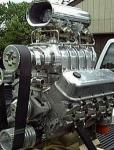
I am going to try a set of the beehives on my 540. I am setting the installed height at 1.930 which should be about 140lbs closed. My cam only calls for 130lbs, so I think this will work......at least the guys at comp said it would. I am using a crane powermax .632 lift with .256I and .264 at .050. What do you guys think?
Thread Starter
Race Director
Joined: Sep 1999
Posts: 11,361
Likes: 383
From: Plano TX
That's a flat tappet cam? The closed pressure is OK and you are OK as far as coilbind as long as you do a 1.930 installed height. I don't know about open pressure though. Is a flattappet cam OK with the 370 lbs open pressure you would get? Sounds high for a flattappet to me.
Racer
Joined: Jan 2004
Posts: 316
Likes: 7
From: Tennessee
Cruise-In VII Veteran
Cruise-In VIII
St. Jude Donor '06-'07
Hey Zwede, that was quick. The cam is a hyd. roller on a billet core with a cast dist gear. I plan to have it on the dyno in a few weeks while the car is still in the paint shop. I met you and Jim at the cruise in a couple years ago so this all your guys fault  I was going to try to have it at the cruise-in this year but you know how paint guys are. I am still planning on coming but will probably be in the wifey's ZO6. Let me know how your beehives work out.
I was going to try to have it at the cruise-in this year but you know how paint guys are. I am still planning on coming but will probably be in the wifey's ZO6. Let me know how your beehives work out.
Burning Brakes
Joined: Feb 2005
Posts: 894
Likes: 91
Valve Float w/ Retro Hyd. Rollers
Originally Posted by zwede
You are very much correct. My old springs are not ideal for a hydraulic roller. They are intended more towards a hydraulic flat tappet. So I needed higher pressure but have to be carefull not to collapse the lifter. 150-160 closed, 360-370 open is pretty much where you want a hydraulic roller.
The big block hydraulic rollers fight valve float due to the heavy lifters and valve train. Unless you pick the right parts you're limited to 5700-5900 rpm. My setup should rev to 6000, maybe even a little higher. We'll see. Due to the heavy valve train of the BB, reducing reciprocating weight is very important. I already have the thinner 11/32 valve stems, and now another 70+ grams reduction so I'm hoping for a 6200-6300 rpm redline, although I expect power peak a little lower due to my small cam. The cam is only 224/230 so peak will be maybe 5600 or so. Previously when I dynoed it the peak was at 5300 which I felt was a little lower than expected. The springs could have played a part in that. We shall see...
The big block hydraulic rollers fight valve float due to the heavy lifters and valve train. Unless you pick the right parts you're limited to 5700-5900 rpm. My setup should rev to 6000, maybe even a little higher. We'll see. Due to the heavy valve train of the BB, reducing reciprocating weight is very important. I already have the thinner 11/32 valve stems, and now another 70+ grams reduction so I'm hoping for a 6200-6300 rpm redline, although I expect power peak a little lower due to my small cam. The cam is only 224/230 so peak will be maybe 5600 or so. Previously when I dynoed it the peak was at 5300 which I felt was a little lower than expected. The springs could have played a part in that. We shall see...
P.S. When you guys are planning the components for these types of builds you should automatically figure in +.100 (minimun) longer valves and incorporate spring seat cups under the springs. They should sit directly on the cups and if shims are needed to correct the pressure then the shims go under the cups. This is very important on ALL roller units, hyd. or mech.