




Getting frustrated!

Le Mans Master


Joined: Jun 2004
Posts: 6,231
Likes: 65
From: Seattle WA
St. Jude Donor '14

We can anlyze the heck out of this and there's just no way we're ever going to know. Yes, it looks like the ring gap was thoroughly checked and found correct, but I'm not confident root cause was found. Again, I think we've exhausted what we can reasonably take from the facts we have and just need to form our own opinions.

Le Mans Master


Joined: Dec 2006
Posts: 5,557
Likes: 9
From: Oquirrh Mountains
St. Jude Donor '09
Respectfully Disagree
Check this post: http://forums.corvetteforum.com/show....php?t=1722167 This was discussed In the post.. End gap was correct when disassembled and measured.
We can anlyze the heck out of this and there's just no way we're ever going to know. Yes, it looks like the ring gap was thoroughly checked and found correct, but I'm not confident root cause was found. Again, I think we've exhausted what we can reasonably take from the facts we have and just need to form our own opinions.
Again, the builder blew it big time.
Thread Starter
Drifting

Joined: Jun 2006
Posts: 1,912
Likes: 12
From: Schaumburg (Chicago) Illinois
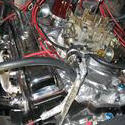
Motor is assembled and waiting for my turn on the dyno.
Bumped compression get better DCR and still run on 93 octane. Desktop dyno puts my Volumetric efficiancy over 100% from 4500 to 6000. Couldn't do that with 9.5 to 1
Rev kit puts internal spings on the lifter body to keep the roller on the cam at high RPM to reduce valve float without heavy valve springs that can damage hydraulic lifters. You can get about 500 more rpm before valve float and my HR cam should still be pulling good @ 6500 RPM
I had tripower on the old motor and loved it. Performed better than the 4 bbl setup it replaced. Built a new 816 CFM tripower setup to feed the 383.
Bumped compression get better DCR and still run on 93 octane. Desktop dyno puts my Volumetric efficiancy over 100% from 4500 to 6000. Couldn't do that with 9.5 to 1
Rev kit puts internal spings on the lifter body to keep the roller on the cam at high RPM to reduce valve float without heavy valve springs that can damage hydraulic lifters. You can get about 500 more rpm before valve float and my HR cam should still be pulling good @ 6500 RPM
I had tripower on the old motor and loved it. Performed better than the 4 bbl setup it replaced. Built a new 816 CFM tripower setup to feed the 383.

Race Director

Joined: May 2005
Posts: 10,674
Likes: 122
From: Millington Illinois
St. Jude Donor '08-'09
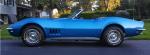
As you can tell by the car and tripower I am trying to keep an old school theme. I am running a 4.11 with an Autogear M-22 Rockcrusher. 4.11 x 2.20 first. Not the ideal 10 to 1 first gear ratio but with the power to weight ratio, all lightweight rotating assembly and 12.5 Lb Flywheel it should hook up better, still take off ok from a stop and pull hard in the 1/4 mile. I want to keep the engine in it's powerband and don't need to go 160 MPH. I really debated going with a TKO 600 with the .82 OD and a 3.70 gear and still might. I have a 3.70 rear in the garage and will see how the Autogear works.
Thread Starter
Drifting
Joined: Jun 2006
Posts: 1,912
Likes: 12
From: Schaumburg (Chicago) Illinois
Need pistons for boring?
I was inquiring about having my block machined. A shop told me they need the pistons in order to properly do the boring to 4.030?
Why?
Is this a sign of a good shop or a bad one?
If they are needed then wouldn't you have to do the same with a new GM block meaning it is not ready to go?
Why?
Is this a sign of a good shop or a bad one?
If they are needed then wouldn't you have to do the same with a new GM block meaning it is not ready to go?
Le Mans Master
Joined: Jun 2004
Posts: 6,231
Likes: 65
From: Seattle WA
St. Jude Donor '14
IMHO, this is a sign of a GOOD shop.
The primary reason for this is that each piston brand and P/N CAN BE a bit different in what they expect for clearances and the easiest way to be sure they don't bore/hone to the wrong spec is to have the pistons in-hand. Generally, your safest bet is to measure->buy parts->machine for the whole assembly.
Yes, you should be able to just bore to 4.030 since the clearance is built into the piston...but there will be some variances in the pistons, and they're just being careful to be sure they're not going to end up with an ugly tolerance stack.
Factory clearances are pretty broad - take a look in your service manual. We can - and should - do better with what we build.
The primary reason for this is that each piston brand and P/N CAN BE a bit different in what they expect for clearances and the easiest way to be sure they don't bore/hone to the wrong spec is to have the pistons in-hand. Generally, your safest bet is to measure->buy parts->machine for the whole assembly.
Yes, you should be able to just bore to 4.030 since the clearance is built into the piston...but there will be some variances in the pistons, and they're just being careful to be sure they're not going to end up with an ugly tolerance stack.
Factory clearances are pretty broad - take a look in your service manual. We can - and should - do better with what we build.
Thread Starter
Drifting
Joined: Jun 2006
Posts: 1,912
Likes: 12
From: Schaumburg (Chicago) Illinois
Perfect answer. I work for a manufacturing company so I definitely understand how tolerance stack-ups can cause problems. I would agree that this attention to detail is a good clue.
Thanks!
Thanks!
Thread Starter
Drifting
Joined: Jun 2006
Posts: 1,912
Likes: 12
From: Schaumburg (Chicago) Illinois
I have made some decisions:
It seems that with a 350 you can get close to 400HP and good torque at street rpm's while still at around 9.5 CR.
Heres my 2 stage plan:
Stage-1 (Cake and eat it too)
I have decided to go with a 350 build. I guess .030 over means 355.
I will use the current original block, heads and intake. Have them rebuilt.
Find correct Q-carb and have rebuilt.
New cast crank - good to 500 hp
New Hyper or Hypo pistons (I don't undrstand the difference) -Good to 400HP
Maybe forged rods - if necessary? Need some input.
I think I can buy a complete rebuild kit from Summit with everything I need.
I will probably buy a Richmond 4 speed to give me around 10:1 at the wheels as I don't see any other way to get to 10:1. ($1500)
I know it will only produce low 300hp but I will see if I am happy with this set up next summer. I know many of you would not be but I might be because I just want some satisfaction going through the intersections. Total cost $5000-ish
The big benefit is I will know the correct parts work well with the short block.
Phase-2 (if not satisfied with Phase-1)
Remove and store the heads and intake. Again knowing they work fine for future value.
Buy AFR 180 heads? and probably a Edelbrock intake. Maybe another carb., Demon, Holley, etc.
This will get my HP to 375 to 425. (Thats what many magazine articles say is possible while still getting very good street manners.)
Still buy the Richmond trans.
The main thing is the bottom stays the same either way making it easy and economical to switch.
So the big question: Where's the cam in all this? This is the last big question to be answered. I am wondering if I can use the best cam for the Phase-2, in the Phase-1. Will it idle fine, perform as well as the best choice for Phase-1 and not cause trouble or burn excessive fuel? If so, if I eventually choose to go to phase-2 it will most certainly be easy without having to pull the cam.
So, I need input to all above, especially the cam idea. After that Input we can get into cam selection as I already have some ideas.
Thanks in advance!
Alan
It seems that with a 350 you can get close to 400HP and good torque at street rpm's while still at around 9.5 CR.
Heres my 2 stage plan:
Stage-1 (Cake and eat it too)
I have decided to go with a 350 build. I guess .030 over means 355.
I will use the current original block, heads and intake. Have them rebuilt.
Find correct Q-carb and have rebuilt.
New cast crank - good to 500 hp
New Hyper or Hypo pistons (I don't undrstand the difference) -Good to 400HP
Maybe forged rods - if necessary? Need some input.
I think I can buy a complete rebuild kit from Summit with everything I need.
I will probably buy a Richmond 4 speed to give me around 10:1 at the wheels as I don't see any other way to get to 10:1. ($1500)
I know it will only produce low 300hp but I will see if I am happy with this set up next summer. I know many of you would not be but I might be because I just want some satisfaction going through the intersections. Total cost $5000-ish
The big benefit is I will know the correct parts work well with the short block.
Phase-2 (if not satisfied with Phase-1)
Remove and store the heads and intake. Again knowing they work fine for future value.
Buy AFR 180 heads? and probably a Edelbrock intake. Maybe another carb., Demon, Holley, etc.
This will get my HP to 375 to 425. (Thats what many magazine articles say is possible while still getting very good street manners.)
Still buy the Richmond trans.
The main thing is the bottom stays the same either way making it easy and economical to switch.
So the big question: Where's the cam in all this? This is the last big question to be answered. I am wondering if I can use the best cam for the Phase-2, in the Phase-1. Will it idle fine, perform as well as the best choice for Phase-1 and not cause trouble or burn excessive fuel? If so, if I eventually choose to go to phase-2 it will most certainly be easy without having to pull the cam.
So, I need input to all above, especially the cam idea. After that Input we can get into cam selection as I already have some ideas.
Thanks in advance!
Alan
Last edited by AWilson; Oct 4, 2007 at 08:41 PM.
Corvette Stories
The Best of Corvette for Corvette Enthusiasts

Top 10 Most Expensive Corvettes Ever Sold on Bring A Trailer
Brett Foote
10 Things Every Corvette Owner Needs (2026 Edition)
Michael S. Palmer
8 Most "Only Corvette Owners Understand" Quirks and Problems
Pouria Savadkouei
10 Reasons the C6 Z06 is Still A Performance Benchmark After 20 Years
Joe Kucinski
How Much Horsepower Every Corvette Engine "LOST" in 1972
Joe Kucinski
Top 10 DOs and DON'Ts for Protecting Your Convertible Top!
Michael S. Palmer
Top 10 Most Explosive Corvettes Ever Made: Power-to-Weight Ratio Ranked!
Joe Kucinski
150 hp to 1,250 hp: Every Corvette Generation Compared by the Specs That Matter
Joe Kucinski
8 Coolest Corvette Pace Cars (and Replicas) of All Time
Verdad Gallardo
Le Mans Master
Joined: Apr 2006
Posts: 5,403
Likes: 95
I'm for stage 1 if stage 2 does not include the new 4 speed, really
I'm for storing the complete numbers matching engine, buying the
new 4 speed, factory blocks and heads can be bought for not much money,
keep the numbers matching stuff in a corner of the garage for later resale.
As far as heads if you go aftermarket the brodix IK180 will flow way more
air then what your HP goals are for $1050.00 the AFR180s will cost you
$1400.00/$1500.00
I'm for storing the complete numbers matching engine, buying the
new 4 speed, factory blocks and heads can be bought for not much money,
keep the numbers matching stuff in a corner of the garage for later resale.
As far as heads if you go aftermarket the brodix IK180 will flow way more
air then what your HP goals are for $1050.00 the AFR180s will cost you
$1400.00/$1500.00
Last edited by Little Mouse; Oct 3, 2007 at 07:30 PM.
Thread Starter
Drifting
Joined: Jun 2006
Posts: 1,912
Likes: 12
From: Schaumburg (Chicago) Illinois
I'm for stage 1 if stage 2 does not include the new 4 speed, really
I'm for storing the complete numbers matching engine, buying the
new 4 speed, factory blocks and heads can be bought for not much money,
keep the numbers matching stuff in a corner of the garage for later resale.
As far as heads if you go aftermarket the brodix IK180 will flow way more
air then what your HP goals are for $1050.00 the AFR180s will cost you
$1400.00/$1500.00
I'm for storing the complete numbers matching engine, buying the
new 4 speed, factory blocks and heads can be bought for not much money,
keep the numbers matching stuff in a corner of the garage for later resale.
As far as heads if you go aftermarket the brodix IK180 will flow way more
air then what your HP goals are for $1050.00 the AFR180s will cost you
$1400.00/$1500.00
So Little Mouse you say don't put any money into the numbers matching parts. Just keep them and do whatever makes sense some day down the road. For now build up an engine from new parts. That way I don't have to spend money on machine shops, it can go to good parts.
Le Mans Master
Joined: Apr 2006
Posts: 5,403
Likes: 95
I will have the Richmond 4 speed in both phases. I'll have to check out Brodix.
So Little Mouse you say don't put any money into the numbers matching parts. Just keep them and do whatever makes sense some day down the road. For now build up an engine from new parts. That way I don't have to spend money on machine shops, it can go to good parts.
So Little Mouse you say don't put any money into the numbers matching parts. Just keep them and do whatever makes sense some day down the road. For now build up an engine from new parts. That way I don't have to spend money on machine shops, it can go to good parts.
numbers matching block, heads, trans all to the side.
Thread Starter
Drifting
Joined: Jun 2006
Posts: 1,912
Likes: 12
From: Schaumburg (Chicago) Illinois
Race Director
Joined: May 2005
Posts: 10,674
Likes: 122
From: Millington Illinois
St. Jude Donor '08-'09
This is from GMPartsDirect, A forum sponser. It can accept a Factory style roller cam and lifters, 4 bolt main, Under $700.
GM PART # 10105123
CATEGORY: All
PACK QTY: 1
CORE CHARGE: $0.00
GM LIST: $950.00
OUR PRICE: $691.60
DESCRIPTION: 350ci Bare Block
This engine block is used in 1986-99 Gen I heavy-duty applications. It has 4.00" diameter cylinder bores and four-bolt main bearing caps. This block is machined for a one-piece rear crankshaft seal. (Does not include rear seal or adaptor.) These blocks weigh 181lbs. Technical Notes: Cylinder wall thickness is the same as current production engines. The lifter valley is machined for hydraulic roller and flat tappets. Crankshafts with two-piece seals can be installed with adapter P/N 10051118. (Block casting P/N 10243880 or 14093638.)
GM PART # 10105123
CATEGORY: All
PACK QTY: 1
CORE CHARGE: $0.00
GM LIST: $950.00
OUR PRICE: $691.60
DESCRIPTION: 350ci Bare Block
This engine block is used in 1986-99 Gen I heavy-duty applications. It has 4.00" diameter cylinder bores and four-bolt main bearing caps. This block is machined for a one-piece rear crankshaft seal. (Does not include rear seal or adaptor.) These blocks weigh 181lbs. Technical Notes: Cylinder wall thickness is the same as current production engines. The lifter valley is machined for hydraulic roller and flat tappets. Crankshafts with two-piece seals can be installed with adapter P/N 10051118. (Block casting P/N 10243880 or 14093638.)
Le Mans Master
Joined: Jun 2004
Posts: 6,231
Likes: 65
From: Seattle WA
St. Jude Donor '14
Decisions are good - you've done a great job of sorting through some hard choices.
400HP is a bit of a stretch for a mild 350 without sacrificing some level of driveability IMHO.
Stage 1
Phase-2
I'd think more around 340-360 HP at the flywheel for this combo. Remember that the magazines typically publish dyno specs with no accessories, an electric fuel pump and dyno headers with open exhaust.
The cam is the single most important buy as you've noted. I would consider a relatively mild flat-tappet cam for Stage 1 and plan for a swap to either a more agressive flat-tappet or hydraulic roller cam for Stage 2.
[/QUOTE]
400HP is a bit of a stretch for a mild 350 without sacrificing some level of driveability IMHO.
Stage 1
- "Hyper" and "Hypo" both refer to hypereutectic pistons.
- If you're buying a new cast crank, the price of a 383 crank is
exactly the same
- Generally, it's cheaper to buy new rods vs. reconditioning the old ones with new bolts. At this power level, an OEM-level rod with ARP bolts is perfectly acceptable.
- This shouldn't cost $5000
Phase-2
I'd think more around 340-360 HP at the flywheel for this combo. Remember that the magazines typically publish dyno specs with no accessories, an electric fuel pump and dyno headers with open exhaust.
The cam is the single most important buy as you've noted. I would consider a relatively mild flat-tappet cam for Stage 1 and plan for a swap to either a more agressive flat-tappet or hydraulic roller cam for Stage 2.
[/QUOTE]
Le Mans Master
Joined: Jun 2004
Posts: 6,231
Likes: 65
From: Seattle WA
St. Jude Donor '14
 A BRAND NEW factory roller-cam capable block is about $650 from the General.
[EDIT] I just read 63mako's post and that's the one. I almost exclusively use these new blocks now, as cores are such a crap shoot any more. Note that these let you use the factory roller cam setup, which is (relatively) dirt cheap and good to .525 lift at the cam. This is about 1/2 the price of a GEN I retrofit roller cam kit from CompCams or Crane.
Last edited by billla; Oct 5, 2007 at 09:20 AM.
Le Mans Master
Joined: Apr 2006
Posts: 5,403
Likes: 95
Starting with a new block would be good, the 10105123 block has the advantage of being made to accept a hydraulic roller and it uses the
one piece rear seal, only disadvantage to it the one piece seal cranks
the ones I have seen are external balance that would cost you some
more money for another flywheel and balancer. this block is a new
version of the old two piece 10066034. I know chevy made a large
journal 327 in 69 because I used a 69 large journal 327 crank to build
a .030 over 331. If a 68 has a large journal block it may be hard to come up with another one to numbers match your car.
one piece rear seal, only disadvantage to it the one piece seal cranks
the ones I have seen are external balance that would cost you some
more money for another flywheel and balancer. this block is a new
version of the old two piece 10066034. I know chevy made a large
journal 327 in 69 because I used a 69 large journal 327 crank to build
a .030 over 331. If a 68 has a large journal block it may be hard to come up with another one to numbers match your car.
Le Mans Master
Joined: Oct 2002
Posts: 7,098
Likes: 378
From: Las Vegas - Just stop perpetuating myths please.
I was inquiring about having my block machined. A shop told me they need the pistons in order to properly do the boring to 4.030?
Why?
Is this a sign of a good shop or a bad one?
If they are needed then wouldn't you have to do the same with a new GM block meaning it is not ready to go?
Why?
Is this a sign of a good shop or a bad one?
If they are needed then wouldn't you have to do the same with a new GM block meaning it is not ready to go?
I have made some decisions:
It seems that with a 350 you can get close to 400HP and good torque at street rpm's while still at around 9.5 CR.
Heres my 2 stage plan:
Stage-1 (Cake and eat it too)
I have decided to go with a 350 build. I guess .030 over means 355.
I will use the current original block, heads and intake. Have them rebuilt.
Find correct Q-carb and have rebuilt.
New cast crank - good to 500 hp
New Hyper or Hypo pistons (I don't undrstand the difference) -Good to 400HP
Maybe forged rods - if necessary? Need some input.
I think I can buy a complete rebuild kit from Summit with everything I need.
I will probably buy a Richmond 4 speed to give me around 10:1 at the wheels as I don't see any other way to get to 10:1. ($1500)
I know it will only produce low 300hp but I will see if I am happy with this set up next summer. I know many of you would not be but I might be because I just want some satisfaction going through the intersections. Total cost $5000-ish
The big benefit is I will know the correct parts work well with the short block.
Phase-2 (if not satisfied with Phase-1)
Remove and store the heads and intake. Again knowing they work fine for future value.
Buy AFR 180 heads? and probably a Edelbrock intake. Maybe another carb., Demon, Holley, etc.
This will get my HP to 375 to 425. (Thats what many magazine articles say is possible while still getting very good street manners.)
Still buy the Richmond trans.
The main thing is the bottom stays the same either way making it easy and economical to switch.
So the big question: Where's the cam in all this? This is the last big question to be answered. I am wondering if I can use the best cam for the Phase-2, in the Phase-1. Will it idle fine, perform as well as the best choice for Phase-1 and not cause trouble or burn excessive fuel? If so, if I eventually choose to go to phase-2 it will most certainly be easy without having to pull the cam.
So, I need input to all above, especially the cam idea. After that Input we can get into cam selection as I already have some ideas.
Thanks in advance!
Alan
It seems that with a 350 you can get close to 400HP and good torque at street rpm's while still at around 9.5 CR.
Heres my 2 stage plan:
Stage-1 (Cake and eat it too)
I have decided to go with a 350 build. I guess .030 over means 355.
I will use the current original block, heads and intake. Have them rebuilt.
Find correct Q-carb and have rebuilt.
New cast crank - good to 500 hp
New Hyper or Hypo pistons (I don't undrstand the difference) -Good to 400HP
Maybe forged rods - if necessary? Need some input.
I think I can buy a complete rebuild kit from Summit with everything I need.
I will probably buy a Richmond 4 speed to give me around 10:1 at the wheels as I don't see any other way to get to 10:1. ($1500)
I know it will only produce low 300hp but I will see if I am happy with this set up next summer. I know many of you would not be but I might be because I just want some satisfaction going through the intersections. Total cost $5000-ish
The big benefit is I will know the correct parts work well with the short block.
Phase-2 (if not satisfied with Phase-1)
Remove and store the heads and intake. Again knowing they work fine for future value.
Buy AFR 180 heads? and probably a Edelbrock intake. Maybe another carb., Demon, Holley, etc.
This will get my HP to 375 to 425. (Thats what many magazine articles say is possible while still getting very good street manners.)
Still buy the Richmond trans.
The main thing is the bottom stays the same either way making it easy and economical to switch.
So the big question: Where's the cam in all this? This is the last big question to be answered. I am wondering if I can use the best cam for the Phase-2, in the Phase-1. Will it idle fine, perform as well as the best choice for Phase-1 and not cause trouble or burn excessive fuel? If so, if I eventually choose to go to phase-2 it will most certainly be easy without having to pull the cam.
So, I need input to all above, especially the cam idea. After that Input we can get into cam selection as I already have some ideas.
Thanks in advance!
Alan
 The shop does not need your pistons to bore the block - only to hand hone each piston to an individual hole (rare these days). It sounds more like they want u to buy the pistons from them.
If u want to save money and are only looking for 1hp per c.i. then just use your old block and crank. Why do u need a new crank when u can recon your old crank for half the price.
 BTW a used seasoned block (once machined) is better than a brand new block that will change diminsions once temp cycled.
 Why do u need expensive AFR heads with big port and big flow numbers that u won't use? Are u going to run a 0.600" lift cam?
 More like 0.500" lift is reality. Learn what pocket porting can do for less than $250. Pocket porting and unshrouding the vlvs will get u most of what u want. Big port heads with big flow numbers do little for a mild cam, moderate rpm combo.
 Nail your c.r. first and thats <9.5 for iron heads (<10.5 alum). U need to choose/measure your head chamber and pistons for this. Then look for a cam. Shopping for a cam without knowing the c.r. is guessing and u will be dissipointed like many other on the forum.
 Sorry if the truth hurts but at least u can deside for your self now.
cardo0
Thread Starter
Drifting
Joined: Jun 2006
Posts: 1,912
Likes: 12
From: Schaumburg (Chicago) Illinois
Thats what u need to ask that shop. The shop does not need your pistons to bore the block - only to hand hone each piston to an individual hole (rare these days). It sounds more like they want u to buy the pistons from them.
If u want to save money and are only looking for 1hp per c.i. then just use your old block and crank. Why do u need a new crank when u can recon your old crank for half the price. BTW a used seasoned block (once machined) is better than a brand new block that will change diminsions once temp cycled.
Why do u need expensive AFR heads with big port and big flow numbers that u won't use? Are u going to run a 0.600" lift cam? More like 0.500" lift is reality. Learn what pocket porting can do for less than $250. Pocket porting and unshrouding the vlvs will get u most of what u want. Big port heads with big flow numbers do little for a mild cam, moderate rpm combo.
Nail your c.r. first and thats <9.5 for iron heads (<10.5 alum). U need to choose/measure your head chamber and pistons for this. Then look for a cam. Shopping for a cam without knowing the c.r. is guessing and u will be dissipointed like many other on the forum. Sorry if the truth hurts but at least u can deside for your self now.
cardo0
The shop does not need your pistons to bore the block - only to hand hone each piston to an individual hole (rare these days). It sounds more like they want u to buy the pistons from them. If u want to save money and are only looking for 1hp per c.i. then just use your old block and crank. Why do u need a new crank when u can recon your old crank for half the price.
BTW a used seasoned block (once machined) is better than a brand new block that will change diminsions once temp cycled. Why do u need expensive AFR heads with big port and big flow numbers that u won't use? Are u going to run a 0.600" lift cam?
More like 0.500" lift is reality. Learn what pocket porting can do for less than $250. Pocket porting and unshrouding the vlvs will get u most of what u want. Big port heads with big flow numbers do little for a mild cam, moderate rpm combo. Nail your c.r. first and thats <9.5 for iron heads (<10.5 alum). U need to choose/measure your head chamber and pistons for this. Then look for a cam. Shopping for a cam without knowing the c.r. is guessing and u will be dissipointed like many other on the forum.
Sorry if the truth hurts but at least u can deside for your self now. cardo0
The truth hurts sometimes, but wrong info and dead ends hurt more. So please don't hold back, as long as it is constructive.
Le Mans Master
Joined: Jun 2004
Posts: 6,231
Likes: 65
From: Seattle WA
St. Jude Donor '14
One-piece cranks are typically neutral in front and require a weighted flywheel in back. A two-piece seal crank has a flange on the back for weighting, but the one piece must be round to seal so the weight gets pushed to the flywheel/flexplate.
Once we start talking about replacment cranks, we come back to the idea that the best buy is a pre-balanced kit from a single manufacturer...
Once we start talking about replacment cranks, we come back to the idea that the best buy is a pre-balanced kit from a single manufacturer...
Le Mans Master
Joined: Jun 2004
Posts: 6,231
Likes: 65
From: Seattle WA
St. Jude Donor '14
Respectfully disagree with most of Cardo0's points, but 'nuff said I do agree that usage drives the cam, and the cam drives the heads...and we build the engine around these two parts.
As a reference:
Crank machining prices in Seattle:
* Crank clean and mag: $45
* Grinding: $145
= $190. Balancing a complete ***'y goes for about $275.
A two-piece, internal balance cast SCAT crank sells for about $169 on SUMMITRACING.COM.
Bringing a "seasoned" used block up to snuff:
* Thermal block clean and mag: $137
* Pressure test: $60
* Bore and hone: $198
* Align hone: $181 I usually see this as optional if reusing the crank
* Resurface deck: $98
= $675.
I know a lot of shops do prefer a "seasoned' block, but I'm just seeing it harder every day to find decent cores and at $135 apiece to find out they're junk you can end up on the wrong side of the economics pretty quickly. IMHO the risks and costs outweigh any potential benefits.
I do agree that usage drives the cam, and the cam drives the heads...and we build the engine around these two parts.As a reference:
Crank machining prices in Seattle:
* Crank clean and mag: $45
* Grinding: $145
= $190. Balancing a complete ***'y goes for about $275.
A two-piece, internal balance cast SCAT crank sells for about $169 on SUMMITRACING.COM.
Bringing a "seasoned" used block up to snuff:
* Thermal block clean and mag: $137
* Pressure test: $60
* Bore and hone: $198
* Align hone: $181 I usually see this as optional if reusing the crank
* Resurface deck: $98
= $675.
I know a lot of shops do prefer a "seasoned' block, but I'm just seeing it harder every day to find decent cores and at $135 apiece to find out they're junk you can end up on the wrong side of the economics pretty quickly. IMHO the risks and costs outweigh any potential benefits.