


Timing Question

Thread Starter
Instructor

Joined: Jun 2005
Posts: 156
Likes: 0
From: Liverpool NY
 Timing Question
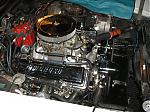
I just got my 400 installed and have had it fired up. I'm now ready to set the timing so I can dial the carb in and am not quite sure how to go about this. The builder suggests the timing be set at 32 degrees and now I'm not quite sure what he meant by that and they're closed till Monday. I have a timing light and know how it works but I'm not quite sure what the heck I'm looking with the timing mark on the balancer and the timing plate 
Any help on this will be greatly appreciated.
Thanks folks
Any help on this will be greatly appreciated.
Thanks folks
Instructor
Joined: Jan 2008
Posts: 143
Likes: 1
From: Beaumont TX
This is a great place to start understanding timing and how to get the most out of it. I recently used his advice with great success. My car now runs better than it ever has in the nine years I have owned it!
http://forums.corvetteforum.com/c3-t...long-post.html
http://forums.corvetteforum.com/c3-t...long-post.html

Instructor
Joined: Dec 2008
Posts: 161
Likes: 0
From: St-Eustache Quebec
I just got my 400 installed and have had it fired up. I'm now ready to set the timing so I can dial the carb in and am not quite sure how to go about this. The builder suggests the timing be set at 32 degrees and now I'm not quite sure what he meant by that and they're closed till Monday. I have a timing light and know how it works but I'm not quite sure what the heck I'm looking with the timing mark on the balancer and the timing plate
Any help on this will be greatly appreciated.
Thanks folks
Any help on this will be greatly appreciated.
Thanks folks

Instructor
Joined: Dec 2008
Posts: 161
Likes: 0
From: St-Eustache Quebec
This is a great place to start understanding timing and how to get the most out of it. I recently used his advice with great success. My car now runs better than it ever has in the nine years I have owned it!
http://forums.corvetteforum.com/c3-t...long-post.html
http://forums.corvetteforum.com/c3-t...long-post.html

Team Owner


Joined: Jan 2006
Posts: 37,637
Likes: 3,118
From: Crossville TN
Once you set the mechanical advance to 32-36 degrees and re-plumb the vacuum advance in, check it out for and detonation [pinging]. If you get pinging, just back off the distributor {retard the setting} a couple of degrees at a time, until no more pinging is heard. Also, don't worry about the timing at idle as long as it idles smoothly.








