



Elle88 Build thread

Thread Starter
Race Director


Joined: May 2005
Posts: 10,674
Likes: 122
From: Millington Illinois
St. Jude Donor '08-'09

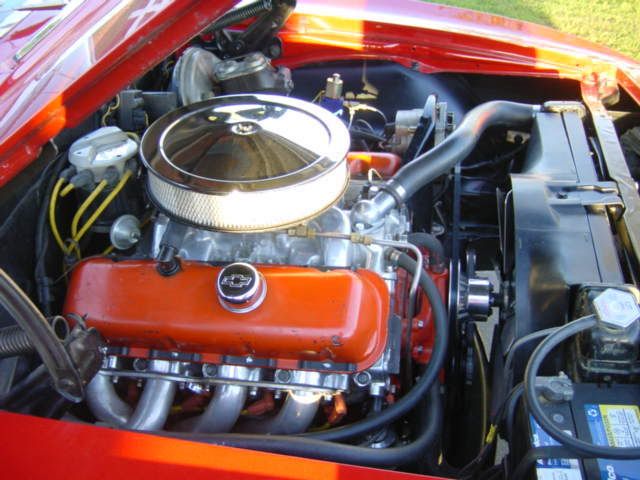
 Set the timing at full mechanical advance but it won't idle well below 1200. The initial needs to be @ 18 to get the idle where it needs to be. This gets us too much total so have to limit the mechanical a little. This is a 1970 LT-1 magnetic pulse distributor and the curve and advance is not right for this motor. This thing sounds really mean and lope smooths right out once you get to 2000 RPM.
Last edited by 63mako; Nov 17, 2009 at 12:49 AM.

Le Mans Master


Joined: Apr 2006
Posts: 5,403
Likes: 95
Already on it. Set the timing at full mechanical advance but it won't idle well below 1200. The initial needs to be @ 18 to get the idle where it needs to be. This gets us too much total so have to limit the mechanical a little. This is a 1970 LT-1 magnetic pulse distributor and the curve and advance is not right for this motor. Working on air bleeds, power valve and jetting today to try and get good A/F ratio across the board. This thing sounds really mean and lope smooths right out once you get to 2000 RPM.
Set the timing at full mechanical advance but it won't idle well below 1200. The initial needs to be @ 18 to get the idle where it needs to be. This gets us too much total so have to limit the mechanical a little. This is a 1970 LT-1 magnetic pulse distributor and the curve and advance is not right for this motor. Working on air bleeds, power valve and jetting today to try and get good A/F ratio across the board. This thing sounds really mean and lope smooths right out once you get to 2000 RPM.Last edited by Little Mouse; Nov 17, 2009 at 11:23 AM.

Burning Brakes


Joined: Sep 2008
Posts: 753
Likes: 0
63mako, forget the vac advance. i will experiment it on the car with time
with my previous L88 i had just 6-7hg vacuum .very low. how much vac this motor?
btw headlights worked. some issue at low speed with power brakes, but nothing serious
18deg initial timing is mandatory with this cam , i think. i tried also 16 deg and was quite fine, but 18 better. I had some mailing about with Tim At member a while ago about...he has a Zl1 cam in a LS7. he also has 18deg initial. but strange, he has 14hg vacuum.
the L88 sounds better if the idle is a little fast...so 63mako, if impossible to have the idle at 1000, also 1200 is fine. the lopey idle makes the engine vibrate too much if idle too low-i experimented also at 900rpm
I jetted my carb as per Tim At advises that matched my books too : 72 pri 78 sec 4.5PV. I suppose you have increased by 2 numbers or so...
my carb is a usual 4150 800cfm , but has the choke tower removed, and holes drilled in the pri throttles to help the engine idle
I decided to use this little carb because in my hands and because i didn't want to go for a new carb right now...but it's planned its replacement with a 850 holley with annular boosters or 950 holley....but i'm leaving these carb tests for the future,because i'm still undecided about them,need to hear other users opinions...and they are expensive to experiment.needless to say that i'm the only owner in italy of such type of engine and no buddy to exchange carbs or parts to experiment...sigh!
with my previous L88 i had just 6-7hg vacuum .very low. how much vac this motor?
btw headlights worked. some issue at low speed with power brakes, but nothing serious
18deg initial timing is mandatory with this cam , i think. i tried also 16 deg and was quite fine, but 18 better. I had some mailing about with Tim At member a while ago about...he has a Zl1 cam in a LS7. he also has 18deg initial. but strange, he has 14hg vacuum.
the L88 sounds better if the idle is a little fast...so 63mako, if impossible to have the idle at 1000, also 1200 is fine. the lopey idle makes the engine vibrate too much if idle too low-i experimented also at 900rpm
I jetted my carb as per Tim At advises that matched my books too : 72 pri 78 sec 4.5PV. I suppose you have increased by 2 numbers or so...
my carb is a usual 4150 800cfm , but has the choke tower removed, and holes drilled in the pri throttles to help the engine idle
I decided to use this little carb because in my hands and because i didn't want to go for a new carb right now...but it's planned its replacement with a 850 holley with annular boosters or 950 holley....but i'm leaving these carb tests for the future,because i'm still undecided about them,need to hear other users opinions...and they are expensive to experiment.needless to say that i'm the only owner in italy of such type of engine and no buddy to exchange carbs or parts to experiment...sigh!
Last edited by elle88; Nov 17, 2009 at 02:15 AM.

Melting Slicks


Joined: Feb 2001
Posts: 3,330
Likes: 13
From: Europe , Luxembourg
Hi
Have a good friend in Luxembourg who is running a clone L88 motor with a 850 carb in his 65 Vette vintage racer.
He surely has a couple of carbs and plenty experience with them.
The car is driven to the different tracks within Europe, hence is streat driveable ( if a L88 is at all )
)
If you like, I can get you contact info to René.
Rgds. Günther
Have a good friend in Luxembourg who is running a clone L88 motor with a 850 carb in his 65 Vette vintage racer.
He surely has a couple of carbs and plenty experience with them.
The car is driven to the different tracks within Europe, hence is streat driveable ( if a L88 is at all
)If you like, I can get you contact info to René.
Rgds. Günther
Thread Starter
Race Director
Joined: May 2005
Posts: 10,674
Likes: 122
From: Millington Illinois
St. Jude Donor '08-'09
No.Holley 800, Old school, Downleg. 2 idle circuits. Holes drilled in the primary throttle plates at some point. 4 vacuum at idle. Will go up to 10. Don't think I can run any vacuum advance.
Last edited by 63mako; Nov 17, 2009 at 02:49 PM.

Le Mans Master

Joined: Apr 2007
Posts: 7,353
Likes: 72
From: Graceland in a Not Correctly Restored Stingray
FWIW, I'd seriously consider having the dizzy recurved so you could achieve sufficient initial (~18* sounds about right for this one) w/o excess total advance, as I can't help but recall one of my favorite Larsisms that 90% of all carb issues are ignition issues (or something along those lines).

Thread Starter
Race Director
Joined: May 2005
Posts: 10,674
Likes: 122
From: Millington Illinois
St. Jude Donor '08-'09
FWIW, I'd seriously consider having the dizzy recurved so you could achieve sufficient initial (~18* sounds about right for this one) w/o excess total advance, as I can't help but recall one of my favorite Larsisms that 90% of all carb issues are ignition issues (or something along those lines).
Corvette Stories
The Best of Corvette for Corvette Enthusiasts

5 Best & 5 Worst Corvette Daily Drivers
Joe Kucinski
The Headlights of Every Corvette Generation Explained
Joe Kucinski
5 Best & 5 Most Overrated Corvette Track Packages of All Time!
Joe Kucinski
Every 2027 Corvette Engine Explained
Joe Kucinski
Designer Imagines A Corvette That Looks More Like a Corvette Than the Corvette
Verdad Gallardo
10 Ugly Corvettes That We Still Kinda Love
Joe Kucinski
Top 10 Most Expensive Corvettes Ever Sold on Bring A Trailer
Brett Foote
10 Things Every Corvette Owner Needs (2026 Edition)
Michael S. Palmer
8 Most "Only Corvette Owners Understand" Quirks and Problems
Pouria Savadkouei
Team Owner

Joined: Apr 1999
Posts: 21,953
Likes: 1,445
From: Reno Nevada
2024 C3 of the Year Finalist- Modified
Recurve for 18 or so and go buy the annular boosters. They cost 20-25 cfm but who cares. A sub 6500 rpm 440 ci doesn't pull that much on the formula anyway. The annulars have the ability to flow at low vac signal. The four hole spacer like i use also helps.
Burning Brakes
Joined: Sep 2008
Posts: 753
Likes: 0
63mako, sorry for the extensive job on the distributor.everything would be easier with a brand new MSD and related advance kit. but i wanted exhactly my distr , even if it's not the L88 one, is the 70 LT1. you know, i'm old school
Gkull , the holley race 850 annular is exhactly what i choose a while ago.will go for that when i'll restart enjoing my car and i'll be in need of experimenting...
Gkull , the holley race 850 annular is exhactly what i choose a while ago.will go for that when i'll restart enjoing my car and i'll be in need of experimenting...
Thread Starter
Race Director
Joined: May 2005
Posts: 10,674
Likes: 122
From: Millington Illinois
St. Jude Donor '08-'09
Decided not to change the weight plate. It is pressed on to the Magnetic pulse reluctor and didn't want to take a chance of not indexing it correctly or damaging it. They are rare and impossible to find. Used a bushing on the pin. Worked perfect. Limited mechanical advance to 20 degrees. Got the A/F real close but left it a little fat until we got the timing dialed in. Ran the engine. It will idle at 1000 RPM. Smooths right out off idle. Pulls fantastic until 5200 RPM. Then timing retards on its own. The more RPM past 5200 the more retard on timing. Still runs smooth just drops timing. Don't know why. Think it is the magnetic pulse module. Need a Sun distributor machine to check this out. Don't know anyone local that has one. Removed the distributor and replaced it with a known good one. Drain backed up again so we had to quit. Here is a video of the idle and a little rev. Also a copy of the dyno sheet on the last pull with the magnetic pulse distributor (date is wrong). You can see the power drops off at 5200 right when the timing starts dropping. 478 HP at 5400 RPM. This has a lot more in it but will have to wait on the plumber to fix the drain again.


Last edited by 63mako; Nov 17, 2009 at 10:53 PM.

Race Director
Joined: Nov 2002
Posts: 12,142
Likes: 54
From: Taylor Michigan
New crate Ls7 454
http://s238.photobucket.com/albums/f...t=68RedLS7.flv
You might try the E Bay tach drive HEI distributor, its a straight plug in...cap, coil, control module, and rotor, ..
.cant beat it...All this car has is a stock 1975 HEI distributor. ...that works very well for me....
Burning Brakes
Joined: Sep 2008
Posts: 753
Likes: 0
OK , no oem distributor anymore....what a pity.
agreed with 63mako to go for this MSD
http://www.lonestarracing.com/shop/p...oducts_id=5956
p.s. anyone knows which could be the problem of the distr retarding after 5300rpm? the magnet?
agreed with 63mako to go for this MSD
http://www.lonestarracing.com/shop/p...oducts_id=5956
p.s. anyone knows which could be the problem of the distr retarding after 5300rpm? the magnet?
Thread Starter
Race Director
Joined: May 2005
Posts: 10,674
Likes: 122
From: Millington Illinois
St. Jude Donor '08-'09
MSD 8571 is an obsolete part number. Tach drive Pro Billet, No vacuum advance. Am searching for a new one that is left over. Worst case the 8572 has a vacuum advance that includes a lock out for it.

Le Mans Master
Joined: May 2006
Posts: 9,993
Likes: 1,136
From: League City Tx
Thats what I just did. I bought the #8572, plugged the vacuum advance and they give you the little plastic thing you install to "lock out" the timing if you want. We locked mine out.

Race Director
Joined: Apr 2000
Posts: 17,676
Likes: 201
From: Who says "Nothing is impossible" ? I've been doing nothing for years.
Yes there should be one that you can remove the vacuum can and replace with a plastic piece over the hole the arm of the can goes through, I had one on my 406ci. On my 427ci I just got one with no vacuum advance period
Thread Starter
Race Director
Joined: May 2005
Posts: 10,674
Likes: 122
From: Millington Illinois
St. Jude Donor '08-'09
New plug wires arrived today. New MSD 8572 distributor will be in tomorrow. The MP distributor works great to 5200 RPM then backs out timing. I think the magnetic coil needs replacement or repair. No access to a Sun distributor machine to diagnose so replacement is the way to go. By the way, the factory L88 produced 430 HP @ 5200 RPM. (factory rating) We are at 468 HP @ 5200 RPM. and there is more to come.
Last edited by 63mako; Nov 19, 2009 at 12:11 AM.

Tech Contributor
Joined: Jun 2004
Posts: 20,952
Likes: 962
From: I tend to be leery of any guy who doesn't own a chainsaw or a handgun.
OK , no oem distributor anymore....what a pity.
agreed with 63mako to go for this MSD
http://www.lonestarracing.com/shop/p...oducts_id=5956
p.s. anyone knows which could be the problem of the distr retarding after 5300rpm? the magnet?
agreed with 63mako to go for this MSD
http://www.lonestarracing.com/shop/p...oducts_id=5956
p.s. anyone knows which could be the problem of the distr retarding after 5300rpm? the magnet?
It's a physical (as in physics) property/limitation in the use of magnetic reluctance type sensors.
Given that the problem is showing up at 5300 RPM (as opposed to when the centrifigal advance hits the limit button,) I am curious if the mechanical advance weights/button are still moving/flexing very slightly up to 5300, and binding solid after that point. Just curiosity and speculation on my point. (I'm assuming the timing chain or cam isn't stretching/twisting due to lifter force loads or oil pump loads at high RPM.)

Melting Slicks

Joined: Oct 2002
Posts: 2,317
Likes: 111
From: St Louis MO
There is a reasonably constant time lag in the magnetic waveform when it changes polarity (right after the sensor poles line up). It's a non-issue at low RPMs (below 3000-4000) as the centrifigal advance can keep advancing the timing enough to cancel out the lag retard of the signal polarity change. Once the centrifigal advance hits its mechanical limit, the lag (equivalent to roughly one degree per thousand RPM in systems like this) imposes a constant retard amount (in time units), but it is read as increasing retard degrees when measured with a timing light.
It's a physical (as in physics) property/limitation in the use of magnetic reluctance type sensors.
Given that the problem is showing up at 5300 RPM (as opposed to when the centrifigal advance hits the limit button,) I am curious if the mechanical advance weights/button are still moving/flexing very slightly up to 5300, and binding solid after that point. Just curiosity and speculation on my point. (I'm assuming the timing chain or cam isn't stretching/twisting due to lifter force loads or oil pump loads at high RPM.)
It's a physical (as in physics) property/limitation in the use of magnetic reluctance type sensors.
Given that the problem is showing up at 5300 RPM (as opposed to when the centrifigal advance hits the limit button,) I am curious if the mechanical advance weights/button are still moving/flexing very slightly up to 5300, and binding solid after that point. Just curiosity and speculation on my point. (I'm assuming the timing chain or cam isn't stretching/twisting due to lifter force loads or oil pump loads at high RPM.)
As a question, does the smaller magnetic pickup in the HEI behave similarly, or to a lesser degree? Perhaps its smaller size has less inductance and might be affected less?
Comparing the MSD magnetic pickup to the early GM pickup, both should probably have the same characteristic, wouldn't you think?