ammeter problem

Race Director

Joined: May 2006
Posts: 16,528
Likes: 53
From: Dayton, Ohio

The ammeter circuit is fed hot from both directions and both ends are protected by fusible links. The only way to check for power from both ends is to remove one of the wires from the back of the ammeter and then check both wires to see you have power coming from both. If you have power from both then the ammeter needs rebuilt or replaced. I think 71Vette can tell you how to repair yours.
( 1 fusible link is under the wiper motor and the other is over at the drivers fender horn relay. both are usually orange in color)
( 1 fusible link is under the wiper motor and the other is over at the drivers fender horn relay. both are usually orange in color)

Team Owner


Joined: Jan 2006
Posts: 37,637
Likes: 3,118
From: Crossville TN
Have you tested the meter [in the car] by having ignition ON (engine OFF) and turning on the headlights? That should show a 5-10 amp draw (-) on the meter. If you click on the 'brights', too, that should almost double the current draw.
If you still have no meter movement, you then need to determine if the wiring is damaged or not. Use an ohmmeter to trace out the wiring to make sure it is not damaged or have a fuse-link that is blown. {Note: You don't want to open up the gauge cluster for no reason!}
If the wiring checks out, your problem is most likely at the meter. A common fault is that one of the small wires [inside the meter] from the coil winding gets fried so that there is no connection made. That can be fixed with a simple jumper wire IF that is the problem.
If you verify that the meter does not work from the test described above and that the engine harness wiring leading to the meter is in good condition, the next step would be to remove the gauge cluster to get at the meter. If you need additional info, send me a PM.
If you still have no meter movement, you then need to determine if the wiring is damaged or not. Use an ohmmeter to trace out the wiring to make sure it is not damaged or have a fuse-link that is blown. {Note: You don't want to open up the gauge cluster for no reason!}
If the wiring checks out, your problem is most likely at the meter. A common fault is that one of the small wires [inside the meter] from the coil winding gets fried so that there is no connection made. That can be fixed with a simple jumper wire IF that is the problem.
If you verify that the meter does not work from the test described above and that the engine harness wiring leading to the meter is in good condition, the next step would be to remove the gauge cluster to get at the meter. If you need additional info, send me a PM.

Thread Starter
7th Gear


Joined: May 2008
Posts: 7
Likes: 0
Have you tested the meter [in the car] by having ignition ON (engine OFF) and turning on the headlights? That should show a 5-10 amp draw (-) on the meter. If you click on the 'brights', too, that should almost double the current draw.
If you still have no meter movement, you then need to determine if the wiring is damaged or not. Use an ohmmeter to trace out the wiring to make sure it is not damaged or have a fuse-link that is blown. {Note: You don't want to open up the gauge cluster for no reason!}
If the wiring checks out, your problem is most likely at the meter. A common fault is that one of the small wires [inside the meter] from the coil winding gets fried so that there is no connection made. That can be fixed with a simple jumper wire IF that is the problem.
If you verify that the meter does not work from the test described above and that the engine harness wiring leading to the meter is in good condition, the next step would be to remove the gauge cluster to get at the meter. If you need additional info, send me a PM.
If you still have no meter movement, you then need to determine if the wiring is damaged or not. Use an ohmmeter to trace out the wiring to make sure it is not damaged or have a fuse-link that is blown. {Note: You don't want to open up the gauge cluster for no reason!}
If the wiring checks out, your problem is most likely at the meter. A common fault is that one of the small wires [inside the meter] from the coil winding gets fried so that there is no connection made. That can be fixed with a simple jumper wire IF that is the problem.
If you verify that the meter does not work from the test described above and that the engine harness wiring leading to the meter is in good condition, the next step would be to remove the gauge cluster to get at the meter. If you need additional info, send me a PM.
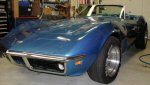
Another sometimes problem I have is with the fuel gauge. When I fill the tank the gauge locks up at about 3/8 full. After driving, it sometimes goes to full. Fuel gauge or fuel level meter in tank. How could I find out which one it is? When I reach in the tank and lift the float up the gauge still locks at 3/8 full. I have a blue on blue 69. Thanks
Thread Starter
7th Gear
Joined: May 2008
Posts: 7
Likes: 0
ammeter
[QUOTE=David Erb;1573959254]Thanks for the information. Yes, I did the headlight check already. I don't understand fusible links. Are they a kind of fuse? I just replaced the whole console and gauge cluster frame this winter. Plus replaced all the smog and exhaust. When I removed the spark plug heat shielding I noticed a arc spot on it from the starter wire connector which got too close. This may have been where the problem started? I also had a lighting circuit fuse blow out sometime too.
Another sometimes problem I have is with the fuel gauge. When I fill the tank the gauge locks up at about 3/8 full. After driving, it sometimes goes to full. Fuel gauge or fuel level meter in tank. How could I find out which one it is? When I reach in the tank and lift the float up the gauge still locks at 3/8 full. I have a blue on blue 69. Thanks
Another sometimes problem I have is with the fuel gauge. When I fill the tank the gauge locks up at about 3/8 full. After driving, it sometimes goes to full. Fuel gauge or fuel level meter in tank. How could I find out which one it is? When I reach in the tank and lift the float up the gauge still locks at 3/8 full. I have a blue on blue 69. Thanks
Team Owner
Joined: Jan 2006
Posts: 37,637
Likes: 3,118
From: Crossville TN
A "fusible link" [aka fuse-link] is just a simple way GM was able to imbed fuse points into the engine compartment wiring in areas that should not cause a fuse failure....unless there is a major mechanical failure in some electrical hardware that generates a direct, high-current short. A good example would be the [mechanical] touching of a high-current source wire at the starter with a part that is directly grounded to the engine, as with your spark shield. That wouldn't happen under normal circumstances, but the battery wasn't disconnected and a BIG short was created. Without the fuse-link, your main harness would have fried. Instead, just the fuse-link melted; so you only have to replace the fuse-link and you're back up and running.
FYI, GM fuse-links are nothing more than a short length (4-6") of wire that is two awg wire sizes smaller than the main wire to which the link is attached. For instance, if you have a 10 awg. power wire with a fuse-link, that link will be made of 14 awg wire. The connection points between the fuse-link and the main wire will normally be 'potted' in some kind of phenolic that won't catch fire easily, since the link is designed to 'fry'. That prevents the circuit from catching fire. So, if you just want to make your own fuse-link, make sure that the wire joints are soldered, then mix up some JB Weld epoxy and put a little ball of it around each joint to insulate and fire-proof that point.
FYI, GM fuse-links are nothing more than a short length (4-6") of wire that is two awg wire sizes smaller than the main wire to which the link is attached. For instance, if you have a 10 awg. power wire with a fuse-link, that link will be made of 14 awg wire. The connection points between the fuse-link and the main wire will normally be 'potted' in some kind of phenolic that won't catch fire easily, since the link is designed to 'fry'. That prevents the circuit from catching fire. So, if you just want to make your own fuse-link, make sure that the wire joints are soldered, then mix up some JB Weld epoxy and put a little ball of it around each joint to insulate and fire-proof that point.

Le Mans Master


Joined: Jan 2006
Posts: 9,192
Likes: 27
From: Boca Raton Florida
A "fusible link" [aka fuse-link] is just a simple way GM was able to imbed fuse points into the engine compartment wiring in areas that should not cause a fuse failure....unless there is a major mechanical failure in some electrical hardware that generates a direct, high-current short. A good example would be the [mechanical] touching of a high-current source wire at the starter with a part that is directly grounded to the engine, as with your spark shield. That wouldn't happen under normal circumstances, but the battery wasn't disconnected and a BIG short was created. Without the fuse-link, your main harness would have fried. Instead, just the fuse-link melted; so you only have to replace the fuse-link and you're back up and running.
FYI, GM fuse-links are nothing more than a short length (4-6") of wire that is two awg wire sizes smaller than the main wire to which the link is attached. For instance, if you have a 10 awg. power wire with a fuse-link, that link will be made of 14 awg wire. The connection points between the fuse-link and the main wire will normally be 'potted' in some kind of phenolic that won't catch fire easily, since the link is designed to 'fry'. That prevents the circuit from catching fire. So, if you just want to make your own fuse-link, make sure that the wire joints are soldered, then mix up some JB Weld epoxy and put a little ball of it around each joint to insulate and fire-proof that point.
FYI, GM fuse-links are nothing more than a short length (4-6") of wire that is two awg wire sizes smaller than the main wire to which the link is attached. For instance, if you have a 10 awg. power wire with a fuse-link, that link will be made of 14 awg wire. The connection points between the fuse-link and the main wire will normally be 'potted' in some kind of phenolic that won't catch fire easily, since the link is designed to 'fry'. That prevents the circuit from catching fire. So, if you just want to make your own fuse-link, make sure that the wire joints are soldered, then mix up some JB Weld epoxy and put a little ball of it around each joint to insulate and fire-proof that point.


Team Owner


Joined: Jul 1999
Posts: 65,492
Likes: 230
From: Orange Park Florida
A "fusible link" [aka fuse-link] is just a simple way GM was able to imbed fuse points into the engine compartment wiring in areas that should not cause a fuse failure....unless there is a major mechanical failure in some electrical hardware that generates a direct, high-current short. A good example would be the [mechanical] touching of a high-current source wire at the starter with a part that is directly grounded to the engine, as with your spark shield. That wouldn't happen under normal circumstances, but the battery wasn't disconnected and a BIG short was created. Without the fuse-link, your main harness would have fried. Instead, just the fuse-link melted; so you only have to replace the fuse-link and you're back up and running.
FYI, GM fuse-links are nothing more than a short length (4-6") of wire that is two awg wire sizes smaller than the main wire to which the link is attached. For instance, if you have a 10 awg. power wire with a fuse-link, that link will be made of 14 awg wire. The connection points between the fuse-link and the main wire will normally be 'potted' in some kind of phenolic that won't catch fire easily, since the link is designed to 'fry'. That prevents the circuit from catching fire. So, if you just want to make your own fuse-link, make sure that the wire joints are soldered, then mix up some JB Weld epoxy and put a little ball of it around each joint to insulate and fire-proof that point.
FYI, GM fuse-links are nothing more than a short length (4-6") of wire that is two awg wire sizes smaller than the main wire to which the link is attached. For instance, if you have a 10 awg. power wire with a fuse-link, that link will be made of 14 awg wire. The connection points between the fuse-link and the main wire will normally be 'potted' in some kind of phenolic that won't catch fire easily, since the link is designed to 'fry'. That prevents the circuit from catching fire. So, if you just want to make your own fuse-link, make sure that the wire joints are soldered, then mix up some JB Weld epoxy and put a little ball of it around each joint to insulate and fire-proof that point.
SO, do not use a more normal plastic coated thinner wire, cause if it blows/glows the plastic will catch fire, and smoke like mad....maybe cause a fire...


Corvette Stories
The Best of Corvette for Corvette Enthusiasts

Top 10 Most Expensive Corvettes Ever Sold on Bring A Trailer
Brett Foote
10 Things Every Corvette Owner Needs (2026 Edition)
Michael S. Palmer
8 Most "Only Corvette Owners Understand" Quirks and Problems
Pouria Savadkouei
10 Reasons the C6 Z06 is Still A Performance Benchmark After 20 Years
Joe Kucinski
How Much Horsepower Every Corvette Engine "LOST" in 1972
Joe Kucinski
Top 10 DOs and DON'Ts for Protecting Your Convertible Top!
Michael S. Palmer
Top 10 Most Explosive Corvettes Ever Made: Power-to-Weight Ratio Ranked!
Joe Kucinski
150 hp to 1,250 hp: Every Corvette Generation Compared by the Specs That Matter
Joe Kucinski
8 Coolest Corvette Pace Cars (and Replicas) of All Time
Verdad Gallardo
Le Mans Master


Joined: Oct 2000
Posts: 8,897
Likes: 1,357
From: Santa Ana CA
I don't know what year you have, but if you have the faded green face on your meter, you may not be able to get an identical replacement.
But, no worries. Drill out the rivets on the new and old faces and swap the face out using new, similar, rivets. (Did this on my '70.)
But, no worries. Drill out the rivets on the new and old faces and swap the face out using new, similar, rivets. (Did this on my '70.)