




Adding a Bubba PCV ?

Thread Starter
Melting Slicks

Joined: Jun 2009
Posts: 2,343
Likes: 4
From: Anderson SC

I went with a right angled one (PV781) - for an SBC. Here's the pic of my "Bubba PCV".
Remember the goal was only to stop underhood spatter from that breather cap - not actually cross-vent the block.
Note: Fuel filter setup is temp until I run a few tanks through it - it sat a LONG time.
I already changed that filter twice.

Click For Bigger Pic
Remember the goal was only to stop underhood spatter from that breather cap - not actually cross-vent the block.
Note: Fuel filter setup is temp until I run a few tanks through it - it sat a LONG time.
I already changed that filter twice.
Click For Bigger Pic
Last edited by Clams Canino; May 14, 2012 at 02:56 PM.
Le Mans Master


Joined: Mar 2008
Posts: 5,948
Likes: 72
From: Oxford MA-----You just lost the game!!!!
Well, ya did what you set out to do: learn a little about how a pcv valve works, and cobble up something that will solve a problem, even if just temporarily. Let us know how it works, OK?
I'm thinking that a more permanent solution might be to mount the pcv valve in a hole drilled in the back of the intake manifold, behind the carb. That way, you would get some ventilation. I imagine you'd have to figure out some way to keep it from sucking an excessive amount of oil, though, with all that oil splashing around in the lifter valley. Or, you could put a cap on the filler tube that would seal it, and have the air intake on the back of the manifold, going into the air cleaner. Either one would require removing the intake, though. Oh, well, I hope your Bubba pcv works out,
Keep the shiny side up!
Scott
I'm thinking that a more permanent solution might be to mount the pcv valve in a hole drilled in the back of the intake manifold, behind the carb. That way, you would get some ventilation. I imagine you'd have to figure out some way to keep it from sucking an excessive amount of oil, though, with all that oil splashing around in the lifter valley. Or, you could put a cap on the filler tube that would seal it, and have the air intake on the back of the manifold, going into the air cleaner. Either one would require removing the intake, though. Oh, well, I hope your Bubba pcv works out,
Keep the shiny side up!
Scott

Race Director


Joined: May 2005
Posts: 10,674
Likes: 122
From: Millington Illinois
St. Jude Donor '08-'09
http://www.bing.com/images/search?q=...AF8A0A&first=0
http://www.bing.com/images/search?q=...=0&FORM=IDFRIR
http://corvettespecialty.com/crankca...fitting-holley
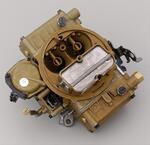
This is how you do it. No PCV valve. This was the factory setup on a 65 vette with sealed valve covers. Keeps negative pressure on the crankcase and the fitting restricts the flow so it is not a vacuum leak.
http://www.bing.com/images/search?q=...=0&FORM=IDFRIR
http://corvettespecialty.com/crankca...fitting-holley
This is how you do it. No PCV valve. This was the factory setup on a 65 vette with sealed valve covers. Keeps negative pressure on the crankcase and the fitting restricts the flow so it is not a vacuum leak.
Last edited by 63mako; May 14, 2012 at 10:52 PM.
Le Mans Master
Joined: Mar 2008
Posts: 5,948
Likes: 72
From: Oxford MA-----You just lost the game!!!!
http://www.bing.com/images/search?q=...AF8A0A&first=0
http://www.bing.com/images/search?q=...=0&FORM=IDFRIR
http://corvettespecialty.com/crankca...fitting-holley
This is how you do it. No PCV valve. This was the factory setup on a 65 vette with sealed valve covers. Keeps negative pressure on the crankcase and the fitting restricts the flow so it is not a vacuum leak.
http://www.bing.com/images/search?q=...=0&FORM=IDFRIR
http://corvettespecialty.com/crankca...fitting-holley
This is how you do it. No PCV valve. This was the factory setup on a 65 vette with sealed valve covers. Keeps negative pressure on the crankcase and the fitting restricts the flow so it is not a vacuum leak.
Keep the shiny side up!
Scott
Race Director
Joined: May 2005
Posts: 10,674
Likes: 122
From: Millington Illinois
St. Jude Donor '08-'09
This is the setup I used on my tripower with additional breathers in each valvecover. The center carb baseplate had a hole in the rear of it that the fitting threaded into. I know the fitting is for a holley but I think many of the aftermarket carbs have a threaded hole there, maybe for the power brake booster?
Thread Starter
Melting Slicks
Joined: Jun 2009
Posts: 2,343
Likes: 4
From: Anderson SC
While that would clearly work too, I had a fitting for a vacuum hose right at the front of the Q-jet, making this setup practically write itself.
If I ever pull the intake off, I'll try something with more cross-flow for sure.
I'm still amazed that this "temporary engine" is still in the car - life has a way of taking over.
I understood how PCV worked - I just never understood the exact function of the valve. Easy enough though.
-W
If I ever pull the intake off, I'll try something with more cross-flow for sure.
I'm still amazed that this "temporary engine" is still in the car - life has a way of taking over.
I understood how PCV worked - I just never understood the exact function of the valve. Easy enough though.
-W

Team Owner


Joined: Jan 2006
Posts: 37,637
Likes: 3,118
From: Crossville TN
If the fitting on the front of the carb is NOT in the baseplate of the carb, that fitting is inappropriate for the PCV purge line. It is merely a 'manifold' or 'ported' vacuum source and has a very small orifice that won't flow enough air to get the job done.
And, you can't just drill a hole in the top of a breather cap and stick a PCV valve in it. Since the breather cap is vented, much of the blow-by would still exit the vents on the cap and still put oily air into your engine compartment. You could put a PCV valve into a sealed oil fill cap, as it is not vented. You need to construct the system as Lars and I have described, if you want it to work very well.
And, you can't just drill a hole in the top of a breather cap and stick a PCV valve in it. Since the breather cap is vented, much of the blow-by would still exit the vents on the cap and still put oily air into your engine compartment. You could put a PCV valve into a sealed oil fill cap, as it is not vented. You need to construct the system as Lars and I have described, if you want it to work very well.
Corvette Stories
The Best of Corvette for Corvette Enthusiasts

Top 10 Most Expensive Corvettes Ever Sold on Bring A Trailer
Brett Foote
10 Things Every Corvette Owner Needs (2026 Edition)
Michael S. Palmer
8 Most "Only Corvette Owners Understand" Quirks and Problems
Pouria Savadkouei
10 Reasons the C6 Z06 is Still A Performance Benchmark After 20 Years
Joe Kucinski
How Much Horsepower Every Corvette Engine "LOST" in 1972
Joe Kucinski
Top 10 DOs and DON'Ts for Protecting Your Convertible Top!
Michael S. Palmer
Top 10 Most Explosive Corvettes Ever Made: Power-to-Weight Ratio Ranked!
Joe Kucinski
150 hp to 1,250 hp: Every Corvette Generation Compared by the Specs That Matter
Joe Kucinski
8 Coolest Corvette Pace Cars (and Replicas) of All Time
Verdad Gallardo
Thread Starter
Melting Slicks
Joined: Jun 2009
Posts: 2,343
Likes: 4
From: Anderson SC
If the fitting on the front of the carb is NOT in the baseplate of the carb, that fitting is inappropriate for the PCV purge line. It is merely a 'manifold' or 'ported' vacuum source and has a very small orifice that won't flow enough air to get the job done.
And, you can't just drill a hole in the top of a breather cap and stick a PCV valve in it. Since the breather cap is vented, much of the blow-by would still exit the vents on the cap and still put oily air into your engine compartment. You could put a PCV valve into a sealed oil fill cap, as it is not vented. You need to construct the system as Lars and I have described, if you want it to work very well.
And, you can't just drill a hole in the top of a breather cap and stick a PCV valve in it. Since the breather cap is vented, much of the blow-by would still exit the vents on the cap and still put oily air into your engine compartment. You could put a PCV valve into a sealed oil fill cap, as it is not vented. You need to construct the system as Lars and I have described, if you want it to work very well.

And I'm hoping that since I'm well under the breather cap (see pic) that it will scavenge most of the oily air in the tube.
I'll report back after some hours.
Let's remember that this car has 20 years on it with just the breather cap. I'm just trying to cut down (or eliminate) what little misting it had.
-W
Le Mans Master
Joined: Mar 2008
Posts: 5,948
Likes: 72
From: Oxford MA-----You just lost the game!!!!
this isn't an issue that has come up during this thread, but it is something that I would like to take the opportunity to address, as long as we are on the subject of crankcase ventilation. If you have a functioning PCV system, it is important that the air being pulled into the crankcase be filtered air, or the dust and grit will cause engine wear. Maybe not to the same extent as unfiltered fuel mixture air, but still, some.
Keep the shiny side up!
Scott
Keep the shiny side up!
Scott
Thread Starter
Melting Slicks
Joined: Jun 2009
Posts: 2,343
Likes: 4
From: Anderson SC
Since I well know that more than 1/2 the air getting pulled into my intake port via the PCV valve will be coming through that breather cap - I just got a new one this morning that has plenty of "stuffing" in it. (My old one was really worn out)
-W
Le Mans Master
Joined: Mar 2008
Posts: 5,948
Likes: 72
From: Oxford MA-----You just lost the game!!!!
Ya know, now that I think about it, you may find that when you floor it, and manifold vacuum drops down near zero, and crankcase pressure rises, it may overpower the pcv valve, and you still get a little oil mist coming out of the breather. A sealed cap on the filler tube with a hose going to the inside of the air filter would ensure filtered air going through the pcv valve when it was operating, and any blow-by would be directed into the inside of the air filter, to be burned by the engine, instead of sprayed around your engine compartment. Might be kinda funny-looking, though!
Keep the shiny side up!
Scott
Keep the shiny side up!
Scott
Thread Starter
Melting Slicks
Joined: Jun 2009
Posts: 2,343
Likes: 4
From: Anderson SC
Ya know, now that I think about it, you may find that when you floor it, and manifold vacuum drops down near zero, and crankcase pressure rises, it may overpower the pcv valve, and you still get a little oil mist coming out of the breather. A sealed cap on the filler tube with a hose going to the inside of the air filter would ensure filtered air going through the pcv valve when it was operating, and any blow-by would be directed into the inside of the air filter, to be burned by the engine, instead of sprayed around your engine compartment. Might be kinda funny-looking, though!

I'll surely report back what (if any) blow-by escapes this kluge.
-W
Le Mans Master
Joined: Mar 2008
Posts: 5,948
Likes: 72
From: Oxford MA-----You just lost the game!!!!
Keep the shiny side up!
Scott

Race Director
Joined: Mar 2006
Posts: 14,112
Likes: 28
From: Florida
this isn't an issue that has come up during this thread, but it is something that I would like to take the opportunity to address, as long as we are on the subject of crankcase ventilation. If you have a functioning PCV system, it is important that the air being pulled into the crankcase be filtered air, or the dust and grit will cause engine wear. Maybe not to the same extent as unfiltered fuel mixture air, but still, some.
Keep the shiny side up!
Scott
Keep the shiny side up!
Scott
Ya know, now that I think about it, you may find that when you floor it, and manifold vacuum drops down near zero, and crankcase pressure rises, it may overpower the pcv valve, and you still get a little oil mist coming out of the breather. A sealed cap on the filler tube with a hose going to the inside of the air filter would ensure filtered air going through the pcv valve when it was operating, and any blow-by would be directed into the inside of the air filter, to be burned by the engine, instead of sprayed around your engine compartment. Might be kinda funny-looking, though!
Keep the shiny side up!
Scott
Keep the shiny side up!
Scott
That's the way GM designed the pcv system to work.
Hard to re-engineer anything better.
