





1973 Power Windows not working

Thread Starter
Burning Brakes


Joined: May 2006
Posts: 763
Likes: 0
From: FBO Florida
 1973 Power Windows not working
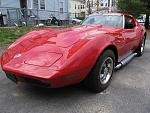
Okay so I just picked up another 1973 and low and behold the power windows (both) have simultaneously stopped working. I have checked connections to switches and they seem to be intact. I have just also replaced the relay under the dash. All the fuses tested good with continuity. Is there an in line fuse or circuit breaker somewhere else? Any ideas. Thanks

Melting Slicks


Joined: Mar 2005
Posts: 2,838
Likes: 10
From: Austin TX
Sounds like you're gonna have to lift the rear section of the console and test for current each side of the switch(s). If you have 12v, then next you'll have to pull door cards and test for 12v to the motors.
My guess is, the switches are bad but it's odd they both fail at about the same time.
My guess is, the switches are bad but it's odd they both fail at about the same time.
Melting Slicks
Joined: May 2011
Posts: 2,753
Likes: 119
From: Springfield Missouri
they can be rebuilt and not replaced with the cheap repo ones, very easy to take apart and clean up to work for many more years.
are you sure you did not kick something loose at the fuse panel??? On my 76 they plug into the fuse panel(I think), and once I hit the wire loose from the fuse panel.
are you sure you did not kick something loose at the fuse panel??? On my 76 they plug into the fuse panel(I think), and once I hit the wire loose from the fuse panel.

Race Director


Joined: Apr 2009
Posts: 19,294
Likes: 2,754
From: Charlotte NC
Okay so I just picked up another 1973 and low and behold the power windows (both) have simultaneously stopped working. I have checked connections to switches and they seem to be intact. I have just also replaced the relay under the dash. All the fuses tested good with continuity. Is there an in line fuse or circuit breaker somewhere else? Any ideas. Thanks
You also need to check and see if you are getting 12 volts at the switch connectors.
You also need to verify if the circuit breaker is allowing power to get to the relay.
DUB
Thread Starter
Burning Brakes
Joined: May 2006
Posts: 763
Likes: 0
From: FBO Florida
Continuity means nothing here. You have to make sure that the fuse that is next to the plug in the center of your fuse panel is allowing 12 volts to get to it.
You also need to check and see if you are getting 12 volts at the switch connectors.
You also need to verify if the circuit breaker is allowing power to get to the relay.
DUB
You also need to check and see if you are getting 12 volts at the switch connectors.
You also need to verify if the circuit breaker is allowing power to get to the relay.
DUB
If the fuse is good next to the plug (IGN) then how could it not be allowing 12 v to get to it?

Former Vendor
Joined: Aug 2006
Posts: 76,656
Likes: 1,853
From: Jeffersonville Indiana 812-288-7103
St. Jude Donor '08-'09-'10-'11-'12-'13-'14-'15
The relay is located under the console... but just curious... I've seen customers hit the connector at the fuse panel and un-plug the harness... are you sure it's plugged in?
A fuse can corrode and so can the terminals. While it may look good, it may not be making good contact. Check the contact terminals and the fuse. Use a test light or a multi-meter to test from terminal to terminal.

A fuse can corrode and so can the terminals. While it may look good, it may not be making good contact. Check the contact terminals and the fuse. Use a test light or a multi-meter to test from terminal to terminal.
Last edited by Willcox Corvette; Jan 8, 2014 at 10:32 AM.
Race Director
Joined: Apr 2009
Posts: 19,294
Likes: 2,754
From: Charlotte NC
Okay, we may be on to something here. I actually have replaced the 30 amp breaker on the firewall in the engine compartment. That did not solve the problem. I am told there is a relay under the console or radio that is hard to get to that might be the problem.
If the fuse is good next to the plug (IGN) then how could it not be allowing 12 v to get to it?
If the fuse is good next to the plug (IGN) then how could it not be allowing 12 v to get to it?
The other side of the fuse panel are for the circuits that require the ignition key being ON.,...thus allowing them to get power...for example, wipers, turn signals, gauges, etc. SO...the IGN port in the center of your fuse panel is getting power from the fuse beside it that would be something that needs to key to be on.
DO NOT be fooled. I can not tell you how many times I have taken my voltmeter and checked a fuse only to find that it is under the 12 volts..because corrosion and crap are on the holder for the fuse in the fuse panel. Once I take out the fuse and clean the contact area that holds the metal portion of the fuse...I will have 12 volts on the outer terminal that holds the fuse ( because that is where the power to the fuses start...on the outer terminals and then goes to the center area)...and then 12 volts on the metal portion of the fuse...and THEN check to make sure the metal holder that is holding the fuse on the center area is also 12 volts. If that is all correct...you IGN terminal should be 12 volts. I have seen 6 volt drops before due to crap on these holders for the fuses themselves.
DUB
Corvette Stories
The Best of Corvette for Corvette Enthusiasts

Top 10 Most Expensive Corvettes Ever Sold on Bring A Trailer
Brett Foote
10 Things Every Corvette Owner Needs (2026 Edition)
Michael S. Palmer
8 Most "Only Corvette Owners Understand" Quirks and Problems
Pouria Savadkouei
10 Reasons the C6 Z06 is Still A Performance Benchmark After 20 Years
Joe Kucinski
How Much Horsepower Every Corvette Engine "LOST" in 1972
Joe Kucinski
Top 10 DOs and DON'Ts for Protecting Your Convertible Top!
Michael S. Palmer
Top 10 Most Explosive Corvettes Ever Made: Power-to-Weight Ratio Ranked!
Joe Kucinski
150 hp to 1,250 hp: Every Corvette Generation Compared by the Specs That Matter
Joe Kucinski
8 Coolest Corvette Pace Cars (and Replicas) of All Time
Verdad Gallardo
Thread Starter
Burning Brakes
Joined: May 2006
Posts: 763
Likes: 0
From: FBO Florida
Pic of fuse panel
Here is a picture of the fuse block. I don't see any corrosion. So what you are saying is the fuse labeled Back up is powering the power windows? Anyone see any problem? The IGN wire is plugged in snug.I am leaning toward relay but I have to get the replacement before I tear the console apart.


One side of your fuse panel is always HOT with 12 volts.....so your brake lights, courtesy lights, hazards, horn etc...will always work with the key being out of the ignition.
The other side of the fuse panel are for the circuits that require the ignition key being ON.,...thus allowing them to get power...for example, wipers, turn signals, gauges, etc. SO...the IGN port in the center of your fuse panel is getting power from the fuse beside it that would be something that needs to key to be on.
DO NOT be fooled. I can not tell you how many times I have taken my voltmeter and checked a fuse only to find that it is under the 12 volts..because corrosion and crap are on the holder for the fuse in the fuse panel. Once I take out the fuse and clean the contact area that holds the metal portion of the fuse...I will have 12 volts on the outer terminal that holds the fuse ( because that is where the power to the fuses start...on the outer terminals and then goes to the center area)...and then 12 volts on the metal portion of the fuse...and THEN check to make sure the metal holder that is holding the fuse on the center area is also 12 volts. If that is all correct...you IGN terminal should be 12 volts. I have seen 6 volt drops before due to crap on these holders for the fuses themselves.
DUB
The other side of the fuse panel are for the circuits that require the ignition key being ON.,...thus allowing them to get power...for example, wipers, turn signals, gauges, etc. SO...the IGN port in the center of your fuse panel is getting power from the fuse beside it that would be something that needs to key to be on.
DO NOT be fooled. I can not tell you how many times I have taken my voltmeter and checked a fuse only to find that it is under the 12 volts..because corrosion and crap are on the holder for the fuse in the fuse panel. Once I take out the fuse and clean the contact area that holds the metal portion of the fuse...I will have 12 volts on the outer terminal that holds the fuse ( because that is where the power to the fuses start...on the outer terminals and then goes to the center area)...and then 12 volts on the metal portion of the fuse...and THEN check to make sure the metal holder that is holding the fuse on the center area is also 12 volts. If that is all correct...you IGN terminal should be 12 volts. I have seen 6 volt drops before due to crap on these holders for the fuses themselves.
DUB
Race Director
Joined: Apr 2009
Posts: 19,294
Likes: 2,754
From: Charlotte NC
Here is a picture of the fuse block. I don't see any corrosion. So what you are saying is the fuse labeled Back up is powering the power windows?YES
Anyone see any problem? NO...but it all depends if you are getting 12 volts on the IGN terminal when the key is ON...And that 12 volts is actually getting to the metal portion of the fuse for the DIR SIG /BACK-UP on the right side. Your fuse panel looks really good...but I have seen good looking fuse panels have problems. You have to make sure you are getting 12 volts to the IGN terminal.
The IGN wire is plugged in snug.I am leaning toward relay but I have to get the replacement before I tear the console apart.
Anyone see any problem? NO...but it all depends if you are getting 12 volts on the IGN terminal when the key is ON...And that 12 volts is actually getting to the metal portion of the fuse for the DIR SIG /BACK-UP on the right side. Your fuse panel looks really good...but I have seen good looking fuse panels have problems. You have to make sure you are getting 12 volts to the IGN terminal.
The IGN wire is plugged in snug.I am leaning toward relay but I have to get the replacement before I tear the console apart.
DUB
Thread Starter
Burning Brakes
Joined: May 2006
Posts: 763
Likes: 0
From: FBO Florida
You need to verify that the 12 volts coming from the IGN terminal is getting to the relay. And then make sure that you are getting power from the circuit breaker to the relay and so on....and that the power coming out of the relay going to the switch connectors is good also. I believe that the relay also needs ot be grounded well also...if my memory serves me correctly.
DUB
DUB
Race Director
Joined: Apr 2009
Posts: 19,294
Likes: 2,754
From: Charlotte NC
With that said...because you have back ups and turn signals working is good...and that would MAKE YOU THINK that the IGN terminal has 12 volts at it...and it might...but unless you test that pigtail coming off the wire that is in your IGN terminal...you really do not know for sure.
To test the circuit breaker under the hood. It has power going to it all the time and the key being ON does not matter. Also...one of the wires that goes to your circuit breaker should have a fusible link (if my memory serves me correctly)on the end of the wire where it attaches to the horn relay on the drivers side wheel house in front of the master cylinder area. The other wire goes inside the car and to your window relay.
You need to get to the connector at the window relay and check to make sure that you are getting power...and also ground.
This is a simple circuit to get correct.
Power ( when the key is turned ON) through the IGN terminal in the fuse panel that goes to the window relay. This is your control to make the relay work.
Power from the circuit breaker ( which is the power the windows need to work due to requiring so many amps)...and this does NOT come into play UNTIL you turn the key ON. So...it is basically "waiting" for the key to be turned ON.
A ground...because this relay HAS TO HAVE a ground in order to work. NO GROUND...NO way it will work. Knowing that the relay needs to be GROUNDED....so when the key is turned ON and the wire in your IGN terminal in the fuse panel then has 12 volts in it and then it energizes the relay...thus closing it...thus allowing the power from your circuit breaker to go to the wires that go to your switches. SIMPLY as that.
DUB
Then Power out to you switch connectors.
Using an ohm meter or continuity tester...you can verify that these wires are good and correct.