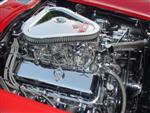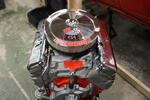






CFM through an L68 Tri-Power.

Thread Starter
Racer

Joined: Oct 2010
Posts: 259
Likes: 3
From: Plano TX
 CFM through an L68 Tri-Power.
Ok...so somewhere a long time ago I saw a thread that the L68 tri-power would actually flow about the same as a 4 barrel flowing ~906 CFM. I have no idea about the math related to the theoretical flow vs equivalent 4 barrel flow.
The l68 cam wasn't particularly "stout", but the L68 wasn't such a bad running engine as street performance engines go; I had a '69 about 15 years ago and thought it ran pretty good, for what it was.
Yet, going to the CFM calculators, 906 CFM is way over what most of the CFM calculators would give as the CFM requirement on such an engine. So I'd expect the L68 would run pretty flat, so to speak.
How did the engine run as well as it did, if in fact the calculators are "correct", which would imply the L68 was grossly over carb'd. Of course, it may be that the end carbs weren't opening fully, being vacuum operated, but I can't believe GM would actually release a motor tuned like that.
The l68 cam wasn't particularly "stout", but the L68 wasn't such a bad running engine as street performance engines go; I had a '69 about 15 years ago and thought it ran pretty good, for what it was.
Yet, going to the CFM calculators, 906 CFM is way over what most of the CFM calculators would give as the CFM requirement on such an engine. So I'd expect the L68 would run pretty flat, so to speak.
How did the engine run as well as it did, if in fact the calculators are "correct", which would imply the L68 was grossly over carb'd. Of course, it may be that the end carbs weren't opening fully, being vacuum operated, but I can't believe GM would actually release a motor tuned like that.

Popular Reply
Feb 28, 2014, 11:04 AM

Tech Contributor


Joined: Aug 1999
Posts: 14,380
Likes: 6,391
From: At my Bar drinking and wrenching in Lafayette Colorado
The cfm flow numbers and ratings on the Tripower cannot be directly compared to the cfm ratings of a 4-barrel carb, and there are some other factors to consider as well, making the "1000 cfm" rating questionable and somewhat irrelevant.
First, keep in mind that the SAE standard for testing and rating 4-barrel carbs is at 1.5 inches of Mercury, while the test pressure for 1-barrel and 2-barrel carbs is 3 inches of Mercury. This higher delta test pressure (twice the delta pressure) for the 2-barrel carb makes the 2-barrel appear to flow much higher, and the numbers for the 4-barrel cannot be compared to the numbers for the 2-barrel. The reason for this pressure difference in the rating is that it is assumed that a 2-barrel carb is used on a modest passenger car, which will pull vacuum even at WOT, whereas a 4-barrel carb used in a performance application will pull very little vacuum at WOT. For racing purposes, the flow ratings get even worse, since a properly-sized carb for a racing engine will pull almost no vacuum at WOT. On the other end of the spectrum, the little 390 NASCAR carbs, used at extreme rpm, pull so much vacuum at WOT that the carb actually flows about 3 times its "rated" flow rating. The large 2-barrels on the low-rev'ing 427 will not be exposed to anywhere close to 3" Hg vacuum at WOT, and will not, therefore, flow anywhere close to the 1000-cfm rating.
To add a little more confusion to the whole "cfm rating" thing, most flow benches in the racing industry (such as those used by Holley and Demon) measure dry air at low pressure drops (about 10 inches of water) one venturi at a time. This result is multiplied by a factor to arrive at what that bore would flow at a higher vacuum (i.e. 1-1/2 or 3 inches of mercury), then that figure is multiplied by the number of barrels to get the C.F.M. rating. This rating is usually much higher than it actually is, since the interaction between the barrels prevents them from achieving their individual flows once they are working together, so use of the manufacturer's "rating" is not a reliable yardstick for running the common "carb sizing" calculators: The calculators usually end up showing that the engine needs a very small carb, when, in fact, the engine, when used in a performance application, can make good use of a carb significantly larger that what the "calculators" would indicate.
So knowing all this, let's take an educated look at the 2-barrel carbs on the 427 Tripower: The 2-barrel carbs are rated at 350 cfm. Times 3 equals 1050 cfm. Wow.
Now, consider that those carbs achieved that rating with twice the test pressure of a 4-barrel carb. The flow through the carb is not linear with pressure, so the 350 carb will probably flow a little over half that at half the delta-P, so give it the benefit of doubt and say it will flow 75% of its 3-inch rating when tested at 1.5" of Hg. That puts the carb at a "4-barrel equivalent comparative flow" of 262 cfm. 262 times 3 is 787 cfm... Sounds just about perfect for a street-rpm 427.
To create additional disadvantage to the Tripower, the low-profile air cleaner, fitting tightly over the carbs, creates additional flow restriction and decrease in total cfm flow. Also, 6 barrels simply cannot feed 8 cylinders as evenly as a single center-mounted 4-barrel. So although the Tripower looks fantastic, and was a great marketing tool for the Corvette Performance image, fact is that a single 850 cfm 4-barrel will significantly outperform the "1050 cfm" Tripower when set up correctly on a good manifold.
But thus, the 427 can use a "1050-cfm" inlet system...
Lars
First, keep in mind that the SAE standard for testing and rating 4-barrel carbs is at 1.5 inches of Mercury, while the test pressure for 1-barrel and 2-barrel carbs is 3 inches of Mercury. This higher delta test pressure (twice the delta pressure) for the 2-barrel carb makes the 2-barrel appear to flow much higher, and the numbers for the 4-barrel cannot be compared to the numbers for the 2-barrel. The reason for this pressure difference in the rating is that it is assumed that a 2-barrel carb is used on a modest passenger car, which will pull vacuum even at WOT, whereas a 4-barrel carb used in a performance application will pull very little vacuum at WOT. For racing purposes, the flow ratings get even worse, since a properly-sized carb for a racing engine will pull almost no vacuum at WOT. On the other end of the spectrum, the little 390 NASCAR carbs, used at extreme rpm, pull so much vacuum at WOT that the carb actually flows about 3 times its "rated" flow rating. The large 2-barrels on the low-rev'ing 427 will not be exposed to anywhere close to 3" Hg vacuum at WOT, and will not, therefore, flow anywhere close to the 1000-cfm rating.
To add a little more confusion to the whole "cfm rating" thing, most flow benches in the racing industry (such as those used by Holley and Demon) measure dry air at low pressure drops (about 10 inches of water) one venturi at a time. This result is multiplied by a factor to arrive at what that bore would flow at a higher vacuum (i.e. 1-1/2 or 3 inches of mercury), then that figure is multiplied by the number of barrels to get the C.F.M. rating. This rating is usually much higher than it actually is, since the interaction between the barrels prevents them from achieving their individual flows once they are working together, so use of the manufacturer's "rating" is not a reliable yardstick for running the common "carb sizing" calculators: The calculators usually end up showing that the engine needs a very small carb, when, in fact, the engine, when used in a performance application, can make good use of a carb significantly larger that what the "calculators" would indicate.
So knowing all this, let's take an educated look at the 2-barrel carbs on the 427 Tripower: The 2-barrel carbs are rated at 350 cfm. Times 3 equals 1050 cfm. Wow.
Now, consider that those carbs achieved that rating with twice the test pressure of a 4-barrel carb. The flow through the carb is not linear with pressure, so the 350 carb will probably flow a little over half that at half the delta-P, so give it the benefit of doubt and say it will flow 75% of its 3-inch rating when tested at 1.5" of Hg. That puts the carb at a "4-barrel equivalent comparative flow" of 262 cfm. 262 times 3 is 787 cfm... Sounds just about perfect for a street-rpm 427.
To create additional disadvantage to the Tripower, the low-profile air cleaner, fitting tightly over the carbs, creates additional flow restriction and decrease in total cfm flow. Also, 6 barrels simply cannot feed 8 cylinders as evenly as a single center-mounted 4-barrel. So although the Tripower looks fantastic, and was a great marketing tool for the Corvette Performance image, fact is that a single 850 cfm 4-barrel will significantly outperform the "1050 cfm" Tripower when set up correctly on a good manifold.
But thus, the 427 can use a "1050-cfm" inlet system...
Lars

Team Owner


Joined: Jul 2004
Posts: 40,412
Likes: 792
From: Redondo Beach, California
My memory is pretty old, but I think a 3X2 with a rectangular intake port could flow a little over 1000 cf/m. From the factory, you couldn't get all 3 carbs to open up by just putting the peddle to the metal...my understanding...The outboard carbs responded to mostly vacuum, the center carb responded directly to the driver's throttle command. Once you floor boarded the center carb, the outboards would open up and if you kept the pedal to the metal, the outboards would open up fully also. Maybe a 3X2 expert can crisp up this dialog a little.

Team Owner


Joined: Jan 2006
Posts: 37,637
Likes: 3,118
From: Crossville TN
The maximum capacity of the tri power carbs will not actually be used. Of course, you can always 'stuff' more fuel into an engine than it needs. But, fuel flow out of any carb is dependent on the vacuum level the engine is producing. The engine can only demand so much airflow at its redline; I'm sure that would be less than the capacity of the tri-carb system could handle.
Thread Starter
Racer
Joined: Oct 2010
Posts: 259
Likes: 3
From: Plano TX
Tri-Power
The maximum capacity of the tri power carbs will not actually be used. Of course, you can always 'stuff' more fuel into an engine than it needs. But, fuel flow out of any carb is dependent on the vacuum level the engine is producing. The engine can only demand so much airflow at its redline; I'm sure that would be less than the capacity of the tri-carb system could handle.
I wish someone would bring one to the next "Dyno Day" at the local dyno shop so as to see what's actually going on with them. That would also give the A/F mix info.
Tech Contributor
Joined: Aug 1999
Posts: 14,380
Likes: 6,391
From: At my Bar drinking and wrenching in Lafayette Colorado
The cfm flow numbers and ratings on the Tripower cannot be directly compared to the cfm ratings of a 4-barrel carb, and there are some other factors to consider as well, making the "1000 cfm" rating questionable and somewhat irrelevant.
First, keep in mind that the SAE standard for testing and rating 4-barrel carbs is at 1.5 inches of Mercury, while the test pressure for 1-barrel and 2-barrel carbs is 3 inches of Mercury. This higher delta test pressure (twice the delta pressure) for the 2-barrel carb makes the 2-barrel appear to flow much higher, and the numbers for the 4-barrel cannot be compared to the numbers for the 2-barrel. The reason for this pressure difference in the rating is that it is assumed that a 2-barrel carb is used on a modest passenger car, which will pull vacuum even at WOT, whereas a 4-barrel carb used in a performance application will pull very little vacuum at WOT. For racing purposes, the flow ratings get even worse, since a properly-sized carb for a racing engine will pull almost no vacuum at WOT. On the other end of the spectrum, the little 390 NASCAR carbs, used at extreme rpm, pull so much vacuum at WOT that the carb actually flows about 3 times its "rated" flow rating. The large 2-barrels on the low-rev'ing 427 will not be exposed to anywhere close to 3" Hg vacuum at WOT, and will not, therefore, flow anywhere close to the 1000-cfm rating.
To add a little more confusion to the whole "cfm rating" thing, most flow benches in the racing industry (such as those used by Holley and Demon) measure dry air at low pressure drops (about 10 inches of water) one venturi at a time. This result is multiplied by a factor to arrive at what that bore would flow at a higher vacuum (i.e. 1-1/2 or 3 inches of mercury), then that figure is multiplied by the number of barrels to get the C.F.M. rating. This rating is usually much higher than it actually is, since the interaction between the barrels prevents them from achieving their individual flows once they are working together, so use of the manufacturer's "rating" is not a reliable yardstick for running the common "carb sizing" calculators: The calculators usually end up showing that the engine needs a very small carb, when, in fact, the engine, when used in a performance application, can make good use of a carb significantly larger that what the "calculators" would indicate.
So knowing all this, let's take an educated look at the 2-barrel carbs on the 427 Tripower: The 2-barrel carbs are rated at 350 cfm. Times 3 equals 1050 cfm. Wow.
Now, consider that those carbs achieved that rating with twice the test pressure of a 4-barrel carb. The flow through the carb is not linear with pressure, so the 350 carb will probably flow a little over half that at half the delta-P, so give it the benefit of doubt and say it will flow 75% of its 3-inch rating when tested at 1.5" of Hg. That puts the carb at a "4-barrel equivalent comparative flow" of 262 cfm. 262 times 3 is 787 cfm... Sounds just about perfect for a street-rpm 427.
To create additional disadvantage to the Tripower, the low-profile air cleaner, fitting tightly over the carbs, creates additional flow restriction and decrease in total cfm flow. Also, 6 barrels simply cannot feed 8 cylinders as evenly as a single center-mounted 4-barrel. So although the Tripower looks fantastic, and was a great marketing tool for the Corvette Performance image, fact is that a single 850 cfm 4-barrel will significantly outperform the "1050 cfm" Tripower when set up correctly on a good manifold.
But thus, the 427 can use a "1050-cfm" inlet system...
Lars
First, keep in mind that the SAE standard for testing and rating 4-barrel carbs is at 1.5 inches of Mercury, while the test pressure for 1-barrel and 2-barrel carbs is 3 inches of Mercury. This higher delta test pressure (twice the delta pressure) for the 2-barrel carb makes the 2-barrel appear to flow much higher, and the numbers for the 4-barrel cannot be compared to the numbers for the 2-barrel. The reason for this pressure difference in the rating is that it is assumed that a 2-barrel carb is used on a modest passenger car, which will pull vacuum even at WOT, whereas a 4-barrel carb used in a performance application will pull very little vacuum at WOT. For racing purposes, the flow ratings get even worse, since a properly-sized carb for a racing engine will pull almost no vacuum at WOT. On the other end of the spectrum, the little 390 NASCAR carbs, used at extreme rpm, pull so much vacuum at WOT that the carb actually flows about 3 times its "rated" flow rating. The large 2-barrels on the low-rev'ing 427 will not be exposed to anywhere close to 3" Hg vacuum at WOT, and will not, therefore, flow anywhere close to the 1000-cfm rating.
To add a little more confusion to the whole "cfm rating" thing, most flow benches in the racing industry (such as those used by Holley and Demon) measure dry air at low pressure drops (about 10 inches of water) one venturi at a time. This result is multiplied by a factor to arrive at what that bore would flow at a higher vacuum (i.e. 1-1/2 or 3 inches of mercury), then that figure is multiplied by the number of barrels to get the C.F.M. rating. This rating is usually much higher than it actually is, since the interaction between the barrels prevents them from achieving their individual flows once they are working together, so use of the manufacturer's "rating" is not a reliable yardstick for running the common "carb sizing" calculators: The calculators usually end up showing that the engine needs a very small carb, when, in fact, the engine, when used in a performance application, can make good use of a carb significantly larger that what the "calculators" would indicate.
So knowing all this, let's take an educated look at the 2-barrel carbs on the 427 Tripower: The 2-barrel carbs are rated at 350 cfm. Times 3 equals 1050 cfm. Wow.
Now, consider that those carbs achieved that rating with twice the test pressure of a 4-barrel carb. The flow through the carb is not linear with pressure, so the 350 carb will probably flow a little over half that at half the delta-P, so give it the benefit of doubt and say it will flow 75% of its 3-inch rating when tested at 1.5" of Hg. That puts the carb at a "4-barrel equivalent comparative flow" of 262 cfm. 262 times 3 is 787 cfm... Sounds just about perfect for a street-rpm 427.
To create additional disadvantage to the Tripower, the low-profile air cleaner, fitting tightly over the carbs, creates additional flow restriction and decrease in total cfm flow. Also, 6 barrels simply cannot feed 8 cylinders as evenly as a single center-mounted 4-barrel. So although the Tripower looks fantastic, and was a great marketing tool for the Corvette Performance image, fact is that a single 850 cfm 4-barrel will significantly outperform the "1050 cfm" Tripower when set up correctly on a good manifold.
But thus, the 427 can use a "1050-cfm" inlet system...
Lars
Last edited by lars; Feb 28, 2014 at 11:24 AM.

Team Owner
Joined: Apr 1999
Posts: 21,953
Likes: 1,445
From: Reno Nevada
2024 C3 of the Year Finalist- Modified
 The only addition to what Lars indepth post said: I messed with a tripower setup for years. The idea was good, but the intake manifold design creates a difference in cylinder to cylinder filling. That can also be said about the low rise two four barrel units.
they do have the eye apeal.

Le Mans Master


Joined: Jun 2004
Posts: 6,231
Likes: 65
From: Seattle WA
St. Jude Donor '14
Lars, thanks for your deeply insightful, experience-driven post 

-----------------------------------------------------------------------------^^^ (really good beer)
I had dreams at one point of building a '68 Chevelle convertible with a tri-power, just for the OMG factor of opening the hood...
-----------------------------------------------------------------------------^^^ (really good beer)
I had dreams at one point of building a '68 Chevelle convertible with a tri-power, just for the OMG factor of opening the hood...

Le Mans Master
Joined: Oct 2010
Posts: 6,938
Likes: 848
From: melbourne florida
2023 C3 of the Year Finalist - Modified
i had a 440 six barrel A12 road runner( which had a similar Almost Identical ) system . it ran better with an 850 holley. they can be made to run well but it takes some work.
Corvette Stories
The Best of Corvette for Corvette Enthusiasts

Top 10 Most Expensive Corvettes Ever Sold on Bring A Trailer
Brett Foote
10 Things Every Corvette Owner Needs (2026 Edition)
Michael S. Palmer
8 Most "Only Corvette Owners Understand" Quirks and Problems
Pouria Savadkouei
10 Reasons the C6 Z06 is Still A Performance Benchmark After 20 Years
Joe Kucinski
How Much Horsepower Every Corvette Engine "LOST" in 1972
Joe Kucinski
Top 10 DOs and DON'Ts for Protecting Your Convertible Top!
Michael S. Palmer
Top 10 Most Explosive Corvettes Ever Made: Power-to-Weight Ratio Ranked!
Joe Kucinski
150 hp to 1,250 hp: Every Corvette Generation Compared by the Specs That Matter
Joe Kucinski
8 Coolest Corvette Pace Cars (and Replicas) of All Time
Verdad Gallardo
Burning Brakes


Joined: Feb 2012
Posts: 925
Likes: 7
The straight math is 350 + 2 x 466 = 1282cfm. That divided by the square root of 2 is 906.6. These sizes are true for the L71, but I think the 400HP engines had the same carbs. I didn't look it up though.
The Mopar cars were 350 + 2 x 500 = 1350.
The Mopar cars were 350 + 2 x 500 = 1350.

Le Mans Master
Joined: Feb 1999
Posts: 8,351
Likes: 75
From: Tampa Bay FL
The cfm flow numbers and ratings on the Tripower cannot be directly compared to the cfm ratings of a 4-barrel carb, and there are some other factors to consider as well, making the "1000 cfm" rating questionable and somewhat irrelevant.
First, keep in mind that the SAE standard for testing and rating 4-barrel carbs is at 1.5 inches of Mercury, while the test pressure for 1-barrel and 2-barrel carbs is 3 inches of Mercury. This higher delta test pressure (twice the delta pressure) for the 2-barrel carb makes the 2-barrel appear to flow much higher, and the numbers for the 4-barrel cannot be compared to the numbers for the 2-barrel. The reason for this pressure difference in the rating is that it is assumed that a 2-barrel carb is used on a modest passenger car, which will pull vacuum even at WOT, whereas a 4-barrel carb used in a performance application will pull very little vacuum at WOT. For racing purposes, the flow ratings get even worse, since a properly-sized carb for a racing engine will pull almost no vacuum at WOT. On the other end of the spectrum, the little 390 NASCAR carbs, used at extreme rpm, pull so much vacuum at WOT that the carb actually flows about 3 times its "rated" flow rating. The large 2-barrels on the low-rev'ing 427 will not be exposed to anywhere close to 3" Hg vacuum at WOT, and will not, therefore, flow anywhere close to the 1000-cfm rating.
To add a little more confusion to the whole "cfm rating" thing, most flow benches in the racing industry (such as those used by Holley and Demon) measure dry air at low pressure drops (about 10 inches of water) one venturi at a time. This result is multiplied by a factor to arrive at what that bore would flow at a higher vacuum (i.e. 1-1/2 or 3 inches of mercury), then that figure is multiplied by the number of barrels to get the C.F.M. rating. This rating is usually much higher than it actually is, since the interaction between the barrels prevents them from achieving their individual flows once they are working together, so use of the manufacturer's "rating" is not a reliable yardstick for running the common "carb sizing" calculators: The calculators usually end up showing that the engine needs a very small carb, when, in fact, the engine, when used in a performance application, can make good use of a carb significantly larger that what the "calculators" would indicate.
So knowing all this, let's take an educated look at the 2-barrel carbs on the 427 Tripower: The 2-barrel carbs are rated at 350 cfm. Times 3 equals 1050 cfm. Wow.
Now, consider that those carbs achieved that rating with twice the test pressure of a 4-barrel carb. The flow through the carb is not linear with pressure, so the 350 carb will probably flow a little over half that at half the delta-P, so give it the benefit of doubt and say it will flow 75% of its 3-inch rating when tested at 1.5" of Hg. That puts the carb at a "4-barrel equivalent comparative flow" of 262 cfm. 262 times 3 is 787 cfm... Sounds just about perfect for a street-rpm 427.
To create additional disadvantage to the Tripower, the low-profile air cleaner, fitting tightly over the carbs, creates additional flow restriction and decrease in total cfm flow. Also, 6 barrels simply cannot feed 8 cylinders as evenly as a single center-mounted 4-barrel. So although the Tripower looks fantastic, and was a great marketing tool for the Corvette Performance image, fact is that a single 850 cfm 4-barrel will significantly outperform the "1050 cfm" Tripower when set up correctly on a good manifold.
But thus, the 427 can use a "1050-cfm" inlet system...
Lars
First, keep in mind that the SAE standard for testing and rating 4-barrel carbs is at 1.5 inches of Mercury, while the test pressure for 1-barrel and 2-barrel carbs is 3 inches of Mercury. This higher delta test pressure (twice the delta pressure) for the 2-barrel carb makes the 2-barrel appear to flow much higher, and the numbers for the 4-barrel cannot be compared to the numbers for the 2-barrel. The reason for this pressure difference in the rating is that it is assumed that a 2-barrel carb is used on a modest passenger car, which will pull vacuum even at WOT, whereas a 4-barrel carb used in a performance application will pull very little vacuum at WOT. For racing purposes, the flow ratings get even worse, since a properly-sized carb for a racing engine will pull almost no vacuum at WOT. On the other end of the spectrum, the little 390 NASCAR carbs, used at extreme rpm, pull so much vacuum at WOT that the carb actually flows about 3 times its "rated" flow rating. The large 2-barrels on the low-rev'ing 427 will not be exposed to anywhere close to 3" Hg vacuum at WOT, and will not, therefore, flow anywhere close to the 1000-cfm rating.
To add a little more confusion to the whole "cfm rating" thing, most flow benches in the racing industry (such as those used by Holley and Demon) measure dry air at low pressure drops (about 10 inches of water) one venturi at a time. This result is multiplied by a factor to arrive at what that bore would flow at a higher vacuum (i.e. 1-1/2 or 3 inches of mercury), then that figure is multiplied by the number of barrels to get the C.F.M. rating. This rating is usually much higher than it actually is, since the interaction between the barrels prevents them from achieving their individual flows once they are working together, so use of the manufacturer's "rating" is not a reliable yardstick for running the common "carb sizing" calculators: The calculators usually end up showing that the engine needs a very small carb, when, in fact, the engine, when used in a performance application, can make good use of a carb significantly larger that what the "calculators" would indicate.
So knowing all this, let's take an educated look at the 2-barrel carbs on the 427 Tripower: The 2-barrel carbs are rated at 350 cfm. Times 3 equals 1050 cfm. Wow.
Now, consider that those carbs achieved that rating with twice the test pressure of a 4-barrel carb. The flow through the carb is not linear with pressure, so the 350 carb will probably flow a little over half that at half the delta-P, so give it the benefit of doubt and say it will flow 75% of its 3-inch rating when tested at 1.5" of Hg. That puts the carb at a "4-barrel equivalent comparative flow" of 262 cfm. 262 times 3 is 787 cfm... Sounds just about perfect for a street-rpm 427.
To create additional disadvantage to the Tripower, the low-profile air cleaner, fitting tightly over the carbs, creates additional flow restriction and decrease in total cfm flow. Also, 6 barrels simply cannot feed 8 cylinders as evenly as a single center-mounted 4-barrel. So although the Tripower looks fantastic, and was a great marketing tool for the Corvette Performance image, fact is that a single 850 cfm 4-barrel will significantly outperform the "1050 cfm" Tripower when set up correctly on a good manifold.
But thus, the 427 can use a "1050-cfm" inlet system...
Lars
Le Mans Master
Joined: Oct 2010
Posts: 6,938
Likes: 848
From: melbourne florida
2023 C3 of the Year Finalist - Modified
mopar rated the center carb @ 500 c.f.m

Melting Slicks

Joined: Mar 2008
Posts: 2,666
Likes: 289
From: Spring Park MN
The cfm flow numbers and ratings on the Tripower cannot be directly compared to the cfm ratings of a 4-barrel carb, and there are some other factors to consider as well, making the "1000 cfm" rating questionable and somewhat irrelevant.
First, keep in mind that the SAE standard for testing and rating 4-barrel carbs is at 1.5 inches of Mercury, while the test pressure for 1-barrel and 2-barrel carbs is 3 inches of Mercury. This higher delta test pressure (twice the delta pressure) for the 2-barrel carb makes the 2-barrel appear to flow much higher, and the numbers for the 4-barrel cannot be compared to the numbers for the 2-barrel. The reason for this pressure difference in the rating is that it is assumed that a 2-barrel carb is used on a modest passenger car, which will pull vacuum even at WOT, whereas a 4-barrel carb used in a performance application will pull very little vacuum at WOT. For racing purposes, the flow ratings get even worse, since a properly-sized carb for a racing engine will pull almost no vacuum at WOT. On the other end of the spectrum, the little 390 NASCAR carbs, used at extreme rpm, pull so much vacuum at WOT that the carb actually flows about 3 times its "rated" flow rating. The large 2-barrels on the low-rev'ing 427 will not be exposed to anywhere close to 3" Hg vacuum at WOT, and will not, therefore, flow anywhere close to the 1000-cfm rating.
To add a little more confusion to the whole "cfm rating" thing, most flow benches in the racing industry (such as those used by Holley and Demon) measure dry air at low pressure drops (about 10 inches of water) one venturi at a time. This result is multiplied by a factor to arrive at what that bore would flow at a higher vacuum (i.e. 1-1/2 or 3 inches of mercury), then that figure is multiplied by the number of barrels to get the C.F.M. rating. This rating is usually much higher than it actually is, since the interaction between the barrels prevents them from achieving their individual flows once they are working together, so use of the manufacturer's "rating" is not a reliable yardstick for running the common "carb sizing" calculators: The calculators usually end up showing that the engine needs a very small carb, when, in fact, the engine, when used in a performance application, can make good use of a carb significantly larger that what the "calculators" would indicate.
So knowing all this, let's take an educated look at the 2-barrel carbs on the 427 Tripower: The 2-barrel carbs are rated at 350 cfm. Times 3 equals 1050 cfm. Wow.
Now, consider that those carbs achieved that rating with twice the test pressure of a 4-barrel carb. The flow through the carb is not linear with pressure, so the 350 carb will probably flow a little over half that at half the delta-P, so give it the benefit of doubt and say it will flow 75% of its 3-inch rating when tested at 1.5" of Hg. That puts the carb at a "4-barrel equivalent comparative flow" of 262 cfm. 262 times 3 is 787 cfm... Sounds just about perfect for a street-rpm 427.
To create additional disadvantage to the Tripower, the low-profile air cleaner, fitting tightly over the carbs, creates additional flow restriction and decrease in total cfm flow. Also, 6 barrels simply cannot feed 8 cylinders as evenly as a single center-mounted 4-barrel. So although the Tripower looks fantastic, and was a great marketing tool for the Corvette Performance image, fact is that a single 850 cfm 4-barrel will significantly outperform the "1050 cfm" Tripower when set up correctly on a good manifold.
But thus, the 427 can use a "1050-cfm" inlet system...
Lars
First, keep in mind that the SAE standard for testing and rating 4-barrel carbs is at 1.5 inches of Mercury, while the test pressure for 1-barrel and 2-barrel carbs is 3 inches of Mercury. This higher delta test pressure (twice the delta pressure) for the 2-barrel carb makes the 2-barrel appear to flow much higher, and the numbers for the 4-barrel cannot be compared to the numbers for the 2-barrel. The reason for this pressure difference in the rating is that it is assumed that a 2-barrel carb is used on a modest passenger car, which will pull vacuum even at WOT, whereas a 4-barrel carb used in a performance application will pull very little vacuum at WOT. For racing purposes, the flow ratings get even worse, since a properly-sized carb for a racing engine will pull almost no vacuum at WOT. On the other end of the spectrum, the little 390 NASCAR carbs, used at extreme rpm, pull so much vacuum at WOT that the carb actually flows about 3 times its "rated" flow rating. The large 2-barrels on the low-rev'ing 427 will not be exposed to anywhere close to 3" Hg vacuum at WOT, and will not, therefore, flow anywhere close to the 1000-cfm rating.
To add a little more confusion to the whole "cfm rating" thing, most flow benches in the racing industry (such as those used by Holley and Demon) measure dry air at low pressure drops (about 10 inches of water) one venturi at a time. This result is multiplied by a factor to arrive at what that bore would flow at a higher vacuum (i.e. 1-1/2 or 3 inches of mercury), then that figure is multiplied by the number of barrels to get the C.F.M. rating. This rating is usually much higher than it actually is, since the interaction between the barrels prevents them from achieving their individual flows once they are working together, so use of the manufacturer's "rating" is not a reliable yardstick for running the common "carb sizing" calculators: The calculators usually end up showing that the engine needs a very small carb, when, in fact, the engine, when used in a performance application, can make good use of a carb significantly larger that what the "calculators" would indicate.
So knowing all this, let's take an educated look at the 2-barrel carbs on the 427 Tripower: The 2-barrel carbs are rated at 350 cfm. Times 3 equals 1050 cfm. Wow.
Now, consider that those carbs achieved that rating with twice the test pressure of a 4-barrel carb. The flow through the carb is not linear with pressure, so the 350 carb will probably flow a little over half that at half the delta-P, so give it the benefit of doubt and say it will flow 75% of its 3-inch rating when tested at 1.5" of Hg. That puts the carb at a "4-barrel equivalent comparative flow" of 262 cfm. 262 times 3 is 787 cfm... Sounds just about perfect for a street-rpm 427.
To create additional disadvantage to the Tripower, the low-profile air cleaner, fitting tightly over the carbs, creates additional flow restriction and decrease in total cfm flow. Also, 6 barrels simply cannot feed 8 cylinders as evenly as a single center-mounted 4-barrel. So although the Tripower looks fantastic, and was a great marketing tool for the Corvette Performance image, fact is that a single 850 cfm 4-barrel will significantly outperform the "1050 cfm" Tripower when set up correctly on a good manifold.
But thus, the 427 can use a "1050-cfm" inlet system...
Lars
I agree 100% with this too. The 3 deuce setup has terrible runner design. Modern 4 barrel manifolds have much more even cylinder fill, especially the single planes. The 3 deuces are still selling the cars born with them though!
Tech Contributor
Joined: Aug 1999
Posts: 14,380
Likes: 6,391
From: At my Bar drinking and wrenching in Lafayette Colorado
Thread Starter
Racer
Joined: Oct 2010
Posts: 259
Likes: 3
From: Plano TX
Wow. It doesn't get much better than that. I knew my major should have been engineering instead of trying to proof that on a continuous line there are an infinite number of points between any two given points. Don't ask.
This is the crux of why I started this thread: "The calculators usually end up showing that the engine needs a very small carb, when, in fact, the engine, when used in a performance application, can make good use of a carb significantly larger that what the "calculators" would indicate. "
The calculators that everyone know about tell me I need between 750 and 800 cfm, "depending". And with an 770 SA, I figure that's about where I am. The problem is, I seem to observe engines running larger CFM than the calculators would call for, successfully. I realize all the particular can make a big difference...cam, exhaust, compression, intake and head design, etc. What came to mind was the 390 vs 400 HP 427s, in which the "flow" of the tri-carb set up seems to be totally out of line with the calculators, but the engines seem to run and perform fine, as do the 390s - for what they are (as I felt my old '69 did). Lars, of course, solved that one. (To clarify, I have no interest in a tri-power set up; I was just using them in trying to logic this out)
But, the further comments remind me that it's "just money", and trying something a little larger would answer the question re my build once and for all. :-) I wonder if I can get a volume discount on dyno runs.
This is the crux of why I started this thread: "The calculators usually end up showing that the engine needs a very small carb, when, in fact, the engine, when used in a performance application, can make good use of a carb significantly larger that what the "calculators" would indicate. "
The calculators that everyone know about tell me I need between 750 and 800 cfm, "depending". And with an 770 SA, I figure that's about where I am. The problem is, I seem to observe engines running larger CFM than the calculators would call for, successfully. I realize all the particular can make a big difference...cam, exhaust, compression, intake and head design, etc. What came to mind was the 390 vs 400 HP 427s, in which the "flow" of the tri-carb set up seems to be totally out of line with the calculators, but the engines seem to run and perform fine, as do the 390s - for what they are (as I felt my old '69 did). Lars, of course, solved that one. (To clarify, I have no interest in a tri-power set up; I was just using them in trying to logic this out)
But, the further comments remind me that it's "just money", and trying something a little larger would answer the question re my build once and for all. :-) I wonder if I can get a volume discount on dyno runs.
Last edited by FlyLS6; Feb 28, 2014 at 11:48 PM.
Melting Slicks
Joined: Mar 2008
Posts: 2,666
Likes: 289
From: Spring Park MN
The whole CFM thing with carbs is really screwed up anyway. It takes one heck of a flow bench to flow a 4 barrel carb at 1.5"HG (20.4" water). A Superflow 600 bench will maybe be able to test a 600 CFM 4 barrel carb, but nothing beyond that. Any difference in the shape and design of the AC base plate, velocity stack, or having nothing on the top will heavily affect the outcome. What's on the outlet side will even affect the flow more. If the throats of the carb are just dumping into a large open area adapter to the bench it will have huge turbulence at the exit and hurt airflow. If you use something like a 2" HVC adapter that has a controlled expansion area, there will be far less turbulence and the flow bench will show a lot more flow. Flow the carb wet and it will be different too.
Burning Brakes
Joined: Feb 2012
Posts: 925
Likes: 7
Which is why in my mind the big block to get was the L72 (427ci/450-425HP) with the good factory manifold and a single 4-barrel in the '66 Vette. Second on Muscle Car Magazine's 50 Fastest list.
Tech Contributor
Joined: Aug 1999
Posts: 14,380
Likes: 6,391
From: At my Bar drinking and wrenching in Lafayette Colorado
Lars
Le Mans Master
Joined: Mar 2008
Posts: 5,948
Likes: 72
From: Oxford MA-----You just lost the game!!!!
I have read that when 4-barrel carbs first came out, there were not any apparatus available that would read cfm that high, which is why they tested them at 1.5 instead of 3, and it just kind of became the standard that is used to this day. Any thoughts on this, anyone?
Also, I think that back before they had 4-barrel carbs, multiple carbs were really the only way to get more cfm for the bigger engines that they started building in the '50s, of which the 3-2barrel carb system was popular. These multiple carb system got quite a reputation back in the '50s, and by the time the '60s rolled around, with big 4-barrel carbs available, they still retained that reputation with old skool types, and still do to this day. Again, any thoughts on this, anyone?
Scott
Also, I think that back before they had 4-barrel carbs, multiple carbs were really the only way to get more cfm for the bigger engines that they started building in the '50s, of which the 3-2barrel carb system was popular. These multiple carb system got quite a reputation back in the '50s, and by the time the '60s rolled around, with big 4-barrel carbs available, they still retained that reputation with old skool types, and still do to this day. Again, any thoughts on this, anyone?
Scott