





more hp

Thread Starter
Intermediate

Joined: Jan 2012
Posts: 45
Likes: 0
 more hp
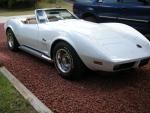
have a 72 vette Auto with stock 200 hp motor,looking to increase hp with new manifold,carby and electronic dizzy and for it to fit under standard hood, what would be a good elderbrock pakage for this car Thanks guys Alan

Melting Slicks


Joined: Oct 2012
Posts: 2,156
Likes: 273
From: Dunedin NZ.
http://www.carcraft.com/techarticles...s/viewall.html
This link was just posted on the forum, might be a good place to start. Consider re-curving your dist and depending on what carb is fitted headers might be a better investment before a new carb JMHO
This link was just posted on the forum, might be a good place to start. Consider re-curving your dist and depending on what carb is fitted headers might be a better investment before a new carb JMHO
Thread Starter
Intermediate
Joined: Jan 2012
Posts: 45
Likes: 0
http://www.carcraft.com/techarticles...s/viewall.html
This link was just posted on the forum, might be a good place to start. Consider re-curving your dist and depending on what carb is fitted headers might be a better investment before a new carb JMHO
This link was just posted on the forum, might be a good place to start. Consider re-curving your dist and depending on what carb is fitted headers might be a better investment before a new carb JMHO

Team Owner


Joined: Jan 2006
Posts: 37,637
Likes: 3,116
From: Crossville TN
You won't gain any HP by replacing the Q-Jet; adjustment and tuning of the Q-Jet might help some. Replacing the intake manifold might gain you a few HP, but it will be of minor benefit, unless you change cam and heads also.
The most bang-for-the-buck would be to modify your distributor's advance curve for maximum performance, instead of minimum warranty cost and emissions as was done by the factory. This could yield up to 40 HP gain for very little cost and modest time and effort. Improving exhaust flow would be another low-dollar improvement....maybe 20 HP or so.
If you want more significant gains, you will have to change cam and heads PLUS intake and exhaust components.
The most bang-for-the-buck would be to modify your distributor's advance curve for maximum performance, instead of minimum warranty cost and emissions as was done by the factory. This could yield up to 40 HP gain for very little cost and modest time and effort. Improving exhaust flow would be another low-dollar improvement....maybe 20 HP or so.
If you want more significant gains, you will have to change cam and heads PLUS intake and exhaust components.
Race Director


Joined: Jan 2000
Posts: 12,399
Likes: 247
From: San Jose CA
Bear in mind that the car has a 200 hp engine. The cam's powerband terminates very low, mid 3000 rpm range maybe.
The best mods you can make to a stock base model Corvette are a distributor recurve (mentioned) and headers + exhaust (mentioned). After that, it starts to become cubic dollars.
A cam will bump the power up a bit, but you can't really get a lot out of much more than a very mild (duration in the 210s) on the stock heads. So like others have said, after this cam and heads are the answer.
The stock Q-Jet is not limiting power at all at your power level, and up to about 500 hp may limit a hp or two, but will provide improved throttle response and fuel economy over a square bore carb.
Good luck.
The best mods you can make to a stock base model Corvette are a distributor recurve (mentioned) and headers + exhaust (mentioned). After that, it starts to become cubic dollars.
A cam will bump the power up a bit, but you can't really get a lot out of much more than a very mild (duration in the 210s) on the stock heads. So like others have said, after this cam and heads are the answer.
The stock Q-Jet is not limiting power at all at your power level, and up to about 500 hp may limit a hp or two, but will provide improved throttle response and fuel economy over a square bore carb.
Good luck.

Safety Car

Joined: Jan 2009
Posts: 3,736
Likes: 56
From: anchorage ak
What's your budget and intended use? How much more bang you looking for? Posibilities unlimited but the more power you achieve the more other things have to change such as gears and stall speed. As was mentioned headers are a great place to start while you determine how much you have to spend. One other question is are you mechanical enough to do the work?
Corvette Stories
The Best of Corvette for Corvette Enthusiasts

150 hp to 1,250 hp: Every Corvette Generation Compared by the Specs That Matter
Joe Kucinski
8 Coolest Corvette Pace Cars (and Replicas) of All Time
Verdad Gallardo
Top 10 Corvette Engines RANKED by Peak Torque (70+ Years of Muscle!)
Joe Kucinski
Corvette ZR1X Will Be Pacing the Indy 500, And Could Probably Race, Too!
Verdad Gallardo
Top 10 Corvettes Coming to Mecum Indy 2026!
Brett Foote
Top 10 C9 Corvette MUST-HAVES to Fix These C8 Generation Flaws!
Michael S. Palmer
10 Revolutionary 'Corvette Firsts' Most People Don't Know
Joe Kucinski
5 Reasons to Upgrade to an LS6-Powered Corvette; 5 Reasons to Stay LT2
Michael S. Palmer
2027 Corvette vs The World: Every C8 vs Its Closest Competitor
Joe Kucinski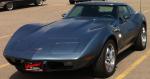
Pro

Joined: Oct 2009
Posts: 523
Likes: 4
From: Calgary Alberta
The aftermarket intake manifold won't make much difference and the stock Q-jet carb is very good if setup properly (see Lars).
Recurving the stock distributor will also make a significant difference and that is fairly inexpensive to do. JMHO.


Race Director

Joined: May 2005
Posts: 10,674
Likes: 122
From: Millington Illinois
St. Jude Donor '08-'09
Bear in mind that the car has a 200 hp engine. The cam's powerband terminates very low, mid 3000 rpm range maybe.
The best mods you can make to a stock base model Corvette are a distributor recurve (mentioned) and headers + exhaust (mentioned). After that, it starts to become cubic dollars.
A cam will bump the power up a bit, but you can't really get a lot out of much more than a very mild (duration in the 210s) on the stock heads. So like others have said, after this cam and heads are the answer.
The stock Q-Jet is not limiting power at all at your power level, and up to about 500 hp may limit a hp or two, but will provide improved throttle response and fuel economy over a square bore carb.
Good luck.
The best mods you can make to a stock base model Corvette are a distributor recurve (mentioned) and headers + exhaust (mentioned). After that, it starts to become cubic dollars.
A cam will bump the power up a bit, but you can't really get a lot out of much more than a very mild (duration in the 210s) on the stock heads. So like others have said, after this cam and heads are the answer.
The stock Q-Jet is not limiting power at all at your power level, and up to about 500 hp may limit a hp or two, but will provide improved throttle response and fuel economy over a square bore carb.
Good luck.
 After headers, exhaust and dist recurve, Heads, cam and intake. If it is an automatic might need convertor or OD trans and gears to compliment the higher powerband caused by cam upgrade. All depends on how far you want to take it and how deep your pockets are.

Le Mans Master


Joined: Apr 2007
Posts: 7,353
Likes: 72
From: Graceland in a Not Correctly Restored Stingray
Cliff Notes on waking up a mid 70's SBC C3
Suggest proceeding with engine upgrades in the following order until either satisfied or your budget runs out...
1) Super-tune ignition system
2) Optimize fuel delivery / dial in carb
3) Install headers/exhaust, repeat steps 1 & 2
4)* Raise compression (preferably with better heads), install better intake and appropriately matched cam, repeat steps 1 & 2
5) Then consider carb (or EFI) options, but always repeat step 1 before making carb adjustments
6) If not yet satisfied, remember the old adage, "How fast do you want to go? How much do you want to spend?"
* A full rebuild may likely be advisable at this point, along with possibly installing main studs (bottom-end insurance). And, anytime you start heading into high-performance territory, blueprinting is highly recommended.
Some non-engine related options, in no particular order...
Remove unnecessary weight (don't reduce safety)
If you have a 3.36, or especially a 3.08:1 or taller ratio (smaller number), consider changing the rear gear to a shorter ratio (larger number)
Change transmission to one with more gears and/or a better set of ratios (preferrably a manual)
If you have and wish to keep an auto, install a higher stall-speed torque converter
My $.02

1) Super-tune ignition system
2) Optimize fuel delivery / dial in carb
3) Install headers/exhaust, repeat steps 1 & 2
4)* Raise compression (preferably with better heads), install better intake and appropriately matched cam, repeat steps 1 & 2
5) Then consider carb (or EFI) options, but always repeat step 1 before making carb adjustments
6) If not yet satisfied, remember the old adage, "How fast do you want to go? How much do you want to spend?"
* A full rebuild may likely be advisable at this point, along with possibly installing main studs (bottom-end insurance). And, anytime you start heading into high-performance territory, blueprinting is highly recommended.
Some non-engine related options, in no particular order...
Remove unnecessary weight (don't reduce safety)
If you have a 3.36, or especially a 3.08:1 or taller ratio (smaller number), consider changing the rear gear to a shorter ratio (larger number)
Change transmission to one with more gears and/or a better set of ratios (preferrably a manual)
If you have and wish to keep an auto, install a higher stall-speed torque converter
My $.02
Last edited by TheSkunkWorks; Aug 3, 2014 at 02:28 AM.

Tech Contributor


Joined: Aug 1999
Posts: 14,373
Likes: 6,371
From: At my Bar drinking and wrenching in Lafayette Colorado
Unfortunately, none of the items you want to "upgrade" will have any effect on increasing performance of your car:
If you have the stock small block hood, the intake manifolds that will fit under the hood are the manifolds similar to the Edelbrock (note spelling) Performer. The Performer is a copy of the GM/Corvette aluminum intake. If you have the 4-barrel Vette intake, the next step in improvement will be a Performer RPM Airgap type intake, which will not fit under your stock hood. If you have the stock cast iron intake, you can lighten things up and make it look "prettier" with an aluminum intake, but this is not likely to produce any noticeable performance gain.
If you have the stock Q-Jet carb, changing that carb will not produce any gain. The stock Q-Jet is 750 cfm. It will run identical to any similar sized Holley-based carb of similar size when set up to its stock specs (I can provide you dyno data and tech article info that proves this). The Edelbrock "Performer" carbs are knock-offs of the old Carter AFB, and will produce a performance loss over a correctly set up Q-Jet. For your best performance, tune and set up your Q-Jet correctly - instructions are provided in my Q-Jet Tuning Paper. E-mail me for a copy if you don't have it.
There are no aftermarket ignition systems that will produce any performance gain over the stock system in a street-driven car, if the stock system is correctly set up. Tune your stock system to produce the timing numbers outlined in my timing articles and it will run better than anything you can bolt on out of a box. Again, I have actual dyno data that I did during testing with Hot Rod Magazine to prove this, and I can forward the test data and the article I have posted here on the Forum on several occasions.
Your best bet for a significant performance increase is as follows:
Set up and tune your stock ignition system. Set it up for 36 degrees of total timing all-in at 3000 rpm. Assure that your resultant initial timing is in the mid-teen range. Make sure your vacuum advance is hooked up and working, and modify it, if needed, to produce 12-14 degrees of timing. Hook it up to manifold vacuum.
Go through your Q-Jet and set it up per the "Quickie Performance Setup" section of my paper. Verify the other tuning parameters outlined in my "Tuning Tour Observations and Recommendations" paper.
These mods will get you a significant change in the performance of the car.
If you want more after this, install headers and re-tune the carb to richen it up.
If you don't feel the car has enough "snap" at that point, get rid of the 3.08:1 rear end gears and drop a set of 3.73:1 gears in it.
After that, you're looking at cam and heads for upgrades. These upgrades will produce a significant change in power output, but cost is also significantly higher than any of the other mods.
Good luck with the tuning and setup. Don't start out by throwing parts at it - the results will be very disappointing.
One other tip: I assume you're from Australia or England. When posting on Forums that are primarily US-based, you might want to avoid the use of the terms "carby" and "dizzy" and use the American terms "carb" and "distributor" unless you're also fishing for a gay encounter... Not that there's anything wrong with that, of course...
Lars
Last edited by lars; Aug 3, 2014 at 11:04 PM.

Le Mans Master
Joined: Feb 1999
Posts: 8,351
Likes: 75
From: Tampa Bay FL
Alan -
Unfortunately, none of the items you want to "upgrade" will have any effect on increasing performance of your car:
If you have the stock small block hood, the intake manifolds that will fit under the hood are the manifolds similar to the Edelbrock (note spelling) Performer. The Performer is a copy of the GM/Corvette aluminum intake. If you have the 4-barrel Vette intake, the next step in improvement will be a Performer RPM Airgap type intake, which will not fit under your stock hood. If you have the stock cast iron intake, you can lighten things up and make it look "prettier" with an aluminum intake, but this is not likely to produce any noticeable performance gain.
If you have the stock Q-Jet carb, changing that carb will not produce any gain. The stock Q-Jet is 750 cfm. It will run identical to any similar sized Holley-based carb of similar size when set up to its stock specs (I can provide you dyno data and tech article info that proves this). The Edelbrock "Performer" carbs are knock-offs of the old Carter AFB, and will produce a performance loss over a correctly set up Q-Jet. For your best performance, tune and set up your Q-Jet correctly - instructions are provided in my Q-Jet Tuning Paper. E-mail me for a copy if you don't have it.
There are no aftermarket ignition systems that will produce any performance gain over the stock system in a street-driven car, if the stock system is correctly set up. Tune your stock system to produce the timing numbers outlined in my timing articles and it will run better than anything you can bolt on out of a box. Again, I have actual dyno data that I did during testing with Hot Rod Magazine to prove this, and I can forward the test data and the article I have posted here on the Forum on several occasions.
Your best bet for a significant performance increase is as follows:
Set up and tune your stock ignition system. Set it up for 36 degrees of total timing all-in at 3000 rpm. Assure that your resultant initial timing is in the mid-teen range. Make sure your vacuum advance is hooked up and working, and modify it, if needed, to produce 12-14 degrees of timing. Hook it up to manifold vacuum.
Go through your Q-Jet and set it up per the "Quickie Performance Setup" section of my paper. Verify the other tuning parameters outlined in my "Tuning Tour Observations and Recommendations" paper.
These mods will get you a significant change in the performance of the car.
If you want more after this, install headers and re-tune the carb to richen it up.
If you don't feel the car has enough "snap" at that point, get rid of the 3.08:1 rear end gears and drop a set of 3.73:1 gears in it.
After that, you're looking at cam and heads for upgrades. These upgrades will produce a significant change in power output, but cost is also significantly higher than any of the other mods.
Good luck with the tuning and setup. Don't start out by throwing parts at it - the results will be very disappointing.
Lars
Unfortunately, none of the items you want to "upgrade" will have any effect on increasing performance of your car:
If you have the stock small block hood, the intake manifolds that will fit under the hood are the manifolds similar to the Edelbrock (note spelling) Performer. The Performer is a copy of the GM/Corvette aluminum intake. If you have the 4-barrel Vette intake, the next step in improvement will be a Performer RPM Airgap type intake, which will not fit under your stock hood. If you have the stock cast iron intake, you can lighten things up and make it look "prettier" with an aluminum intake, but this is not likely to produce any noticeable performance gain.
If you have the stock Q-Jet carb, changing that carb will not produce any gain. The stock Q-Jet is 750 cfm. It will run identical to any similar sized Holley-based carb of similar size when set up to its stock specs (I can provide you dyno data and tech article info that proves this). The Edelbrock "Performer" carbs are knock-offs of the old Carter AFB, and will produce a performance loss over a correctly set up Q-Jet. For your best performance, tune and set up your Q-Jet correctly - instructions are provided in my Q-Jet Tuning Paper. E-mail me for a copy if you don't have it.
There are no aftermarket ignition systems that will produce any performance gain over the stock system in a street-driven car, if the stock system is correctly set up. Tune your stock system to produce the timing numbers outlined in my timing articles and it will run better than anything you can bolt on out of a box. Again, I have actual dyno data that I did during testing with Hot Rod Magazine to prove this, and I can forward the test data and the article I have posted here on the Forum on several occasions.
Your best bet for a significant performance increase is as follows:
Set up and tune your stock ignition system. Set it up for 36 degrees of total timing all-in at 3000 rpm. Assure that your resultant initial timing is in the mid-teen range. Make sure your vacuum advance is hooked up and working, and modify it, if needed, to produce 12-14 degrees of timing. Hook it up to manifold vacuum.
Go through your Q-Jet and set it up per the "Quickie Performance Setup" section of my paper. Verify the other tuning parameters outlined in my "Tuning Tour Observations and Recommendations" paper.
These mods will get you a significant change in the performance of the car.
If you want more after this, install headers and re-tune the carb to richen it up.
If you don't feel the car has enough "snap" at that point, get rid of the 3.08:1 rear end gears and drop a set of 3.73:1 gears in it.
After that, you're looking at cam and heads for upgrades. These upgrades will produce a significant change in power output, but cost is also significantly higher than any of the other mods.
Good luck with the tuning and setup. Don't start out by throwing parts at it - the results will be very disappointing.
Lars
Thread Starter
Intermediate
Joined: Jan 2012
Posts: 45
Likes: 0
Alan -
Unfortunately, none of the items you want to "upgrade" will have any effect on increasing performance of your car:
If you have the stock small block hood, the intake manifolds that will fit under the hood are the manifolds similar to the Edelbrock (note spelling) Performer. The Performer is a copy of the GM/Corvette aluminum intake. If you have the 4-barrel Vette intake, the next step in improvement will be a Performer RPM Airgap type intake, which will not fit under your stock hood. If you have the stock cast iron intake, you can lighten things up and make it look "prettier" with an aluminum intake, but this is not likely to produce any noticeable performance gain.
If you have the stock Q-Jet carb, changing that carb will not produce any gain. The stock Q-Jet is 750 cfm. It will run identical to any similar sized Holley-based carb of similar size when set up to its stock specs (I can provide you dyno data and tech article info that proves this). The Edelbrock "Performer" carbs are knock-offs of the old Carter AFB, and will produce a performance loss over a correctly set up Q-Jet. For your best performance, tune and set up your Q-Jet correctly - instructions are provided in my Q-Jet Tuning Paper. E-mail me for a copy if you don't have it.
There are no aftermarket ignition systems that will produce any performance gain over the stock system in a street-driven car, if the stock system is correctly set up. Tune your stock system to produce the timing numbers outlined in my timing articles and it will run better than anything you can bolt on out of a box. Again, I have actual dyno data that I did during testing with Hot Rod Magazine to prove this, and I can forward the test data and the article I have posted here on the Forum on several occasions.
Your best bet for a significant performance increase is as follows:
Set up and tune your stock ignition system. Set it up for 36 degrees of total timing all-in at 3000 rpm. Assure that your resultant initial timing is in the mid-teen range. Make sure your vacuum advance is hooked up and working, and modify it, if needed, to produce 12-14 degrees of timing. Hook it up to manifold vacuum.
Go through your Q-Jet and set it up per the "Quickie Performance Setup" section of my paper. Verify the other tuning parameters outlined in my "Tuning Tour Observations and Recommendations" paper.
These mods will get you a significant change in the performance of the car.
If you want more after this, install headers and re-tune the carb to richen it up.
If you don't feel the car has enough "snap" at that point, get rid of the 3.08:1 rear end gears and drop a set of 3.73:1 gears in it.
After that, you're looking at cam and heads for upgrades. These upgrades will produce a significant change in power output, but cost is also significantly higher than any of the other mods.
Good luck with the tuning and setup. Don't start out by throwing parts at it - the results will be very disappointing.
One other tip: I assume you're from Australia or England. When posting on Forums that are primarily US-based, you might want to avoid the use of the terms "carby" and "dizzy" and use the American terms "carb" and "distributor" unless you're also fishing for a gay encounter... Not that there's anything wrong with that, of course...
Lars
Unfortunately, none of the items you want to "upgrade" will have any effect on increasing performance of your car:
If you have the stock small block hood, the intake manifolds that will fit under the hood are the manifolds similar to the Edelbrock (note spelling) Performer. The Performer is a copy of the GM/Corvette aluminum intake. If you have the 4-barrel Vette intake, the next step in improvement will be a Performer RPM Airgap type intake, which will not fit under your stock hood. If you have the stock cast iron intake, you can lighten things up and make it look "prettier" with an aluminum intake, but this is not likely to produce any noticeable performance gain.
If you have the stock Q-Jet carb, changing that carb will not produce any gain. The stock Q-Jet is 750 cfm. It will run identical to any similar sized Holley-based carb of similar size when set up to its stock specs (I can provide you dyno data and tech article info that proves this). The Edelbrock "Performer" carbs are knock-offs of the old Carter AFB, and will produce a performance loss over a correctly set up Q-Jet. For your best performance, tune and set up your Q-Jet correctly - instructions are provided in my Q-Jet Tuning Paper. E-mail me for a copy if you don't have it.
There are no aftermarket ignition systems that will produce any performance gain over the stock system in a street-driven car, if the stock system is correctly set up. Tune your stock system to produce the timing numbers outlined in my timing articles and it will run better than anything you can bolt on out of a box. Again, I have actual dyno data that I did during testing with Hot Rod Magazine to prove this, and I can forward the test data and the article I have posted here on the Forum on several occasions.
Your best bet for a significant performance increase is as follows:
Set up and tune your stock ignition system. Set it up for 36 degrees of total timing all-in at 3000 rpm. Assure that your resultant initial timing is in the mid-teen range. Make sure your vacuum advance is hooked up and working, and modify it, if needed, to produce 12-14 degrees of timing. Hook it up to manifold vacuum.
Go through your Q-Jet and set it up per the "Quickie Performance Setup" section of my paper. Verify the other tuning parameters outlined in my "Tuning Tour Observations and Recommendations" paper.
These mods will get you a significant change in the performance of the car.
If you want more after this, install headers and re-tune the carb to richen it up.
If you don't feel the car has enough "snap" at that point, get rid of the 3.08:1 rear end gears and drop a set of 3.73:1 gears in it.
After that, you're looking at cam and heads for upgrades. These upgrades will produce a significant change in power output, but cost is also significantly higher than any of the other mods.
Good luck with the tuning and setup. Don't start out by throwing parts at it - the results will be very disappointing.
One other tip: I assume you're from Australia or England. When posting on Forums that are primarily US-based, you might want to avoid the use of the terms "carby" and "dizzy" and use the American terms "carb" and "distributor" unless you're also fishing for a gay encounter... Not that there's anything wrong with that, of course...
Lars
Burning Brakes

Joined: Sep 2012
Posts: 818
Likes: 0
From: coon rapids mn
eurekax ,how many miles on your motor ?maybe do a compression or a leak down test .consider some new valve springs if you retain your current cam .do you have a hydraulic cam ?if so check to make sure the lifters can hold some oil pressure .also check for any bent push rods ,or loose rocker arms .consider a valve job if you want to retain your stock heads ,and don't mind removing them .
Thread Starter
Intermediate
Joined: Jan 2012
Posts: 45
Likes: 0
eurekax ,how many miles on your motor ?maybe do a compression or a leak down test .consider some new valve springs if you retain your current cam .do you have a hydraulic cam ?if so check to make sure the lifters can hold some oil pressure .also check for any bent push rods ,or loose rocker arms .consider a valve job if you want to retain your stock heads ,and don't mind removing them .