




Major Wiring Experts Needed!

Burning Brakes

Joined: Oct 2008
Posts: 1,037
Likes: 14
From: Mobile Alabama

Can someone explain this to me.
PSI uses a 30amp relay(#10) to power fuses #1-5.
The fuses total to way more than 30amps.
So did they do this knowing the 5 fuses won't draw that much. Or is there something about the 30amp relay that I'm not understanding how much it can handle?
I'd like to add one or two more fuses to the switched power from that relay but don't want to overload it.]
PSI uses a 30amp relay(#10) to power fuses #1-5.
The fuses total to way more than 30amps.
So did they do this knowing the 5 fuses won't draw that much. Or is there something about the 30amp relay that I'm not understanding how much it can handle?
I'd like to add one or two more fuses to the switched power from that relay but don't want to overload it.]


Race Director


Joined: Apr 2009
Posts: 19,294
Likes: 2,754
From: Charlotte NC
The understanding will come quickly BECAUSE you are WILLING to UNDERSTAND it.
KEEP THIS IN MIND: (as I am sure you will)
As '74modified' shows in the photo that was posted...the more protection you do...the better.
There is so much to tell you about wiring that I could type for hours but here are some basics to always keep at the forefront of any wiring you do.
You are aware of wire gauge charts that show what a specific gauge wire can handle for the LENGTH of that specific gauge wire. And just because a wire can carry a current load...the length of the wire along with gauge size can effect the way the wire can transmit the correct value to a computer (for example). SO...moving your PCM all the way to the rear of the car...you may find that it will not work due to the resistance of the wires have been effected and the PCM will not work correctly....EVEN THOUGH you wired it in with all correct gauge wires like the factory did.
Also..(in my opinion)...whenever I am pulling power right off a starter or battery junction block...I ALWAYS make sure that I install a FUSIBLE LINK at that connection to protect that wire. And then when it goes to a relay or fuse panel (like GM did and does)...IF that wire gets overloaded for some reason...the fusible link will fail as designed.
Then...any wire coming off a relay will be FUSED to protect that wire going to whatever it is operating.
Electric motors (fuel pumps, fans, etc) may often time require a 10 gauge wire even though it does not draw a lot of amps. An this is because the larger gauge wire will be able to keep these motor running correctly even if the voltage drop is slight.
Fuses are used to protect the WIRE and not so much what you are powering up. This is to make sure that you do not have a wire meltdown....and the fuse is rated so IF a major increase in current of the part you are powering up gets excessive...it will blow the fuse.
So....if you use multiple relays to power up components. The power required to operate the coil in the relay is so small (in the millivolts) that due to you supplying the relay with power that is using a current supply from a wire that is FUSIBLE LINKED...you can supply several relays ( if you choose) with ONE control power wire and one fuse....OR you can have EACH relay have its own power wire for the coil being fused. And that is why...on most four/five wire relays....the two wires that work the coil are small gauge (generally terminals 85 and 86)....because the coil does not need more than that due to it is drawing such a small amount of current.
Are you using an aftermarket EXTERNAL fuel pump????..and NOT one just like GM uses??? VERY IMPORTANT!!! IF so...who makes it. Once again....VERY IMPORTANT.
DUB
Last edited by DUB; Feb 2, 2015 at 05:23 PM. Reason: Deleted bad information

Thread Starter
Race Director


Joined: Dec 2005
Posts: 13,515
Likes: 12
From: Fisher, IL
I'm running an in tank fuel pump like what the trans ams/corvettes used.
I just hadn't gotten to that part of my diagram yet. Also just noticed my "MIL" description on the brown wire in my diagram is wrong.
So I guess I have 2 options:
1. Is use the current PSI fuse/relay stuff assuming they know enough to not sell something useless and make sure I supply safe "switched" power to things.
Or.
2. Ante up and buy a bigger fuse/relay box similar to 74modified and rewire everything.
Some things I didn't do you mentioned are have fuses at the starter. Mostly for space/looks of inline fuses. What about circuit breakers?
So on the relays. The switched wire going in only draws a few mA's?
So the blank IGN spade in the stock fuse panel that's fused through the 20A tail light circuit can supply a LOT of relays with input still due to such low draw the relay needs?
Another Question:
I relocated my coils recently to near where my computer and all the fuse block stuff is going in the passenger side cab area. Says I need to have high Volt wires at least 12in away from sensitive wiring. Is there any way I can wrap or shield my spark plug wires so I don't run into issues with this? I have a feeling even with careful routing they're going to end up closer than 12in to the fuse box wiring.
I just hadn't gotten to that part of my diagram yet. Also just noticed my "MIL" description on the brown wire in my diagram is wrong.
So I guess I have 2 options:
1. Is use the current PSI fuse/relay stuff assuming they know enough to not sell something useless and make sure I supply safe "switched" power to things.
Or.
2. Ante up and buy a bigger fuse/relay box similar to 74modified and rewire everything.
Some things I didn't do you mentioned are have fuses at the starter. Mostly for space/looks of inline fuses. What about circuit breakers?
So on the relays. The switched wire going in only draws a few mA's?
So the blank IGN spade in the stock fuse panel that's fused through the 20A tail light circuit can supply a LOT of relays with input still due to such low draw the relay needs?
Another Question:
I relocated my coils recently to near where my computer and all the fuse block stuff is going in the passenger side cab area. Says I need to have high Volt wires at least 12in away from sensitive wiring. Is there any way I can wrap or shield my spark plug wires so I don't run into issues with this? I have a feeling even with careful routing they're going to end up closer than 12in to the fuse box wiring.
Race Director
Joined: Apr 2009
Posts: 19,294
Likes: 2,754
From: Charlotte NC
So I guess I have 2 options:
1. Is use the current PSI fuse/relay stuff assuming they know enough to not sell something useless and make sure I supply safe "switched" power to things.
Or.
2. Ante up and buy a bigger fuse/relay box similar to 74modified and rewire everything.
Another Question:
I relocated my coils recently to near where my computer and all the fuse block stuff is going in the passenger side cab area. Says I need to have high Volt wires at least 12in away from sensitive wiring. Is there any way I can wrap or shield my spark plug wires so I don't run into issues with this? I have a feeling even with careful routing they're going to end up closer than 12in to the fuse box wiring.
I relocated my coils recently to near where my computer and all the fuse block stuff is going in the passenger side cab area. Says I need to have high Volt wires at least 12in away from sensitive wiring. Is there any way I can wrap or shield my spark plug wires so I don't run into issues with this? I have a feeling even with careful routing they're going to end up closer than 12in to the fuse box wiring.
DUB
Thread Starter
Race Director
Joined: Dec 2005
Posts: 13,515
Likes: 12
From: Fisher, IL
Obviously your choice....and WHY would they use ONE relay for all injectors and coils...when GM uses 2...AND i am pretty darn correct on
I NEVER wrote to have or use FUSES at the starter. READ what I wrote again...and I wrote it in bold print because it is important. I wrote FUSIBLE LINKS...which are NOT fuses...and are NOT circuit breakers.
Theoretically YES
YES...there are products out that that will allow you to shield wiring...such as from Waytek.
DUB
I NEVER wrote to have or use FUSES at the starter. READ what I wrote again...and I wrote it in bold print because it is important. I wrote FUSIBLE LINKS...which are NOT fuses...and are NOT circuit breakers.
Theoretically YES
YES...there are products out that that will allow you to shield wiring...such as from Waytek.
DUB
I understand it's safer but here's my question concerning needing them:
Since I'm only running 1 or 2 things off of each 12g wire(1 fan+ gauges, 2nd fan+ spare spot, Ignition relay+nothing, OBDII+PCM power, Horn relay+nothing) I don't feel there's much risk of overloading the wire from starter to fuse block.
I guess I'm trying to figure out what's needed and safe vs. overkill. I'm usually overkill on most projects with this car but since 95% of the wiring is done already I'm not very excited about buying new everything and rewiring a lot of it.
Thread Starter
Race Director
Joined: Dec 2005
Posts: 13,515
Likes: 12
From: Fisher, IL
For the shielding of wires:
Can I put a metal sleeve on each spark plug wire instead of trying to fit a huge metal sleeve over the harness wires?
Since I have to cut and crimp the plug wires still anyway it'll be super easy to put the shielding on them and order all the same 3/8" shielding.
Their descriptions are too complicated for my pea brain to understand lol.
"-Maintains electrostatic and electromagnetic shielding.
-Dissipate electrical field intrusion.
-Helps defend against radio frequency interference (RFI) in 0.5 MHz to 1.7 MHz range."
Can I put a metal sleeve on each spark plug wire instead of trying to fit a huge metal sleeve over the harness wires?
Since I have to cut and crimp the plug wires still anyway it'll be super easy to put the shielding on them and order all the same 3/8" shielding.
Their descriptions are too complicated for my pea brain to understand lol.
"-Maintains electrostatic and electromagnetic shielding.
-Dissipate electrical field intrusion.
-Helps defend against radio frequency interference (RFI) in 0.5 MHz to 1.7 MHz range."
Last edited by PUNISHER VETTE; Feb 1, 2015 at 09:05 PM.
Burning Brakes
Joined: Oct 2008
Posts: 1,037
Likes: 14
From: Mobile Alabama
Just Googled fusible links as I didn't know anything about them. Basically if I'm running a few 12g wires from the starter I need to put a 16g fusible link at the start for each one? Basically turning my 12g wire into 16g usable?
I understand it's safer but here's my question concerning needing them:
Since I'm only running 1 or 2 things off of each 12g wire(1 fan+ gauges, 2nd fan+ spare spot, Ignition relay+nothing, OBDII+PCM power, Horn relay+nothing) I don't feel there's much risk of overloading the wire from starter to fuse block.
I guess I'm trying to figure out what's needed and safe vs. overkill. I'm usually overkill on most projects with this car but since 95% of the wiring is done already I'm not very excited about buying new everything and rewiring a lot of it.
I understand it's safer but here's my question concerning needing them:
Since I'm only running 1 or 2 things off of each 12g wire(1 fan+ gauges, 2nd fan+ spare spot, Ignition relay+nothing, OBDII+PCM power, Horn relay+nothing) I don't feel there's much risk of overloading the wire from starter to fuse block.
I guess I'm trying to figure out what's needed and safe vs. overkill. I'm usually overkill on most projects with this car but since 95% of the wiring is done already I'm not very excited about buying new everything and rewiring a lot of it.
Corvette Stories
The Best of Corvette for Corvette Enthusiasts

Top 10 Most Expensive Corvettes Ever Sold on Bring A Trailer
Brett Foote
10 Things Every Corvette Owner Needs (2026 Edition)
Michael S. Palmer
8 Most "Only Corvette Owners Understand" Quirks and Problems
Pouria Savadkouei
10 Reasons the C6 Z06 is Still A Performance Benchmark After 20 Years
Joe Kucinski
How Much Horsepower Every Corvette Engine "LOST" in 1972
Joe Kucinski
Top 10 DOs and DON'Ts for Protecting Your Convertible Top!
Michael S. Palmer
Top 10 Most Explosive Corvettes Ever Made: Power-to-Weight Ratio Ranked!
Joe Kucinski
150 hp to 1,250 hp: Every Corvette Generation Compared by the Specs That Matter
Joe Kucinski
8 Coolest Corvette Pace Cars (and Replicas) of All Time
Verdad Gallardo
Thread Starter
Race Director
Joined: Dec 2005
Posts: 13,515
Likes: 12
From: Fisher, IL
If it were me (I am doing a lot of guessing on your setup), I would run something large like a 2ga wire from the stater lug up to a fuse block and then hook up the wires you originally had running to the starter. Because of the electronics involved, it would really be better to have the feed to the come from the battery.
From the Battery with 2 gauge( 6g fusible link?). To a fuse and/or distribution block.
Did you wire your coils/ignition with a relay per side like DUB said GM did it?
Going from the battery is no harder than the starter for me at this point. So if it's better I'm also a fan of hidden wires vs. in the engine bay needing organizing to look decent.
Burning Brakes
Joined: Oct 2008
Posts: 1,037
Likes: 14
From: Mobile Alabama
So you'd do:
From the Battery with 2 gauge( 6g fusible link?). To a fuse and/or distribution block.
Did you wire your coils/ignition with a relay per side like DUB said GM did it?
Going from the battery is no harder than the starter for me at this point. So if it's better I'm also a fan of hidden wires vs. in the engine bay needing organizing to look decent.
From the Battery with 2 gauge( 6g fusible link?). To a fuse and/or distribution block.
Did you wire your coils/ignition with a relay per side like DUB said GM did it?
Going from the battery is no harder than the starter for me at this point. So if it's better I'm also a fan of hidden wires vs. in the engine bay needing organizing to look decent.
I have each bank on relay -like OEM, and fuses for each circuit.
Coming from the battery would tend to give you cleaner power without as much "noise" from motors and the like.
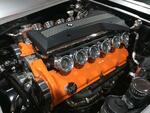
Le Mans Master


Joined: May 2003
Posts: 8,877
Likes: 3,556
From: Fernandina Beach FL
2023 Restomod of the Year finalist
2020 C3 of the Year Winner - Modified
There are lot's of good tips....
Here's my thoughts-
Big charge wire from the Alt to the battery.
Run the electronics OFF the battery. The battery does more than just start your car. First it helps w/ the surges and second it helps filter out the AC not cleaned up by the diodes. Electronics LIKE that!!!
I am also directly running a ground wire from Battery to starter/engine-
 DSCN4921 by richardhayes454, on Flickr
I like big wires- alt wire is running down pass side AWAY from electronics-IF you do have to run electronic wires near the alt wire parallel- a few inches will make a difference- and running them perpendicular is less of an issue
 DSCN4844 by richardhayes454, on Flickr
I am using a BEP marine piece for a junction box- has a cover and it designed to be out it the weather.
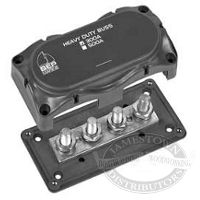
in the back-
 DSCN4990 by richardhayes454, on Flickr
And if it were me (which I am doing) is DON'T relocate the coils till AFTER you get it up and running- You can trust me on that one!!!
Coils are here JUST to get it running-

After its running- then I'll move them-
Just a few wires to sort-

My harness-

Another thing to remember is w/ the gauge of the wire and current rating.
It is rated at IIRC 70ºF- the hotter the wire gets the MORE resistance (or voltage drop) the wire is going to have. Under the hood- you should go UP one size in wire to compensate for the added heat.
As far as fusing coil pacs and injectors. I would fuse them separate (if possible)
The best way is to have the fuel pump and injectors using the same relay trigger protected by a rollover/inertia switch. The Ford is my favorite- easy to find, straight forward and if the unfortunate accident ever happens will keep gas from being sprayed at 50PSI. Used in Mustangs/Tauruses and I think even Summit Racing sells them for $30.

OH- use the fuses that LIGHT up when they blow- will save you a TON of time.
You might want to look at these as well- converts from glass to blade fuses-
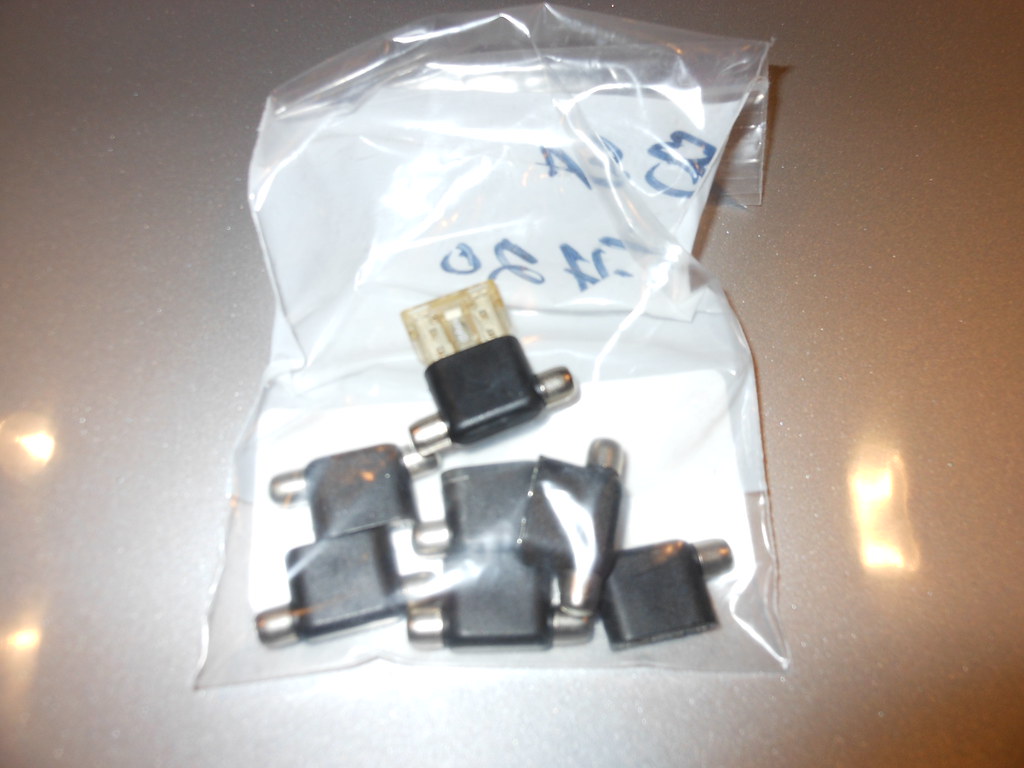 DSCN5010 by richardhayes454, on Flickr
These are my favorite- Modular relay sockets- fully configurable- and have spot for three fuses-
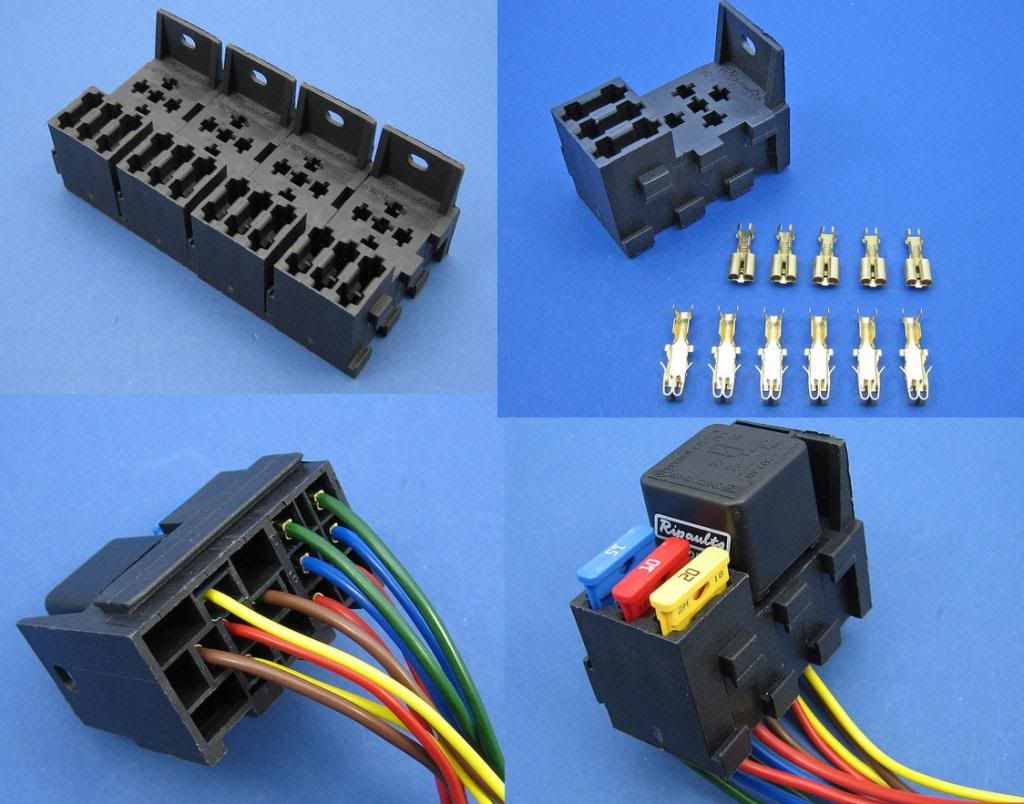
And if you don't want to waste a bunch of time- spring the extra $5 for the Bosch relay!!! If you like headaches- go ahead and buy ther relay at the local Autozone!!!
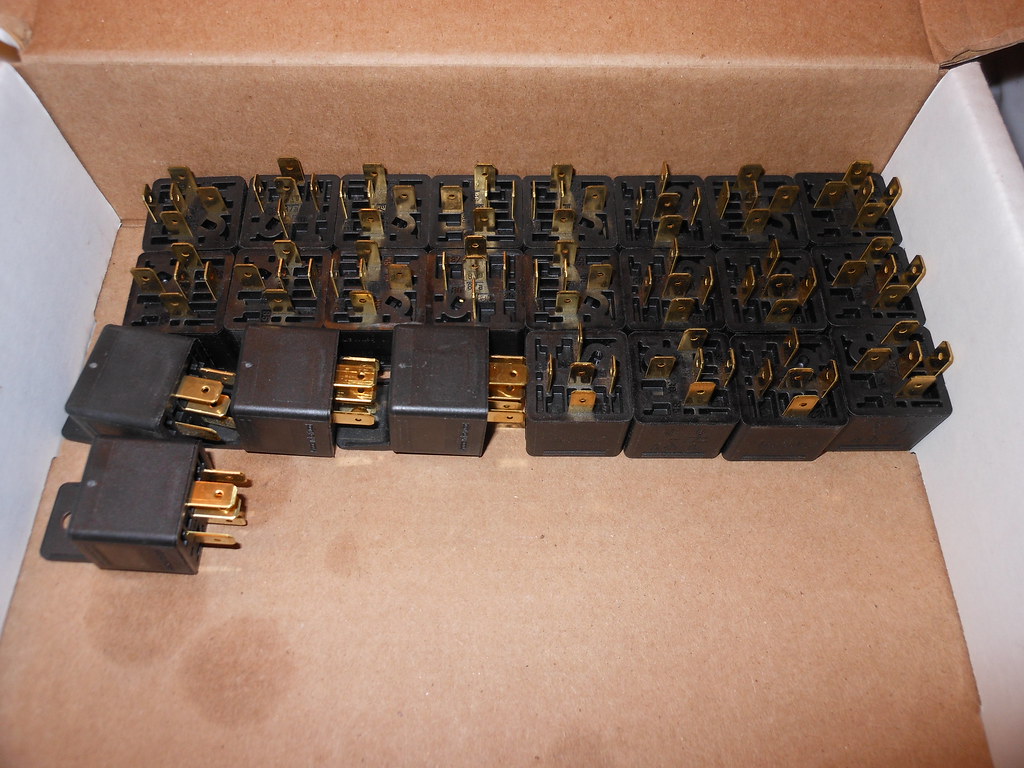 DSCN4922 by richardhayes454, on Flickr
This might help you out wiring as well-
Running wires through a grommet-
I like to take a small tube- sharpen it up on a grinder - put it in a drill- and carefully 'drill' it though the grommet- then run the wires through the tube and then push the tube through.
 DSCN4778 by richardhayes454, on Flickr
 DSCN4777 by richardhayes454, on Flickr
 DSCN4779 by richardhayes454, on Flickr
 DSCN4781 by richardhayes454, on Flickr
Here's my thoughts-
Big charge wire from the Alt to the battery.
Run the electronics OFF the battery. The battery does more than just start your car. First it helps w/ the surges and second it helps filter out the AC not cleaned up by the diodes. Electronics LIKE that!!!
I am also directly running a ground wire from Battery to starter/engine-
DSCN4921 by richardhayes454, on FlickrI like big wires- alt wire is running down pass side AWAY from electronics-IF you do have to run electronic wires near the alt wire parallel- a few inches will make a difference- and running them perpendicular is less of an issue
DSCN4844 by richardhayes454, on FlickrI am using a BEP marine piece for a junction box- has a cover and it designed to be out it the weather.
in the back-
DSCN4990 by richardhayes454, on FlickrAnd if it were me (which I am doing) is DON'T relocate the coils till AFTER you get it up and running- You can trust me on that one!!!
Coils are here JUST to get it running-

After its running- then I'll move them-
Just a few wires to sort-

My harness-

Another thing to remember is w/ the gauge of the wire and current rating.
It is rated at IIRC 70ºF- the hotter the wire gets the MORE resistance (or voltage drop) the wire is going to have. Under the hood- you should go UP one size in wire to compensate for the added heat.
As far as fusing coil pacs and injectors. I would fuse them separate (if possible)
The best way is to have the fuel pump and injectors using the same relay trigger protected by a rollover/inertia switch. The Ford is my favorite- easy to find, straight forward and if the unfortunate accident ever happens will keep gas from being sprayed at 50PSI. Used in Mustangs/Tauruses and I think even Summit Racing sells them for $30.
OH- use the fuses that LIGHT up when they blow- will save you a TON of time.
You might want to look at these as well- converts from glass to blade fuses-
DSCN5010 by richardhayes454, on FlickrThese are my favorite- Modular relay sockets- fully configurable- and have spot for three fuses-

And if you don't want to waste a bunch of time- spring the extra $5 for the Bosch relay!!! If you like headaches- go ahead and buy ther relay at the local Autozone!!!
DSCN4922 by richardhayes454, on FlickrThis might help you out wiring as well-
Running wires through a grommet-
I like to take a small tube- sharpen it up on a grinder - put it in a drill- and carefully 'drill' it though the grommet- then run the wires through the tube and then push the tube through.
DSCN4778 by richardhayes454, on FlickrDSCN4777 by richardhayes454, on FlickrDSCN4779 by richardhayes454, on FlickrDSCN4781 by richardhayes454, on Flickr
Thread Starter
Race Director
Joined: Dec 2005
Posts: 13,515
Likes: 12
From: Fisher, IL
Thanks Richard. Big help.
I was hesitant about rewiring everything mostly because I didn't want to upgrade my fuse/relay box. BUT... I think I'll just buy more of what I currently have and make a nice bracket to hold everything. I saw your 1+3 similar to what I'm using but could only find them being sold overseas. I liked them better than the ones I have as I'm stuck with 2 relays unless I split things up a bunch.
Looks like you used 0/1 gauge? Any fusible link or high amp fuse at the battery for it?
All the same relays? 30amp bosch ones? or are they less amps since you can run more and not worry about overloading it?
I was hesitant about rewiring everything mostly because I didn't want to upgrade my fuse/relay box. BUT... I think I'll just buy more of what I currently have and make a nice bracket to hold everything. I saw your 1+3 similar to what I'm using but could only find them being sold overseas. I liked them better than the ones I have as I'm stuck with 2 relays unless I split things up a bunch.
Looks like you used 0/1 gauge? Any fusible link or high amp fuse at the battery for it?
All the same relays? 30amp bosch ones? or are they less amps since you can run more and not worry about overloading it?
Race Director
Joined: Apr 2009
Posts: 19,294
Likes: 2,754
From: Charlotte NC
I do not know what you meant in what I put in BOLD PRINT in the quote above.
I understand it's safer but here's my question concerning needing them:
Since I'm only running 1 or 2 things off of each 12g wire(1 fan+ gauges, 2nd fan+ spare spot, Ignition relay+nothing, OBDII+PCM power, Horn relay+nothing) I don't feel there's much risk of overloading the wire from starter to fuse block.
Since I'm only running 1 or 2 things off of each 12g wire(1 fan+ gauges, 2nd fan+ spare spot, Ignition relay+nothing, OBDII+PCM power, Horn relay+nothing) I don't feel there's much risk of overloading the wire from starter to fuse block.
I WAS WRONG!!!!!!!!!
ALSO..I had to remove a part of my last post BECAUSE GM uses ONLY ONE relay to power up BOTH banks of your coils and injectors. I was mistaken...and took time to look in the 1999 Corvette Service Manual I have and verified it.
ALSO....just so you know. That ONE relay that GM uses also supplies power to a 15 amp fuse for the throttle control actuator...and a 10 amp fuse for the AC....and a 10 amp fuse for the folding top system....and a 10 amp fuse for the Body Control Module.
I wired in a relay for each bank on the car I am working on...and can be done either way.
DUB
Race Director
Joined: Apr 2009
Posts: 19,294
Likes: 2,754
From: Charlotte NC
 Richard was a BIG help here!!!!

I was hesitant about rewiring everything mostly because I didn't want to upgrade my fuse/relay box. BUT... I think I'll just buy more of what I currently have and make a nice bracket to hold everything. I saw your 1+3 similar to what I'm using but could only find them being sold overseas. I liked them better than the ones I have as I'm stuck with 2 relays unless I split things up a bunch.
AND...in some cases...in the Service manuals I have looked at....the positive battery cable that comes off the battery and goes to a fuse center or distribution block has NO fusible link...and that is because the wire is short.( I am assuming)...but ALL wires coming off the distribution block are protected with a fusible link.
[/QUOTE]All the same relays? 30amp bosch ones? or are they less amps since you can run more and not worry about overloading it?[/QUOTE]
I use the GM 30 amp relays that use the silicone sealed Metri-pac connectors...because if they are out in the engine compartment..I want them water tight.
I use the ones like Richard posted...but only on the interior.
DUB
Thread Starter
Race Director
Joined: Dec 2005
Posts: 13,515
Likes: 12
From: Fisher, IL
YES....4 gauge size smaller is what a fusible link need to be and TRY NOT get it longer than 6 inches
I do not know what you meant in what I put in BOLD PRINT in the quote above.
That is the point....SAFETY and NOT A fire. YES...I understand that battery cables do not have fusible links on them form the factory...BUT I am paranoid...and I HAVE TO make sure all my electrical work is CORRECT...so fusible links, circuit breakers,relays and fuses is what I do.
Stop and think about all what you have done and ask yourself if 'overkill' is a BAD thing. Because....if you do not make sure that you are covered really well...then you may realize that problems that come up will make you say "WOULDA-COULDA-SHOULDA"
I WAS WRONG!!!!!!!!!
ALSO..I had to remove a part of my last post BECAUSE GM uses ONLY ONE relay to power up BOTH banks of your coils and injectors. I was mistaken...and took time to look in the 1999 Corvette Service Manual I have and verified it.
ALSO....just so you know. That ONE relay that GM uses also supplies power to a 15 amp fuse for the throttle control actuator...and a 10 amp fuse for the AC....and a 10 amp fuse for the folding top system....and a 10 amp fuse for the Body Control Module.
I wired in a relay for each bank on the car I am working on...and can be done either way.
DUB
I do not know what you meant in what I put in BOLD PRINT in the quote above.
That is the point....SAFETY and NOT A fire. YES...I understand that battery cables do not have fusible links on them form the factory...BUT I am paranoid...and I HAVE TO make sure all my electrical work is CORRECT...so fusible links, circuit breakers,relays and fuses is what I do.
Stop and think about all what you have done and ask yourself if 'overkill' is a BAD thing. Because....if you do not make sure that you are covered really well...then you may realize that problems that come up will make you say "WOULDA-COULDA-SHOULDA"
I WAS WRONG!!!!!!!!!
ALSO..I had to remove a part of my last post BECAUSE GM uses ONLY ONE relay to power up BOTH banks of your coils and injectors. I was mistaken...and took time to look in the 1999 Corvette Service Manual I have and verified it.
ALSO....just so you know. That ONE relay that GM uses also supplies power to a 15 amp fuse for the throttle control actuator...and a 10 amp fuse for the AC....and a 10 amp fuse for the folding top system....and a 10 amp fuse for the Body Control Module.
I wired in a relay for each bank on the car I am working on...and can be done either way.
DUB
So how does a 30amp relay supply so much power to all those things?
Any difference between an fuse at the battery vs. a fusible link?
I mentioned it turns a 12 gauge wire into a 16 gauge wire because if you treat it like a 12 gauge it's going to burn the 16 gauge part. So you're forced to use your combination of the two at a 16 gauge level. Just seems easier to put a 150 or 200amp fuse in line(for a 4ish gauge wire)
Race Director
Joined: Apr 2009
Posts: 19,294
Likes: 2,754
From: Charlotte NC
I mentioned it turns a 12 gauge wire into a 16 gauge wire because if you treat it like a 12 gauge it's going to burn the 16 gauge part. So you're forced to use your combination of the two at a 16 gauge level. Just seems easier to put a 150 or 200amp fuse in line(for a 4ish gauge wire)
Fusible link wire is NOT the same as your primary wire you are using in the wiring harness. Specifically made wire...and you are over thinking the gauge issue....when this has been done and PROVEN for countless years.
You can look and find more to read...but read this if you have not already.
http://www.ehow.com/info_12199288_fusible-car.html
And consider this....if you have a 60 amp Maxi-fuse....and look in between the two legs of the fuse where we all know a fuse will 'pop'....LOOK at the size of that small wire joining the two legs together...and that is LESS material than a fusible link wire that is 4 gauge sizes small as required.
And like Richard wrote in his one post. HEAT and wiring is not good...so having wires very close to a HEAT SOURCE can effect the properties of what the wire can handle and do.
And you putting in a 150 or 200 amp fuse in line....my question is ....HOW do you know that you need that size of fuse??? By guessing??? Because putting a huge fuse inline....may not blow....thus your WIRE will suffer and melt down.
DUB
Le Mans Master
Joined: May 2003
Posts: 8,877
Likes: 3,556
From: Fernandina Beach FL
2023 Restomod of the Year finalist
2020 C3 of the Year Winner - Modified
Thanks Richard. Big help.
I was hesitant about rewiring everything mostly because I didn't want to upgrade my fuse/relay box. BUT... I think I'll just buy more of what I currently have and make a nice bracket to hold everything. I saw your 1+3 similar to what I'm using but could only find them being sold overseas. I liked them better than the ones I have as I'm stuck with 2 relays unless I split things up a bunch.
Looks like you used 0/1 gauge? Any fusible link or high amp fuse at the battery for it?
All the same relays? 30amp bosch ones? or are they less amps since you can run more and not worry about overloading it?
I was hesitant about rewiring everything mostly because I didn't want to upgrade my fuse/relay box. BUT... I think I'll just buy more of what I currently have and make a nice bracket to hold everything. I saw your 1+3 similar to what I'm using but could only find them being sold overseas. I liked them better than the ones I have as I'm stuck with 2 relays unless I split things up a bunch.
Looks like you used 0/1 gauge? Any fusible link or high amp fuse at the battery for it?
All the same relays? 30amp bosch ones? or are they less amps since you can run more and not worry about overloading it?
Yep- I was only able to find the sockets across the pond in the UK- I ordered a couple dozen and they netted out w/ shipping to about $7 apiece. Plus took less time than getting some stuff from California!!!
Yes- it is 1/0- really nice stuff -"Streetwire" brand.
My thoughts- you run the wire-away from harms way- clamp it down- A fuse is really of no need- just another junction point that could become an issue. Dub's explanation is why I don't like fuses for anything larger than say 30A.
If you look at a 100K car (OK window sticker was only 98K- BMW 750IL)- where cost is no object- but having everything right and working- and they don't fuse SEVERAL large wires running through the car..I rest my case...
Wires from the battery in the trunk to electrical panel, alternator and starter-no fuse in line at all.


30 Bosch relays- now called Tyco- but you can still find them NOS.
Just double up the relays for more current- don't cheap out for $10!!!...Relays have contacts in them -just like your ignition points.
AND you want the relays as CLOSE to the accessory as possible.
Thread Starter
Race Director
Joined: Dec 2005
Posts: 13,515
Likes: 12
From: Fisher, IL
You guys are bad influences on my wallet!
Broke down and ordered some 1/0 gauge CCA wire and terminals. CCA was more than the coated aluminum but from my 2min of research seemed far superior?
Got a 150 amp power bus bar with cover.
4 more bosch relays with bases and a another fuse block or 4. lol.
100x3 uninsulated female terminals in all 3 sizes(10-22).
and some thinned braided copper shielding for my spark plug wires.
I'll have to make a bracket to mount it all but that'll be easy enough.
My question: Should I leave the fuses/relays PCI created or split the coils/ignition into their own relays still? Now that you triple checked DUB...what do you think?
Broke down and ordered some 1/0 gauge CCA wire and terminals. CCA was more than the coated aluminum but from my 2min of research seemed far superior?
Got a 150 amp power bus bar with cover.
4 more bosch relays with bases and a another fuse block or 4. lol.
100x3 uninsulated female terminals in all 3 sizes(10-22).
and some thinned braided copper shielding for my spark plug wires.
I'll have to make a bracket to mount it all but that'll be easy enough.
My question: Should I leave the fuses/relays PCI created or split the coils/ignition into their own relays still? Now that you triple checked DUB...what do you think?
Le Mans Master
Joined: May 2003
Posts: 8,877
Likes: 3,556
From: Fernandina Beach FL
2023 Restomod of the Year finalist
2020 C3 of the Year Winner - Modified
You guys are bad influences on my wallet!
Broke down and ordered some 1/0 gauge CCA wire and terminals. CCA was more than the coated aluminum but from my 2min of research seemed far superior?
Got a 150 amp power bus bar with cover.
4 more bosch relays with bases and a another fuse block or 4. lol.
100x3 uninsulated female terminals in all 3 sizes(10-22).
and some thinned braided copper shielding for my spark plug wires.
I'll have to make a bracket to mount it all but that'll be easy enough.
My question: Should I leave the fuses/relays PCI created or split the coils/ignition into their own relays still? Now that you triple checked DUB...what do you think?
Broke down and ordered some 1/0 gauge CCA wire and terminals. CCA was more than the coated aluminum but from my 2min of research seemed far superior?
Got a 150 amp power bus bar with cover.
4 more bosch relays with bases and a another fuse block or 4. lol.
100x3 uninsulated female terminals in all 3 sizes(10-22).
and some thinned braided copper shielding for my spark plug wires.
I'll have to make a bracket to mount it all but that'll be easy enough.
My question: Should I leave the fuses/relays PCI created or split the coils/ignition into their own relays still? Now that you triple checked DUB...what do you think?
CCA= Copper Clad Aluminum.... You want OFC-oxygen free copper
Current rating charts use Copper wire ...CCA is less-IIRC 10 gauge copper was equivalent to 6 gauge cca. Aluminum heats up faster than copper...heat melts wire. PLUS aluminum expands and contracts more than copper-Tell your homeowners insurance your house has aluminum wire - and you'll probably get a cancellation letter...
Richard
Thread Starter
Race Director
Joined: Dec 2005
Posts: 13,515
Likes: 12
From: Fisher, IL
Bad influence....
CCA= Copper Clad Aluminum.... You want OFC-oxygen free copper
Current rating charts use Copper wire ...CCA is less-IIRC 10 gauge copper was equivalent to 6 gauge cca. Aluminum heats up faster than copper...heat melts wire. PLUS aluminum expands and contracts more than copper-Tell your homeowners insurance your house has aluminum wire - and you'll probably get a cancellation letter...
Richard
CCA= Copper Clad Aluminum.... You want OFC-oxygen free copper
Current rating charts use Copper wire ...CCA is less-IIRC 10 gauge copper was equivalent to 6 gauge cca. Aluminum heats up faster than copper...heat melts wire. PLUS aluminum expands and contracts more than copper-Tell your homeowners insurance your house has aluminum wire - and you'll probably get a cancellation letter...
Richard
Sorry. That's what I meant. I got the OFC not the CCA. Got me worried for a second as it shipped already this morning.
I just saw copper was 100%(99+) conductive where as the aluminum was only 60%. Not sure how conductive the CCA is but I already didn't like it.