




Battery Just Blew Up

Le Mans Master


Joined: Aug 2005
Posts: 6,541
Likes: 1,975
From: Temple Terrace Florida
 Battery
I had two batteries blow up in my Generac generator for my house. I now just replace the battery every year to be safe. The Generac system has a constant trickle charge on the battery. I always approach the battery with safety glasses and long sleeve shirts and pants. Jerry

2026 Loser of the Year


Joined: Sep 2013
Posts: 36,599
Likes: 7,046
From: New Or-leens Loo-z-anna
nothing wrong with the cheap trickle chargers at HF, but as the last post said, put them on a timer. let them run an hour a day or so, not non-stop. I have a few but found it's easier just to use a battery disconnect and re-charge if needed every few months...the top post disconnects with the screw off terminal work great, reach under the battery door and give it a spin. side posts in my C4 is a little more difficult, I use the blade switch there, but either way, you eliminate any parasitic drains, clocks, ecm's, etc...

Racer

Joined: Jan 2014
Posts: 334
Likes: 6
On the classic cars I drive, I disconnect the battery (negative lead) with a quick-disconnect after parking it for the day. I do this basically because of the old wiring in these cars. Every time I replace a circuit or harness I realize how brittle and nasty 40 plus year old wiring can get. As a bonus, the battery doesn't drain or build up gases from a charger.
Glad you are okay.
Glad you are okay.
Burning Brakes

Joined: Jan 2012
Posts: 943
Likes: 73


Race Director


Joined: Sep 1999
Posts: 11,361
Likes: 383
From: Plano TX


Melting Slicks


Joined: Feb 2006
Posts: 3,105
Likes: 96
From: Sunrise FL
BTW, there is no such thing as a "sealed" battery that does not vent hydrogen. Sealed batteries (like Optima) will not spill acid if tipped over, but will still vent off hydrogen gas.

Race Director
Joined: Apr 2007
Posts: 11,152
Likes: 890
From: South Western Ontario
Exactly. And all lead-acid batteries will create hydrogen when charging, even the sealed maintenance free ones.
Corvette Stories
The Best of Corvette for Corvette Enthusiasts

Top 10 Most Expensive Corvettes Ever Sold on Bring A Trailer
Brett Foote
10 Things Every Corvette Owner Needs (2026 Edition)
Michael S. Palmer
8 Most "Only Corvette Owners Understand" Quirks and Problems
Pouria Savadkouei
10 Reasons the C6 Z06 is Still A Performance Benchmark After 20 Years
Joe Kucinski
How Much Horsepower Every Corvette Engine "LOST" in 1972
Joe Kucinski
Top 10 DOs and DON'Ts for Protecting Your Convertible Top!
Michael S. Palmer
Top 10 Most Explosive Corvettes Ever Made: Power-to-Weight Ratio Ranked!
Joe Kucinski
150 hp to 1,250 hp: Every Corvette Generation Compared by the Specs That Matter
Joe Kucinski
8 Coolest Corvette Pace Cars (and Replicas) of All Time
Verdad Gallardo
Race Director
Joined: Mar 2003
Posts: 11,608
Likes: 780
From: Eustis ( Area 51 Bat Cave ) Fl

That's what I do after hearing of too many batteries cooked from crappy trickle chargers.
When charging the battery (yes, even with a trickle charger), the battery door needs to be left open and the driver's window should be rolled down a good bit. That's the only way to get the hydrogen gas out of the battery box/interior.
I doubt there was anything defective with the battery. If constantly on a trickle charger, the electrolyte level needs to be checked every month or so, as well.
I doubt there was anything defective with the battery. If constantly on a trickle charger, the electrolyte level needs to be checked every month or so, as well.
I too doubt this was the batteries fault but rather several things lined up to allow it to happen,
I bought two of the el cheapo HF trickle chargers and while I do not recall what the output was when I tested them it was more than I wanted on a battery 24-7, and some HF stuff is okay some is pure garbage.
One out is to run the trickle charger on a timer, but on my junk I just top off the battery every few weeks if I am not using the car/trike, I never liked the idea of the battery boiling.

Drifting

Joined: Sep 2010
Posts: 1,412
Likes: 50
From: Laguna Niguel California
Yes, all batteries develop hydrogen gas. I had some explosions in an industrial application and actually traced it to a shortcut taken by the (Cheap) manufacturer. They used slightly different bronze alloys for the internal terminal connections. After a while galvanic corrosion occurred which created a very slight gap which upon charging resulted in a spark - K-boom to quote Don Knotts.
Le Mans Master

Joined: May 2003
Posts: 8,877
Likes: 3,556
From: Fernandina Beach FL
2023 Restomod of the Year finalist
2020 C3 of the Year Winner - Modified
There is a PROBLEM w/ cheap trickle chargers!!!
Basically you are taking AC current from your house and converting it to DC- HOWEVER there is still some AC left over or not filtered out. The cheaper have really bad filtering....
Depending on how much AC ripple or unfiltered AC current the charger puts out-this is also dependent on the battery's internal resistance- the AGM type batteries have a lower resistance than gel cells which makes them experience more AC ripple....
The unfiltered AC from your cheap charger-
1) Will heat the battery up - creating MORE out gassing
2) result in electrolyte premature dry out
3) rapid deterioration of the plate active material and grid
Here's a study on it- http://www.cdtechno.com/pdf/ref/41_2131_0212.pdf
I was in the Car Stereo Business many years ago and am all to familiar w/ what a bad charger can do to a battery...
Basically you are taking AC current from your house and converting it to DC- HOWEVER there is still some AC left over or not filtered out. The cheaper have really bad filtering....
Depending on how much AC ripple or unfiltered AC current the charger puts out-this is also dependent on the battery's internal resistance- the AGM type batteries have a lower resistance than gel cells which makes them experience more AC ripple....
The unfiltered AC from your cheap charger-
1) Will heat the battery up - creating MORE out gassing
2) result in electrolyte premature dry out
3) rapid deterioration of the plate active material and grid
Here's a study on it- http://www.cdtechno.com/pdf/ref/41_2131_0212.pdf
I was in the Car Stereo Business many years ago and am all to familiar w/ what a bad charger can do to a battery...
Burning Brakes
Joined: Jan 2012
Posts: 943
Likes: 73
7d8
The battery shown in your post looks like a conventional type?
To add to the problem with cheap trickle chargers is that they have a fixed amperage output compared to a Battery Tender type charger. The trickle charger keeps a constant amperage until removed from the battery, which increases gassing. A electronic controlled Tender type will test the battery and set the amperage according to the need, it doesn't stay at the max output. Even so, the Tender type still has to be monitored, it's not a plug in and forget for the winter. And, the Tender type can also break, which is another reason to keep an eye on it.
The battery shown in your post looks like a conventional type?
To add to the problem with cheap trickle chargers is that they have a fixed amperage output compared to a Battery Tender type charger. The trickle charger keeps a constant amperage until removed from the battery, which increases gassing. A electronic controlled Tender type will test the battery and set the amperage according to the need, it doesn't stay at the max output. Even so, the Tender type still has to be monitored, it's not a plug in and forget for the winter. And, the Tender type can also break, which is another reason to keep an eye on it.
Burning Brakes
Joined: Jan 2012
Posts: 943
Likes: 73

Racer
Joined: Jan 2014
Posts: 425
Likes: 3
From: Jefferson City Missouri
The Schumacher battery tenders are JUNK!!!! If you bought one from Wal-Mart, that is probably what you have. I had two of them and both of them over time started to over-charge batteries. I'm not talking about over charging them after being left on for weeks/months, I'm talking about they never stopped charging! The first one was boiling batteries and would continue to run well above 14.8VDC. After boiling two of my batteries I tossed it in the trash. Then about a year later the other one started doing the same thing. I thought for sure it was just me. I did some testing and sure enough it was doing the same thing and over-charging the batteries. I would never trust them again!
I have since moved on to BatteryMinder http://www.batteryminders.com/. I now have 5 of them of different models and they work WONDERFUL!!! I have gotten 13 years out of my riding lawn mower battery using one of these on it the last couple of years.
I too disconnect the battery EVERY time I park it in the garage. I will never charge the battery in the car. I have a handle on it and remove it when parked over the winter. Admittingly, I don't even bolt the cables down. I just press them on and give them a good twist by hand. Works well.
I have since moved on to BatteryMinder http://www.batteryminders.com/. I now have 5 of them of different models and they work WONDERFUL!!! I have gotten 13 years out of my riding lawn mower battery using one of these on it the last couple of years.
I too disconnect the battery EVERY time I park it in the garage. I will never charge the battery in the car. I have a handle on it and remove it when parked over the winter. Admittingly, I don't even bolt the cables down. I just press them on and give them a good twist by hand. Works well.
Le Mans Master
Joined: May 2003
Posts: 8,877
Likes: 3,556
From: Fernandina Beach FL
2023 Restomod of the Year finalist
2020 C3 of the Year Winner - Modified
Racer
Joined: Jan 2014
Posts: 425
Likes: 3
From: Jefferson City Missouri
Corrosion internally can cause shorting of the plates which increases the internal resistance. This is the sign of a week battery.

Le Mans Master
Joined: Aug 2006
Posts: 7,427
Likes: 1,560
From: mount holly NC
2025 c3 ('74-'82) of the Year Finalist - Unmodified
2019 C3 of Year Finalist (appearance mods)
A bad charger gave you the fumes but those replacement battery terminal ends gave you the spark when you turned on the starter, get rid of them and get some ready made cables with the molded ends.


Burning Brakes
Joined: Jan 2012
Posts: 943
Likes: 73
Ok, that's just the normal stuff. When a battery needs charging, that means the plates are sulfated and I thought you were referring to that state of the chemical process.

Burning Brakes

Joined: Aug 2013
Posts: 1,071
Likes: 322
From: palm springs ca
I have been in 2 battery blow ups. One was my fault back in 1970 as I disconnected as I was viewing the level in the cells (stupid), but I learned. The second sent me to the Hospital. I was in town and the car was dead, so I went to see if the posts were tight with my hand and BANG. Cut my face and arms and acid in the eyes. I think the long water wash at the ER did more harm than the acid, but the day before this was posted I had something opposite happen.
I had a charger blow and catch fire. I was fortunate that I was charging the battery out side the shop. It was a 6/12/24 volt charger WITH a 40 amp breaker inside. It was properly selected and hooked up (polarity) correct. About 1/2 hr into the 10 amp charge I heard a hiss and saw all the smoke. I quickly unplugged the line to the charger and it took about 30 seconds to calm down.
Point I am making is that I will NEVER charge a battery in the shop after seeing this happen. It is not uncommon to hook up a charger to a low battery in a car indoors but you can bet the charger will be 2 amps and in a fire proof area. My other chargers would cycle on & off if the battery was internally shorted but this one gave up all at once.
Took it apart and found that the bridge rectifier and transformer burnt and the breaker was in good condition.
Dom
I had a charger blow and catch fire. I was fortunate that I was charging the battery out side the shop. It was a 6/12/24 volt charger WITH a 40 amp breaker inside. It was properly selected and hooked up (polarity) correct. About 1/2 hr into the 10 amp charge I heard a hiss and saw all the smoke. I quickly unplugged the line to the charger and it took about 30 seconds to calm down.
Point I am making is that I will NEVER charge a battery in the shop after seeing this happen. It is not uncommon to hook up a charger to a low battery in a car indoors but you can bet the charger will be 2 amps and in a fire proof area. My other chargers would cycle on & off if the battery was internally shorted but this one gave up all at once.
Took it apart and found that the bridge rectifier and transformer burnt and the breaker was in good condition.
Dom

2nd Gear
Joined: Apr 2013
Posts: 2
Likes: 0
From: Limestone TN
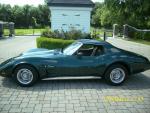
So I have a 74 convertible project that I am working on. It has a 1 year old battery in it that I bought from Walmart. The battery has a trickle charger on it to keep it charged as I do not start the car but every once in a while to move it or keep the carb from getting stale. Well today I was out doing some sanding on the body and wanted to get the car out into the sunlight, so I disconnected the charger and proceeded to turn on the ignition. I have open headers on the car and at first thought the car backfired, but noticed smoke coming from behind the seat. The noise actually deafened my right ear as it was a loud boom. I immediately lifted the vert cover and disconnected the ground cable and got out of the garage to let the poisonous gas clear. I went back in with a respirator to baking soda the battery compartment and my garage floor. I tell you what, I am 47 and have been working on cars since I could drive and never once had this happen and as a kid had a battery fall into my radiator and short out. This is some scary crap. This is especially scary with the battery sitting right inside the drivers compartment.
So anyone else have one of these interesting stories? And what can be done to avoid this again? It might only be once in a lifetime, but not one I would like to recreate .
So anyone else have one of these interesting stories? And what can be done to avoid this again? It might only be once in a lifetime, but not one I would like to recreate .