






Plumbers Putty

Thread Starter
Instructor

Joined: Aug 2014
Posts: 119
Likes: 0
From: Torrance Ca
 Plumbers Putty
When I was disassembling the T-molding on the center support getting ready for paint last year, I noticed there was plumbers putty underneath the molding. Was that there for sealing or anti-rattle purposes. Getting ready for reassembly and don't want any leaks or rattles. It was also between the two A pillar moldings. Anyone know where and how much to apply. There was some rust at the rear of the T-molding, and I don't know how the water is supposed to drain from that area, because it is relatively flat. I don't want to block water from draining. Should I use clear silicone and run a small bead around the outside perimeter of all the T-top trim along with the putty underneath. Any experience with this type of thing would be appreciated.

Zen Vet Master Level VII


Joined: Mar 2016
Posts: 5,218
Likes: 1,174
From: Southlake, TX
Yes, I would. On every T Tops I've either disassembled or put back together I've used a discreet amount of sealant prevented leaks, rattles and wind noise.
Just a thin, unbroken seal line will do- don't want it squishing out the sides!
Thread Starter
Instructor
Joined: Aug 2014
Posts: 119
Likes: 0
From: Torrance Ca
Is the plumbers putty still a good choice, (probably didn't have many options in 68), or today's silicones. I think the putty would be good for the vibrations because it is pretty thick, and the silicone would probably work better for sealing between the two A-pillar moldings.
Zen Vet Master Level VII
Joined: Mar 2016
Posts: 5,218
Likes: 1,174
From: Southlake, TX
Sorry, not sure what plumbers putty is--- I've never used it.
I'm a fan of clear silicone, easy to apply, sets quickly and molds nicely to contours. I don't think you can go wrong.
I'm a fan of clear silicone, easy to apply, sets quickly and molds nicely to contours. I don't think you can go wrong.
Thread Starter
Instructor
Joined: Aug 2014
Posts: 119
Likes: 0
From: Torrance Ca
It's used for sink drains and I guess old vettes, lol. What,s nice about it is, when you push something down in it, it stays there, and it doesn't harden even after 48 years. Silicone takes a little longer to set up to hold in place. Thanks for your quick responses to my posts. I think I'll use a combo of both. Underneath the center T-molding there is some contours that have a pretty good gap between the body and molding where the putty would hold things together pretty firmly to reduce any movement, same with the bottom trim around the A-pillar frame. The rest of the trim I think I'll go with the clear silicone. Thanks again.
Thread Starter
Instructor
Joined: Aug 2014
Posts: 119
Likes: 0
From: Torrance Ca
No, it was plumbers putty, light gray in color, and not uniform in shape, at least it looked and felt like putty to me, but that ribbon looks like a good choice also, might have to look at that also. How thick is that stuff, about an 1/8th or so?

Team Owner


Joined: Sep 2006
Posts: 31,335
Likes: 4,449
From: Westminster Maryland
Hi,
I found something that I'd describe as similar to plumber's putty or window glass glazing on my 71.
It placement on the ss trim would have put it on the rear side of the lip in the windshield header that the ss trim clips over.
Regards,
Alan
My thought is that the cracks formed in it as the material aged and shrank.

I found something that I'd describe as similar to plumber's putty or window glass glazing on my 71.
It placement on the ss trim would have put it on the rear side of the lip in the windshield header that the ss trim clips over.
Regards,
Alan
My thought is that the cracks formed in it as the material aged and shrank.
Corvette Stories
The Best of Corvette for Corvette Enthusiasts

5 Best & 5 Worst Corvette Daily Drivers
Joe Kucinski
The Headlights of Every Corvette Generation Explained
Joe Kucinski
5 Best & 5 Most Overrated Corvette Track Packages of All Time!
Joe Kucinski
Every 2027 Corvette Engine Explained
Joe Kucinski
Designer Imagines A Corvette That Looks More Like a Corvette Than the Corvette
Verdad Gallardo
10 Ugly Corvettes That We Still Kinda Love
Joe Kucinski
Top 10 Most Expensive Corvettes Ever Sold on Bring A Trailer
Brett Foote
10 Things Every Corvette Owner Needs (2026 Edition)
Michael S. Palmer
8 Most "Only Corvette Owners Understand" Quirks and Problems
Pouria Savadkouei
Thread Starter
Instructor
Joined: Aug 2014
Posts: 119
Likes: 0
From: Torrance Ca
Hi,
I found something that I'd describe as similar to plumber's putty or window glass glazing on my 71.
It placement on the ss trim would have put it on the rear side of the lip in the windshield header that the ss trim clips over.
Regards,
Alan
My thought is that the cracks formed in it as the material aged and shrank.
I found something that I'd describe as similar to plumber's putty or window glass glazing on my 71.
It placement on the ss trim would have put it on the rear side of the lip in the windshield header that the ss trim clips over.
Regards,
Alan
My thought is that the cracks formed in it as the material aged and shrank.

Race Director

Joined: Mar 2006
Posts: 14,112
Likes: 28
From: Florida
It is 3M 08578 Strip Caulk (Dum Dum)
Available in grey or black had has been used in a lot of areas by all car manufacturers over the years. Not used much since the 80s.
It can dry out and crack over many years, but usually not.
Available at any auto paint supplier.
BTW, the 3M ribbon sealer is the old time windshield adhesive, no longer used and has to be cut out.
Thread Starter
Instructor
Joined: Aug 2014
Posts: 119
Likes: 0
From: Torrance Ca
No, it is not plumbers' putty, although it looks very similar.
It is 3M 08578 Strip Caulk (Dum Dum)
Available in grey or black had has been used in a lot of areas by all car manufacturers over the years. Not used much since the 80s.
It can dry out and crack over many years, but usually not.
Available at any auto paint supplier.
BTW, the 3M ribbon sealer is the old time windshield adhesive, no longer used and has to be cut out.
It is 3M 08578 Strip Caulk (Dum Dum)
Available in grey or black had has been used in a lot of areas by all car manufacturers over the years. Not used much since the 80s.
It can dry out and crack over many years, but usually not.
Available at any auto paint supplier.
BTW, the 3M ribbon sealer is the old time windshield adhesive, no longer used and has to be cut out.
Team Owner
Joined: Sep 2006
Posts: 31,335
Likes: 4,449
From: Westminster Maryland
Hi,
I would have a difficult time describing this material as gray "dum-dum".
This is a saved sample of the original material shown in my photo of the large piece of ss roof panel trim.
Plumber's putty or glazier's putty.
A material similar to "strip caulk" was also used, but this isn't it.
Regards,
Alan


THIS is the material used that's similar to todays 3M strip caulk.
Note it's still sticky and stretchy.
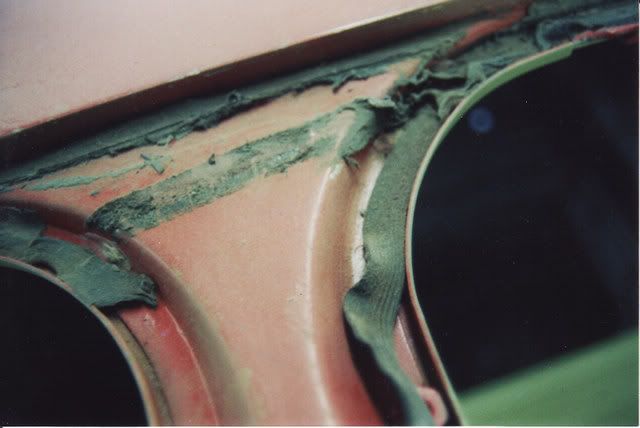
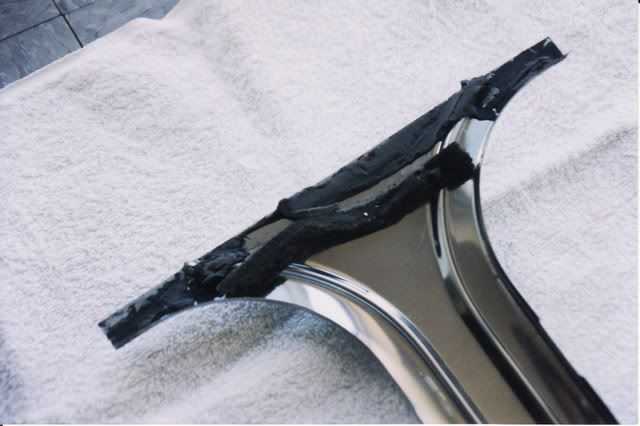
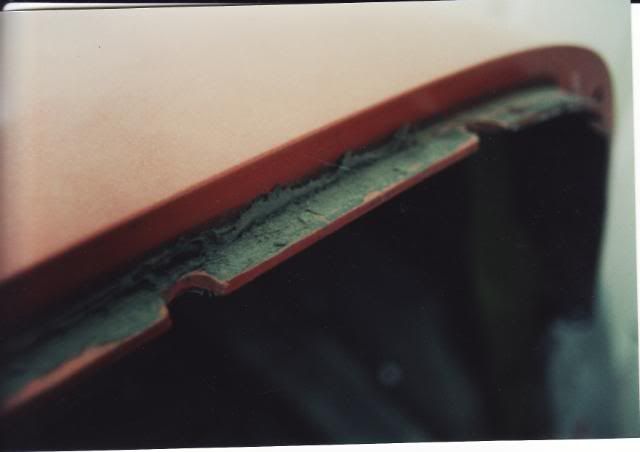
I would have a difficult time describing this material as gray "dum-dum".
This is a saved sample of the original material shown in my photo of the large piece of ss roof panel trim.
Plumber's putty or glazier's putty.
A material similar to "strip caulk" was also used, but this isn't it.
Regards,
Alan
THIS is the material used that's similar to todays 3M strip caulk.
Note it's still sticky and stretchy.
Last edited by Alan 71; Jul 11, 2016 at 12:09 PM.
Thread Starter
Instructor
Joined: Aug 2014
Posts: 119
Likes: 0
From: Torrance Ca
Hi,
I would have a difficult time describing this material as gray "dum-dum".
This is a saved sample of the original material shown in my photo of the large piece of ss roof panel trim.
Plumber's putty or glazier's putty.
A material similar to "strip caulk" was also used, but this isn't it.
Regards,
Alan
THIS is the material used that's similar to todays 3M strip caulk.
Note it's still sticky and stretchy.
I would have a difficult time describing this material as gray "dum-dum".
This is a saved sample of the original material shown in my photo of the large piece of ss roof panel trim.
Plumber's putty or glazier's putty.
A material similar to "strip caulk" was also used, but this isn't it.
Regards,
Alan
THIS is the material used that's similar to todays 3M strip caulk.
Note it's still sticky and stretchy.

Team Owner

Joined: Jan 2006
Posts: 37,637
Likes: 3,118
From: Crossville TN
Installing caulking that was used at the factory 50 years ago doesn't really make any 'practical' sense, IF your intent is to have something there that will seal leaks. Modern synthetic rubber materials (like the 'ribbon' sealant) are much better suited to sealing AND remaining viable for many decades.
If it is important for you to know (yourself ONLY) that 'factory correct' sealant was used, by all means, go for it (if you can actually find the same stuff). Otherwise, use better stuff that is easier to apply and works much better.
If it is important for you to know (yourself ONLY) that 'factory correct' sealant was used, by all means, go for it (if you can actually find the same stuff). Otherwise, use better stuff that is easier to apply and works much better.
Last edited by 7T1vette; Jul 11, 2016 at 08:08 PM.



Race Director
Joined: Mar 2006
Posts: 14,112
Likes: 28
From: Florida
Hi,
I would have a difficult time describing this material as gray "dum-dum".
This is a saved sample of the original material shown in my photo of the large piece of ss roof panel trim.
Plumber's putty or glazier's putty.
A material similar to "strip caulk" was also used, but this isn't it.
Regards,
Alan
THIS is the material used that's similar to todays 3M strip caulk.
Note it's still sticky and stretchy.
I would have a difficult time describing this material as gray "dum-dum".
This is a saved sample of the original material shown in my photo of the large piece of ss roof panel trim.
Plumber's putty or glazier's putty.
A material similar to "strip caulk" was also used, but this isn't it.
Regards,
Alan
THIS is the material used that's similar to todays 3M strip caulk.
Note it's still sticky and stretchy.
Apparently at the factory, it came bulk in 3 ft rolls, not a retail box of course. Commonly known as body caulking compound or nick named dum dum. It does stay pliable and sticky all these years
You should know that plumbers putty or window glaze will NOT stay pliable for 40+ years, but will dry out, harden and crack.
Thread Starter
Instructor
Joined: Aug 2014
Posts: 119
Likes: 0
From: Torrance Ca
Installing caulking that was used at the factory 50 years ago doesn't really make any 'practical' sense, IF your intent is to have something there that will seal leaks. Modern synthetic rubber materials (like the 'ribbon' sealant) are much better suited to sealing AND remaining viable for many decades.
If it is important for you to know (yourself ONLY) that 'factory correct' sealant was used, by all means, go for it (if you can actually find the same stuff). Otherwise, use better stuff that is easier to apply and works much better.
If it is important for you to know (yourself ONLY) that 'factory correct' sealant was used, by all means, go for it (if you can actually find the same stuff). Otherwise, use better stuff that is easier to apply and works much better.