When you click on links to various merchants on this site and make a purchase, this can result in this site earning a commission. Affiliate programs and affiliations include, but are not limited to, the eBay Partner Network.
Does anyone see a problem with upgrading a current SI 63 amp alternator on a 1979 Corvette with a 140 amp alternator from a 1999 Cadillac. I bought the conversion wire with the resistor from Corvette America so all the wires should hook up with no problem. Just want to be sure.
No problem at all...as long as the new alternator doesn't send out more than 63 amps. That's what the wiring was rated for. Double the current going into the existing wiring and guess what might happen???
Maybe....fried wiring??
A 144 amp alternator is capable of pumping out 144 amps. Maybe it won't do that under normal circumstances; but what if it malfunctions by going to maximum charge all by itself?
The wiring being 'fed' by the alternator must be capable of handling that amount of current.
Yep, listen to 7t1s words of wisdom you dont want a melt down,
I love upgrading the alt, i run far more high draw goodies than my 69 came with, my alt i believe is on the 140-160 amp range, cant recall but my feed wire from it is much larger gauge than stock,
Which brings us to if you are not running a bunch of high demand goodies the stock alt is fine.
as long as the new alternator doesn't send out more than 63 amps
Not sure what this comment means.
If you have a 144 amp alternator it means that it has a capacity limit of a 144 amp DRAW.
Amperage is a demand component. Something or many somethings have to demand the current for it to flow. The alternator cannot simply choose to push amperage.
Think about you battery. what is it capable of? 1000 amps 10,000 amps perahps for a very short duration. Yet it does not push it's amperage down the battery cable. It simple supplys it when demanded.
An Alternator could push more voltage, but that is not a wire gauge dependant quantity.
If you are worried about it then put a fusable link or fuse near the alternator for the wire size you are using.
Think about this, What size wire can tolerate a steady 144 amp draw? Nothing you can put on that alternator.
Does anyone see a problem with upgrading a current SI 63 amp alternator on a 1979 Corvette with a 140 amp alternator from a 1999 Cadillac. I bought the conversion wire with the resistor from Corvette America so all the wires should hook up with no problem. Just want to be sure.
There is no problem with upgrading to a CS144, just make sure to upgrade your charge wires. I used 8 gauge charge wire from the alt to the horn relay, and 8 gauge from the horn relay to the starter. Lastly, I added another 8 gauge charge wire from the alt straight to the battery with a 10 gauge fusible link. All factory wiring is still in tact, never any issues with this setup in 8 years and 18k miles.
Your factory ammeter may ready inaccurately though, mine does, I added a hidden digital volt meter coming directly off of the battery terminals so I always know exactly what I have at the battery.
There are 2 connector plugs on the harness going between the interior and exterior. One plug is for the body harness and the other plug is for the engine harness. On a 78, the charging wire from the alternator goes through the body harness plug and then jumpers under the dash to the engine harness plug where it exits again before going to the starter solenoid. On it's way to the starter solenoid, it passes through another "solenoid harness" connector which has a total of 3 wires. These charging wire is 10 gauge wire.
By this routing, the charging wire passes through a number of connectors and is 10 gauge. Both, makes it incapable of handling the higher currents from a larger alternator but it's mostly because the connectors won't reliably handle the current. There have even been many cases of the connectors melting with the stock alternator.
So, the charging wire should be upgraded unless you are OK with your car possibly having at best an electrical failure where it quits charging or loses power and at worst the failure causes it to catch on fire.
I would run a new 8 gauge wire from the alternator directly to the solenoid. I would also remove the old wire from the alternator to the firewall plug. That way, if the new wire fails you don't accidentally start running the car on the old wire without knowing it. IF you want a place to connect aftermarket accessories then put a terminal block in the middle of the new wire run.
If you have a 144 amp alternator it means that it has a capacity limit of a 144 amp DRAW.
Amperage is a demand component. Something or many somethings have to demand the current for it to flow. The alternator cannot simply choose to push amperage.
Think about you battery. what is it capable of? 1000 amps 10,000 amps perahps for a very short duration. Yet it does not push it's amperage down the battery cable. It simple supplys it when demanded.
An Alternator could push more voltage, but that is not a wire gauge dependant quantity.
If you are worried about it then put a fusable link or fuse near the alternator for the wire size you are using.
Think about this, What size wire can tolerate a steady 144 amp draw? Nothing you can put on that alternator.
That is correct! The alternator will only supply amps based on DRAW. It will not magically put out 140 amps unless accessories running pull that draw. The prudent thing is too add an in line fuse or additional wiring but unless you have HIGH amp draw accessories added on the car, the chances the 140 amp alternator will ever charge near that capacity is very small. In most cases the biggest advantage of a high amp alternator on a mostly stock accessory car is faster battery charge after a start, high amperage capacity at alternator idle, and much cooler alternator operation since it will work much less providing say 50 amps versus am OEM 63 amp alternator. The more modern high amp alternator I have, CS144-140 amp, also has a much better designed case and fan for cooler operation. Heat is the enemy of the alternator and will shorten its operating life dramatically...
Last edited by jb78L-82; Mar 13, 2017 at 10:23 AM.
As far a 'upgrading' the wire along with the alternator-
-use the right kind of wire- I don't recommend the general purpose stuff
-rule of thumb- go with one size BIGGER due to the heat under the hood. Heat adds resistance. Wires are rated at 70ºF- rarely is it those temps under the hood.
Here's a chart- 8 gauge for that alt is the minimum-I'd personally go bigger....
I've probably read more than a handful of separate postings on the Forum over the last few months where the alternator in their car was going to max charge. If the battery is already fully charged, that won't be a problem; if the battery is somewhat depleted, your guess is as good as mine as to how many amps a 144 amp alternator will put out.
Yes, you can put a fusible link, a circuit breaker, or a fuse in that line. Then, when it blows, you can fix that before your alternator will function.
All in all, it makes NO SENSE to upgrade an alternator without upgrading the main power wires that it feeds. And, I will loudly proclaim...anyone who recommends upgrading an alternator without upgrading wiring needs to have his 'electrons' removed.
Last edited by 7T1vette; Mar 13, 2017 at 06:18 PM.
The best thing to use for charge wire if you have HEAVY amp draw (multiple fans, stereo, AC, additional lighting etc) is "00" welding lead cable. Ofcourse this would have to go from the alternator, through a big fuse, then to the starter or better yet, directly to the battery positive.
Ofcourse you'll need to match that on the ground side as well.
I had to do my C5Z this way because of lots of draw/heat.
Probably way over kill on a C3 though.
Tech Tip
If you do switch to welding lead, make sure to use the CORRECT size lug to match the size of the alternator positive post or bolt hole EXACTLY... You want a tight fit or it can burn the post on the alternator. (reg/rect)
If nothing else, the CS series alternators (at least the OEM GM versions) feature a much faster reaction time for detecting voltage loss at the regulator vs the SI units. This provides much more steady voltage and amperage draw. On vehicles I do charging system upgrades on to use features like auto down/up windows, delay off headlights, etc. the CS144 alternators can't be beat. It's not always about high amperage capability-it's more about voltage management.
Last edited by gmachinz; Mar 15, 2017 at 03:03 PM.
Ideally, the matching lug installed onto any heavy gauge wire should be crimped using quality industrial equipment.
Yes, crimped on the cable for sure, but on the alternator side of the lug (on the eyelet), it needs to fit snugly on the stud/bolt. If not, it can burn the stud/post/bolt hole on the regulator/rectifier.
You can get a hydraulic cable crimper for the 2/0 lugs at Harbor Freight for $40.
But yes, I agree, way over kill on anything on a C3.
On my 71, I have a Lincoln MK8 fan that pulls about 40 amps continously, AC, stereo system w/amp, MSD etc etc... so I have a decent amount of amp draw when the lights and everything is on, and my redundant 8 ga charge cables have been plenty.
Its amazing how bright 45 year old dash lights can be when there is a solid 14.3v going through the car at full electric load.
The length of 2/0 cable required to go from alternator to starter could support about 400-500A so it's overkill for any standard alternator installation. You'd have to be using a very large specially built competition alternator to require a cable that large.
Granted this is in one of my 1980's Silverado pickups but the CS144 style alternator handles all the stock duties just fine. I added a lot of optional accessories and kept it all appearing stock-and voltage is always rock steady at 14V+ no matter how many things I've got running.
Its amazing how bright 45 year old dash lights can be when there is a solid 14.3v going through the car at full electric load.
Yep!
I'm into overkill and have plenty of electrical draw-
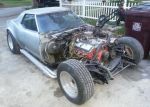
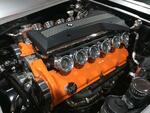
I'm running dual spal fans- electric AC compressor, electric power steering-electric fuel pump and 12 LS coils and 12 Bosch injectors- electric headlight motors plus 80/100w bulbs. Heated seats and cooled/heated cupholder but to keep my carbon footprint in check I went w/ LED lighting.
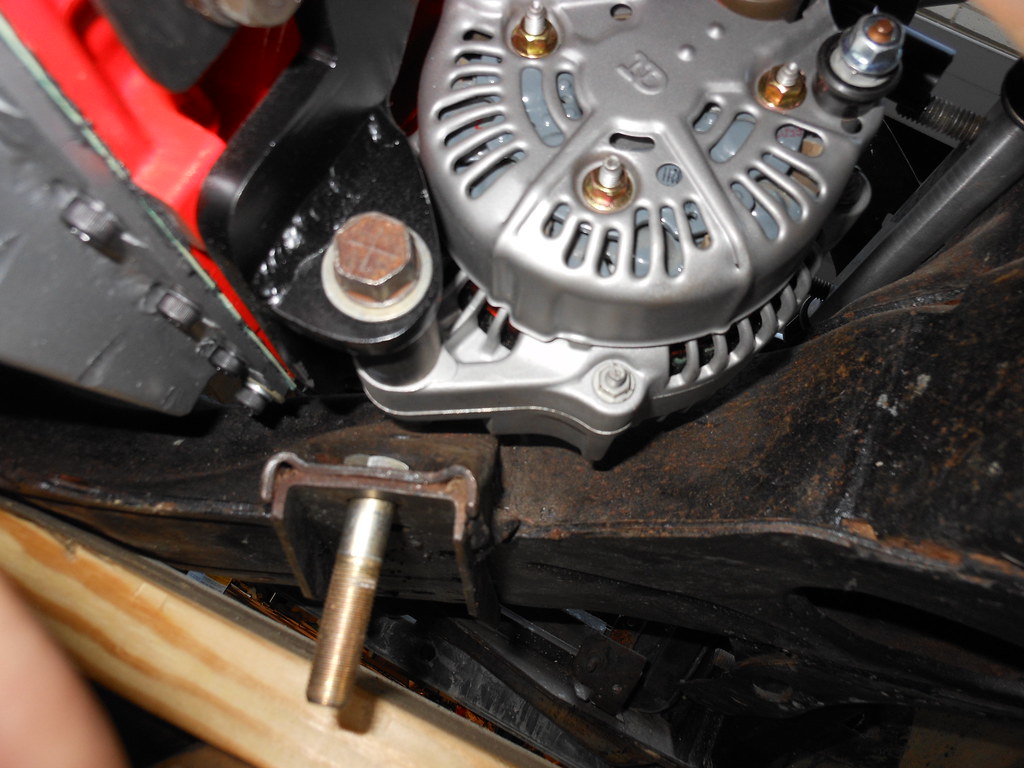
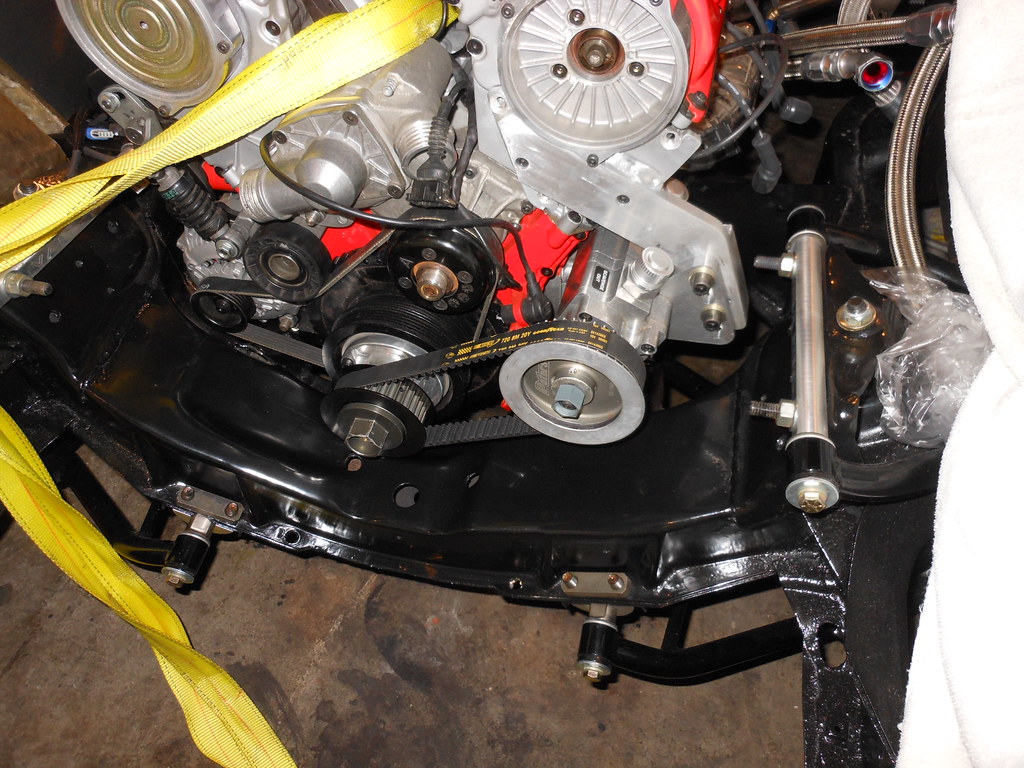
I went w/ a custom built Nippondenso alternator- as it's small size and with 80-90 Amps available at idle-
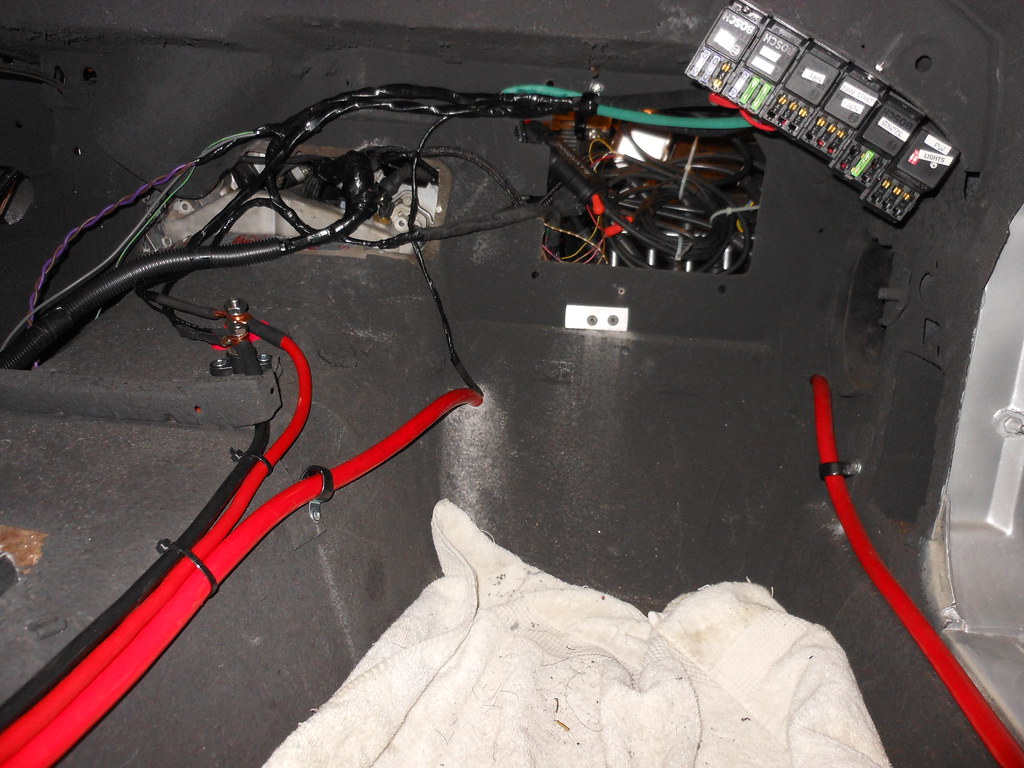
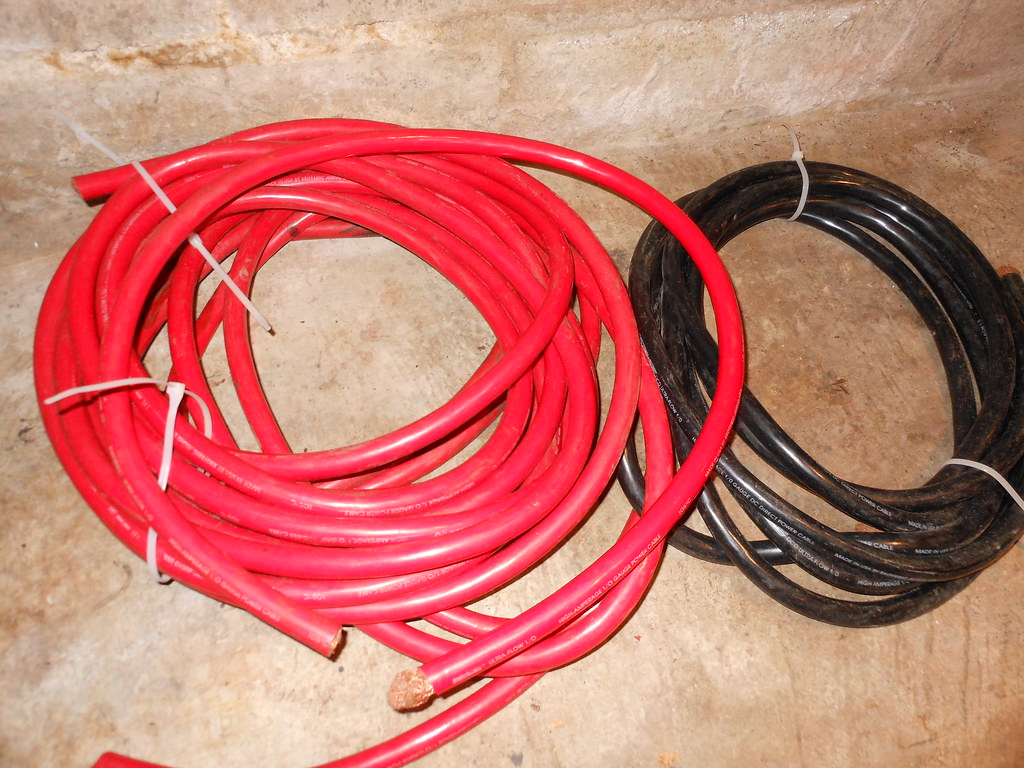
Also went with 1/0 gauge wire... from the Alt to the battery and battery to the starter. I used 4GU to some marine post terminals to under the dash for Vintage AC /ECU/Power windows/ electric exhaust cut-outs-door solenoids- door locks
[url=https://flic.kr/p/sngax5]
Alternator- tight fit...
[url=https://flic.kr/p/r71qsP]
[url=https://flic.kr/p/ngYHtr]
cable-
[url=https://flic.kr/p/p8aUdM]
Last edited by Richard454; Mar 16, 2017 at 11:27 PM.
Reason: double pictures?
There are 2 connector plugs on the harness going between the interior and exterior. One plug is for the body harness and the other plug is for the engine harness. On a 78, the charging wire from the alternator goes through the body harness plug and then jumpers under the dash to the engine harness plug where it exits again before going to the starter solenoid. On it's way to the starter solenoid, it passes through another "solenoid harness" connector which has a total of 3 wires. These charging wire is 10 gauge wire.
By this routing, the charging wire passes through a number of connectors and is 10 gauge. Both, makes it incapable of handling the higher currents from a larger alternator but it's mostly because the connectors won't reliably handle the current. There have even been many cases of the connectors melting with the stock alternator.
So, the charging wire should be upgraded unless you are OK with your car possibly having at best an electrical failure where it quits charging or loses power and at worst the failure causes it to catch on fire.
I would run a new 8 gauge wire from the alternator directly to the solenoid. I would also remove the old wire from the alternator to the firewall plug. That way, if the new wire fails you don't accidentally start running the car on the old wire without knowing it. IF you want a place to connect aftermarket accessories then put a terminal block in the middle of the new wire run.
I installed a Powermaster 140amp alternator in my 79 a few years back. The voltage regulator kept the voltage in the proper range, but it was malfunctioning and putting out full amperage. The connector melted before the fusible links blew. It melted to the point where the positive and ground wires in the connector had touched and melted lengths of wire on either side of it. The only reason it didn't set fire to the car is because they melted and disconnected from each other.
Lots of replaced wire later, fusible links are now fast blow fuses and a fused 6 gauge wire is also run between the alternator and starter.
Don't upgrade the alternator without upgrading the wiring between the alternator and starter (the wire from the starter to the battery is usually very large, since it handles sending a lot of amperage to the starter).
Thanks for all of the responses. I am convinced that it would not be a good idea to upgrade to a CS 144 on a stock 79 without upgrading the all the wiring as well. So a CS 144 is out. I still want to upgrade my system without upgrading the wiring so what do you think about going with a CS130 from a 1987 Camaro. This alternator is rated at 100 amps. The original SI alternator is rated at 63 amp. I would think the stock wiring could handle 100 amps. What do you think? Thanks.







 Alternator Upgrade