When you click on links to various merchants on this site and make a purchase, this can result in this site earning a commission. Affiliate programs and affiliations include, but are not limited to, the eBay Partner Network.
Unless you want to become a QJet expert yourself, go Holley. While I agree the Qjet was an engineering masterpiece, it's simply a PIA to maintain (IMHO of course
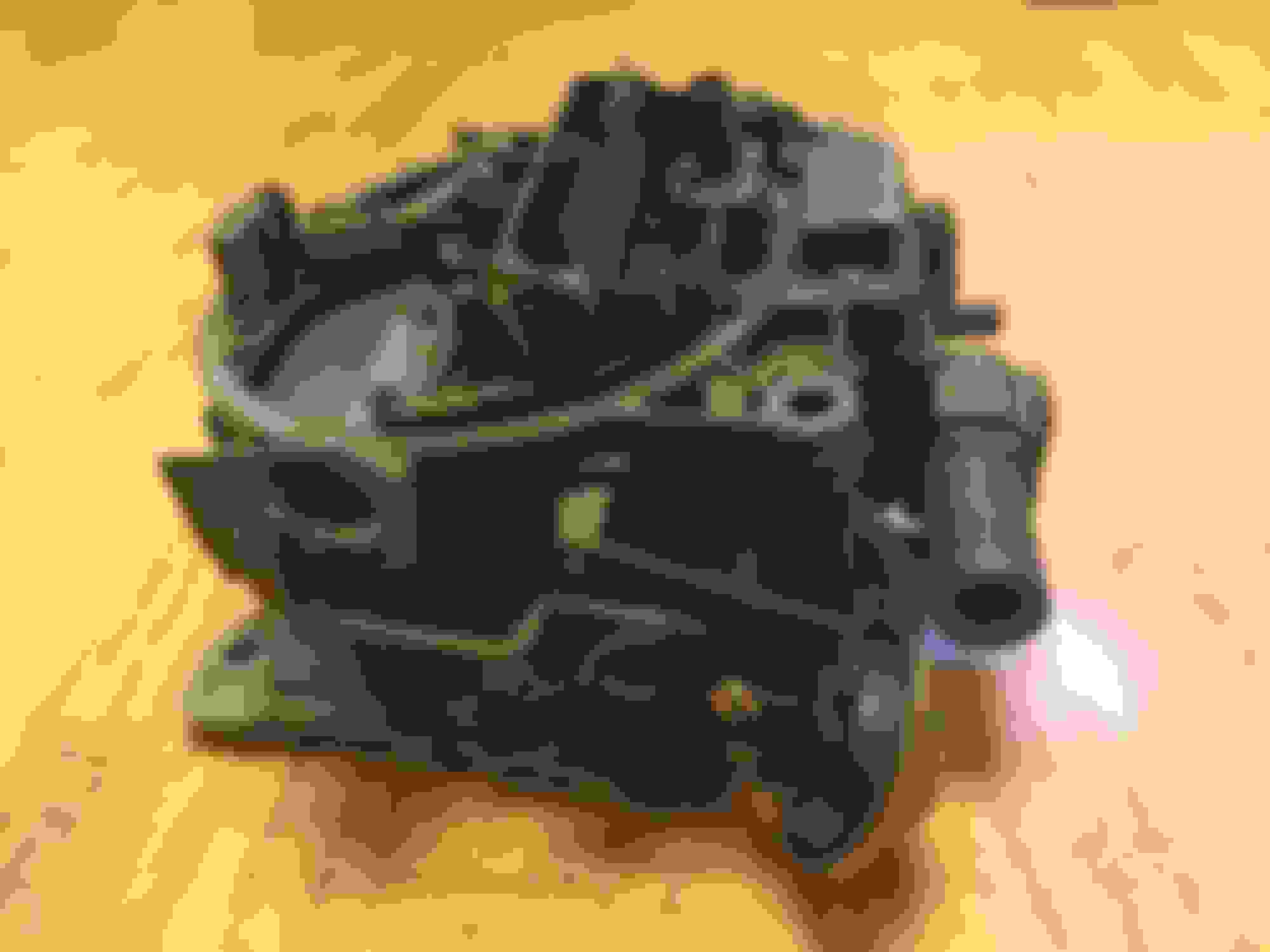
I sent my Q-jet to Lars and he let me know it wasn't rebuild-able......so, I'm looking for a Q-jet, late 69 that has not been molested. Let me know if you have one with some pictures and price.
I also sent my distributor to Lars and the workmanship was excellent. It looks brand new which makes me want to do a Q-jet the same way.
If none turn up I'll probably go the Edelbrock intake and carb route.
I sent my Q-jet to Lars and he let me know it wasn't rebuild-able......so, I'm looking for a Q-jet, late 69 that has not been molested. Let me know if you have one with some pictures and price.
I have a good '78 Qjet that was recently rebuilt for sale in the ATL CL. Ask Lars if he can mix and match components to make it look like a 69?
From: At my Bar drinking and wrenching in Lafayette Colorado
You need to stick with a 1969 - 1974. The 73-74 carbs are actually pretty good, and offer a very good level of performance with the design improvements that were done after the 68-69 models. This will allow you to retain your stock choke system while keeping a carb that appears visually "correct" for your car.
My '78 Qjet list bolted to a stock 69 manifold and used the stock divorced choke. I assume this means when it was rebuilt prior to my ownership that some mix 'n match of parts/levers happened (or maybe trucks in 78 still used a divorced choke?). list number is 17058213. It ran fine when I pulled it.
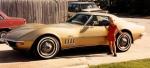
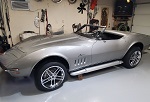
2025 c3 ('74-'82) of the Year Finalist - Unmodified
2019 C3 of Year Finalist (appearance mods)
Atomic particle accelerator. that made me laugh!
If you have an original unmolested carb your right, it can be easily rebuilt, however if bubba has messed with it you may never get it to work properly.
Ask Lars for a copy of 'Q jet problems I have seen' and you'll understand the problem.
Originally Posted by PainfullySlow
I don't get all the mystique. It's a carb, not an atomic particle accelerator.
Is it a little more complex than a holley? Sure, but is hardly difficult to properly rebuild with a little patience and some attention to detail.
These engines are one step above a Briggs and Stratton, technologically speaking. It isn't brain surgery.
If you haven't worked on a Q-Jet, you really shouldn't give advice related to it. Yes, it is a bit more complex than a Holley/Edelbrock. It is also a much better carb than a Holley/Edelbrock (especially the Edelbrock, which is a late 1950's carb design).
The problem with Q-Jets is that orifices and passages machined into the throttle plate and/or body got revised from year to year, so that swapping carb components becomes a crap-shoot and mismatches occur. Any carb that was not rebuilt by Lars or Cliff is suspect, as other rebuilders just throw any Q-Jet components together.
But, if a Q-Jet carb has not been torn apart and had components swapped, it is a very good candidate to be rebuilt to original configuration with a simple rebuild kit. Trying to "convert" a specific model year Q-Jet into that for another model year is not so easy. That is best left to those with intimate knowledge (Lars, Cliff).
This is not to say that you couldn't put a Q-Jet from one model year onto another model year engine. Usually, that can be done with just some swapping of jets/rods (assuming that differences in external configuration are not that important to you).
Last edited by 7T1vette; Dec 13, 2017 at 05:27 PM.
I haven't touched a Q-Jet in close to 25 years, but spending most of my life in Rochester, NY, gave me the advantage of having a couple of "gearhead" friends, who also happened to work for Rochester Products. Both of these guys were well-versed in the ins and outs of both Q-Jets and Rochester FI units. They shared with me a LOT of what they knew. I rebuilt/tuned several Q-Jets, over the years, but as I said, I haven't touched one in a LONG time.
To me, the only real drawback to working on a Q-Jet, is that you have to disconnect the accelerator pump lever from the airhorn, before you can remove the air horn. You do this, by pressing the roll pin that the arm pivots on, part way through the "extension" of the airhorn that's there for the pin to sit in. The roll pin that they installed, is a harder material that the airhorn itself. Therefore, repeated disassembly of the carb can cause the hole to go oversized.
You need to stick with a 1969 - 1974. The 73-74 carbs are actually pretty good, and offer a very good level of performance with the design improvements that were done after the 68-69 models. This will allow you to retain your stock choke system while keeping a carb that appears visually "correct" for your car.
Lars
Hi Lars!
Since you are the Qjet expert, I was wondering if you can comment on a reference in the recent edition of Vette magazine where they had an article on rebuilding the Qjet and stated that the quadrajet was originally designed as an emissions carb, not for performance....Would that explain why GM used Holley's on the performance V8 engines including the C3's in the late 60's and early 70's? I have always thought that its complicated design relative to a holley was to precisely meter the gas to the engine and reduce emissions which were looming on the horizon for GM and the other OEM's....Thanks
From: At my Bar drinking and wrenching in Lafayette Colorado
At the risk of getting on the receiving end of the wrath of the Holley fans, GM's use of the Holley carbs was a marketing tool that had little to do with performance in the late '60s.
All performance enthusiasts in the late 50s and early 60s knew that the factory carbs of the time (AFBs, WCFBs and Rochester 4-Jets) were not performance carbs - they were cfm limited, and the way to achieve a performance gain was to install a Holley, or to run multiple carbs. That was true at the time, and Holley had the "performance" reputation that it deserved.
When introduced in 1966 on some cars, and on all GM cars in '67, the Q-Jet had no such performance reputation, even though its 750 cfm rating and excellent characteristics made it equivalent to a Holley in terms of actual horsepower numbers. The Holley still had the "magic" reputation, and GM capitalized on that by using it on their "performance" cars for as long as possible. The marketing was brilliant, and it worked. The performance crowd wanted a Holley. GM sold them a Holley. The fact that the Q-Jet could produce the same power numbers is completely irrelevant - it's marketing. GM did the same thing in later years with twin cam engines: In standard tune, you can make the same power out of a single cam engine and bigger valves, but twin cams must be performance. Rear disc brakes on passenger car sedans is another example: Your really think you need discs on the back of a Saturn? Heck it sells cars - it's marketing.
I've done quite a bit of dyno testing, and I've run Holley and Q-Jet carbs of the same cfm capacity back-to-back on the same engines. With both carbs correctly tuned and maximized for best power and air/fuel mixture, the Holley and Q-Jet (of the same size) will run virtually identical at peak power and wide open throttle. The Q-Jet will produce better torque and power at the low- to mid-range due to the smaller primary venturies and a well-refined transition circuit.
As for the Q-Jet being "an emissions carb:" GM was aware of the upcoming emissions requirements, and realized the need for a carb that could be updated and refined as the requirements emerged and became more stringent. The Q-Jet design allows the carb to be tailored for optimum efficiency through all its circuits and transitions, allowing fuel and air bleeds to be custom tailored in every circuit of the carb. The fact that the same carb design can be used and precisely set up for every GM application to meet the emissions requirements makes the carb a "well tunable" carb in my book - not just an "emissions carb." But a carb that has the capability to be well tuned with so many variables also has the capability of being really well messed up by someone altering that level of tuning... And therein comes its reputation as a "Quadrajunk" and all the other words you've heard: Any carb becomes a bad running piece of junk once its tuning has been completely messed up and altered by someone drilling out the air bleeds, drilling the IFRs, randomly changing jetting, and throwing away critical parts, such as the secondary airvalve rod.
Any properly-sized carb will run about the same as any other properly-sized carb if the two carbs are both correctly tuned. A well set up Q-Jet is pretty tough to beat - I have the test data to prove it. A badly tuned Q-Jet can run just as bad as a badly-tuned Holley, and a well-tuned Holley will run a lot better than an altered, damaged Q-Jet. Go figure...
I have zero experience with the Holley carbs but I can attest to the excellent performance that I have gotten from my Q-jet that I modified via Cliff Ruggles' book. Not just top end performance, also throttle response, off idle performance and fuel economy.
My only experience has been with the Holley 6210-3 (650 CFM, 4165 series, spreadbore, mechainical secondaries). My dad had put one on in the early 70's on his 69. We finally replaced it with a brand new one, exact same setup in 2009. It's extremely easy to tune and work on. Only a couple of tweaks are needed (like adding float whistles and adjusting the idle mixture and idle speed). They even have the divorced choke and were an almost bolt and go carb.
I replaced the OEM Qjet on my 78 L-82 in 1985 with a Holley 4175 650 CFM vaccum secondary Qjet direct replacement carb since the Qjet was running poorly and I did not know how to tune it correctly at that time. I have come to realize that the Qjet can be made to run very well over the years, mostly due to your expert advice and direction. Thanks Again!
I still use the Holley 4175 650 CFM carb on my rebuilt/upgraded L-82 355 with Howards Roller cam, AFR 180's, and 10.2:1 compression with just a primary jet size change from the L-82 592 jet to a 68 jet. It runs very well but probably still needs a slightly bigger jet (70?) and maybe a secondary metering plate increase but for now its quite good.
Last edited by jb78L-82; Dec 14, 2017 at 05:14 PM.
Just on the last leg of restoration of my 69 350/350 Corvette. I've done the car about 95% stock as it has plenty of power for me and I like the original look. Thinking about weather to re-build my quadrajet or move to edelbrock carburetor.......
Question: what are the CFM numbers for my stock 1969 Quad and does anyone recommend this move? Quads are pretty complicated for me but that might just be me.....
Put it back on with a new filter and live with it. I had mine rebuilt twice and it did mot help performance and my wallet was $600.00 liter.
My '78 Qjet list bolted to a stock 69 manifold and used the stock divorced choke. I assume this means when it was rebuilt prior to my ownership that some mix 'n match of parts/levers happened (or maybe trucks in 78 still used a divorced choke?). list number is 17058213. It ran fine when I pulled it.
Just on the last leg of restoration of my 69 350/350 Corvette. I've done the car about 95% stock as it has plenty of power for me and I like the original look. Thinking about weather to re-build my quadrajet or move to edelbrock carburetor.......
Question: what are the CFM numbers for my stock 1969 Quad and does anyone recommend this move? Quads are pretty complicated for me but that might just be me.....
I recommend running your QuadraJet because it's able to flow way more cfm than your engine can ever swallow and it'll provide the highest venturi velocity.