






Fusible links...

Team Owner


Joined: Sep 2006
Posts: 31,342
Likes: 4,459
From: Westminster Maryland

Hi D,
The fusible links are at the horn relay, the wiper motor, and the starter solenoid.
Regards,
Alan
Horn Relay:

Starter Solenoid:
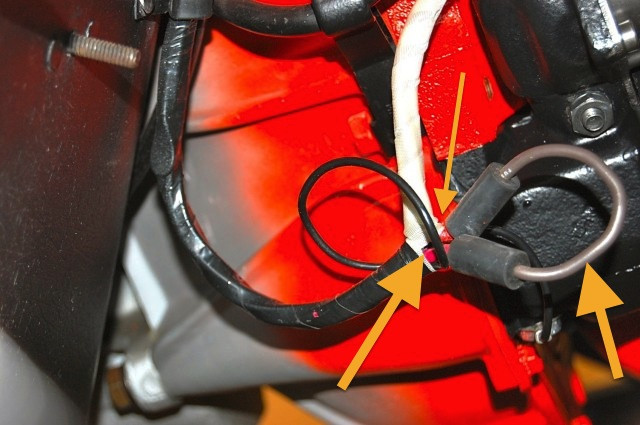
Wiper Motor:
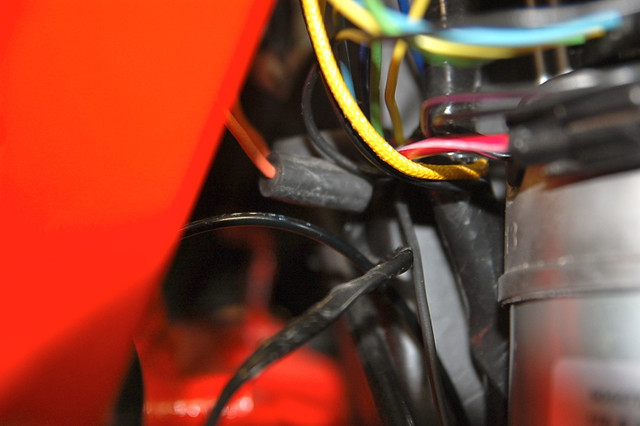
The fusible links are at the horn relay, the wiper motor, and the starter solenoid.
Regards,
Alan
Horn Relay:
Starter Solenoid:
Wiper Motor:
Last edited by Alan 71; Dec 19, 2017 at 10:17 AM.

Team Owner

Joined: Jan 2006
Posts: 37,637
Likes: 3,118
From: Crossville TN
Fusible links are placed with specific purpose and are designed with prevention of wiring fires, primarily.
Fusible links are placed in the system near [or at] usually reliable components that draw significant amounts of current. So, by design, it should be RARE that a fusible link is actually destroyed. However, these components...though reliable by design...may fail so that there is a dead-short created in the electrical system. Thus, the need for a fusible link--a device that generally acts as simple wiring to pass current, but which destroys itself when a dead short occurs.
The design of the fusible link is that its wire is 2 awg sizes smaller than the wiring to which it is attached. This means that when a dead-short occurs, the [smaller] fusible link wire will 'fry' instead of the regular wiring to which it is attached. Further, the fusible link wire is sheathed in a non-flammable material (so that IT cannot catch fire) and the terminal ends are inert so that they cannot catch fire nor become hot when the fusible link melts.
Fusible links are NOT to be placed where fuses or circuit breakers are needed. They should be placed where it is unlikely that there will ever be a need for them to fail.
Fusible links are placed in the system near [or at] usually reliable components that draw significant amounts of current. So, by design, it should be RARE that a fusible link is actually destroyed. However, these components...though reliable by design...may fail so that there is a dead-short created in the electrical system. Thus, the need for a fusible link--a device that generally acts as simple wiring to pass current, but which destroys itself when a dead short occurs.
The design of the fusible link is that its wire is 2 awg sizes smaller than the wiring to which it is attached. This means that when a dead-short occurs, the [smaller] fusible link wire will 'fry' instead of the regular wiring to which it is attached. Further, the fusible link wire is sheathed in a non-flammable material (so that IT cannot catch fire) and the terminal ends are inert so that they cannot catch fire nor become hot when the fusible link melts.
Fusible links are NOT to be placed where fuses or circuit breakers are needed. They should be placed where it is unlikely that there will ever be a need for them to fail.
Last edited by 7T1vette; Dec 19, 2017 at 11:49 AM.

Race Director


Joined: Apr 2007
Posts: 11,153
Likes: 892
From: South Western Ontario
I've always seen fusible links used in a car to protect some of the main wire runs, not components. For example, one is used to protect the 10 gauge wire that comes off the starter solenoid and 2 more are used to protect the wires for the ammeter. They are placed at or close to the take-off point of the smaller size wire to protect the smaller wire. I'm pretty sure the feed off the solenoid and the 2 ammeter fusible links are the 3 pictures Alan posted.
That red wire appears to be the normal wire, not the fusible link. And yes, it appears to have been shorted to the point it's insulation started to melt. Quite possibly, there was a short that melted the fusible link protecting the wire. The previous owner being rather clueless about how to fix the issue, jumped or shorted the fusible link and tried it again which started melting the main wire since it was no longer protected.
It appears you also have a wire with insulation damage in the bottom left of the picture.
There really shouldn't be a need to add any more fusible links. All the main wiring is 10 gauge so the fusible link near the solenoid protects it all.
At this point, you either need to change the harness, or pull it and take it all apart and replace any of the heat damaged wires. For small insulation damage, I would recommend using dual-wall heat shrink tubing. This is the only type that actually seals.
That red wire appears to be the normal wire, not the fusible link. And yes, it appears to have been shorted to the point it's insulation started to melt. Quite possibly, there was a short that melted the fusible link protecting the wire. The previous owner being rather clueless about how to fix the issue, jumped or shorted the fusible link and tried it again which started melting the main wire since it was no longer protected.
It appears you also have a wire with insulation damage in the bottom left of the picture.
There really shouldn't be a need to add any more fusible links. All the main wiring is 10 gauge so the fusible link near the solenoid protects it all.
At this point, you either need to change the harness, or pull it and take it all apart and replace any of the heat damaged wires. For small insulation damage, I would recommend using dual-wall heat shrink tubing. This is the only type that actually seals.
Last edited by lionelhutz; Dec 19, 2017 at 01:10 PM.

Race Director

Joined: Apr 2009
Posts: 19,294
Likes: 2,754
From: Charlotte NC
DorianC3
Actually...a fusible link needs to be 4 gauge sizes smaller than the wire you are attaching it to.....as a rule of thumb. I do know that of you look at a GM wiring diagram...there is a place where this '4 gauge smaller' philosophy is different.
The length is also important. I really never go more than 6 inches long with the fusible link.
https://www.autozone.com/repairguide...00c15280217ea7
http://www.madelectrical.com/catalog/fusible-link.shtml
http://knowhow.napaonline.com/fusibl...epair-one-car/
I AGREE 100% with 7T1vette and lionelhutz
. A fusible link protects the WIRE and not so much the component. A fuse and circuit breaker does basically the same thing. Mainly becasue the philosophy is you want to protect your wiring can not so much the part. Because repairing a melted down wiring harness is much worse that replacing many electrical parts. And wiring harness going through a 'melt down ' scenario...can cause the car to go up in flames.
Not knowing what you plan on doing. I know I use a special heat shrink tube that might be quite similar to what loinelhutz mentioned. I use the 4:1 shrink ratio and it does have a sealant inside it so when it is used it seals off the connection.
https://www.waytekwire.com/products/...rink-Ratio=4-1
If you have a wiring diagram...you do have several fusible links.
The one in the photo Alan posted that is by your wiper motor is for one of your AMP gauge wires
The fusible link at your starter is for the wire that supplies power OVER to your horn relay.
Then you do have other fusible links that are attached to the wires that are also secured to the buss bar on your horn relay to protect the wiring gong to the fuse panel and ignition switch.
DUB
Actually...a fusible link needs to be 4 gauge sizes smaller than the wire you are attaching it to.....as a rule of thumb. I do know that of you look at a GM wiring diagram...there is a place where this '4 gauge smaller' philosophy is different.
The length is also important. I really never go more than 6 inches long with the fusible link.
https://www.autozone.com/repairguide...00c15280217ea7
http://www.madelectrical.com/catalog/fusible-link.shtml
http://knowhow.napaonline.com/fusibl...epair-one-car/
I AGREE 100% with 7T1vette and lionelhutz
. A fusible link protects the WIRE and not so much the component. A fuse and circuit breaker does basically the same thing. Mainly becasue the philosophy is you want to protect your wiring can not so much the part. Because repairing a melted down wiring harness is much worse that replacing many electrical parts. And wiring harness going through a 'melt down ' scenario...can cause the car to go up in flames.
Not knowing what you plan on doing. I know I use a special heat shrink tube that might be quite similar to what loinelhutz mentioned. I use the 4:1 shrink ratio and it does have a sealant inside it so when it is used it seals off the connection.
https://www.waytekwire.com/products/...rink-Ratio=4-1
If you have a wiring diagram...you do have several fusible links.
The one in the photo Alan posted that is by your wiper motor is for one of your AMP gauge wires
The fusible link at your starter is for the wire that supplies power OVER to your horn relay.
Then you do have other fusible links that are attached to the wires that are also secured to the buss bar on your horn relay to protect the wiring gong to the fuse panel and ignition switch.
DUB
Team Owner
Joined: Jan 2006
Posts: 37,637
Likes: 3,118
From: Crossville TN
DUB...
You are correct. My [faulty] memory recalled that AWG sizes were only even-numbered (so that a numerical difference of "2" would only be one AWG size different).
Alas, my memory has failed yet again (more so with advancing age). So a fusible link should be numerically AND size-wise 4 smaller than the wiring to which it is attached.

You are correct. My [faulty] memory recalled that AWG sizes were only even-numbered (so that a numerical difference of "2" would only be one AWG size different).
Alas, my memory has failed yet again (more so with advancing age). So a fusible link should be numerically AND size-wise 4 smaller than the wiring to which it is attached.
Last edited by 7T1vette; Dec 20, 2017 at 04:07 PM.
Corvette Stories
The Best of Corvette for Corvette Enthusiasts

Corvette & Porsche 911: How Two Icons Conquered the Last 25 Years
Joe Kucinski
2027 Chevrolet Silverado 1500 First Look: Everything You NEED to Know!
Michael S. Palmer
5 Best & 5 Worst Corvette Daily Drivers
Joe Kucinski
The Headlights of Every Corvette Generation Explained
Joe Kucinski
5 Best & 5 Most Overrated Corvette Track Packages of All Time!
Joe Kucinski
Every 2027 Corvette Engine Explained
Joe Kucinski
Designer Imagines A Corvette That Looks More Like a Corvette Than the Corvette
Verdad Gallardo
10 Ugly Corvettes That We Still Kinda Love
Joe Kucinski
Top 10 Most Expensive Corvettes Ever Sold on Bring A Trailer
Brett Foote
Race Director
Joined: Apr 2009
Posts: 19,294
Likes: 2,754
From: Charlotte NC
DUB...
You are correct. My [faulty] memory recalled that AWG sizes were only even-numbered (so that a numerical difference of "2" would only be one AWG size different).
Alas, my memory has failed yet again (more so with advancing age). So a fusible link should be numerically AND size-wise 4 smaller than the wiring to which it is attached.
You are correct. My [faulty] memory recalled that AWG sizes were only even-numbered (so that a numerical difference of "2" would only be one AWG size different).
Alas, my memory has failed yet again (more so with advancing age). So a fusible link should be numerically AND size-wise 4 smaller than the wiring to which it is attached.
HECK...I feel if I do not screw up or forget something each and every day....something is wrong and I just might still be sleeping and in a dream.
ALL IS GOOD...because it happens to the best of us.
DUB

Le Mans Master


Joined: Jan 2001
Posts: 6,753
Likes: 1,393
Below is where the fusible links were located on my April 1968 vehicle:
https://www.corvetteforum.com/forums...locations.html
https://www.corvetteforum.com/forums...locations.html
Last edited by carriljc; Dec 20, 2017 at 10:10 PM.

Thread Starter
Melting Slicks


Joined: Nov 2017
Posts: 2,372
Likes: 522
Tons and tons of great information here. Thanks gents !!!
I decided to rebuild the harness myself. The connectors all look in reasonable condition. The headlight harness seems intact and not abused.
There needs to be four fusible links:
1 at the starter solenoid (14 AWG brown = 80 Amp?)
1 at the horn relay (16 AWG Black = 60 Amp?)
2 at each end of the ammeter wire (20 AWG orange = 40 Amp)
Can anyone tell me what the respective amp limit is on each of these links is correct ?
I decided to rebuild the harness myself. The connectors all look in reasonable condition. The headlight harness seems intact and not abused.
There needs to be four fusible links:
1 at the starter solenoid (14 AWG brown = 80 Amp?)
1 at the horn relay (16 AWG Black = 60 Amp?)
2 at each end of the ammeter wire (20 AWG orange = 40 Amp)
Can anyone tell me what the respective amp limit is on each of these links is correct ?
Last edited by DorianC3; Dec 22, 2017 at 04:00 AM.

Melting Slicks
Joined: May 2011
Posts: 2,753
Likes: 119
From: Springfield Missouri
it's good that you are taking on this task of rebuilding your wiring harness, but I wonder that buying a new wiring harness would be a better route??? I know they aren't giving them away, but on my 76 I went all the way and replaced all the harnesses under the hood, mainly because of the heat that is produced there and the brittleness of the wires. JMO Good luck with your progress.
Thread Starter
Melting Slicks
Joined: Nov 2017
Posts: 2,372
Likes: 522
Yes, I hear ya. But I live in Belgium. So there’s an extra layer of expense that I have to consider. I have access to quality wires
by the yard. Likely I’ll do a full replacement one day but I’m the rolling restoration type. I need to be driving what I restore.
by the yard. Likely I’ll do a full replacement one day but I’m the rolling restoration type. I need to be driving what I restore.
Team Owner
Joined: Sep 2006
Posts: 31,342
Likes: 4,459
From: Westminster Maryland
Hi D,
"Can anyone tell me what the respective amp limit is on each of these links is correct ?"
I'm not sure what you're asking.... or IF I can answer.
I believe the wiring diagram will list the wire 'sizes'.
Is that what you're trying to determine?
Regards,
Alan
"Can anyone tell me what the respective amp limit is on each of these links is correct ?"
I'm not sure what you're asking.... or IF I can answer.
I believe the wiring diagram will list the wire 'sizes'.
Is that what you're trying to determine?
Regards,
Alan
Race Director
Joined: Apr 2009
Posts: 19,294
Likes: 2,754
From: Charlotte NC
 100%
100% The main thing is to make sure you put the fusible link back where it was located...which 99% of the time....the fusible link is right near where it is being attached to a power source.
That missing 1% is the one for your ammeter where is is by your wiper motor where it is hanging out of the harness and NOT....repeat NOT WRAPPED up with electrical tape in a the harness to make it look pretty.
And if my memory serves me correctly.... there is a fusible link coming out of the bulkhead connector on some year models.
You DO want your fusible links exposed.
DUB

Melting Slicks
Joined: May 2011
Posts: 2,753
Likes: 119
From: Springfield Missouri
fill in more on your heading so we know more about you, like address etc. I coming to Belgium next March, doing a river cruise with Viking, any small items you need brought over?? NOT like a motor or anything!