When you click on links to various merchants on this site and make a purchase, this can result in this site earning a commission. Affiliate programs and affiliations include, but are not limited to, the eBay Partner Network.
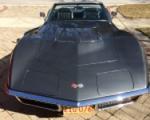
I gave my 16-year-old son his first ride in the '70 with the top down the other day. He smiled the entire time. I dropped him off where he was going, and on the way back home, the car started pulling progressively harder to the left. Luckily I was on 25mph neighborhood streets and got the car to the curb. I checked to see if any of the tires were going flat, and they weren't. Tried to drive away and the left front wheel started to skid. I stopped right there, pumped the brake about 10 times, and the caliper loosened up. I drove with no issues for about a block, when it all happened again. Pumped brakes again and was able to drive. About 6 minutes later, I was in my driveway where it happened for the 3rd time. Let the brakes cool off, and later pumped the brakes again and got it into the garage. Today, I finally took the front left wheel off to see what I could see. I didn't know what I was looking for, so my goal was just to see if anything jumped out at me. (Coincidentally, a few days ago, I just did a front brake job on my daughter's Honda, which was incredibly easy.) I couldn't see anything obviously wrong and took a bunch of pictures to see if any of you might see something.
The research I did in the forum indicated that the brake hose could be collapsed or gummed up. I took pictures of the brake hose to see if any of you could decipher any date code that might be on it. Also, I read that if it pulls to the left, the problem is on the right?
I bet it's the rubber hose from the frame to the caliper internally colapsed and not letting the brakes fully release when your off the pedal. Now with that little bit of pressure holding the brake on, when you drive away it creates friction and heat, which will heat and expand the brake fluid......creating more braking action.
Change both rubber lines to new ones, bleed the brakes, and drive on!
BTW nice pics showing the problem area....I wish everyone did that
If it's pulling to the left the problem would be the left side locking up. Your problem sounds exactly like a brake hose on the left side that is collapsing internally, not allowing fluid to return up the line when the brake is released. It then heats up due to friction, expands internally which puts even more brake pressure on.
If it's pulling to the left the problem would be the left side locking up. Your problem sounds exactly like a brake hose on the left side that is collapsing internally, not allowing fluid to return up the line when the brake is released. It then heats up due to friction, expands internally which puts even more brake pressure on.
Two Canadian posters in a row... What are those odds? Thanks to you both.
The hose doesn't have to have any external damage showing to be compromised on the inside. Try bleeding that caliper and see how much fluid comes out. I had a similar problem with pulling to one side and it turned out to be blocked hose in the rear. If your hose is the problem it is restricting the square cut seal on the caliper piston from returning to it's at rest position and releasing the rotor. Each pump of the brake keeps building up the pressure. I am just not sure why pumping the brake pedal got the caliper to loosen up. Something to think about.
My plan at this point is to change out the hoses. Any suggestions on where to buy them? Also, just out of curiosity, was anyone able to see any date codes on the hoses in the pics?
My plan at this point is to change out the hoses. Any suggestions on where to buy them? Also, just out of curiosity, was anyone able to see any date codes on the hoses in the pics?
My plan at this point is to change out the hoses. Any suggestions on where to buy them? Also, just out of curiosity, was anyone able to see any date codes on the hoses in the pics?
Most parts store should have them (NAPA etc,) I always shop on line first to see who has parts in stock,
From: Arlington Va Current ride 04 vert, previous vettes: 69 vert, 77 resto mod
this is easy enough to check for sure.....just pump the brakes until the rotor is locked up and then open bleeder valve.....if its a collapsed hose acting as a one way valve brake fluid will squirt out as you release the pressure....if it doesnt squirt out thats not your problem
I just had the same problem on my 71. Driver's side front.
The hose had deteriorated internally. You couldn't tell looking at it. No leaks, and when I cracked the bleeder no fluid came out. Bits of the rubber hose had deteriorated and blocked the ports in the caliper so I had to disassemble and rebuild it in addition to replacing the hose.
I have stainless steel braided lines on my other Vette and plan to change out all four on this car in the near future.
I did go ahead and completely flush the system for now.
Most all auto parts stores carry the hoses in stock: NAPA, O'Reilly, Autozone, Advanced. Make sure the hose comes with a new copper crush washer or buy one if not. The auto parts store will have them.
I just had the same problem on my 71. Driver's side front.
The hose had deteriorated internally. You couldn't tell looking at it. No leaks, and when I cracked the bleeder no fluid came out. Bits of the rubber hose had deteriorated and blocked the ports in the caliper so I had to disassemble and rebuild it in addition to replacing the hose.
I have stainless steel braided lines on my other Vette and plan to change out all four on this car in the near future.
I did go ahead and completely flush the system for now.
Most all auto parts stores carry the hoses in stock: NAPA, O'Reilly, Autozone, Advanced. Make sure the hose comes with a new copper crush washer or buy one if not. The auto parts store will have them.
I just had the same problem on my 71. Driver's side front.
The hose had deteriorated internally. You couldn't tell looking at it. No leaks, and when I cracked the bleeder no fluid came out. Bits of the rubber hose had deteriorated and blocked the ports in the caliper so I had to disassemble and rebuild it in addition to replacing the hose.
I have stainless steel braided lines on my other Vette and plan to change out all four on this car in the near future.
I did go ahead and completely flush the system for now.
Most all auto parts stores carry the hoses in stock: NAPA, O'Reilly, Autozone, Advanced. Make sure the hose comes with a new copper crush washer or buy one if not. The auto parts store will have them.
How were you able to tell that the ports had been blocked? Because I've never worked on Corvette brakes before, I'm trying to picture how I would know that after removing the hose. Is it because no fluid came out of the bleeder?
How were you able to tell that the ports had been blocked? Because I've never worked on Corvette brakes before, I'm trying to picture how I would know that after removing the hose. Is it because no fluid came out of the bleeder?
If it was the master cylinder it would be a problem with both front brakes so if it's just the left side it's either the hose or the caliper. A brake hose is most likely the culprit and is less than 15 bucks. If it works, then replace the other 3 hoses also as they won't be far behind. On the off chance it doesn't work then replace the caliper and you will already have the new hose for it. A bad hose is like a one way valve internally. It deteriorates causing a restriction and allows fluid to flow under high pressure when you step on the pedal but flow is restricted so when the pedal is released there is a small amount of pressure keeping the brake from releasing on that side. Try a new hose.
Last edited by CanadaGrant; Jul 13, 2018 at 12:28 AM.
Could be a collapsed brake hose but I would be surprised.
The picture of the rotor surface you provided does not strike me as a rotor that would have a dragging caliper/pistons since it has decent corrosion on it. A dragging caliper would wipe that surface clean quickly. What do the other rotors look like, particularly the other front rotor versus the problem caliper? Are these SS calipers, from which manufacturer, and how old are the calipers? When was the last time the brake fluid was bled and changed?
Last edited by jb78L-82; Jul 13, 2018 at 06:54 AM.
Maybe its me, maybe its the camera angle but the drivers side, inboard pad, backing plate looks warped and looks too long. The pad looks like it has more meat than outboard and the backing plate appears to be rubbing caliper bottom. In other words, are those the correct pads? Seem too big. Maybe they are not releasing properly.
Could be a collapsed brake hose but I would be surprised.
The picture of the rotor surface you provided does not strike me as a rotor that would have a dragging caliper/pistons since it has decent corrosion on it. A dragging caliper would wipe that surface clean quickly. What do the other rotors look like, particularly the other front rotor versus the problem caliper? Are these SS calipers, from which manufacturer, and how old are the calipers? When was the last time the brake fluid was bled and changed?
What you are saying makes sense, however I would just add that the dragging/seizing didn't go on very long, so I'm not sure how much would have been wiped off the rotor in that short time. I plan on getting a look at both of the front rotors on Monday, so hopefully I'll know more then.
The caliper says "Delco Moraine" on it and I was told that it had the SS sleeves. Not sure on their age, as the 80+ year old second owner was the one who had them replaced, and his memory was a bit fuzzy when we talked.
Was the wheel hot when you checked it out? Partially-applied pads will generate a LOT of heat pretty fast. If the wheel was hot, I'd bet on a deteriorated flex hose. If so, change them all.
Again, it could be a collapsed brake hose but in my personal experience in working on cars for 40 years now since a teenager, often a dragging brake is more often than not a result of a frozen brake caliper from age, wear, poor maintenance (changing old brake fluid) or mileage. The statement that the former owner was 80 years old and can't recall maintenance details tells me that the brake fluid could be very old and often will freeze a caliper from the moisture retention within the system. Also, if the car was stored outdoors, I will double down on a frozen caliper guess from weather corrosion.
Within the last 2 years, I have dealt with a a frozen rear caliper on my Chrysler 300 (sits out doors) and a friend;s Ford Expedition with a frozen caliper. Also, about to replace the front calipers on my daughter's 01 Grand Prix (210,000 miles and sits outdoors) that is partially frozen.
I would inspect the caliper carefully, change the brake fluid completely,and replace all rubber lines with SS braided hoses which I have had on my 78 C3 since the early 90's. I have SS braided lines on my Chrysler 300....gives a much firmer linear brake pedal than the ruibber hoses....
From: Some days your the dog and some days your the hydrant.
Royal Canadian Navy
You may as well replace all 4 brake hoses and while your at it, remove all 4 calipers and seperate the halves for inspection. It's not difficult to do.





 One Wheel Locked Up