







Help adjusting valves with guide plates

Thread Starter
Instructor


Joined: Sep 2008
Posts: 233
Likes: 17
From: Macon GA
 Help adjusting valves with guide plates
Anyone have a good way to adjust hydraulic flat tappet cam with guide plates installed? Engine (350 SB with aluminum heads & Lunati cam) is fully assembled and in the car with about 300 miles on it. Just want to go back through timing, valve lash, etc. before I start driving it for real. Guide plates are really in the way but there has to be an easy way.
Le Mans Master


Joined: Aug 2017
Posts: 8,336
Likes: 2,810
From: Cool Northern Michigan
I guess I don't understand the question. You can't set the lash then install the plates afterwards obviously, however.
Some Guide Plates actually have a little wiggle room to them because the plate stud holes are drilled a fraction bigger than the rocker stud. This allows for some movement to adjust the plate just perfect over the two pushrods, without any serious rubbing or friction. Maybe some of your guide plates are off a bit making valvelash difficult to impossible? When the plates are aligned properly, the pushrod will spin easily.
The rocker stud takes big torque numbers to loosen and tighten.
Add: sounds like poor design plates. Or are they up-side-down?
Some Guide Plates actually have a little wiggle room to them because the plate stud holes are drilled a fraction bigger than the rocker stud. This allows for some movement to adjust the plate just perfect over the two pushrods, without any serious rubbing or friction. Maybe some of your guide plates are off a bit making valvelash difficult to impossible? When the plates are aligned properly, the pushrod will spin easily.
The rocker stud takes big torque numbers to loosen and tighten.
Add: sounds like poor design plates. Or are they up-side-down?
Last edited by HeadsU.P.; Feb 20, 2020 at 06:37 PM.

Dr. Detroit


Joined: Mar 2012
Posts: 10,097
Likes: 4,027
From: New Braunfels Texas
Jebby
Corvette Stories
The Best of Corvette for Corvette Enthusiasts

Top 10 Most Expensive Corvettes Ever Sold on Bring A Trailer
Brett Foote
10 Things Every Corvette Owner Needs (2026 Edition)
Michael S. Palmer
8 Most "Only Corvette Owners Understand" Quirks and Problems
Pouria Savadkouei
10 Reasons the C6 Z06 is Still A Performance Benchmark After 20 Years
Joe Kucinski
How Much Horsepower Every Corvette Engine "LOST" in 1972
Joe Kucinski
Top 10 DOs and DON'Ts for Protecting Your Convertible Top!
Michael S. Palmer
Top 10 Most Explosive Corvettes Ever Made: Power-to-Weight Ratio Ranked!
Joe Kucinski
150 hp to 1,250 hp: Every Corvette Generation Compared by the Specs That Matter
Joe Kucinski
8 Coolest Corvette Pace Cars (and Replicas) of All Time
Verdad Gallardo
Le Mans Master

Joined: Oct 2002
Posts: 7,098
Likes: 378
From: Las Vegas - Just stop perpetuating myths please.
Coincidence I just did my fourth gen camaro last night. I had cotton gloves on over my nitrile gloves. Only way to handle the hot p-rods. So your fingers would have to be fairly huge not to fit. You do loose some sensitivity but I do the full 1 turn preload so close is good enough. BTW I don't know how you can feel for up and down movement on the p-rod with the engine running (which is how I do it). Really have to get the feel of rolling the p-rod and when it just stops rolling in your fingers to find zero lash (with the engine running). I do this because with the engine running the lifter should be full of oil and the cup should be held up tight to the retaining clip. To verify I didn't over preload the lifters I could see oil filling the top of the rocker arm with oil which it could not do (pumping) if the lifter was bottomed out.
Hope this can help others.
Hope this can help others.
Dr. Detroit
Joined: Mar 2012
Posts: 10,097
Likes: 4,027
From: New Braunfels Texas
Coincidence I just did my fourth gen camaro last night. I had cotton gloves on over my nitrile gloves. Only way to handle the hot p-rods. So your fingers would have to be fairly huge not to fit. You do loose some sensitivity but I do the full 1 turn preload so close is good enough. BTW I don't know how you can feel for up and down movement on the p-rod with the engine running (which is how I do it). Really have to get the feel of rolling the p-rod and when it just stops rolling in your fingers to find zero lash (with the engine running). I do this because with the engine running the lifter should be full of oil and the cup should be held up tight to the retaining clip. To verify I didn't over preload the lifters I could see oil filling the top of the rocker arm with oil which it could not do (pumping) if the lifter was bottomed out.
Hope this can help others.
Hope this can help others.
Jebby
Le Mans Master
Joined: Oct 2002
Posts: 7,098
Likes: 378
From: Las Vegas - Just stop perpetuating myths please.
I set the preload with engine running because it's easier while the engine is in the car. Difficult to turn the engine crankshaft to the correct position. Yes adjusting preload without the valve train moving is probably more accurate but you have to have the engine warm or it should be warm anyways.
One full turn is used in nearly every shop manual for the sbc. Lifter pump up is a function of the internal leakdown rate. I have never read anywhere 5000rpm is the limit for stock like lifters. If so the cars would have come will an 5000rpm red line. I have to call saying one turn preload and 5000rpm to much B.S.. No, I'm not a professional builder but have hashed this over and researched it enough to know so. Using low pre-load (1/2 or 1/4 turn) reduces valve lift and power/torque if you can understand that a lifters preload controls the plunger/piston travel and the greater the pre-load the less the plunger/piston can compress which takes from valve lift.
Believe what you want. I'm trying stop the myths and help others.
One full turn is used in nearly every shop manual for the sbc. Lifter pump up is a function of the internal leakdown rate. I have never read anywhere 5000rpm is the limit for stock like lifters. If so the cars would have come will an 5000rpm red line. I have to call saying one turn preload and 5000rpm to much B.S.. No, I'm not a professional builder but have hashed this over and researched it enough to know so. Using low pre-load (1/2 or 1/4 turn) reduces valve lift and power/torque if you can understand that a lifters preload controls the plunger/piston travel and the greater the pre-load the less the plunger/piston can compress which takes from valve lift.
Believe what you want. I'm trying stop the myths and help others.
Dr. Detroit
Joined: Mar 2012
Posts: 10,097
Likes: 4,027
From: New Braunfels Texas
I set the preload with engine running because it's easier while the engine is in the car. Difficult to turn the engine crankshaft to the correct position. Yes adjusting preload without the valve train moving is probably more accurate but you have to have the engine warm or it should be warm anyways.
One full turn is used in nearly every shop manual for the sbc. Lifter pump up is a function of the internal leakdown rate. I have never read anywhere 5000rpm is the limit for stock like lifters. If so the cars would have come will an 5000rpm red line. I have to call saying one turn preload and 5000rpm to much B.S.. No, I'm not a professional builder but have hashed this over and researched it enough to know so. Using low pre-load (1/2 or 1/4 turn) reduces valve lift and power/torque if you can understand that a lifters preload controls the plunger/piston travel and the greater the pre-load the less the plunger/piston can compress which takes from valve lift.
Believe what you want. I'm trying stop the myths and help others.
One full turn is used in nearly every shop manual for the sbc. Lifter pump up is a function of the internal leakdown rate. I have never read anywhere 5000rpm is the limit for stock like lifters. If so the cars would have come will an 5000rpm red line. I have to call saying one turn preload and 5000rpm to much B.S.. No, I'm not a professional builder but have hashed this over and researched it enough to know so. Using low pre-load (1/2 or 1/4 turn) reduces valve lift and power/torque if you can understand that a lifters preload controls the plunger/piston travel and the greater the pre-load the less the plunger/piston can compress which takes from valve lift.
Believe what you want. I'm trying stop the myths and help others.
Furthermore....there is zero chance to get preload the same on 16 lifters while running as the I and E have different ramp rates....
But as I said last year....you all can do it the way you want, but nowhere does a GM manual recommend setting them running either....but the reference to one turn makes it better though....
Why don’t you call ten engine builders and ask them how to lash valves and see what they say.....then we can compare notes on “myths”.....and if you are trying to help others, a comprehensive understanding on how every component of an engine works and reacts is vital....and preload affecting valve lift is not a myth, it is just flat out not true.
Jebby
Last edited by Jebbysan; Feb 22, 2020 at 05:36 PM.
Dr. Detroit
Joined: Mar 2012
Posts: 10,097
Likes: 4,027
From: New Braunfels Texas
Here is an article that explains valve lash on any style lifter by three mythical creatures:
Pat Musi
Scott Shafferoff
And David Reher
https://www.chevyhardcore.com/tech-s...sh-like-a-pro/
This will be the last time I get this heavy handed about this topic.....but don’t go telling people you are trying to dispel myths when you have no idea.....
BTW, I was originally taught this method by Sam Gianino in 1997.....another mythical creature.
Jebby
Pat Musi
Scott Shafferoff
And David Reher
https://www.chevyhardcore.com/tech-s...sh-like-a-pro/
This will be the last time I get this heavy handed about this topic.....but don’t go telling people you are trying to dispel myths when you have no idea.....
BTW, I was originally taught this method by Sam Gianino in 1997.....another mythical creature.
Jebby
Le Mans Master
Joined: Aug 2017
Posts: 8,336
Likes: 2,810
From: Cool Northern Michigan
Nice article, but the first thing I see is a feeler gauge which refers to Solid Lifters. I thought we were talking about preload with Hyd?
I own eight oil spray clips that fit the rockerarms. Those clips will not work on roller rockers however.
I like to hear what the lifter is doing while running (clack-clack-clack). Then a half a turn after zero.
Its fast, its lazy, but it works for me. Is it 100% accurate? Probably not. I don't care.
I own eight oil spray clips that fit the rockerarms. Those clips will not work on roller rockers however.
I like to hear what the lifter is doing while running (clack-clack-clack). Then a half a turn after zero.
Its fast, its lazy, but it works for me. Is it 100% accurate? Probably not. I don't care.
Last edited by HeadsU.P.; Feb 22, 2020 at 07:40 PM.
Dr. Detroit
Joined: Mar 2012
Posts: 10,097
Likes: 4,027
From: New Braunfels Texas
Le Mans Master
Joined: Oct 2002
Posts: 7,098
Likes: 378
From: Las Vegas - Just stop perpetuating myths please.
So I read this Chevy Hardcore article and all I see is they recommend 1/2 turn for 0.030" to 0.060" preload. Nothing about why or what that does for performance. Kind of a waste of my time.
Saying you don't compress a lifter under oil pressure is a total misunderstanding of how the lifter works. It doesn't (normally) compress the oil (though with high amounts of air entrainment it can but that's another topic) but the oil bleeds out through the internal wall tolerances of the lifter as it rises. This allows the piston/plunger to move down reducing the oil volume below it. This is how the lifter pumps oil up through the p-rod. The distance the piston/plunger can moves does affect valve lift as the greater the preload the smaller the distance the plunger/piston can move and the less the lift is lost when the lifter piston/plunger is bottomed out most likely at the top of the lobe. When the lifter returns the base circle of the cam it now meets the pressurized oil from the galley which enters that volume below the piston/plunger through a tiny check valve and refills the volume.
The problem at high RPM is some lifters can't bleed down fast enough and yes the piston/plunger can't compress but with inertia the piston/plunger stays high as more oil forces in and can hold the valve open when the lifter returns to the base circle. That's where the reduced preload is an attempt to prevent lifter pump up. But even with 1/4 or even 1/8 turn preload the lifter would still be holding the valve open by that much. Less preload than 1 full turn still holds the valve open once the lifter is pumped up. The real solution is not to over rev your engine. Seems like very few understand this.
Now someone claiming they have seen power increase on a dyno with reduced preload is making that up - total B.S.. Less preload only reduces full lift. Even one full turn has some lift loss but not as much. A larger preload will make more power period. If you say you've see less pre-load make more power on the dyno your lying. Flat out lying. I have no time to argue with someone claiming they have experience with something that can't happen.
I'm out.
Saying you don't compress a lifter under oil pressure is a total misunderstanding of how the lifter works. It doesn't (normally) compress the oil (though with high amounts of air entrainment it can but that's another topic) but the oil bleeds out through the internal wall tolerances of the lifter as it rises. This allows the piston/plunger to move down reducing the oil volume below it. This is how the lifter pumps oil up through the p-rod. The distance the piston/plunger can moves does affect valve lift as the greater the preload the smaller the distance the plunger/piston can move and the less the lift is lost when the lifter piston/plunger is bottomed out most likely at the top of the lobe. When the lifter returns the base circle of the cam it now meets the pressurized oil from the galley which enters that volume below the piston/plunger through a tiny check valve and refills the volume.
The problem at high RPM is some lifters can't bleed down fast enough and yes the piston/plunger can't compress but with inertia the piston/plunger stays high as more oil forces in and can hold the valve open when the lifter returns to the base circle. That's where the reduced preload is an attempt to prevent lifter pump up. But even with 1/4 or even 1/8 turn preload the lifter would still be holding the valve open by that much. Less preload than 1 full turn still holds the valve open once the lifter is pumped up. The real solution is not to over rev your engine. Seems like very few understand this.
Now someone claiming they have seen power increase on a dyno with reduced preload is making that up - total B.S.. Less preload only reduces full lift. Even one full turn has some lift loss but not as much. A larger preload will make more power period. If you say you've see less pre-load make more power on the dyno your lying. Flat out lying. I have no time to argue with someone claiming they have experience with something that can't happen.
I'm out.

Le Mans Master
Joined: Sep 2001
Posts: 7,739
Likes: 630
From: Unreconstructed, South Carolina
shaken, not stirred ?
Here is an article that explains valve lash on any style lifter by three mythical creatures:
Pat Musi
Scott Shafferoff
And David Reher
https://www.chevyhardcore.com/tech-s...sh-like-a-pro/
This will be the last time I get this heavy handed about this topic.....but don’t go telling people you are trying to dispel myths when you have no idea.....
BTW, I was originally taught this method by Sam Gianino in 1997.....another mythical creature.
Jebby
Pat Musi
Scott Shafferoff
And David Reher
https://www.chevyhardcore.com/tech-s...sh-like-a-pro/
This will be the last time I get this heavy handed about this topic.....but don’t go telling people you are trying to dispel myths when you have no idea.....
BTW, I was originally taught this method by Sam Gianino in 1997.....another mythical creature.
Jebby
In the espoused chevhardcore article, they say Lightly turn the pushrod with your fingers as you tighten the adjusting nut, and you should feel a point where there is a little resistance (this is called Zero Lash). ...
...
Whereas, it was previously stated the above's bad ... that pushrods should be wiggled up & down.
me thinks either method is OK ... perhaps even a mix; beginning w/ a shake, followed by a twist ... whatever floats your boat.
Maybe too many Bond flicks ...https://giphy.com/gifs/james-bond-go...U00/fullscreen
Dr. Detroit
Joined: Mar 2012
Posts: 10,097
Likes: 4,027
From: New Braunfels Texas
Contradiction ...
In the espoused chevhardcore article, they say Lightly turn the pushrod with your fingers as you tighten the adjusting nut, and you should feel a point where there is a little resistance (this is called Zero Lash). ...
...
Whereas, it was previously stated the above's bad ... that pushrods should be wiggled up & down.
me thinks either method is OK ... perhaps even a mix; beginning w/ a shake, followed by a twist ... whatever floats your boat.
Maybe too many Bond flicks ...https://giphy.com/gifs/james-bond-go...U00/fullscreen
In the espoused chevhardcore article, they say Lightly turn the pushrod with your fingers as you tighten the adjusting nut, and you should feel a point where there is a little resistance (this is called Zero Lash). ...
...
Whereas, it was previously stated the above's bad ... that pushrods should be wiggled up & down.
me thinks either method is OK ... perhaps even a mix; beginning w/ a shake, followed by a twist ... whatever floats your boat.
Maybe too many Bond flicks ...https://giphy.com/gifs/james-bond-go...U00/fullscreen
I personally do not use pinch lock nut on anything either......even ball stud style rockers....I always use a poly-loc. The poly-loc spins freely with your fingers and as soon as you get to zero lash, you can feel the plunger in the lifter as a small amount of resistance in your fingers. All of this may sound extra until you put have it all ready once and run the lash out starting at #1......even in the car, I can lash a set doing either the I open E closed or TDC on each cylinder method....in about 15-20 minutes. If you start and do not stop in between...and end up on #2 at the end.....bolt the valve covers on and be done. Done. And it is right. No muss, no fuss.....no myth. Roll the crank 90 more degrees to be back on #1 and then check the rotor placement...lock the distributor.....plugs, wires and start.....or you can monkey around getting it close, putting on clips and special covers after you start the engine with not enough or too much lash.......
As for adjusting them after a certain amount of miles.....this is myth. If the engine has 200,000 miles on it and the lash was properly done cold engine off at 0 miles then it will never change the whole duration of the engines life.
Bill Mitchell Jr. at World products likes the poly-loc resistance method as well.....85% of what they used to have in their catalog was hydraulic flat tappet....I worked there for six months back in 03......they used the I open E closed method.....1/2 turn......I watched 2 to 3 engines dyno'd a day right at the end of the shop.......it took 30 minutes from lash to dyno cart, then 30 minutes to dyno setup.....start and run a break-in profile on the Super-Flow then pull it three times.......third time was 6000 rpm and full load.......remove and ship.
If I get a chance, I should video the next time I lash an engine on the stand......there are a lot of little things that I could point out that are serious time savers and headache relievers when building an engine.....the lash would be a good one.
I am truly sorry if I come off harsh......it is not personal in anyway to anyone here.......
If anyone would like me to explain in detail how I lash a hydraulic....feel free to PM me.....
Jebby

Drifting

Joined: Dec 2017
Posts: 1,305
Likes: 226
From: PA
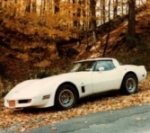
For what it's worth. Item 1, I'm not an expert. Item 2, I'm not a mechanic, I'm a mechanical engineer. Item 3, but I did grow up on a farm in the 70's and worked on engines including minibikes, motorcycles, tractors, snowmobiles, Ford flat V-8's, and various SBC's from fathers pickups, my mother's 72 Le Sabre, my brothers '74 Camaro (which we heavily modified using the facilities at my grandfather's 6 bay service garage), and my own '80 Vette. I think the fact that every time this question is asked a debate like this arises proves that the way it's done doesn't make a whole lotta difference for 99% of the folks driving. I will say that the '80 vette manual states to adjust with the engine off by spinning the push rods as tightening the stud nut for zero lash. Then go 1 turn. That 1 turn on 24 thread pitch is 0.042"
On the issue of it being too hard to turn the engine by hand, first, pull the plugs and second, you only have to go to two positions to set all the rockers - again, per the shop manual. As to 1/2 a turn or 1 turn, again the manual says 1. I've seen debate on this as on this thread. The fact that people have been arguing about which is right for decades tells me that while maybe it affects performance a little, it ain't gonna make a noticeable difference in performance to all but maybe the 1% hairiest engine builds which will likely blow up.sooner or later in any case.
As for my experience, I have done this job three times on my vette through the years. Concerning what constitutes slight resistance, you might go 1/8" turn between no resistance and definite resistance. That change moves the nut 0.005". Big whoop. As for 1/2 or 1 turn after that, you have 0.021" difference depending on what you choose. My solution - turn until I feel resistance and worst case I'm 0.005" too deep. Then split the distance on how many turns, i.e. I go 3/4" I figure that puts me somewhere around 0.030-0.035" preload vs. the manuals 0.042" and the 0.021" 1/2 folks. And the L82 is still chugging along just fine like this.
The beauty of the hydraulic tappet lifter is it's tolerance to adjustment and wear. Relax and enjoy it.
On the issue of it being too hard to turn the engine by hand, first, pull the plugs and second, you only have to go to two positions to set all the rockers - again, per the shop manual. As to 1/2 a turn or 1 turn, again the manual says 1. I've seen debate on this as on this thread. The fact that people have been arguing about which is right for decades tells me that while maybe it affects performance a little, it ain't gonna make a noticeable difference in performance to all but maybe the 1% hairiest engine builds which will likely blow up.sooner or later in any case.
As for my experience, I have done this job three times on my vette through the years. Concerning what constitutes slight resistance, you might go 1/8" turn between no resistance and definite resistance. That change moves the nut 0.005". Big whoop. As for 1/2 or 1 turn after that, you have 0.021" difference depending on what you choose. My solution - turn until I feel resistance and worst case I'm 0.005" too deep. Then split the distance on how many turns, i.e. I go 3/4" I figure that puts me somewhere around 0.030-0.035" preload vs. the manuals 0.042" and the 0.021" 1/2 folks. And the L82 is still chugging along just fine like this.
The beauty of the hydraulic tappet lifter is it's tolerance to adjustment and wear. Relax and enjoy it.
Last edited by vince vette 2; Feb 24, 2020 at 11:37 AM.