



PCV valve for 383 ??

Safety Car


Joined: Nov 2005
Posts: 3,532
Likes: 1,185
From: Arizona - If you don’t know CFI, STOP proliferating the myths around it...

Aha! Someone with real world experience. You don't know how hard I have looked for someone like you. Tell me more. How hard is it to set up? What improvements did you see? Does it fit the factory valve cover grommet? What do you have for a baffle in the valve cover? Any tips?
BTW, I think a lot of people get too hung up on the price of performance things sometimes. I cost what it cost. Custom machining is NOT cheap, ask me how I know this. It's a good product IMO and worked for me. It will last a lifetime I would imagine and won't need to be replaced ever again. You get what you pay for, usually cheap money gets you cheap products and even less performance and heart ache. These are corvettes, along with that usually comes a higher price tag for parts for these cars and the nature of the beast and that is something to keep in mind. I've had people call me (business line) and ask me what kind of mileage I get with my 82 and 383? Are you kidding me?! I could care less about MPG when I hit the loud pedal, if you are one of those guys that are more concerned about maximum MPG, go buy a Prius and sell your corvette. It's hard to knock something that works, right?

Last edited by Buccaneer; May 31, 2020 at 04:58 PM.

Team Owner


Joined: Jan 2006
Posts: 37,637
Likes: 3,117
From: Crossville TN
"Tuning" a waste-air dump valve. OMG....what could possibly top that?!! 
By the way... I have a wonderful booklet on "How NOT to be Gullible".... And it's only $39.95. It goes along with the $130 'tunable' PCV gizmo. Package deal for only $200, today only.
By the way... I have a wonderful booklet on "How NOT to be Gullible".... And it's only $39.95. It goes along with the $130 'tunable' PCV gizmo. Package deal for only $200, today only.

Le Mans Master


Joined: Apr 2011
Posts: 6,284
Likes: 1,171
From: Hermosa
7T1vette;1601598626]"Tuning" a waste-air dump valve. OMG....what could possibly top that?!!
By the way... I have a wonderful booklet on "How NOT to be Gullible".... And it's only $39.95. It goes along with the $130 'tunable' PCV gizmo. Package deal for only $200, today only
By the way... I have a wonderful booklet on "How NOT to be Gullible".... And it's only $39.95. It goes along with the $130 'tunable' PCV gizmo. Package deal for only $200, today only
google works for everyone
Last edited by REELAV8R; May 31, 2020 at 07:53 PM.
Team Owner
Joined: Jan 2006
Posts: 37,637
Likes: 3,117
From: Crossville TN
Yes. PCV valves can be defective, there can be collected dirt/debris on the pintle which prevent it from closing, the spring can be broken. Any of those are easily found by removing the valve and checking it for proper operation.
That's true with any sub-component on the vehicle. But that doesn't impact the fact that the PCV valve is a simple device with a simple function.
That's true with any sub-component on the vehicle. But that doesn't impact the fact that the PCV valve is a simple device with a simple function.
Safety Car
Joined: Nov 2005
Posts: 3,532
Likes: 1,185
From: Arizona - If you don’t know CFI, STOP proliferating the myths around it...
Sorry, I only deal in facts and what works. I have had many different PCV's on my motor and they all didn't work the way I wanted them to work with my motor. I got this one and...PRESTO, it worked out just fine just like a few of the other posters here. I don't care how many Naysayers there are out there and if they think something is BS! It works and that all that matters to me and worth the money. Good luck selling your book, but not interested.
Last edited by Buccaneer; Jun 1, 2020 at 03:24 PM.

Melting Slicks


Joined: Apr 2001
Posts: 2,030
Likes: 363
From: Lubbock Texas
Sorry, I only deal in facts and what works. I have had many different PCV's on my motor and they all didn't work the way I wanted them to work with my motor. I got this one and...PRESTO, it worked out just fine just like a few of the other posters here. I don't care how many Naysayers there are out there and if they think something is BS! It works and that all that matters to me and worth the money. Good luck luck selling your book, but not interested.
DC
Last edited by DC3; Jun 1, 2020 at 01:39 PM.

Drifting


Joined: Oct 2005
Posts: 1,527
Likes: 148
From: East London/SW Essex UK
Completely agree. For a simple device with a simple function there sure are a lot of different part numbers out there because, wait for it Charley, once size does not fit all. Spring rates are different as PCVs are designed for the engine. If someone doesn't have a stock engine, the best you can do is to find a PCV for an engine that most closely resembles yours, or pony up for the adjustable unit.
DC
DC

The ORIGINAL and bestest

Joined: Oct 2000
Posts: 10,009
Likes: 240
From: Toronto Ontario
Toronto Events Coordinator
OEMs use a pcv valve that has been carefully calibrated and tested for use with every specific engine, it’s been engineered that way. As soon as you alter the characteristics of an engine, that pcv valve may or may not work ideally anymore.
My personal experience. When I was buying a pcv valve for my moderately cammed 406 (230/236 dur & 544/555 lift) I initially went with a billet specialties unit, and it quickly became evident that it was not working well with my engine. I bought that billet unit strictly based on appearances thinking a pcv valve is a pcv valve.
So I then went down the path of trying to decipher pcv valves with no luck, and I too discussed this with Lars. I ended up trying several different pcv valves that were OE on factory performance engines until I found one that seemed to work. I don’t remember which one I eventually settled on, but it bugged me that I couldn’t figure out exactly which one to use that would be perfectly suited to my specific engine.
When I first saw this M/E Wagner adjustable pcv valve. I read their info and decided to give it a try. I haven’t actually gotten around to doing so yet, so I can’t offer any personal first hand feedback yet. I am looking forward to tinkering with it though.
With over 10k invested in my engine, another $130 didn’t really seem like such a big deal! 😂😂
I also find it comical how tightly twisted some people’s panties become about how other people choose to spend their own money!! 😂😂
Your results may vary.

My personal experience. When I was buying a pcv valve for my moderately cammed 406 (230/236 dur & 544/555 lift) I initially went with a billet specialties unit, and it quickly became evident that it was not working well with my engine. I bought that billet unit strictly based on appearances thinking a pcv valve is a pcv valve.
So I then went down the path of trying to decipher pcv valves with no luck, and I too discussed this with Lars. I ended up trying several different pcv valves that were OE on factory performance engines until I found one that seemed to work. I don’t remember which one I eventually settled on, but it bugged me that I couldn’t figure out exactly which one to use that would be perfectly suited to my specific engine.
When I first saw this M/E Wagner adjustable pcv valve. I read their info and decided to give it a try. I haven’t actually gotten around to doing so yet, so I can’t offer any personal first hand feedback yet. I am looking forward to tinkering with it though.
With over 10k invested in my engine, another $130 didn’t really seem like such a big deal! 😂😂
I also find it comical how tightly twisted some people’s panties become about how other people choose to spend their own money!! 😂😂
Your results may vary.
Last edited by 7t2vette; Jun 1, 2020 at 04:46 PM.
Corvette Stories
The Best of Corvette for Corvette Enthusiasts

10 Reasons the C6 Z06 is Still A Performance Benchmark After 20 Years
Joe Kucinski
How Much Horsepower Every Corvette Engine "LOST" in 1972
Joe Kucinski
Top 10 DOs and DON'Ts for Protecting Your Convertible Top!
Michael S. Palmer
Top 10 Most Explosive Corvettes Ever Made: Power-to-Weight Ratio Ranked!
Joe Kucinski
150 hp to 1,250 hp: Every Corvette Generation Compared by the Specs That Matter
Joe Kucinski
8 Coolest Corvette Pace Cars (and Replicas) of All Time
Verdad Gallardo
Top 10 Corvette Engines RANKED by Peak Torque (70+ Years of Muscle!)
Joe Kucinski
Corvette ZR1X Will Be Pacing the Indy 500, And Could Probably Race, Too!
Verdad Gallardo
Top 10 Corvettes Coming to Mecum Indy 2026!
Brett Foote
Team Owner
Joined: Jan 2006
Posts: 37,637
Likes: 3,117
From: Crossville TN
Everyone can do whatever they want with their money and their car. I have always stated that & will continue to do so.
However, when it comes down to 'professing' that a very simple device is 'specially made for a single engine', I have to say "Hogwash!". I'm sure that in the bowels of some design 'kitchen', there is a single book that defines the characteristics of these devices and that engine manufacturers just went to the "PCV Bible" to find the piece that had a decent match for their engine's needs. You test a new engine and you measure its performance, etc, etc and the pressure built up in the crankcase (or, flow thru a fixed orifice near engine redline) and you go to the "Bible" to pick one. Exactly how many different manufacturers [rather than re-branded suppliers] of PCV valves are there, really?
However, when it comes down to 'professing' that a very simple device is 'specially made for a single engine', I have to say "Hogwash!". I'm sure that in the bowels of some design 'kitchen', there is a single book that defines the characteristics of these devices and that engine manufacturers just went to the "PCV Bible" to find the piece that had a decent match for their engine's needs. You test a new engine and you measure its performance, etc, etc and the pressure built up in the crankcase (or, flow thru a fixed orifice near engine redline) and you go to the "Bible" to pick one. Exactly how many different manufacturers [rather than re-branded suppliers] of PCV valves are there, really?
Drifting
Joined: Oct 2005
Posts: 1,527
Likes: 148
From: East London/SW Essex UK
Everyone can do whatever they want with their money and their car. I have always stated that & will continue to do so.
However, when it comes down to 'professing' that a very simple device is 'specially made for a single engine', I have to say "Hogwash!". I'm sure that in the bowels of some design 'kitchen', there is a single book that defines the characteristics of these devices and that engine manufacturers just went to the "PCV Bible" to find the piece that had a decent match for their engine's needs. You test a new engine and you measure its performance, etc, etc and the pressure built up in the crankcase (or, flow thru a fixed orifice near engine redline) and you go to the "Bible" to pick one. Exactly how many different manufacturers [rather than re-branded suppliers] of PCV valves are there, really?
However, when it comes down to 'professing' that a very simple device is 'specially made for a single engine', I have to say "Hogwash!". I'm sure that in the bowels of some design 'kitchen', there is a single book that defines the characteristics of these devices and that engine manufacturers just went to the "PCV Bible" to find the piece that had a decent match for their engine's needs. You test a new engine and you measure its performance, etc, etc and the pressure built up in the crankcase (or, flow thru a fixed orifice near engine redline) and you go to the "Bible" to pick one. Exactly how many different manufacturers [rather than re-branded suppliers] of PCV valves are there, really?

Le Mans Master
Joined: Apr 2011
Posts: 6,284
Likes: 1,171
From: Hermosa
I have a notion that if your engine is stock that a pretty generic PCV valve will work just fine. But as you deviate farther from stock creating a situation in which your vacuum levels vary by a much higher percentage then it becomes more difficult to find a PCV valve that will suit the engine.
So us guys who have say 10" of vacuum at idle but achieve 18" inches in cruise experience a much wider variance in vacuum levels. A variance that cannot be accommodated by a PCV valve for an engine that has say 15" to 17" at idle and 18" to 20”at cruise.
It's would be no wonder that folks who have not deviated far from stock vacuum levels or stock engines would not understand how this may effect the performance of an engine since they have not had to experience or trouble shoot this issue.
you read all the time about people with unacceptably low vacuum levels for power brakes, or that have to jack the idle way up to get it to idle sufficiently or jack the vacuum up , or experience an overly rich idle condition etc.
The PCV is just like idle bypass air for the carb. Lacking sufficient idle bypass at low vacuum levels you will experience undesirable idle, off idle and low rpm symptoms.
So us guys who have say 10" of vacuum at idle but achieve 18" inches in cruise experience a much wider variance in vacuum levels. A variance that cannot be accommodated by a PCV valve for an engine that has say 15" to 17" at idle and 18" to 20”at cruise.
It's would be no wonder that folks who have not deviated far from stock vacuum levels or stock engines would not understand how this may effect the performance of an engine since they have not had to experience or trouble shoot this issue.
you read all the time about people with unacceptably low vacuum levels for power brakes, or that have to jack the idle way up to get it to idle sufficiently or jack the vacuum up , or experience an overly rich idle condition etc.
The PCV is just like idle bypass air for the carb. Lacking sufficient idle bypass at low vacuum levels you will experience undesirable idle, off idle and low rpm symptoms.
Last edited by REELAV8R; Jun 2, 2020 at 10:52 PM.
Team Owner
Joined: Jan 2006
Posts: 37,637
Likes: 3,117
From: Crossville TN
What does vacuum have to do with a PCV valve? It's crankcase pressure that blows the valve open to dump it into the fuel charge. Carb vacuum is used to turn on a purge valve in the vapor canister...but his model year didn't have that.
Melting Slicks
Joined: Dec 2009
Posts: 3,229
Likes: 656
From: Thunder Bay
While you are correct that the PCV system serves to ventilate blow-by gases from the crankcase, the PCV valve operates in response to engine vacuum, not crankcase pressure. There should not be any buildup in crankcase pressure since the crankcase is vented to the air cleaner through the PCV filter. As I understand it, at idle when vacuum is high, vacuum overcomes the spring pressure and causes the valve to be closed. When vacuum drops with increasing RPM, the valve opens and crankcase gases are drawn into the intake manifold to be burned. As we know all too well, in our engines with performance camshafts, engine vacuum is often lower than stock. Therefore a stock PCV valve may not perform properly. If the valve is open when it shouldn't be, it is essentially a big vacuum leak. That can create havoc with our attempts to tune the air/fuel mixture. Is it significant? Is it worth $130? That's what I'm trying to find out.
Le Mans Master
Joined: Apr 2011
Posts: 6,284
Likes: 1,171
From: Hermosa
The ME Wagner also has two circuits. Idle and cruise. Both are adjustable. It’s the idle circuit that fails due to the low vacuum and causes idle off idle issues. As a bonus it also claims better evacuation during all other phases of operation sans WOT.
And yes the Pcv has everything to do with vacuum levels in all realms of operation, as I believe Drwet is also saying.
There is a ton of reading material on Pcv valves and the ME Wagner valve available on line.
And yes the Pcv has everything to do with vacuum levels in all realms of operation, as I believe Drwet is also saying.
There is a ton of reading material on Pcv valves and the ME Wagner valve available on line.
Last edited by REELAV8R; Jun 4, 2020 at 01:09 PM.
Team Owner
Joined: Jan 2006
Posts: 37,637
Likes: 3,117
From: Crossville TN
If high engine vacuum caused the PCV valve to open, it would do so at idle when engine vacuum is at maximum. And, if it did that, you would have a LOT of waste air mixing with your idle fuel charge and idle quality would suck and you would be running way lean -- just because of the PCV valve being open when it should NOT be.
The pintle in the PCV valve is spring loaded just so it WILL NOT open when engine is idling.
Since your comprehension about PCV valve function is so limited, I have changed my position to suggesting that you SHOULD spend the $130 for that whiz-bang, super-duper PCV valve. It will do all the things that need to be done for those who can't figure it out for themselves.
The pintle in the PCV valve is spring loaded just so it WILL NOT open when engine is idling.
Since your comprehension about PCV valve function is so limited, I have changed my position to suggesting that you SHOULD spend the $130 for that whiz-bang, super-duper PCV valve. It will do all the things that need to be done for those who can't figure it out for themselves.
Le Mans Master
Joined: Apr 2011
Posts: 6,284
Likes: 1,171
From: Hermosa
Since your comprehension about PCV valve function is so limited
sorry you can’t understand but it’s not my responsibility to educate you.[img]blob:https://www.corvetteforum.com/9f29e40d-a4b2-4f19-bd65-a8d375aabe14[/img]

Last edited by REELAV8R; Jun 5, 2020 at 12:43 PM.
Melting Slicks
Joined: Apr 2001
Posts: 2,030
Likes: 363
From: Lubbock Texas
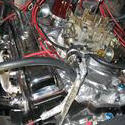
Nice diagram which clearly proves your point. High vacuum at idle clearly opens the valve. It is the spring which is tuned for each engine's vacuum that holds the valve in the correct position to allow a small amount of vapor to flow at idle. When there is load on the engine, the lower vacuum can't move the valve as far into the chamber which allows a greater amount of vapor to flow. It's clear that if you have a stock engine, you should go with the one designed for your engine. If you have a non-stock engine, you have to guess which of the hundreds of PCV valves available on the market will be best for your engine. Since manufacturers don't provide flow rates, spring rates, and correlation with vacuum, it's either a trial and error approach or pick up a tuneable PCV valve like the Wagner. If you have an engine that doesn't make good vacuum at idle, you're going to get full vapor flow through most of the off the shelf PCV valves. I never found one that would work with my old engine. I'll try the one the manufacturer recommends for my new engine and if I have a single issue, I'll be getting the Wagner unit.
DC
Le Mans Master
Joined: Apr 2011
Posts: 6,284
Likes: 1,171
From: Hermosa
If you have an engine that doesn't make good vacuum at idle, you're going to get full vapor flow through most of the off the shelf PCV valves.
Not directed at you but general information from here.
Like I said before, the adjustable ME wagner PCV valve is or acts essentially as an adjustable air bypass valve for the carb. at idle. Bypass air becomes more important as vacuum levels get lower.
Bypass air is any air that goes into the intake around the normal fuel circuit, so it provides air without fuel.
Too much bypass air and you have a vacuum leak and the symptoms associated with it.
Too little bypass air and you cannot get the throttle blades closed enough at idle and end up with fuel from the transition slots or "nozzle drip" due to fuel being provided by the main circuit and not the idle circuit.
Although you can add or drill the idle bypass air hole to a larger size, (in a q-jet) it may take a few attempts to get it right or you may go too big etc, and it may not be for the average owner since it can be somewhat involved.
Not saying the ME wagner valve is a necessarily a replacement for proper bypass air just that it can act as adjustable bypass air at idle. As can an OEM PCV, only it's not adjustable and is not correct for your engine if it has low vacuum at idle.
Getting the timing right is key here first. Enough advance at idle for low cylinder pressure at idle engines. IE moderate to large overlap cams. I have also noted that higher altitudes, higher temperature and lower pressure days, also lowers intake vacuum at idle. Makes sense, less dense air.
Stock or mild cam engines rarely need any bypass air.
I am not an expert here, just my observations what I have learned from Cliff Ruggles' book (mostly) and what I understand about the subject thus far via my experience with the subject.
I had to add bypass air to my Q-jet to get it to idle properly without nozzle drip and it worked very well. The ME Wagner allowed fine tuning and I understand how important evacuation of the crankcase can be. Both of which can be accomplished with this simple addition.
If I'm wrong or someone thinks I'm wrong I'm sure it will be pointed it out.

Drifting
Joined: Oct 2005
Posts: 1,527
Likes: 148
From: East London/SW Essex UK
The last few posts have (as far as I'm concerned) resolved all queries and questions relating to PCV valves. Anyone care to address CFM flow for stock vs aftermarket fans and improved braking distances for larger diameter braking systems to the same level of detail?

Drifting
Joined: Apr 2020
Posts: 1,779
Likes: 250
From: Ocean County NJ
Breathers no PCV
New to this thread and sorry for piling on. The Vette I bought has NO PCV valve and the previous owner had two breather elements in it, should I add a PCV?
I don't have all the specs on the engine and cam as it was built by a specialty shop years ago that moved but its a 425 HP SBC, 11:1 CR, alum heads, big cam, air-gap, demon carb, long tubes, MSD.
My Buick GS engine is also heavily worked with a big cam (had to run a vacuum tank) but has scavenger tubes on the headers so don't have a lot of experience with PCV dialing in.
I don't have all the specs on the engine and cam as it was built by a specialty shop years ago that moved but its a 425 HP SBC, 11:1 CR, alum heads, big cam, air-gap, demon carb, long tubes, MSD.
My Buick GS engine is also heavily worked with a big cam (had to run a vacuum tank) but has scavenger tubes on the headers so don't have a lot of experience with PCV dialing in.