




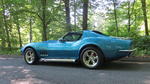


PCV valve for 383 ??

Melting Slicks


Joined: Dec 2009
Posts: 3,233
Likes: 657
From: Thunder Bay

Yes the PCV calibration does matter. With that said, most guys (myself included) don't really pay a lot of attention. As long as it fits and works, its OK. I recently ran across this fully adjustable PCV valve:
http://mewagner.com/?p=444
The concept makes sense and despite the cost, I have every intention of ordering and installing one once this virus crap settles down.
http://mewagner.com/?p=444
The concept makes sense and despite the cost, I have every intention of ordering and installing one once this virus crap settles down.
Melting Slicks
Joined: Dec 2009
Posts: 3,233
Likes: 657
From: Thunder Bay
It gets worse. I’m in Canada. That $120 is about $160 up here. Problem is PCV valves are calibrated to the engine and really only work properly on the exact engine they were designed for. Once the original is lost/gone/worn out, you are stuck with generic replacements. Remember the PCV valve is just a big vacuum leak. If it’s not properly calibrated to the engine you get all the issues that go with that.

Melting Slicks


Joined: Apr 2001
Posts: 3,399
Likes: 278
From: Olmsted Falls, Ohio
Well, I replaced mine and then thought about it because I upgraded the engine.
I asked Lars about how you can figure out how much vacuum your PCV should be pulling, and was there a chart, etc. and basically got a I don't know answer because he's never seen a chart.
So if you can show us some real documentation on how to find a PCV that is "properly calibrated" to your engine without spending $120, I'd be happy to read it. Until then it's all a minor consideration for most of us.
I've probably got 6 different PCVs with different codes on the bottom that mean almost nothing.
I asked Lars about how you can figure out how much vacuum your PCV should be pulling, and was there a chart, etc. and basically got a I don't know answer because he's never seen a chart.
So if you can show us some real documentation on how to find a PCV that is "properly calibrated" to your engine without spending $120, I'd be happy to read it. Until then it's all a minor consideration for most of us.
I've probably got 6 different PCVs with different codes on the bottom that mean almost nothing.
Melting Slicks
Joined: Dec 2009
Posts: 3,233
Likes: 657
From: Thunder Bay
Well, I replaced mine and then thought about it because I upgraded the engine.
I asked Lars about how you can figure out how much vacuum your PCV should be pulling, and was there a chart, etc. and basically got a I don't know answer because he's never seen a chart.
So if you can show us some real documentation on how to find a PCV that is "properly calibrated" to your engine without spending $120, I'd be happy to read it. Until then it's all a minor consideration for most of us.
I've probably got 6 different PCVs with different codes on the bottom that mean almost nothing.
I asked Lars about how you can figure out how much vacuum your PCV should be pulling, and was there a chart, etc. and basically got a I don't know answer because he's never seen a chart.
So if you can show us some real documentation on how to find a PCV that is "properly calibrated" to your engine without spending $120, I'd be happy to read it. Until then it's all a minor consideration for most of us.
I've probably got 6 different PCVs with different codes on the bottom that mean almost nothing.

Team Owner


Joined: Jan 2006
Posts: 37,637
Likes: 3,118
From: Crossville TN
If your 383 has about the same HP and similar redline to the LT-1 engine, go with that. PCV units are designed to stay closed as idle and begin to flow at low cruising speed. They also must be able to handle the internal crankcase positive flowrate at max rpm for that engine. I think you're making this way too complicated for the task at hand.
Selecting one spec'd for a 400 cu in SBC engine would be a reasonable choice, as well.
Selecting one spec'd for a 400 cu in SBC engine would be a reasonable choice, as well.
Last edited by 7T1vette; May 29, 2020 at 12:13 AM.
Corvette Stories
The Best of Corvette for Corvette Enthusiasts

Top 10 Most Expensive Corvettes Ever Sold on Bring A Trailer
Brett Foote
10 Things Every Corvette Owner Needs (2026 Edition)
Michael S. Palmer
8 Most "Only Corvette Owners Understand" Quirks and Problems
Pouria Savadkouei
10 Reasons the C6 Z06 is Still A Performance Benchmark After 20 Years
Joe Kucinski
How Much Horsepower Every Corvette Engine "LOST" in 1972
Joe Kucinski
Top 10 DOs and DON'Ts for Protecting Your Convertible Top!
Michael S. Palmer
Top 10 Most Explosive Corvettes Ever Made: Power-to-Weight Ratio Ranked!
Joe Kucinski
150 hp to 1,250 hp: Every Corvette Generation Compared by the Specs That Matter
Joe Kucinski
8 Coolest Corvette Pace Cars (and Replicas) of All Time
Verdad Gallardo
Melting Slicks
Joined: Apr 2001
Posts: 3,399
Likes: 278
From: Olmsted Falls, Ohio
drwet:
I got curious and read the tech articles posted at mewagner.com and began to notice a trend.
They never really tell you anything about the valves available on the market that they are testing against. They just call them stock valve a, b, etc.
Second thing I noticed, is that searching for information on the internet is pretty much useless. You still cannot find out which PCV (I have 6, from over the years, all with different codes) does what. The code definitions are not available. Must be a big industy secret. Maybe smoke-and-mirrors?
Yes, the PCV is a vacuum leak, hell, the whole engine is designed as a vacuum leak. No big news there.
But does a PCV that you can tune make a diffenence, or does it make you feel like you've solved the world's problems with old cars, when in fact you've wasted time and money?
For me, I'll let that mystery alone, not worth the trouble.
I got curious and read the tech articles posted at mewagner.com and began to notice a trend.
They never really tell you anything about the valves available on the market that they are testing against. They just call them stock valve a, b, etc.
Second thing I noticed, is that searching for information on the internet is pretty much useless. You still cannot find out which PCV (I have 6, from over the years, all with different codes) does what. The code definitions are not available. Must be a big industy secret. Maybe smoke-and-mirrors?
Yes, the PCV is a vacuum leak, hell, the whole engine is designed as a vacuum leak. No big news there.
But does a PCV that you can tune make a diffenence, or does it make you feel like you've solved the world's problems with old cars, when in fact you've wasted time and money?
For me, I'll let that mystery alone, not worth the trouble.
Melting Slicks
Joined: Dec 2009
Posts: 3,233
Likes: 657
From: Thunder Bay
drwet:
I got curious and read the tech articles posted at mewagner.com and began to notice a trend.
They never really tell you anything about the valves available on the market that they are testing against. They just call them stock valve a, b, etc.
Second thing I noticed, is that searching for information on the internet is pretty much useless. You still cannot find out which PCV (I have 6, from over the years, all with different codes) does what. The code definitions are not available. Must be a big industy secret. Maybe smoke-and-mirrors?
Yes, the PCV is a vacuum leak, hell, the whole engine is designed as a vacuum leak. No big news there.
But does a PCV that you can tune make a diffenence, or does it make you feel like you've solved the world's problems with old cars, when in fact you've wasted time and money?
For me, I'll let that mystery alone, not worth the trouble.
I got curious and read the tech articles posted at mewagner.com and began to notice a trend.
They never really tell you anything about the valves available on the market that they are testing against. They just call them stock valve a, b, etc.
Second thing I noticed, is that searching for information on the internet is pretty much useless. You still cannot find out which PCV (I have 6, from over the years, all with different codes) does what. The code definitions are not available. Must be a big industy secret. Maybe smoke-and-mirrors?
Yes, the PCV is a vacuum leak, hell, the whole engine is designed as a vacuum leak. No big news there.
But does a PCV that you can tune make a diffenence, or does it make you feel like you've solved the world's problems with old cars, when in fact you've wasted time and money?
For me, I'll let that mystery alone, not worth the trouble.

Melting Slicks
Joined: Apr 2001
Posts: 3,399
Likes: 278
From: Olmsted Falls, Ohio
This is their article on another site.
http://www.engineprofessional.com/ar...Q315_34-44.pdf
I'm still confounded that a simple device that has been on cars since 1961, and in fact still functions as designed, has not started a full aftermarket rush to "better" the device and haul in money by the boat-load. Must be because there is little to be gained.
There are plenty of articles out there on what vacuum you should see the valve open at idle and crusing.
Sure sounds like more hit-and-miss because the makers of these devices do NOT publish any specs.
At any rate, I quit. I'm not reinventing the wheel. My PCV works, or seems to for the last 22 years as the engine got older. Still seems to work now with all new internals and increased HP and compression. Don't see any blow-by, don't see any drips. Yep seems to work.
http://www.engineprofessional.com/ar...Q315_34-44.pdf
I'm still confounded that a simple device that has been on cars since 1961, and in fact still functions as designed, has not started a full aftermarket rush to "better" the device and haul in money by the boat-load. Must be because there is little to be gained.
There are plenty of articles out there on what vacuum you should see the valve open at idle and crusing.
Sure sounds like more hit-and-miss because the makers of these devices do NOT publish any specs.
At any rate, I quit. I'm not reinventing the wheel. My PCV works, or seems to for the last 22 years as the engine got older. Still seems to work now with all new internals and increased HP and compression. Don't see any blow-by, don't see any drips. Yep seems to work.
Team Owner
Joined: Jan 2006
Posts: 37,637
Likes: 3,118
From: Crossville TN
Why does one need to "better the device" for something as simple as a waste air dump valve??? You fellas are a classic case of the Executive Board who can't make a decision about what color to paint the bicycle rack.....
This device is a SMALL vacuum leak--but only after the engine is up to low cruising speeds (over 1000 rpm, approx.). It is closed at idle [NO blow-by], so it doesn't affect idle quality.
It needs to be big enough to handle the amount of crankcase blow-by produced by the engine: ie, larger engine = larger PCV valve capacity; and higher performance = looser rings, more blow-by.
Other than that, what do you need to know? Pick one designed for an engine that "kinda" matches what you have. NOT BRAIN SURGERY!
P.S. The $129 special, super-duper, "adjustable" PCV valve is designed and priced just for folks who can't get thru the "fog"...
This device is a SMALL vacuum leak--but only after the engine is up to low cruising speeds (over 1000 rpm, approx.). It is closed at idle [NO blow-by], so it doesn't affect idle quality.
It needs to be big enough to handle the amount of crankcase blow-by produced by the engine: ie, larger engine = larger PCV valve capacity; and higher performance = looser rings, more blow-by.
Other than that, what do you need to know? Pick one designed for an engine that "kinda" matches what you have. NOT BRAIN SURGERY!
P.S. The $129 special, super-duper, "adjustable" PCV valve is designed and priced just for folks who can't get thru the "fog"...

Safety Car


Joined: Nov 2005
Posts: 3,532
Likes: 1,185
From: Arizona - If you don’t know CFI, STOP proliferating the myths around it...
Yes the PCV calibration does matter. With that said, most guys (myself included) don't really pay a lot of attention. As long as it fits and works, its OK. I recently ran across this fully adjustable PCV valve:
http://mewagner.com/?p=444
The concept makes sense and despite the cost, I have every intention of ordering and installing one once this virus crap settles down.
http://mewagner.com/?p=444
The concept makes sense and despite the cost, I have every intention of ordering and installing one once this virus crap settles down.
Last edited by Buccaneer; May 29, 2020 at 01:15 PM.
Melting Slicks
Joined: Dec 2009
Posts: 3,233
Likes: 657
From: Thunder Bay
Aha! Someone with real world experience. You don't know how hard I have looked for someone like you. Tell me more. How hard is it to set up? What improvements did you see? Does it fit the factory valve cover grommet? What do you have for a baffle in the valve cover? Any tips?

Drifting


Joined: Oct 2005
Posts: 1,528
Likes: 148
From: East London/SW Essex UK
Why does one need to "better the device" for something as simple as a waste air dump valve??? You fellas are a classic case of the Executive Board who can't make a decision about what color to paint the bicycle rack.....
This device is a SMALL vacuum leak--but only after the engine is up to low cruising speeds (over 1000 rpm, approx.). It is closed at idle [NO blow-by], so it doesn't affect idle quality.
It needs to be big enough to handle the amount of crankcase blow-by produced by the engine: ie, larger engine = larger PCV valve capacity; and higher performance = looser rings, more blow-by.
Other than that, what do you need to know? Pick one designed for an engine that "kinda" matches what you have. NOT BRAIN SURGERY!
P.S. The $129 special, super-duper, "adjustable" PCV valve is designed and priced just for folks who can't get thru the "fog"...
This device is a SMALL vacuum leak--but only after the engine is up to low cruising speeds (over 1000 rpm, approx.). It is closed at idle [NO blow-by], so it doesn't affect idle quality.
It needs to be big enough to handle the amount of crankcase blow-by produced by the engine: ie, larger engine = larger PCV valve capacity; and higher performance = looser rings, more blow-by.
Other than that, what do you need to know? Pick one designed for an engine that "kinda" matches what you have. NOT BRAIN SURGERY!
P.S. The $129 special, super-duper, "adjustable" PCV valve is designed and priced just for folks who can't get thru the "fog"...
Melting Slicks
Joined: Apr 2001
Posts: 3,399
Likes: 278
From: Olmsted Falls, Ohio
roscobbc:
I think you completely miss the point of this thread.
It is not about "genuine" or "modern day" vs the exisiting available replacement parts.
The replacement parts work just fine. And yes, maybe you should think about installing a different valve if your engine upgrades warrent it.
The point was: is it worth $130? What does it really do that the stock unit does not?
Sure a manufacurer can charge what ever they need to recoup R&D costs.
I have yet to hear what the big gains are vs cost to make this product so great.
One guy here says "it works awesome". WTH does that mean? All that billet aluminum looks better than black plastic?
My stock looking valve "works awesome" too. In other words it does it's job.
I think you completely miss the point of this thread.
It is not about "genuine" or "modern day" vs the exisiting available replacement parts.
The replacement parts work just fine. And yes, maybe you should think about installing a different valve if your engine upgrades warrent it.
The point was: is it worth $130? What does it really do that the stock unit does not?
Sure a manufacurer can charge what ever they need to recoup R&D costs.
I have yet to hear what the big gains are vs cost to make this product so great.
One guy here says "it works awesome". WTH does that mean? All that billet aluminum looks better than black plastic?
My stock looking valve "works awesome" too. In other words it does it's job.
Last edited by KenSny; May 31, 2020 at 09:41 AM.

Had a 1976 L-82, 4-sp


Joined: Mar 2011
Posts: 5,338
Likes: 1,213
From: Some days your the dog and some days your the hydrant.
Royal Canadian Navy
I would rather flush $120 down the toilet than buy one of those billet pcv's. But heck, I eliminated that big vacuum leak altogether. I run two breathers. I don't drive the car enough where contamination of the oil will be an issue between oil changes. My engine is tight so no oil misting all over the engine bay.

Drifting
Joined: Oct 2005
Posts: 1,528
Likes: 148
From: East London/SW Essex UK
roscobbc:
I think you completely miss the point of this thread.
It is not about "genuine" or "modern day" vs the exisiting available replacement parts.
The replacement parts work just fine. And yes, maybe you should think about installing a different valve if your engine upgrades warrent it.
The point was: is it worth $130? What does it really do that the stock unit does not?
Sure a manufacurer can charge what ever they need to recoup R&D costs.
I have yet to hear what the big gains are vs cost to make this product so great.
One guy here says "it works awesome". WTH does that mean? All that billet aluminum looks better than black plastic?
My stock looking valve "works awesome" too. In other words it does it's job.
I think you completely miss the point of this thread.
It is not about "genuine" or "modern day" vs the exisiting available replacement parts.
The replacement parts work just fine. And yes, maybe you should think about installing a different valve if your engine upgrades warrent it.
The point was: is it worth $130? What does it really do that the stock unit does not?
Sure a manufacurer can charge what ever they need to recoup R&D costs.
I have yet to hear what the big gains are vs cost to make this product so great.
One guy here says "it works awesome". WTH does that mean? All that billet aluminum looks better than black plastic?
My stock looking valve "works awesome" too. In other words it does it's job.

Le Mans Master

Joined: Apr 2011
Posts: 6,284
Likes: 1,171
From: Hermosa
I think we need to get over the price tag. It is another tuning tool. I have one and it works very well.I paid $100, but that is not particularly relevant. Hell, I’ve given away $100 or spent it on a night out, so why would I sweat that price point.
it works really well for engines that develop low vacuum. I’m at 10” at idle in gear with electric fans running.
It works well enough that I have spent more for less, that’s for sure.
it is a well designed and thought out device that does precisely what it says it does. Not Chinese garbage. I spent enough time fiddling around with different pcv valves that didn’t work.
i have no problem supporting US designed and made products that deliver on quality and performance.
it works really well for engines that develop low vacuum. I’m at 10” at idle in gear with electric fans running.
It works well enough that I have spent more for less, that’s for sure.
it is a well designed and thought out device that does precisely what it says it does. Not Chinese garbage. I spent enough time fiddling around with different pcv valves that didn’t work.
i have no problem supporting US designed and made products that deliver on quality and performance.
Last edited by REELAV8R; May 31, 2020 at 12:28 PM.

Race Director


Joined: Jun 2000
Posts: 10,046
Likes: 675
From: FL
I think we need to get over the price tag. It is another tuning tool. I have one and it works very well.I paid $100, but that is not particularly relevant. Hell, I’ve given away $100 or spent it on a night out, so why would I sweat that price point.
it works really well for engines that develop low vacuum. I’m at 10” at idle in gear with electric fans running.
It works well enough that I have spent more for less, that’s for sure.
it is a well designed and thought out device that does precisely what it says it does. Not Chinese garbage. I spent enough time fiddling around with different pcv valves that didn’t work.
i have no problem supporting US designed and made products that deliver on quality and performance.
it works really well for engines that develop low vacuum. I’m at 10” at idle in gear with electric fans running.
It works well enough that I have spent more for less, that’s for sure.
it is a well designed and thought out device that does precisely what it says it does. Not Chinese garbage. I spent enough time fiddling around with different pcv valves that didn’t work.
i have no problem supporting US designed and made products that deliver on quality and performance.

I have one on my. 496 big block. Works great.