




PCV valve for 383 ??
Instructor

Joined: Oct 2018
Posts: 127
Likes: 21
From: Omaha, NE

I had issues with my new motor pulling to much air at idle. Took forever to figure out it was the PCV. As much as I would love to have the adjustable PCV, I can't bring my self to spend that kind of money. There are quite few forums out there referencing old AC Delco parts for PCV valve and comparing them to their stock applications. For example, alot of guys will says the lower vacuum engines should use a CV769C because it was originally used in the 69 camaros with the large cam that had about 10 inhg. But I struggled to find to cross reference any of the old AC delco numbers that you can't buy anymore. And then I found this pdf! It cross the AC delco number to a 4 digit number.
http://www.teamlucor.com/stores/gene...%20catalog.pdf
Coincidently? Napa's parts numbers use this same four digit number. So I was able to find all of the PCV valve part numbers that were talked about on the forums and get them from NAPA. All in stock at the store. I think I bought four of them at $4 each. And tried them all until I found the one that worked best.
http://www.teamlucor.com/stores/gene...%20catalog.pdf
Coincidently? Napa's parts numbers use this same four digit number. So I was able to find all of the PCV valve part numbers that were talked about on the forums and get them from NAPA. All in stock at the store. I think I bought four of them at $4 each. And tried them all until I found the one that worked best.
Melting Slicks


Joined: Dec 2009
Posts: 3,233
Likes: 657
From: Thunder Bay
New to this thread and sorry for piling on. The Vette I bought has NO PCV valve and the previous owner had two breather elements in it, should I add a PCV?
I don't have all the specs on the engine and cam as it was built by a specialty shop years ago that moved but its a 425 HP SBC, 11:1 CR, alum heads, big cam, air-gap, demon carb, long tubes, MSD.
My Buick GS engine is also heavily worked with a big cam (had to run a vacuum tank) but has scavenger tubes on the headers so don't have a lot of experience with PCV dialing in.
I don't have all the specs on the engine and cam as it was built by a specialty shop years ago that moved but its a 425 HP SBC, 11:1 CR, alum heads, big cam, air-gap, demon carb, long tubes, MSD.
My Buick GS engine is also heavily worked with a big cam (had to run a vacuum tank) but has scavenger tubes on the headers so don't have a lot of experience with PCV dialing in.

Drifting

Joined: Apr 2020
Posts: 1,779
Likes: 250
From: Ocean County NJ
As I understand it, the PCV system is primarily a pollution control device. However, it also scavenges blow-by combustion products out of the crankcase, which apparently have the potential to do harm to the engine and contaminate the oil. All things considered, I would prefer to have the PCV system on the engine, but I would also like it to function correctly with a properly calibrated valve.
Drifting
Joined: Apr 2020
Posts: 1,779
Likes: 250
From: Ocean County NJ
I would rather flush $120 down the toilet than buy one of those billet pcv's. But heck, I eliminated that big vacuum leak altogether. I run two breathers. I don't drive the car enough where contamination of the oil will be an issue between oil changes. My engine is tight so no oil misting all over the engine bay.
My other car was set up for the track and it has two scavenger tubes on the headers hooked up to the valve covers so blow by isn't an issue (but oil getting sucked through the rings might be
 )
)A lot of cars had breathers in the old days and I assume a PCV was just a way to get rid of the gases in a more green manner

Team Owner


Joined: Jan 2006
Posts: 37,637
Likes: 3,118
From: Crossville TN
Correct. It just scavenged the crankcase blow-by gases and merged them with the fuel tank vapors and into the intake charge for burning...instead of dumping into the engine compartment environment or the atmosphere. Simple, painless, no loss to engine. Breathers will work fine, unless there is a lot of blow-by due to loose fit on rings. Then, there might be some misting in the engine compartment....regularly.
Drifting
Joined: Apr 2020
Posts: 1,779
Likes: 250
From: Ocean County NJ
Correct. It just scavenged the crankcase blow-by gases and merged them with the fuel tank vapors and into the intake charge for burning...instead of dumping into the engine compartment environment or the atmosphere. Simple, painless, no loss to engine. Breathers will work fine, unless there is a lot of blow-by due to loose fit on rings. Then, there might be some misting in the engine compartment....regularly.

Drifting


Joined: Oct 2005
Posts: 1,528
Likes: 148
From: East London/SW Essex UK
Correct. It just scavenged the crankcase blow-by gases and merged them with the fuel tank vapors and into the intake charge for burning...instead of dumping into the engine compartment environment or the atmosphere. Simple, painless, no loss to engine. Breathers will work fine, unless there is a lot of blow-by due to loose fit on rings. Then, there might be some misting in the engine compartment....regularly.
Drifting
Joined: Apr 2020
Posts: 1,779
Likes: 250
From: Ocean County NJ
Corvette Stories
The Best of Corvette for Corvette Enthusiasts

Top 10 Most Expensive Corvettes Ever Sold on Bring A Trailer
Brett Foote
10 Things Every Corvette Owner Needs (2026 Edition)
Michael S. Palmer
8 Most "Only Corvette Owners Understand" Quirks and Problems
Pouria Savadkouei
10 Reasons the C6 Z06 is Still A Performance Benchmark After 20 Years
Joe Kucinski
How Much Horsepower Every Corvette Engine "LOST" in 1972
Joe Kucinski
Top 10 DOs and DON'Ts for Protecting Your Convertible Top!
Michael S. Palmer
Top 10 Most Explosive Corvettes Ever Made: Power-to-Weight Ratio Ranked!
Joe Kucinski
150 hp to 1,250 hp: Every Corvette Generation Compared by the Specs That Matter
Joe Kucinski
8 Coolest Corvette Pace Cars (and Replicas) of All Time
Verdad Gallardo

Had a 1976 L-82, 4-sp


Joined: Mar 2011
Posts: 5,338
Likes: 1,213
From: Some days your the dog and some days your the hydrant.
Royal Canadian Navy

Monstr, I don't want any contaminated air getting in my air/fuel mix. My engine block, bearings, camshaft, etc., etc., etc., will not erode, corrode, disintegrate, melt, seize, freeze or be subject to any other catastrophic failure by not running a pcv system. Well, at least non of the aforementioned failures has happened in the 20 years since I removed the pcv. Why? My car might see a 1000 miles a year and I change my oil once a year. Hardly enough mileage to worry about contaminated oil destroying my engine. Even if I put 6K on in a year, I wouldn't have a pcv unless I got oil floating out of my breathers misting the engine compartment. But that would indicate excessive blowby and time for a rebuild.
For the guys who promote running a pcv, fill your boots. But please don't spread myths of obnoxious toxic fumes, oil misting, engine disintegration, poor running, etc. Btw, my vapor canister (another source of dilution) is plugged too! My house hasn't burned down and not a whiff of gas inside my garage...........ever.........in 32 years.
Team Owner
Joined: Jan 2006
Posts: 37,637
Likes: 3,118
From: Crossville TN
Myths.... Why do you think the PCV system was developed? Much before EPA regulations. Folks got tired of having a gooped-up engine/compartment because of blow-by and waste oil draining out the 'dump tube' at the rear of the engine. You have your dislikes...that's fine. But there are justifiable reasons for PCV system, so quit trying to convince everyone else that it's a bogus & useless system. If you don't want one, fine. Some of us do.
Had a 1976 L-82, 4-sp
Joined: Mar 2011
Posts: 5,338
Likes: 1,213
From: Some days your the dog and some days your the hydrant.
Royal Canadian Navy
I'm not trying to convince anyone. That's why I said to use a pcv if one wants to do so. Monstr asked me why I don't use a pcv so I gave him my answer. But don't go around saying that the engine compartment will get full of oil when it won't unless there are other problems like excessive blowby and you absolutely must use a pcv.
Le Mans Master

Joined: Oct 2002
Posts: 7,098
Likes: 378
From: Las Vegas - Just stop perpetuating myths please.
Problem with the PCV valve is none of the manufactures publish specifications for open pressure differential (vacuum) and flow rate. Makes it a bit of a hidden science which creates plenty of superstition on part numbers and quality of manufacture - always easy to blame it on the cheap and poor quality manufacture. But no one takes the time and effort to measure the open pressure (vacuum) with a Mighty Vac pump as you definitely want a valve that will start to open at or below your normal idle vacuum.
Once the valve is open measuring the flow is quite a task but is knowing the flow really that necessary? What I'm saying is wouldn't be easier to just tune the carb using a A/F monitor at this point? There could be a problem with excessive flow but if the flow is low it should be able to be tuned out. My assumption is that it's unlikely the PCV valve flow would be to high to be turned out using carb jetting and an A/F monitor since the pressure deferential goes down as the throttle blades open - reducing flow.
Yea, most of us don't want to turn or cars into race only cars and we need a functional PCV system for even a weekend cruiser. If a adjustable PCV valve can get you there I don't see anything wrong with spending for a custom part. But I also think there are more than one way to correct the PCV system after performance modifications and really the sky is the limit here.
Once the valve is open measuring the flow is quite a task but is knowing the flow really that necessary? What I'm saying is wouldn't be easier to just tune the carb using a A/F monitor at this point? There could be a problem with excessive flow but if the flow is low it should be able to be tuned out. My assumption is that it's unlikely the PCV valve flow would be to high to be turned out using carb jetting and an A/F monitor since the pressure deferential goes down as the throttle blades open - reducing flow.
Yea, most of us don't want to turn or cars into race only cars and we need a functional PCV system for even a weekend cruiser. If a adjustable PCV valve can get you there I don't see anything wrong with spending for a custom part. But I also think there are more than one way to correct the PCV system after performance modifications and really the sky is the limit here.

Le Mans Master

Joined: Dec 2006
Posts: 8,837
Likes: 1,028
Good question. The answer dates back much further than you might think. The system was originally designed by Cadillac for tank engines.Although the modern purpose of a positive crankcase ventilation (PCV) system is to reduce air pollution, the original purpose was to allow an engine to operate underwater without the water leaking in. The first PCV systems were built during World War II, to allow tank engines to operate during deep fording operations, where the normal draft tube ventilator would have allowed water to enter the crankcase and destroy the engine.[3]
In the early 1950s, Professor Arie Jan Haagen-Smit established that pollution from automobile engines was a major cause of the smog crisis being experienced in Los Angeles, California.[4] The California Motor Vehicle Pollution Control Board (a precursor to the California Air Resources Board) was established in 1960 and began researching how to prevent blow-by gases from being released directly into the atmosphere.[5] The PCV system was designed to re-circulate the gases into the air intake so that they could be combined with the fresh air/fuel and more completely combusted. In 1961, California regulations required that all new cars be sold with a PCV system, therefore representing the first implementation of vehicle emissions control device.[6]
By 1964, most new cars sold in the U.S. were so equipped by voluntary industry action so as not to have to make multiple state-specific versions of vehicles. PCV quickly became standard equipment on all vehicles worldwide because of its benefits not only in emissions reduction but also in engine internal cleanliness and oil lifespan.[1][7]
In 1967, several years after its introduction into production, the PCV system became the subject of a U.S. federal grand jury investigation, when it was alleged by some industry critics that the Automobile Manufacturers Association (AMA) was conspiring to keep several such smog reduction devices on the shelf to delay additional smog control. After eighteen months of investigation, the grand jury returned a "no-bill" decision, clearing the AMA, but resulting in a consent decree that all U.S. automobile companies agreed not to work jointly on smog control activities for a period of ten years.[8]
In the decades since, legislation and regulation of vehicular emissions has tightened substantially. Most of today's petrol engines continue to use PCV systems.
In the early 1950s, Professor Arie Jan Haagen-Smit established that pollution from automobile engines was a major cause of the smog crisis being experienced in Los Angeles, California.[4] The California Motor Vehicle Pollution Control Board (a precursor to the California Air Resources Board) was established in 1960 and began researching how to prevent blow-by gases from being released directly into the atmosphere.[5] The PCV system was designed to re-circulate the gases into the air intake so that they could be combined with the fresh air/fuel and more completely combusted. In 1961, California regulations required that all new cars be sold with a PCV system, therefore representing the first implementation of vehicle emissions control device.[6]
By 1964, most new cars sold in the U.S. were so equipped by voluntary industry action so as not to have to make multiple state-specific versions of vehicles. PCV quickly became standard equipment on all vehicles worldwide because of its benefits not only in emissions reduction but also in engine internal cleanliness and oil lifespan.[1][7]
In 1967, several years after its introduction into production, the PCV system became the subject of a U.S. federal grand jury investigation, when it was alleged by some industry critics that the Automobile Manufacturers Association (AMA) was conspiring to keep several such smog reduction devices on the shelf to delay additional smog control. After eighteen months of investigation, the grand jury returned a "no-bill" decision, clearing the AMA, but resulting in a consent decree that all U.S. automobile companies agreed not to work jointly on smog control activities for a period of ten years.[8]
In the decades since, legislation and regulation of vehicular emissions has tightened substantially. Most of today's petrol engines continue to use PCV systems.


Race Director

Joined: Mar 2016
Posts: 14,406
Likes: 8,212
From: Napa Valley California
I’ll be running two Moroso catch cans with breathers on my 496.
Each can will be connected with -10 braided hose and mounted on the firewall.
The engine builder told me we could add a PCV later if I experience to much oil collected in the catch cans.
They said that with an engine where the oil is changed regularly there won’t be enough acids or corrosives contaminating the oil to worry about.
The secret is to change the oil on a regular basis.
I asked them about misting oil in the engine compartment and they said that proper placement of the fittings in the valve covers is a key component so oil from the valve train isn’t squirting up into the fittings.
They said that running a single filtered catch can, properly placed, fed by both valve covers will not allow any oil to mist in the engine compartment.
I’ve run numerous engines over the years in boats and cars using just valve cover breathers, no PCV’s and never had an issue.
I also don’t run my cars or boats hard all the time.
I get on them for sure to get that rush, but it’s short lived.
Each can will be connected with -10 braided hose and mounted on the firewall.
The engine builder told me we could add a PCV later if I experience to much oil collected in the catch cans.
They said that with an engine where the oil is changed regularly there won’t be enough acids or corrosives contaminating the oil to worry about.
The secret is to change the oil on a regular basis.
I asked them about misting oil in the engine compartment and they said that proper placement of the fittings in the valve covers is a key component so oil from the valve train isn’t squirting up into the fittings.
They said that running a single filtered catch can, properly placed, fed by both valve covers will not allow any oil to mist in the engine compartment.
I’ve run numerous engines over the years in boats and cars using just valve cover breathers, no PCV’s and never had an issue.
I also don’t run my cars or boats hard all the time.
I get on them for sure to get that rush, but it’s short lived.

Team Owner

Joined: Apr 1999
Posts: 21,953
Likes: 1,445
From: Reno Nevada
2024 C3 of the Year Finalist- Modified
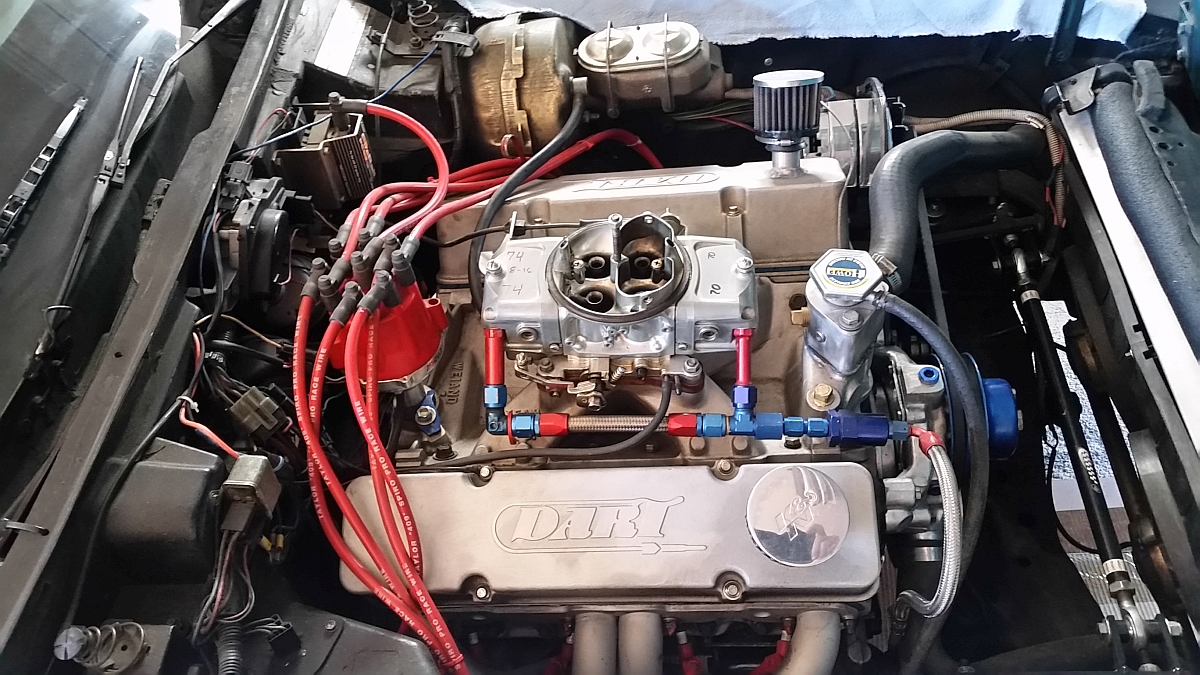
I vote for NO PCV. You are inducing a variable vacuum/ and or foul diluted blow by that ruins efficient combustion. Valve cover breathers/breather catch cans work great. Cam valley vacuum pumps actually increase HP. The ultimate is dry sump with adjustable cam valley vacuum.
open headers with valve cover evacuation systems is kind of a race only idea unless you have big enough pipes to nearly eliminate back pressure.
Did you ever wonder why your PCV equipped car has dirty spark plugs that don't last very long and modern cars can go 100K between plug changes?
MY 25 year setup!
open headers with valve cover evacuation systems is kind of a race only idea unless you have big enough pipes to nearly eliminate back pressure.
Did you ever wonder why your PCV equipped car has dirty spark plugs that don't last very long and modern cars can go 100K between plug changes?
MY 25 year setup!
Last edited by gkull; Jun 12, 2020 at 01:16 PM.

Tech Contributor
Joined: Jun 2004
Posts: 20,910
Likes: 962
From: I tend to be leery of any guy who doesn't own a chainsaw or a handgun.
Problem with the PCV valve is none of the manufactures publish specifications for open pressure differential (vacuum) and flow rate. Makes it a bit of a hidden science which creates plenty of superstition on part numbers and quality of manufacture - always easy to blame it on the cheap and poor quality manufacture. But no one takes the time and effort to measure the open pressure (vacuum) with a Mighty Vac pump as you definitely want a valve that will start to open at or below your normal idle vacuum.
Once the valve is open measuring the flow is quite a task but is knowing the flow really that necessary? What I'm saying is wouldn't be easier to just tune the carb using a A/F monitor at this point? There could be a problem with excessive flow but if the flow is low it should be able to be tuned out. My assumption is that it's unlikely the PCV valve flow would be to high to be turned out using carb jetting and an A/F monitor since the pressure deferential goes down as the throttle blades open - reducing flow.
Yea, most of us don't want to turn or cars into race only cars and we need a functional PCV system for even a weekend cruiser. If a adjustable PCV valve can get you there I don't see anything wrong with spending for a custom part. But I also think there are more than one way to correct the PCV system after performance modifications and really the sky is the limit here.
Once the valve is open measuring the flow is quite a task but is knowing the flow really that necessary? What I'm saying is wouldn't be easier to just tune the carb using a A/F monitor at this point? There could be a problem with excessive flow but if the flow is low it should be able to be tuned out. My assumption is that it's unlikely the PCV valve flow would be to high to be turned out using carb jetting and an A/F monitor since the pressure deferential goes down as the throttle blades open - reducing flow.
Yea, most of us don't want to turn or cars into race only cars and we need a functional PCV system for even a weekend cruiser. If a adjustable PCV valve can get you there I don't see anything wrong with spending for a custom part. But I also think there are more than one way to correct the PCV system after performance modifications and really the sky is the limit here.
Regarding the second bolded sentence, it's my understanding that PCV valves are designed to allow a somewhat constant/metered flow rate via the shape of the internal passage and the spring/pintle setup. High vacuum tries to cause the pintle to close, but the spring/seat-shape keeps it slightly open, allowing a metered amount of air flow. At higher throttle settings or WOT, the spring opens the pintle further to reduce the orifice restriction, allowing good flow rate at the lower pressure differential.
I welcome correction if anyone has technical information to the contrary.
Tech Contributor
Joined: Jun 2004
Posts: 20,910
Likes: 962
From: I tend to be leery of any guy who doesn't own a chainsaw or a handgun.
I vote for NO PCV. You are inducing a variable vacuum/ and or foul diluted blow by that ruins efficient combustion. Valve cover breathers/breather catch cans work great. Cam valley vacuum pumps actually increase HP. The ultimate is dry sump with adjustable cam valley vacuum.
open headers with valve cover evacuation systems is kind of a race only idea unless you have big enough pipes to nearly eliminate back pressure.
Did you ever wonder why your PCV equipped car has dirty spark plugs that don't last very long and modern cars can go 100K between plug changes?
MY 25 year setup!
open headers with valve cover evacuation systems is kind of a race only idea unless you have big enough pipes to nearly eliminate back pressure.
Did you ever wonder why your PCV equipped car has dirty spark plugs that don't last very long and modern cars can go 100K between plug changes?
MY 25 year setup!
And, for a road course driven street car, I suspect my PCV system is lighter than a catch can and a couple valve cover breathers.