When you click on links to various merchants on this site and make a purchase, this can result in this site earning a commission. Affiliate programs and affiliations include, but are not limited to, the eBay Partner Network.
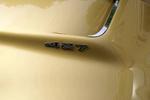
I have a question about engine coolant for my 69 427 coupe. I had to remove the radiator to install my vintage air system and therefore drained all of the engine coolant. My car has the steel reserve coolant tank where you add the coolant. There is no place to add directly to the radiator.
is there a specific process to add coolant when the system is completely empty? How much does it hold? I purchased this prestone that is prediluted.
To do a 50/50 mix with a fully drained system should require about 2 1/2 gallons of antifreeze. Keep in mind the 22 quarts include an empty heater core, so take that into consideration when determining how much the system will accept. Mixing your own with distilled water is the least expensive route to go.
What I do (with a fully drained system) is add about 1 1/2 gallons of antifreeze then about a gallon of distilled water. Run the engine to bring the temperature up to normal and mix the antifreeze and water. Then slowly add additional water and antifreeze mix until it won't accept any more.
You can find a tremendous amount of detailed information about your Corvette here in the free download of the Vehicle Information Kit from the GM Heritage Center. https://www.corvetteforum.com/forums...-7t1vette.html(page 136 is all about the cooling system)
Remove the bypass hose on the water pump, then put as much coolant into the block, This way when you start it there will be coolant in the block, and the water pump won't air lock..
Thanks everyone! Only coolant that remains would be in the engine block as I replaced the heater core and drained the radiator and hoses.
dumb question but does the color of the antifreeze make a difference? I understand the dexcool is an additive. Should I just buy the basic stuff from autozone?
Last edited by Bhebert449; Aug 2, 2020 at 11:16 AM.
Stick with the basic green stuff, How old is the coolant in the block. You might want to drain that out too. This way the system is good for a long time.
Since you are concerned about your anti-freeze, you would do well to pull both of the block drain plugs. That way, there will be no dilution of the mix, and any sediment in the block can be flushed out. They are usually pretty tight.
As far as coolant goes, use the green concentrate, mix it 50/50 and you are good to go.
I abandoned green a/f a long time ago.
I've been using the low silicate red ELC (extended life coolant) for decades. Flush the green, put in the red.
It has the corrosion protection needed for both iron and aluminum engine components. Also protects from electrolysis. And, if you have a leak, it makes a nice, easy to spot trail of dried crusty red stuff. What could be better than that? Lol.
Seriously though, whatever coolant you decide to use, it would probably be a good idea to pull the block plugs and flush the block.
Since you are concerned about your anti-freeze, you would do well to pull both of the block drain plugs. That way, there will be no dilution of the mix, and any sediment in the block can be flushed out. They are usually pretty tight.
As far as coolant goes, use the green concentrate, mix it 50/50 and you are good to go.
I abandoned green a/f a long time ago.
I've been using the low silicate red ELC (extended life coolant) for decades. Flush the green, put in the red.
It has the corrosion protection needed for both iron and aluminum engine components. Also protects from electrolysis. And, if you have a leak, it makes a nice, easy to spot trail of dried crusty red stuff. What could be better than that? Lol.
Seriously though, whatever coolant you decide to use, it would probably be a good idea to pull the block plugs and flush the block.
Good luck
Jeff
where are the block plugs? Will it require a torch to heat them to get them loose?
where are the block plugs? Will it require a torch to heat them to get them loose?
both sides. 'bout halfway front-to-back, down low near bottom of block. You may need a torch. Use ONLY a close-fitting 6-point socket / wrench. Threads are 1/8" NPT tapered pipe. Use a little teflon tape or pipe dope to reinstall.
Don't use Dexcool anything in your C3. That orange color is fraught w/ problems if/when any air gets into system.
As bird says, use only green stuff such as Prestone. Unless a true emergency, refill w/ only green stuff & Distilled water; it matters!
Suggest you First thoroughly clean & flush your cooling system; tap/well water's OK for that but not for final refill or topoff.
Pull the rad hose from the thermostat housing and pour it in.......this is SOP for the Harrison tank style radiators.
Use 75/25 Distilled water/Green Anti-freeze in warm climates....50/50 in cold climates. Never buy pre-mix anti-freeze as you are essentially paying $5 for two quarts of water.
Since you are concerned about your anti-freeze, you would do well to pull both of the block drain plugs. That way, there will be no dilution of the mix, and any sediment in the block can be flushed out. They are usually pretty tight.
As far as coolant goes, use the green concentrate, mix it 50/50 and you are good to go.
I abandoned green a/f a long time ago.
I've been using the low silicate red ELC (extended life coolant) for decades. Flush the green, put in the red.
It has the corrosion protection needed for both iron and aluminum engine components. Also protects from electrolysis.
Seriously though, whatever coolant you decide to use, it would probably be a good idea to pull the block plugs and flush the block.
Good luck
Jeff
I agree on the antifreeze. I went with Zerex G05, in all my cars, 2 chevys and 1 ford. It's a little easier if they all have the same stuff.
Why go with a 2 yr product when you can go with a 5 yr product?
You definitely have to flush well if you're changing types of fluid.
But, I'm not sure on the block plugs. I'm a big fan of the "if it's not broken, don't fix it" thinking from long years of experience.
They may or may not come out easily, and then be a problem.. I drain, refill, run the car to normal temp, drain again, etc.. You may have to do this 4/5 times to get it all out. You could also use a chemical flush, but be aware, the agressive ones may remove too many deposits and give you a leak.
The color of the coolant has nothing to do with it. But, GREEN coolant is glycol-based and the PINK stuff is meant for all aluminum engines....which we DO NOT have. Since you have drained about half of the coolant out of your system, it would be best for you to flush all the other DexCool out of your engine & expansion tank, then refill with glycol based coolant (50/50 mix with distilled water). If your mechanic suggested the DexCool (or chose it for you), ask for your money back. It should not have been selected for your cast iron engine.
To fill your system, the 'normal' method is to remove the pressure cap from your system (probably on the expansion tank) and leave it off during the fill and check-out process. Pour 1 gallon of distilled water into the expansion tank (which will send most of that to the radiator), then pour in 1 gallon of glycol antifreeze (not the 'already mixed' stuff!). Start the engine and immediately pour in another gallon of distilled water. Follow that with another gallon of antifreeze. You may have to pour in slowly to not allow the expansion tank to overflow. Also, at some point the system will not take any more fluid until the thermostat in the engine opens up and allows full flow thru the entire cooling system. You will know when that happens by testing the upper radiator hose for 'heat': it will stay cool until the T-stat opens and allows hot water to flow into/thru that hose.
Once the T-stat opens and the system flows freely, fill one empty coolant jug with 1/2 gallon of coolant and 1/2 gallon of distilled water and shake to mix them. Now you can use that mixed gallon to continue filling the system until the the fluid level in the expansion tank stays just above the transfer hose bnetween tank and radiator. When that occurs, put the pressure cap back on and go drive the car for a while. When you get back check to see that the level in the tank is still at the full line on the tank. Park the car and let cool overnight. Next morning check the fluid level in the tank. If low, fill to the full line and that should do it.
I'm guessing they are in a similar location on a big block. Be sure to have one or more buckets ready when the plug comes out, and you may need a pokey stick to dislodge the crud.
If you remove the waterneck/thermostat housing and fill the engine first, then top off the rest of the system, you may be less likely to have trapped air. A tiny hole in the thermostat helps, too.
Taking old rusty block plugs out might open yourself up to restoring your block. Don't worry about the old wives tail, the dreaded trapped air bubble. Fill, warm it up, refill, repeat. It's not rocket science.









 Engine coolant question