When you click on links to various merchants on this site and make a purchase, this can result in this site earning a commission. Affiliate programs and affiliations include, but are not limited to, the eBay Partner Network.
But I have never seen anyone run the numbers on different combinations.My gut always told me you can get respectable performance out of a dished piston L48, as long as you have a short duration cam, but I decided to run the numbers and see what they say. I worked or hung out at a race engine shop for 40 years, but we did not build many this mild, but the same principles apply.
Main Problem:
The stock engine is pretty sluggish due to very low compression. 8.5CR is the spec but usually measures lower, like 8.0. More cam duration than stock causes it to lose more cylinder pressure, and you don't have much to start with, so it gets even more sluggish. So it is not even worth upgrading the cam very much on a stock / head engine. A Comp 268H, the original one, works pretty well. Cams larger than that do not seem to run very well. Past that the first step is to increase the CR. That gives you upgraded cam options. But how much can you easily increase the CR and how big of a cam works?
These are the dished pistons that are the main problem, with their 18cc dish. The 2 or 4 eyebrow flat tops only lose 2 or 6cc.
I have owned both a 68 L48 295 HP 350, and a 75 L48. The 68 was a great all around engine. I loved it. Pretty strong, quick and mild. The 75 was slow, but it responded very well to headers, dual exhausts and mufflers. And was reasonably close to the 68 then. Maybe 270ish HP? But that was in the 80s. I learned a lot about engines since.
Recipe:
I came up with this recipe: It should work great with stock 3.08 gears. It should run as well as or better than a 70 300 HP engine, and be less octane sensitive. That is about your modification limit with the stock dished pistons.
The small cc heads wind up being an important key. You'll never get as much CR as a 70, but the better flowing modern heads make up for a lot.
As long as you keep the cam's advertised duration short, you can have very respectable cylinder pressure, throttle response, crispness and low to mid rpm power. The 57 cc heads give you over a 1.5 CR bump over the 76 cc heads, and 1/2 pt of compression bump over the 64cc heads, (to a respectable 9.4CR) and that helps a lot. Even the 64cc heads are 3/4 pt higher (8.8CR) than your current 76cc heads (~8.0 CR).
Recipe for a stock block and diff gears:
Stock dished pistons
TFS 57cc 175 cc heads
Steel head gasket
9.4 CR
212* dur cam vs your current 195*
1200-5600 rpm range vs your current 600-4800
.053" quench same as current but modern chambers and aluminum heads
DCR is very respectable at 7.8 vs your current 6.7. Ideal might be low 8s but you can not easily get there.
I would not push the cam any larger unless you change the pistons for more CR. You'll lose the crisp throttle this combo should have. And more cam also means more diff gear, or more convertor, or you will have a bog that might last til 25mph.
Last edited by leigh1322; Nov 18, 2024 at 08:39 PM.
The compression ratio was lowered in 1971 by using a larger chamber head and dished pistons in that year. Those heads should have a 76cc chamber, Possibly a 487 or 993 casting. Based on a flat top piston with 6cc valve reliefs that is a typical, .025 in the hole and using a GM 10105117 head gasket that is .028 thick and a 67cc head it puts you about 9.4 to 1 for compression. It will run on good pump gas at that if you are careful with the timing curve.
It would also be beneficial to swap to a thin (018-.020" thick) steel shim type head gasket to both raise the C.R. and reduce the quench distance (although only do this if you are sure everything is flat, head surface and block). Even though this will raise the compression ratio a bit, the engine will be less sensitive to octane with tighter quench.
Quench of 040” seems to be ideal in reducing knock sensitivity. .050” will be a little more sensitive. And over .060” definitely increases octane requirements. You can either pull timing, run better gas, or reduce C.R. Under .040” is not typically recommended due to low piston to head clearance.
Aluminum heads conduct heat better, usually enabling 0.5 pt increase in C.R. at the same knock sensitivity.
It will also be less sensitive to octane with new era Vortec or modern combustion chamber shape. An old school chamber shape like the open truck/smogger style will not like being pushed on compression ratio on pump gas. Chamber shape makes a big difference here.
Even though the stock chevy heads are listed at 64cc, don't take that as the real # without checking them, most Chevy heads are 1-2cc bigger than published #'s when you actually cc them. Also as the valve seats wear, the valves recess, and this increases the chamber size, That’s why 67cc is used for C.R. calculations even tho these are called 64cc heads.
DCR or dynamic compression ratio is also very important. This takes into account the closing point of the intake valve, based on advertised duration, where compression actually begins. The bigger the cam duration, the more it lowers the DCR, and the static compression ratio it likes. This means that milder cams should run a little less C.R. A DCR of 8.5 is very doable on hi octane pump gas if you cover your bases with regard to quench, chamber shape and head material. For DCR high 7s or low 8s is a good target.
Last edited by leigh1322; Nov 18, 2024 at 12:34 PM.
The numbers say a smaller Comp 260H would run even stronger than a Comp 268H, until 20-25 mph or so. Very important on the street. The 268H responds very well to a little more gear. With 3.08 gears, the factory cam hits it power range at 7mph, and the 268 not until 17, so you would feel the bog. The 260 splits the difference.
HR cams add to the cost, and installation complexity, but they do offer much faster ramps, and shorter advertised duration for the same .050” duration. So better low end TQ or idle quality. Or you can split the difference and get more power for the same low end/idle.
Results
The lobe shape of a HR cam, especially the non-listed .200” lift duration numbers, and higher lift, mean it will make more HP than the flat tappet.
The XR264HR should run great with stock 3.08 gears.
The XR270HR would benefit from more gear so you don’t get that stop light lag. It would also benefit from higher CR pistons, better flowing heads, etc. but at that point you are into an entire engine build or a crate motor $ territory. Comps recommendations say this is the highest duration you can run with a stock convertor, and I agree. But only if you have the gears to back it up.
HP
I’ll guess at HP, but cam #2 should get you lower 300’s and cam #6/7 solidly into mid 300s. And those #s all assume headers, true dual exhaust and free flowing straight thru mufflers. With dished pistons. 50 more with more different pistons, more CR, and higher flowing heads. But then your costs go way up, and approach crate engine territory.
Last edited by leigh1322; Nov 18, 2024 at 12:36 PM.
How much overall assuming you only want to pull out the C/C and are afraid to break a fingernail ?
A quick "back of the napkin" ballpark estimate of the final cost would be hepful to some I imagine. Engine parts, HR cam, labor and tuning.......let's leave the headers and exhaust out of the equation.
Reason I'm asking is that $4-5K gets you a complete 340-390HP crate engine with a HR cam from BP. I'm doing a 540 so, I'm not interested personally, just curious.
Last edited by Nikolai122; Nov 18, 2024 at 04:32 PM.
How much overall assuming you only want to pull out the C/C and are afraid to break a fingernail ?
A quick "back of the napkin" ballpark estimate of the final cost would be hepful to some I imagine. Engine parts, HR cam, labor and tuning.......let's leave the headers and exhaust out of the equation.
Reason I'm asking is that $4-5K gets you a complete 340-390HP crate engine with a HR cam from BP. I'm doing a 540 so, I'm not interested personally, just curious.
I did a flat tappet cam, heads, and an intake on my L48 last year for around 2.5k. Keep in mind I did all the labor and tuning myself, but I’m very satisfied with the results.
If you’re paying someone else to do it it makes less sense. For the same price of charging someone to do all that you can probably get a crate engine, with a hydraulic roller cam and better pistons for about the same price.
Two things stand out for me on this plan. One is that the full dish pistons on the stock pistons have no real quench area like the "step dish" pistons or more commonly referred to as d-dish pistons.
Second is by increasing CR on poor quench piston and that quench distance being .053" It seems to me that you may be inviting detonation problems. Particuarly if done to existing pistons with existing rings that will provide less than ideal ring seal and therefore introduce more oil mist to the combustion chamber via the PCV system. Burning oil further lowers the detonation threhhold.
So you could be limiting the potential output of the engine significantly due to detonation problems despite the increased CR.
I would be curious to see how well a 98000 mile engine with a 57cc chamber would perform, but were it mine... I'd go the extra mile and change at least the rings and better yet the pistons too.
Yeah I agree, this is not an "ideal" engine combination. At least not the way we build them today.
But if you limit the upgrades to stock dished pistons, it is about as far as you can go, practically speaking.
I say this is "by the numbers" but in reality it is based on experience, and I am just looking at the numbers now.
My buddy Jeff built hundreds of these combos back in the 80-90s, and they worked pretty well, for what they are.
And I helped on many of them.
That 268H cam really wakes an L48 up! And 64cc heads help even more.
But two cautions come to mind:
Make sure the rings are sealing well before any performance upgrades like this. Run a leak-down test. Or put in a fresh set. These engines are way older now than they were when we put these cams in back in the 90s.
The block must measure flat if you are going to use a metal steel shim head gasket. Otherwise you are far better off with the thicker, more compliant fel-pro one. If that is the case, you lose a little compression, and DCR and gain quench volume. It still works, just not as well.
Even engines with stock heads ran pretty well with this cam, it added a lot of punch and HP. My 75 C3 L48 ran sigificantly better with a de-cat, headers, true 2-1/4" duals, and turbo mufflers. It was like a different car, with a completely stock long-block, with stock cam. Even tho the DCR turns out now to be in the high 6s! But notice how this cam adds an exhaust rumble, a bunch of duration (17*) for more rpm, and the DCR barely drops. That is it's secret sauce. The ramps are faster so the advertised duration and IVC point barely changes.
These 8.5 CR L48 engines ran pretty well with .053" quench back in the day, as far as detonation anyway. But honestly we hardly ever got the compression out of the hi 8s or low 9s, even with head upgrades. Cam, or heads and cam, was a typical speed shop upgrade back then. That was probably a good thing, looking at the DCRs the way we do now.
A completely stock 68-70 10:1 CR 300HP L48 ran pretty well. It's DCR would have been 8.7. That's about as high as you would want to go on pump gas. And without the modern head features like swirl and tight quench. Based on experience, they like a stock timing curve for 93 pump gas, or a couple degrees retarded, not an aggressive timing curve at all. A 268H would help this one also, without many side effects.
Based on it's reputation, the 268H adds "cylinder pressure" (DCR?). But based on the numbers what it really does is add a bunch of duration (17*) (for HP) without any typical reduction in cylinder pressure (DCR), that you normally get with "bigger" cams.
The whole concept of running 10.5CR and .040" quench is a relatively more recent combo. That works, but only when combined with flat top pistons for less flame front restriction, modern chamber designs for enhanced swirl, aluminum heads for better heat removal, and .040" quench for increased turbulance. Only with all of that help, can you run cam timing that gets your DCR into the mid 8s, on 93 pump gas, and still run an aggressive timing curve, and get away with it.
We did not do DCRs back then, we experimented. My 11:1 LT-1 (Z28) was blue-printed. The .015 decked block took the compression up, but took off the matching numbers. A fel-pro head gasket kept the quench at a factory .053. With it's 2.02 OEM 67cc iron heads, it was a bit of a shop test mule and had multiple cams in it.
The Comp 268H gained way more TQ than the LT-1 cam. But it detonated badly at mid-range with 93 gas. 100 octane pump gas cleared it up. Looking at it's DCR now, it would have been 8.8. Without the benefit of aluminum heads, without high swirl chambers, and with only .053 quench. Now I know why it didn't work. That cam only lasted a week.
That was a big fail, so we tried other cams. After a couple we settled on a GM 30-30 cam with a much later closing intake valve, near 76* vs the 65* of the comp. With no other changes it ran way better with regards to detonation. But it still did not really like 93 pump gas with a good aggressive curve in it. But it was close. It needed a little octane booster, a blend of 97 octane gas, or 8* reduced timing at idle, from 12-4*.
Looking at it now it only had a DCR of 8.0. According to current theory, that should have been OK. But remember it did not have the other modern benefits: no aluminum, no swirl, no tight quench (had .053). I feel sure it would have liked 93 gas if it had at least some of those things. We were just a little over the edge on detonation mid-range. But boy did it like to rev with good gas in the tank (254* duration solid)!
I was asked about HP for these combos.
How about from a low of 165 HP to a high of 380 HP? Done. LOL
That is more difficult because Chevy changed the engine combo parts and the way engines were rated during the C3s run. The early cars were rated in Gross HP by GM. On an engine stand, headers, no accessories and an optimal carb/distributor tune, just like engine dynos are done today. A maximum available HP. They did not even fudge the dyno HP numbers, they just occasionally rated their most extreme engines a bit low, at too low an rpm, like ~1000 rpm, like 430 HP at 5200 for the L88 when it really made peak HP (~530) at 6500, or the DZ 302, or the valve cover decal switch on the 450 HP L72 427s down to 425. All that was to fool insurance agents. Any real car guy saw right thru that game.
Starting in 1971 they rated them in Net HP. Still on an engine stand, and still at the crank, but with all standard accessories bolted to the engine, just as it would be as installed in the car. Alternator, water pump, fans, air cleaner, and a complete factory exhaust all the way to the tailpipe. With as-installed carb & distributor tuning. The factory still basically rates them this way today. No aftermarket co. ever rates them this way. The aftermarket, drive-on dynos, are different because they measure them at the rear tire, for rear wheel HP (RWHP). Chevy's Net HP figures are measured at the crank.
In 1971 only, Chevy dyno'd all their engines both ways, and published the results.
Analyzing this chart gives us some baselines. The L48 (Standard 350) lost 60 HP with this rating method, most of it due to the installation of exhaust and mufflers. Let's call that part worth about ~30 HP. The distributor curve most of the rest. (~20 HP)
Obviously the higher flowing BBCs are restricted more by a factory exhaust (~80-100 HP). The LT-1 is affected less (~55 HP) because it has the 2-1/2" BB exhaust. The aftermarket has come to realize that large overlap cams are strongly affected by headers, but there is far less effect on small overlap L48 style camshafts.
The one major L48 engine mechanical change over all those years was the huge drop in compression in 1971 from 10-1/4:1 CR to 8-1/2:1 CR. Very commonly they even measure 1/4 to 1/2 pt lower than this, mostly due to valve seat wear / recession.
Mechanically1971 thru 1982 the L48 engine internals remained basically identical.
Externally tho there were changes. In 1975 the engine lost it's dual exhaust and received basically a single exhaust with it's restrictive pellet style catalytic convertor, with 2 mufflers and a y-pipe. IIRC that convertor carried thru til '82. Someone correct me if the 82 computer car had a honeycomb one or not.
Minor 10-20 HP differences from one year to the next were due to more restrictive distributor timing curves for emissions, not mechanical parts, Undoing the restricted distributor timing has always been your biggest bang for the buck, and can unleash 20-25 HP. This was the speed shops tuning secret for years. Many magazine test cars got distributor tunes before being tested, back in the day.
Comparing net & gross HP, comes up with something like this;
L48 Years
1968-1970 10-1/4:1 CR 295/300 HP Gross, 240 HP net, 2" dual exhaust, quiet OEM mufflers
1971-1974 8.5 CR, 255-280 HP gross, 195-210 Net HP, 2" dual exhaust, OEM mufflers, more restrictive distrib timing
1975-1982 8.2- 8.5 C.R. 220-255 HP gross, 165-195 HP net, single pellet catalytic convertors, y-pipe, dual mufflers
So yeah you could have anywhere between 165 HP and 300 HP with an L48 depending on the year and the engine rating.
If we stick with the Gross method only, 220 HP was the low (75) and 300 HP was the high (70).
So how far can you push one?
If you are starting with a 75-82 cat convertor model:
1975-1982 8.2- 8.5 C.R. 220-255 HP gross, 165-195 HP net, single pellet catalytic convertors, y-pipe, dual mufflers (16 sec qtr mile in a 75)
Change the exhaust back to true duals to get get 71-74 specs:
1971-1974 8.5 CR, 255-280 HP gross, 195-210 Net HP, 2" dual exhaust, OEM mufflers,
Add a good distrib tune, and even better exhaust:
71-82 8.2-8.5 CR, ~310 HP gross, ~250 HP net, de-cat, distrib tune, headers, 2-1/2" pipes, turbo mufflers (verified by author with time slips) (14 flat, could be high 13s)
Add a 268 H cam:
71-82 8.2-8.5 CR, ~330 HP gross, ~270 HP net, de-cat, distrib tune, headers, 2-1/2" pipes, turbo mufflers, 268H cam
Add Trick flow heads for more CR and more flow;
71-82 ~9.2 CR, ~360 HP gross, ~300 HP net, de-cat, distrib tune, headers, 2-1/2" pipes, turbo mufflers, 268H cam
Change the pistons for back to 10:1 70 specs:
71-82 ~10.2 CR, ~380 HP gross, ~320 HP net, de-cat, distrib tune, headers, 2-1/2" pipes, turbo mufflers, 268H cam, flat top pistons
Give a stock 68-70 better exhaust and a good distrib tune:
1968-1970 10.25:1 CR; optimized distrib tune, 2-1/2" pipes, headers, turbo mufflers, ~330 Gross HP, ~270 Net HP
Give that one a 268H cam:
1968-1970 10.25:1 CR; optimized distrib tune, 2-1/2" pipes, headers, turbo mufflers, 268H cam, ~350 Gross HP, ~290 Net HP
Give that one newer better flowing heads:
1968-1970 10.25:1 CR; optimized distrib tune, 2-1/2" pipes, headers, turbo mufflers, 268H cam, trick flow heads, ~380 Gross HP, ~320 Net HP (13 flat)
I would estimate my HP numbers are within say ~10 HP of reality.
Have fun waking that L48 up!
Jumping from ~220 HP to ~380 HP (gross) is quite a jump!
That's up 73% !!!!
Quarter mile drops from low 16s to high 12s are possible
But that is as far as I would push a stock short block without strengthening it up, for more rpm, etc.
And even then, make sure your ring seal is sound first.
You need to be in the low 14s or 13s for any car to feel fast. My engine block never touched 75 ran 14 flat after exhaust mods, and felt fast on the street. But today, that is a 330 HP V6 Camaro at 13.7s. Hmmm ... 320 HP net, sound familiar?
Last edited by leigh1322; Dec 18, 2024 at 10:48 AM.
Over the years, there has been countless topics on waking up the L48 motor. Thank you for this methodical and detailed analysis. Takes a lot of work to compile and write these types of posts. Also, the net vs gross hp ratings change are still misunderstood by many. I can somewhat attest to these posted results after modifying my stock L48 with 64cc heads and going to a roller cam. Looks all stock underhood but considerably more power. I’m guessing in the 330-350 range. Which is all I need. Thanks for sharing this info Leigh. Cheers.
If I were to hop up a smog motor (what I call them) and were on a budget I would go with;
Alum heads with a 180cc runner
64cc or less
1.6 roller tip rockers
aluminum intake
recurve distributor
headers and at least 2.25 pipe
straight through or super Turbo mufflers.
Depending on rear gear maybe a slight stall converter.
A cam is the next logical step and a hyd roller conversion would be ideal but we are no longer in the "budget" catagory.
All true!
And if you do go to the next step and go for a cam, keep the duration smaller, or you will be right back where you started, with soggy throttle response.
Add a 268 H cam: 71-82 8.2-8.5 CR, ~330 HP gross, ~270 HP net, de-cat, distrib tune, headers, 2-1/2" pipes, turbo mufflers, 268H cam Add Trick flow heads for more CR and more flow; 71-82 ~9.2 CR, ~360 HP gross, ~300 HP net, de-cat, distrib tune, headers, 2-1/2" pipes, turbo mufflers, 268H cam
Only 30 HP from the change to the Trick Flow heads? Many other discussions on swapping the heads give them a lot more credit. By the time you're done with all the accessories, changing to aluminum heads these days is over $2,000.
Thanks, Leigh, for all the good info here. I'm right there with my '77, trying to decide if the Trickflow DH175's and a 268H are worth the investment.
Last edited by ScottinMaine; Jan 6, 2025 at 06:13 AM.
Reason: Didn't give Leigh enough credit for all the work.
Those heads are currently 754.99 on Trick Flows website. 1510 for both, add in new head gaskets and you’re at 16.
I’m sure it also assumed that if you’re doing heads you’re also in deep enough to do a cam and everything else. I did my heads/cam/intake swap in 2023 for 2.5k, although I used slightly different parts.
Thanks, Piersonpie. What about rockers, covers and pushrods? I was figuring on 'good' roller rockers, which run at least $225, $400 for the Scorpions. That's where I was adding ~$500 for accessories. But you're right, add the flat-tappet cam kit and those two mods are still in the $2,500 range.
I used Procomp SDM-PCE261100101 roller rockers which were $168 in 2023, $180 now. BTR pushrods that were $109 then, $120 now. As for the valve covers I was able to use the stock “short” ones since my heads had a raised mounting face, but with other heads you might need taller valve covers so everything can fit.
If I were to do it again I might not even do roller rockers, since I feel like modifying an L48 is more of a stepping stone before doing a more ground up engine build.
I do not see any advantage to roller rockers at this level. Mild cam, mild springs, etc. And the downside is $.
BTW I ran stock OEM rockers in my 7k rpm 70 Z28 for 27 years, racing it. With the stiffer Z28 brown stripe springs.
Everyone loves to spend your money.
And no one will ever see them either.
I'm basically following this pretty popular plan, already have completed the headers and duals, rebuilt carb and dizzy, Edelbrock Performer, have bought Trickflow DH175 (60cc) heads and will keep the dished pistons. My compression test shows 155-165 all around, so I think my rings are good. I'm still puzzled by the choice between the two Comp Cams 268 cams, the 212/218 version versus the 218/218 version. Don't I want the first one which closes the intake valve earlier to get the DCR up?
I read a bunch of posts on this topic since I first read this one a few weeks ago. The more I read the more I appreciate this excellent summary.








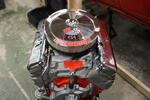


 L48 performance upgrades by the numbers









 All true!


