When you click on links to various merchants on this site and make a purchase, this can result in this site earning a commission. Affiliate programs and affiliations include, but are not limited to, the eBay Partner Network.
That was perfect Jason!
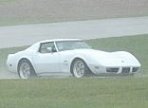
You had about 45* of steering wheel turn, at 60 mph, at or slightly over 1G.
4 to 8 inches of steer rim movement.
And you caught up with a C6!
Well done!
Confirms some of my numbers.
You turn exits were smoother and higher G than your entries,, they were a little lower and more variable.
What was going on?
Was it the braking issue?
Hope you got that ironed out.
Bump Steer at 2 different steering arm ratios and 3 Caster Settings. Complete factory setup. 1* or 2* caster is factory alignment. The C3 Toes Out on a wheel bump. Up to almost 1/2" at the bump stop. On each wheel.
At the critical 1.0" Bump level it is a max of 0.185" with the 2* PS choice.
This will mean a constantly twitching steering wheel on a bumpy road, particularly noticeable with manual steering.
Next change is installing the Van Steel Bum Steer rod end. kit I used all the .695" of spacers provided, lowering the tie rod an additional .500 inch vs factory.
Bump Steer with VS Bump Steer Kit Same 3 caster results repeated. Bump Steer is reduced on all. Note graph is zoomed in to two inch max bump limit now.
Two degree Caster Graph, before and after. Original bump steer of .135" is reduced to .080" with the VS bump steer kit. At one inch bump.
It's much better, but still noticeable.
Five Degree Caster Graph, before and after. Original bump steer of .110" is reduced to .033" with the VS bump steer kit. At one inch bump.
New sports cars might be at this level, under .030" it's not very noticeable.
Seven Degree Caster Graph, before and after. Original bump steer of .090" is reduced to .006" with the VS bump steer kit. At one inch bump.
This is race car territory. Near perfect.
I still need to figure out how to address the 2* caster bump steer.
Since running the bump steer kit and the extra caster provided by the Global West control arms I always thought the front end handling was so much better but now we have it documented to show why.
Good stuff Leigh. It looks like more caster = less bump steer and PS position = more bump steer.
Any plans to measure the higher caster values with the PS hole? I doubt many people are running 5-7 deg of caster with manual steering.
I am! I need to measure more accurately, but I was at 6 degrees caster when I measured (SPC adjustable UCAs make this possible). With manual steering. I don't even have the low-ratio holes in my steering arms, only the quicker PS holes in my 80.
This is Awesome stuff @leigh1322 , thanks for posting it!
I'd still be happy to 3D print some bumpsteer blocks to test with as well, per the last thread on this. I don't have a steering arm with two holes, or I'd have already done this.
That was perfect Jason!
You had about 45* of steering wheel turn, at 60 mph, at or slightly over 1G.
4 to 8 inches of steer rim movement.
And you caught up with a C6!
Well done!
Confirms some of my numbers.
You turn exits were smoother and higher G than your entries,, they were a little lower and more variable.
What was going on?
Was it the braking issue?
Hope you got that ironed out.
I haven't been to the track in years regretfully, but I believe I know what the problem was and I am in the process of correcting it. I have poly bushings in the rear suspension and it binds up so much that even in a helmet I can here the poly bushings popping from the stiction. I believe this is causing the oversteer issue at initial turn-in if I brake going into the corner. I'm replacing all the poly with johnny joints in the trailing arms and spherical rod ends in the camber links. This should free up the rear suspension to move correctly and make for a more predictable setup. Even with the issues I knew I was having, I was really happy with achieving 1G using good street tires.
The car is in need of a mild restoration and its getting several upgrades before I get back to the track. One of them being a 100Hp bump, so that should be fun.
@leigh1322
I just wanted to say this is a great thread that I have been watching with intent. The issue of bumpsteer is one of the most important items for C3 handling. It can certainly be noticed during even everyday driving.
Your methodical and exhaustive approach is appreciated.
I come here often to look for everything new about my 57 year old car. Every once in a while I find something really interesting and a new approach. Congrats.
Nothing much to report right now except some computer work.
It is 20* out in the garage, a bit de-motivating! LOL
This picture is not as clear as I would like, but it gives me ideas for future corrections:
The blue horizontal lines are the directions that the a-arm surface is. A 2-D view of that link. Neither is level at ride height. The upper points down and inward a couple of degrees (roughly 5*). The lower up and inward (roughly 2.5*). My measurements here are very difficult to get exact because of the three legged pivot nature of each a-arm. Where these two blue lines cross is the Instant center of the right front suspension. This is basically the center of the circle that the hub follows the circumference on, in it's up & down travels. The I.C. (instant center) is some where around 100 inches away. This gives the current camber change curve. The stock camber change curve is about 3/4* positive per inch of bump.
The vertical yellow lines travel thru the upper and lower a-arm pivot points. The tie rod pivot points should land exactly on this line, to have a zero bump steer front suspension. They do not. And that gives us our bump steer.
All the lines below the lower a-arm represent locations or possible locations of the tie rod and it's pivot points. I could not get a phot that showed all this at once. So I measured every joint from the floor, and worked from there. And confirmed the angle of each link.
The lower green tie-rod line is the OEM location of the tie rod and it's angle. It is pointing inward down and away from the instant center and the lower a arm link. It is neither parallel to the lower a-arm, nor does it cross anywhere near the instant center. It is also not on either preferred yellow line, so it is not the correct length either. At 2* caster, the outer link is far too high for that line to cross the instant center. so we have roughly .185" of positive toe-in change (toe-out) (bump steer) for every 1" of bump travel in the front suspension. This gives us the bump steer curve of the Yellow or blue line in the first pic in post #62.
The redline is the preferred location of the tie rod with regard to bump steer. This was achieved by lowering the outer tie rod joint 1.25" from 0* caster position. or almost exactly 1.0" from the 2* caster position, of the end of steering arm. Lowering the joint location at the end of the steering arm 1.0" lower gives almost perfect bump steer. Sound exactly like the dimensions of the Guldstrand Bump steer blocks? No surprise there. I accomplished the same lowered position by tilting the a-arm to 7* caster, which lowered the joint partially there, and then added another 0.50" lowering from the Van Steel bump steer kit. Resulting in the same joint location, and same very low bump steer, of .008" per 1" of bump travel. That results in the 7* + .5" blue line in two graphs in post #62.
Starting from the 0* caster position, adding 2* caster lowers the end of our steering arm, and it's tie rod link, .23" Going to the 4* caster position, about max with stock a arms, results in a .50 " drop. Going to 7* results in a .80" drop. These were all measured. This helps us determine that the ideal location of the tie rod end is about 1.25-1.30" below the start point. Our measured .006" bump steer per inch curve confirms this location. Steering rod location Graph in post 46.
This pic shows the tie rod locations we are trying so hard to achieve. Everything needs to pivot around the instant center.
So at the 2* caster position it would require a 1.0" additional tie rod end drop to achieve ideal bump steer. This can be done with the Guldstrand/VBP bump steer blocks, which are 1.0" thick. But those are not available anymore. Unless you are willing to spend $600 for the Duntov Motorsports version. Lowering the tie rod end .5" with the available Van Steel bump steer kit will make it better, but only get you part way there. The third graph in post 62 shows this resulting bump steer dropping from .185" to .080" per inch of bump travel. A lot better, but not there yet. What we need to do as a group is find some one to make these aluminum blocks again, it can not be all that hard. I will contact Bikespace, and see if we can collaborate on a 3-D printed plastic solution. Then we will have a 3-D CAD file we can use to get some Aluminum ones made somewhere. I will also contact Van Steel and see if they are interested. That is one of the main ways forward with this project.
BUT...the Bump Steer blocks cause another problem. They move the outer joint inward, and shorten the tie rod, and now neither joint hits the preferred yellow line location. That moves the tie rod outer lower joint to the blue tie rod line above, and throws a curve into our bump steer line. You can see that beginning in my 7*+.5" curve line, and it gets progressively worse in VBPs or Jason Staley's published bump steer curves, which have a very pronounced curve. But at least it is pretty good around 1" of travel, up or down. But at 1.5" it starts to get seriously large again, maybe .080".
Past the bump steer blocks there are other improvements we can make.
The 4* caster position does not require the 1.0" bump steer blocks. It only needs about 0.4" of correction. So the VS Bump steer kit would be an ideal solution here to add that additional 0.5" drop required. I need to talk to them to see why they use the adjustable links on the inner joint. That makes zero sense to me, it does absolutely nothing for bump steer. can not be adjusted anyway die to a arm interference, and doubles the cost. Hopefully Dan and I can collaborate, and he will offer a new version. Another alternative here is perhaps we can design a Bump Steer block that is a bolt on solution and has a 1/2" drop.
My perfect bump steer world vision is to relocate the inner tie rod joint location, upward, and inward. Refer to the white tie rod line above. This can be done with a bolt-on addition to the center link, ala the TruTurn solution:
This is a bolt-on solution. It bolts to the current center link, at the circled location. And raises the inner tie rod location, correcting the geometry issues. Ridetech does not offer this part separately, but as part of an entire expensive front end kit. This could be made as a bolt-on plate, for a stock front end, and be much less expensive. I intend to mock one up in plywood and see if I can get anyone to make it for me. I know that a couple of race teams have made these out of billet aluminum, and they do work. With the white line tie rod solution, we would not need the Bump Steer blocks at all. We could still use the VS Bump steer shim kit for fine adjustments tho. This would be the most ideal solution, and should generate a bump steer curve that is a perfectly vertical straight line, with zero bump steer change, at any suspension deflection. We are close with the 7* +.5" solution, but this would be even better.
Then the last thing is the orange line in the pic above. This represent a taller upper ball joint, which is a common modification and does improve the camber gain curve, and front tire traction. Alas it also changes the upper a-arm angle, which severely moves and shortens the instant center. And screws up our bump steer. The tie rod angle and joint locations would have to move, yet again. This mod also raises the front RCH (roll center height) giving less Roll Couple on the front of the roll axis vs the CG (center of gravity). This means the front to rear roll balance of the car will change, and will have to be readjusted with different sway bars, or springs. You always get at least 2 changes when you move a suspension location! LOL. This one taller ball joint change causes a domino list of effects. Less roll on the front would give you more understeer, or less oversteer. This could be a good thing, or a bad thing. The factory always puts roll understeer into a car, and it only kicks in when the car rolls in a turn. For a race car, less is better. You juggle both the front and the rear RCH to adjust it, to your liking. Then you rebalance the car again with sway bars, again to your liking. Personally I do not like the understeer to increase my steering angle in the middle of a corner. Lowering the car does the opposite and lowers the RCH. So It all has to be tuned together. So this ball joint mod, and the lowered ride height, should be done first, and get the car balanced first, and then do all the bump steer work.
This video is pretty decent on explaining all the inter-relationships in Geometry
I ran some simulations in suspension analyzer a while back.
Duntov knew exactly he was doing with basic RCH heights and ride height etc, for the best geometry on the race track. He suggested a ride height of Z=1.25 and taller upper ball joints for race car preparation. This self-corrects a bunch of the suspension geometry, except for the bump steer.
An all stock C3 rides a little high, at Z=2.5, the front RCH is around 4-5", and it moves around quite a bit as the car moves. The RCH drops like 2.0" on a 1" suspension compression, adding quite a bit of understeer to the front end. This is almost impossible to measure, so a software program is about the only way to see what is going on.
This one has a stock ride height, soft stock springs, stock sway bars, stock ride height, Z=2.5, RCH=4.2", and the body dives 2.0" and rolls 3.0* Camber Gain =-.77*
Once you use the taller ball joint, the front roll center height is raised only a little, but more importantly it moves very little now when the front end dives. This greatly reduces the additional understeer on nose drop or body roll in a corner. The result is more predictable steering. You can also see the drastically shorter Instant Centers, which create a better camber gain curve. These also move the RCH slightly upward. So the taller ball joint is a very good mod.
This one has all the mods. Stiffer springs & sway bars, taller upper ball joint, still stock Z=2.5 ride height, RCH now 4.9" Camber Gain curve almost double at -1.2*, Dive = 1.0" and Roll=1.0*, and RCH barely moves downward under dive to 4.1", so it barely adds any roll understeer. That is the chassis setup you want. Dropping the front an inch should not affect the geometry very much.
So if you are going to use taller ball joints, you should do that first, then the other stuff.
Last edited by leigh1322; Dec 10, 2025 at 12:46 PM.
I got some time to do some more bump steer measuring.
The previous bump steer measurements were on the MS hole in the steering arm.
These are on the PS arm hole setting.
This is the hole location that is more likely to try and take advantage of increased caster, over 2*.
Unfortunately the PS bump steer measurements are worse than the MS ones.
The same 1/2" drop with the VS Bump Steer adjuster makes it better, but is not enough to correct it all the way.
he faster steering ratio, and the shorter lever arm from tie rod joint to spindle, make the bump steer worse than using the manual hole.
At 2* caster, the bump steer was originally .185" at a 1" bump, and drops to .104" with the bump steer kit.
At 4* caster, the bump steer was originally .163" at a 1" bump, and drops to .080" with the bump steer kit.
At 6* caster, the bump steer was originally .146" at a 1" bump, and drops to .070" with the bump steer kit.
At 7* caster, the bump steer was originally .123" at a 1" bump, and drops to .051" with the bump steer kit.
More correction work is needed to get it down to near zero.
Last edited by leigh1322; Dec 30, 2025 at 07:38 PM.
Hey Leigh,
I just received my new Van Steel bump steer kit.
I loosened all the tie rods and I’m waiting to see what you find next before I just install the kit.
I’m probably one of the guys that would be just fine with just installing the kit as is, but I might as well see what the latest and greatest design will be.
Yes I am still making the car manual steering.
I’m also running the Van Steel upper and lower tubular control arms which they advertise as adding 6* caster.
Aren’t you also running some type of tubular or adjustable control arms?
I don’t know if that will help with the bump steer equations or not.
It is something to ask Dan about when you talk with him about designing the new and improved components.
You are absolutely right.
Positive caster makes a big difference.
Here is the 7* pos caster bump steer chart.
Bump steer is almost zero. Like .006" At 6* you should be around .020" 5* I measured at .033" All of these are with the Howe / Van Steel bump steer stud with full shims.
The real trick will be how much steering effort do you wan to tolerate?
Pos caster increases that.
2* or 3* is about as far as is typically recommended by GM or Vintage Racers.
You can just adjust it and try it. And see what you like.
Look what arrived in the mail for testing.....
From a fellow forum member interested in the results. Duntov Racing Bump Steer Blocks
Very similar to the old Guldstrand or VBP bump steer blocks.
But obviously made by them.
I will be testing these, at different caster settings, and see what we wind up with.
I also have my eye on having something manufactured like these:
These billet aluminum steering arms are available for other cars. For roughly $229. We could really use something like this. Should be an even better solution than the bump steer bocks above.
Last edited by leigh1322; Jan 1, 2026 at 10:44 AM.
Before I go any further I really needed to be able to compare the OEM tie rod ends to the bump stud.
It was obvious they did not pivot with the same amount of drop.
I tried a couple things, and finally decided to graph the bump to the shims stack height, and compare that to a tie rod end.
I set the suspension up with 4* caster on the PS hole. And then measured the bump with both rod ends. The OEM tie rod end (red dot), and the bump stud end (blue dots).
The bump stud rod end needs to have .027" of shims to give exactly the same bump curve as the OEM tie rod end.
The bump stud has a total of .625" 0.700" of shims.
So it can move the pivot point up a total of .27"
Or it can move the pivot point down .35" .43"
Based on the graph above, here is a bump steer correction chart:
To apply the correct amount of shims.
Edit: 1/4/26 I measured all the way to the maximum amount of shims, and updated the chart and the table.
Last edited by leigh1322; Jan 4, 2026 at 09:30 PM.
Reason: additional measurements
2020 Corvette of the Year Finalist (performance mods)
2019 C3 of Year Winner (performance mods)
2016 C3 of Year Finalist
can you overlay the stock versus bump stud...I cant see a comparison on the above chart. from the way I read it the stock tie rod end has more movement than when you add shims to the stud?