





Cylinder Head Install

Le Mans Master


Joined: Dec 2000
Posts: 7,839
Likes: 22
From: San Diego, Ca

There's nothing wrong with taking a little extra time, but modern (OEM) engine building (which includes the L98) doesn't roll or retorque or do anything other than apply the correct torque with clean fasteners and threads. Thread cleaning tools have been on the market for 6 or 7 years now and are preferred over a tap as they don't remove metal. The sealant that's used on the bolts (and aftermarket headbolts often have it allready applied) is used as the lubricant. Retorquing raises the possibility of ruining the seal - which is needed to prevent corrosion. With everything clean, you should follow the bolt pattern and torque in 1/3's. Also, to save a little grief, install the plugs before you install the heads.

Thread Starter
Burning Brakes


Joined: Mar 2002
Posts: 1,035
Likes: 0
From: Atlanta Ga
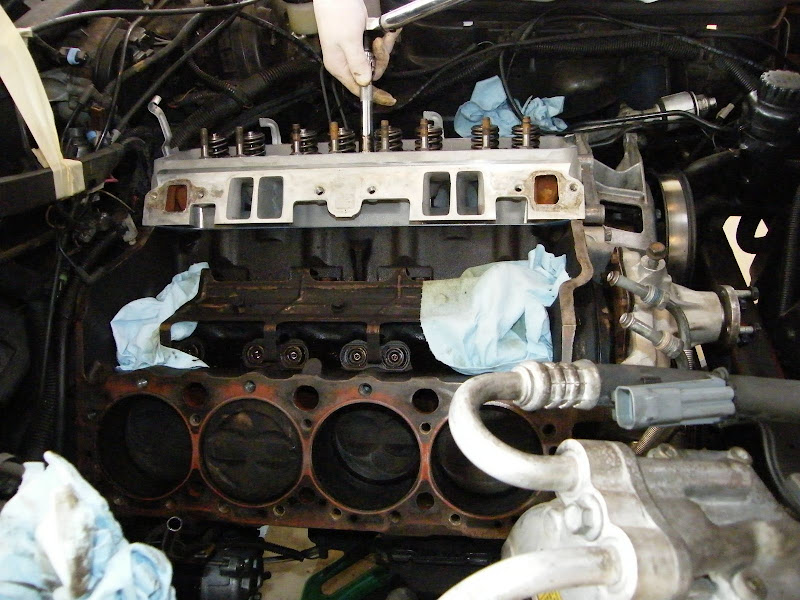
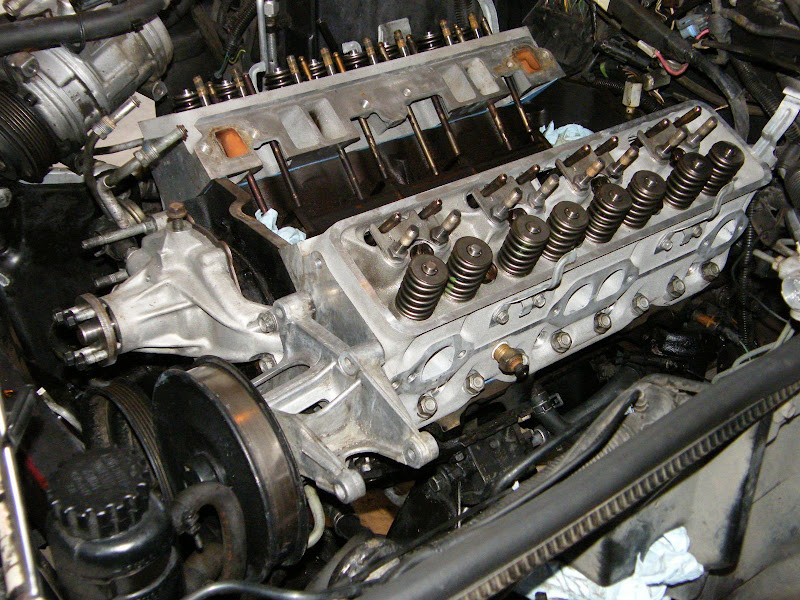
Well one side is on! Used original bolts cleaned with wire wheel. I used permatex high temp sealant and put a bit of oil under the bolt head for proper torque reading. I used two torque wrenches one to check the other, ran the down to 50, 55, 60, 65 on the inner bolts.
I did have one scary moment when I looked at the head and thought maybe there was a "side" to them, but after review the original pics I think all is good. Right in the middle of the head there is an arrow cast in the head, that made me think that they had to be reversed, but I checked the other and they are the same!
I'd be on the other one but that small tube of sealant only get you through one head! Got to hit the parts store. I'll post more pics soon, thanks for the help.
I did have one scary moment when I looked at the head and thought maybe there was a "side" to them, but after review the original pics I think all is good. Right in the middle of the head there is an arrow cast in the head, that made me think that they had to be reversed, but I checked the other and they are the same!
I'd be on the other one but that small tube of sealant only get you through one head! Got to hit the parts store. I'll post more pics soon, thanks for the help.
Le Mans Master
Joined: Dec 2000
Posts: 7,839
Likes: 22
From: San Diego, Ca
"plugs before the head?are you talking about a in car head swap?"
That's what's going on here and I'm talking about installing the spark plugs on the heads before you install them. Lessens the risk of crossthreading and it's the only time you'll get a torque wrench on all 8 of them.
That's what's going on here and I'm talking about installing the spark plugs on the heads before you install them. Lessens the risk of crossthreading and it's the only time you'll get a torque wrench on all 8 of them.

Race Director


Joined: Jun 2004
Posts: 13,952
Likes: 706
From: WI
http://www.arp-bolts.com/Tech/TechInstall.html
"..new fasteners should be tightened and loosened through several cycles before applying final torque. The number of times depends on the lubricant. For all situations where ARP lubricants are used, five cycles are required before final torquing."
"..new fasteners should be tightened and loosened through several cycles before applying final torque. The number of times depends on the lubricant. For all situations where ARP lubricants are used, five cycles are required before final torquing."

Race Director


Joined: Feb 2004
Posts: 12,517
Likes: 19
http://www.arp-bolts.com/Tech/TechInstall.html
"..new fasteners should be tightened and loosened through several cycles before applying final torque. The number of times depends on the lubricant. For all situations where ARP lubricants are used, five cycles are required before final torquing."
"..new fasteners should be tightened and loosened through several cycles before applying final torque. The number of times depends on the lubricant. For all situations where ARP lubricants are used, five cycles are required before final torquing."
I found out the hard way. After I lost a motor.
Builder took new main studs out of the box, lubed and torqued them, then align honed it.
I received the block back, and bore guaged everything. It was perfect.
During the build, I assembled, and disassembled everything many times for mock up purposes.
Fired the motor, and blackened the crank. The lack of rolling in, caused the oil clearance to go away after the mock up process.
For me, lesson learned. All of the pro builders I know, roll them in.
Except for the one that cost me a motor. He works on volume, and does not guarantee his work.
Thread Starter
Burning Brakes
Joined: Mar 2002
Posts: 1,035
Likes: 0
From: Atlanta Ga
OK, got the heads on but just looked and saw something I think is a problem 
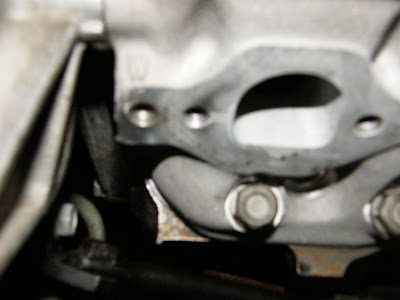
Just to the side of the exhaust bolt hole there is a threaded opening and I see a "W" in the casting above it! Is this an open water jacket port that got removed by the machine shop for cleaning and should have been plugged?
I was able to stick the end of a test light into the hole at least 1/2"
Help appreciated.
Just to the side of the exhaust bolt hole there is a threaded opening and I see a "W" in the casting above it! Is this an open water jacket port that got removed by the machine shop for cleaning and should have been plugged?
I was able to stick the end of a test light into the hole at least 1/2"
Help appreciated.
Corvette Stories
The Best of Corvette for Corvette Enthusiasts

150 hp to 1,250 hp: Every Corvette Generation Compared by the Specs That Matter
Joe Kucinski
8 Coolest Corvette Pace Cars (and Replicas) of All Time
Verdad Gallardo
Top 10 Corvette Engines RANKED by Peak Torque (70+ Years of Muscle!)
Joe Kucinski
Corvette ZR1X Will Be Pacing the Indy 500, And Could Probably Race, Too!
Verdad Gallardo
Top 10 Corvettes Coming to Mecum Indy 2026!
Brett Foote
Top 10 C9 Corvette MUST-HAVES to Fix These C8 Generation Flaws!
Michael S. Palmer
10 Revolutionary 'Corvette Firsts' Most People Don't Know
Joe Kucinski
5 Reasons to Upgrade to an LS6-Powered Corvette; 5 Reasons to Stay LT2
Michael S. Palmer
2027 Corvette vs The World: Every C8 vs Its Closest Competitor
Joe Kucinski
Race Director
Joined: Feb 2004
Posts: 12,517
Likes: 19
OK, got the heads on but just looked and saw something I think is a problem
Just to the side of the exhaust bolt hole there is a threaded opening and I see a "W" in the casting above it! Is this an open water jacket port that got removed by the machine shop for cleaning and should have been plugged?
I was able to stick the end of a test light into the hole at least 1/2"
Help appreciated.
Just to the side of the exhaust bolt hole there is a threaded opening and I see a "W" in the casting above it! Is this an open water jacket port that got removed by the machine shop for cleaning and should have been plugged?
I was able to stick the end of a test light into the hole at least 1/2"
Help appreciated.

Thread Starter
Burning Brakes
Joined: Mar 2002
Posts: 1,035
Likes: 0
From: Atlanta Ga
Thread Starter
Burning Brakes
Joined: Mar 2002
Posts: 1,035
Likes: 0
From: Atlanta Ga

Safety Car

Joined: Oct 2008
Posts: 4,689
Likes: 4
From: Yucaipa CA
the heads are the same dont be worried but look where your temp sensor is. or is that a aux. cooling fan sensor? I said that cause there isnt anything there on my 90 just a plug.
Thread Starter
Burning Brakes
Joined: Mar 2002
Posts: 1,035
Likes: 0
From: Atlanta Ga
I took both sensors out before sending them to the machine shop, so I looked at the pictures of the before and got the sensor back in the proper spots to match the before image.
Gotta tell ya, I got a bit freeked when you posted that. In the future please be clear, your first post sounded awful definite about these being on the wrong side.


Safety Car
Joined: Oct 2008
Posts: 4,689
Likes: 4
From: Yucaipa CA
I took both sensors out before sending them to the machine shop, so I looked at the pictures of the before and got the sensor back in the proper spots to match the before image.
Gotta tell ya, I got a bit freeked when you posted that. In the future please be clear, your first post sounded awful definite about these being on the wrong side.
Gotta tell ya, I got a bit freeked when you posted that. In the future please be clear, your first post sounded awful definite about these being on the wrong side.
Thread Starter
Burning Brakes
Joined: Mar 2002
Posts: 1,035
Likes: 0
From: Atlanta Ga
Not sure exactly the two roles but there is one on the front driver side, I think that is the typical water temp sending unit, the other is back passenger side, just a clip-on one wire type thing, not sure but it is obviously related to water temp.
Le Mans Master
Joined: Dec 2000
Posts: 7,839
Likes: 22
From: San Diego, Ca
They're the same (all heads are) and only go on one way. Left side threaded port was used for (optional) fan switch '87 - '89. Right for the Temp Gage Sender. Reversed on the '86 (iron head). '90 - '91 plugs it. The only thing that matters is the length of the harness; ie, you can put switch/sender on either side.