





DIY tpi runner mod

Advanced

Joined: Nov 2009
Posts: 93
Likes: 0

It maybe a good rod if you could use it as a filler rod when tig welding some noncritical parts. If anything has stress, heat cycles or needs to remain rigid I would stay with a basic Aluminum rod.

Drifting


Joined: May 2006
Posts: 1,428
Likes: 7
From: Chewelah Wa
Last night I butt welded (brazed?) two pieces of 12 gauge aluminum together as a experiment, and I really did not have high hopes. It actually went way better than expected. It took some practice to lay down a nice bead and seemed plenty strong enough for a set of runners. I think the next step is to find some stock runners and see what can be done. I may just try to open up the tubing by splitting the backside and partially around the flanges and re-brazing or doing something like Yorky did with the siamesing, or both and trying both sets out on my car. I obviously have too much time on my hands... lol

Safety Car

Joined: May 2004
Posts: 4,469
Likes: 275
From: Naples FL
These were done years ago. I've been lusting after them for a while now
Here's another.
These runners were used way back in the World Challenge days. The rules said you had to run stock intake manifolds but they could be modified. At least I think that was the case. I've been tempted to build a set myself.
Richard Newton
SpeedTV
Here's another.
These runners were used way back in the World Challenge days. The rules said you had to run stock intake manifolds but they could be modified. At least I think that was the case. I've been tempted to build a set myself.
Richard Newton
SpeedTV
Last edited by rfn026; Dec 31, 2009 at 01:56 PM. Reason: url Problems

Pro


Joined: Oct 2008
Posts: 706
Likes: 265
From: Jyväskylä, FINLAND
When you open up the runners, you should have a rig, which has excatly the same angles as plenum and intake, where to bolt runners tight when welding. Otherwise they will warp/bend and you'll most probably have some nasty leak(s).
Advanced
Joined: Nov 2009
Posts: 93
Likes: 0
Stitch weld it to help reduce warpage is the easeist way to do it. Preheat the substrate and assembly in and oven and stitch the outer portions together. After multiple tacks and a stable base is established you can proceed to fully weld the remainder. Aluminum requires alot of heat and likes to cool quickly on its own.
Corvette Stories
The Best of Corvette for Corvette Enthusiasts

Top 10 Most Expensive Corvettes Ever Sold on Bring A Trailer
Brett Foote
10 Things Every Corvette Owner Needs (2026 Edition)
Michael S. Palmer
8 Most "Only Corvette Owners Understand" Quirks and Problems
Pouria Savadkouei
10 Reasons the C6 Z06 is Still A Performance Benchmark After 20 Years
Joe Kucinski
How Much Horsepower Every Corvette Engine "LOST" in 1972
Joe Kucinski
Top 10 DOs and DON'Ts for Protecting Your Convertible Top!
Michael S. Palmer
Top 10 Most Explosive Corvettes Ever Made: Power-to-Weight Ratio Ranked!
Joe Kucinski
150 hp to 1,250 hp: Every Corvette Generation Compared by the Specs That Matter
Joe Kucinski
8 Coolest Corvette Pace Cars (and Replicas) of All Time
Verdad Gallardo
Pro
Joined: Jan 2008
Posts: 566
Likes: 2
From: murfreesboro tn
on the pics yorcci posted it looks like when they did it they lost a bolt hole on each runner wonder how that would seal i have a welder that is great and this would be a simple job for him but that one hole missing in each runner would give me some concern

Racer
Joined: May 2009
Posts: 421
Likes: 2
From: van buren ar
i am very interested in seing before and after dyno results on this mod.i love the low end grunt of the l98 motor.i beat them in a race on a regular basis,however i prefer there stock street perfomance.does this mod give them the upper rpm strength they need or is it just another way to get a few more rpms?im very curious.
Pro
Joined: Oct 2008
Posts: 706
Likes: 265
From: Jyväskylä, FINLAND

Each and every bolt hole is still in use. Just look at the picture, where the original and siamesed runners are side by side on the front wheel.
Race Director


Joined: Nov 2003
Posts: 12,221
Likes: 446
From: Overland Park Kansas
2020 Corvette of the Year Finalist (appearance mods)
C4 of Year Winner (appearance mods) 2019
i am very interested in seing before and after dyno results on this mod.i love the low end grunt of the l98 motor.i beat them in a race on a regular basis,however i prefer there stock street perfomance.does this mod give them the upper rpm strength they need or is it just another way to get a few more rpms?im very curious.
Dave,,,any front-loading plenum will create leaner rear cylinders. That shouldn't stop you -- if you're interested in this conversion.

Racer
Joined: Jul 2005
Posts: 274
Likes: 0
From: oklahoma
Race Director
Joined: Nov 2003
Posts: 12,221
Likes: 446
From: Overland Park Kansas
2020 Corvette of the Year Finalist (appearance mods)
C4 of Year Winner (appearance mods) 2019
http://www.wallaceracing.com/runnertorquecalc.php
This calculator (esp 2nd one of the 3 on the linked page), is much easier to see the difference.
Hint: Remember tube cross-section = pi*r** (pi x radius squared)
When you join tubes, you'll have to figure the cross-section by computing the joined area as a rectangle -- with a tube on the ends. Then average it with the base/head runners...and hope you're close.
Better yet...Do a dyno before and after!
This calculator (esp 2nd one of the 3 on the linked page), is much easier to see the difference.
Hint: Remember tube cross-section = pi*r** (pi x radius squared)
When you join tubes, you'll have to figure the cross-section by computing the joined area as a rectangle -- with a tube on the ends. Then average it with the base/head runners...and hope you're close.
Better yet...Do a dyno before and after!
Last edited by GREGGPENN; Jan 7, 2010 at 02:31 PM.
Pro
Joined: Oct 2008
Posts: 706
Likes: 265
From: Jyväskylä, FINLAND
Here's mine.
Engine HP:
308 hp @ 4 650 rpm
547 Nm @ 3 450 rpm (402 lbfts)

This is the bigger version: http://finnshark.com/gallery/files/5...5_original.jpg
Modifications made:
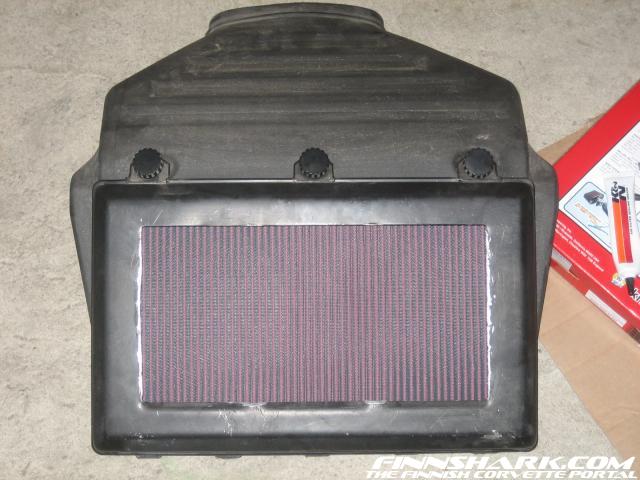
1) K&N air filter with airfilter box lid cut
2) TPiS BigMouth intake
3) 1.6 roller rockers
4) Plenum siamesed & ported, runners siamesed


5) Hedman Elite LT headers (still dual exhaust with stock mufflers)

The best ET last summer with these mods was 13.671 s / 104.4 mph
I will change the stock mufflers to stock LT-1 mufflers before I take it to the dyno shop for chip programming. Just for appearance, I like those LT-1 tips and I am a little curious, whether there is a difference in HP output with L98 and LT-1 mufflers or not.
Drifting
Joined: May 2006
Posts: 1,428
Likes: 7
From: Chewelah Wa
Here are the semi-finished results of my stock runner siamese job using Aluma-weld rods. These are fully siamesed on a Edelbrock Hi Flo. I also ported the plenum and polished the top. This was quite the science project, and I have more hours into this than I can count. I bought the runners and plenum from Pwnage, so my originals are still on the car. I bought all the Moates stuff for datalogging and chip burning, so the intake will not go on until I figure the chip stuff out. It will probably go on with the stock heads, I may throw some 1.6 rockers on. Heads and a cam may not be in the budget this year. I have about 375 bucks into the whole intake. 


I just realized I have the plenum on there backwards....imma tard, sorry
I just realized I have the plenum on there backwards....imma tard, sorry
Last edited by powerpigz-51; Apr 22, 2010 at 01:41 AM.

Team Owner

Joined: Oct 2004
Posts: 81,241
Likes: 3,063
From: altered state
St. Jude Donor '05
Was thinking maybe siamesing the base would be going backwards a bit. Should run similar to a half decent dual plane intake Id guess. Fully siamesed the runner now becomes almost a plenum area itself as the air is moving much slower in there than before. THink a guy from 3rd gen siamesed the daylights out of his and wasnt happy with it, suggested a runner mod and leaving the length on the base stock.

Drifting
Joined: May 2006
Posts: 1,428
Likes: 7
From: Chewelah Wa
The base inlets are highly ported, but non-siamesed. The head ports are reg size. My base came this way. I also have heard of mixed results with the base siamesing, and have heard that this is what leans out the rear cylinders. It will be nice to get past the wall. The Thirdgen guys are fully siamesing the SLP's and having good results. With some heads and a cam it could be interesting.