


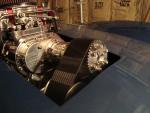

VATS Module Schematic

Thread Starter
Race Director


Joined: Apr 2002
Posts: 10,036
Likes: 346
From: Anaheim CA
 VATS Module Schematic
Since I had my dash apart I decided to look into the VATS module. Interesting stuff. I've never seen VATS innards exposed anywhere, so here ya go.
I don't know how the assembly line matched up the VATS modules with the correct keys. My module has these numbers on it: "16045121 -- 11075 -- G". My key resistor is 3.01K.


I drew a schematic. This is just as I drew it and I didn't know where things were going. I was just drawing and tracing circuitry, so it's pretty convoluted. I measured the VCC zener diode D4 and found it to be 10 volts. The GM engineers never fail to surprise me. F1 is OPEN. R3 is the same resistance as the resistor in my key. Apparently they test the PC board and then blow the fuse on purpose. This opens the possibility of a new way to do a "resistor type" VATS bypass. Disconnect the connector at the bottom of the steering column and jump across F1. Another interesting item: Pin R is marked by a connector on the PC board but there is no pin in the connector there. Apparently they apply or measure a voltage there during factory testing. U1 & U2 are LM2901 quad comparators. QX and the Xn parts are not populated. It looks like X1 & X2 make up a voltage divider (or X2 is a Zener diode) that would put out a fixed voltage instead of the 30Hz VATS to ECM signal. I couldn't read the value on C1 (under the part), but it's a tantalum capacitor. Someday I'll redraw this on a schematic capture program (and untangle the flow so it's easier to follow what's going on).

I don't know how the assembly line matched up the VATS modules with the correct keys. My module has these numbers on it: "16045121 -- 11075 -- G". My key resistor is 3.01K.
I drew a schematic. This is just as I drew it and I didn't know where things were going. I was just drawing and tracing circuitry, so it's pretty convoluted. I measured the VCC zener diode D4 and found it to be 10 volts. The GM engineers never fail to surprise me. F1 is OPEN. R3 is the same resistance as the resistor in my key. Apparently they test the PC board and then blow the fuse on purpose. This opens the possibility of a new way to do a "resistor type" VATS bypass. Disconnect the connector at the bottom of the steering column and jump across F1. Another interesting item: Pin R is marked by a connector on the PC board but there is no pin in the connector there. Apparently they apply or measure a voltage there during factory testing. U1 & U2 are LM2901 quad comparators. QX and the Xn parts are not populated. It looks like X1 & X2 make up a voltage divider (or X2 is a Zener diode) that would put out a fixed voltage instead of the 30Hz VATS to ECM signal. I couldn't read the value on C1 (under the part), but it's a tantalum capacitor. Someday I'll redraw this on a schematic capture program (and untangle the flow so it's easier to follow what's going on).
Last edited by Cliff Harris; Dec 2, 2011 at 01:11 PM. Reason: Updated schematic & description to match.

Instructor

Joined: Jul 2011
Posts: 116
Likes: 0
From: Hastings Florida
Take a look at these block diagrams Chris.
It will give you an idea how those dual quad comparitors are used.
1. as a 555 timer
2. as a voltage comparitor
3. as a signal generator
What you're looking at in those photos, is a combination of all three.
It will give you an idea how those dual quad comparitors are used.
1. as a 555 timer
2. as a voltage comparitor
3. as a signal generator
What you're looking at in those photos, is a combination of all three.
Last edited by DMheart; Dec 2, 2011 at 06:18 PM.
Le Mans Master


Joined: Jan 2006
Posts: 5,621
Likes: 206
From: Orlando FL
Since I had my dash apart I decided to look into the VATS module. Interesting stuff. I've never seen VATS innards exposed anywhere, so here ya go.
I don't know how the assembly line matched up the VATS modules with the correct keys. My module has these numbers on it: "16045121 -- 11075 -- G". My key resistor is 3.01K.
I drew a schematic. This is just as I drew it and I didn't know where things were going. I was just drawing and tracing circuitry, so it's pretty convoluted. I measured the VCC zener diode D4 and found it to be 10 volts. The GM engineers never fail to surprise me. F1 is OPEN. R3 is the same resistance as the resistor in my key. Apparently they test the PC board and then blow the fuse on purpose. This opens the possibility of a new way to do a "resistor type" VATS bypass. Disconnect the connector at the bottom of the steering column and jump across F1. Another interesting item: Pin R is marked by a connector on the PC board but there is no pin in the connector there. Apparently they apply or measure a voltage there during factory testing. U1 & U2 are LM2901 quad comparators. QX and the Xn parts are not populated. It looks like X1 & X2 make up a voltage divider (or X2 is a Zener diode) that would put out a fixed voltage instead of the 30Hz VATS to ECM signal. I couldn't read the value on C1 (under the part), but it's a tantalum capacitor. Someday I'll redraw this on a schematic capture program (and untangle the flow so it's easier to follow what's going on).
I don't know how the assembly line matched up the VATS modules with the correct keys. My module has these numbers on it: "16045121 -- 11075 -- G". My key resistor is 3.01K.
I drew a schematic. This is just as I drew it and I didn't know where things were going. I was just drawing and tracing circuitry, so it's pretty convoluted. I measured the VCC zener diode D4 and found it to be 10 volts. The GM engineers never fail to surprise me. F1 is OPEN. R3 is the same resistance as the resistor in my key. Apparently they test the PC board and then blow the fuse on purpose. This opens the possibility of a new way to do a "resistor type" VATS bypass. Disconnect the connector at the bottom of the steering column and jump across F1. Another interesting item: Pin R is marked by a connector on the PC board but there is no pin in the connector there. Apparently they apply or measure a voltage there during factory testing. U1 & U2 are LM2901 quad comparators. QX and the Xn parts are not populated. It looks like X1 & X2 make up a voltage divider (or X2 is a Zener diode) that would put out a fixed voltage instead of the 30Hz VATS to ECM signal. I couldn't read the value on C1 (under the part), but it's a tantalum capacitor. Someday I'll redraw this on a schematic capture program (and untangle the flow so it's easier to follow what's going on).
And even the IC chips have numbers on them. The later years (90s), several chips don’t have numbers or is a proprietary number as I have been into several boxes.
It's good to see some electronic tech-turd stuff in the posting.
Check his Schematic.
http://www.misterpeachy.com/VettePic..._Schematic.pdf
Thread Starter
Race Director
Joined: Apr 2002
Posts: 10,036
Likes: 346
From: Anaheim CA
All the transistors and most of the diodes have Delco numbers on them. The problem with that is that they leave off the first three numbers so you only see the last four digits. Of course these parts are so old that the data sheets are not available anyway...
I started drawing the schematic in an antique version of PADS PowerLogic (v5.1) that I have. I forgot how much they improved it over the years (I was using v9.02 on my last job). I keep trying to zoom with Ctrl-scrollwheel and it doesn't work.
I started drawing the schematic in an antique version of PADS PowerLogic (v5.1) that I have. I forgot how much they improved it over the years (I was using v9.02 on my last job). I keep trying to zoom with Ctrl-scrollwheel and it doesn't work.
Thread Starter
Race Director
Joined: Apr 2002
Posts: 10,036
Likes: 346
From: Anaheim CA
The Pretty Version
I found some problems with the original schematic as I drew the fancy version. They'll just magically disappear when I upload a new revision.
Here's the pretty version. There may still be errors in this one. A few notes: I put the part number of the module in the title block. It's not really the correct number, but I don't know what it should be. I'm just guessing on the configuration of the "X" parts. I don't really know the values of the ceramic capacitors. I marked all the common ones 0.1uF, but they could be something else. C7, C10 and C11 look different, so I left off their values. D1 looks like a Zener diode to me. Grounding input R will cause the starter relay to energize. Another way to do a VATS bypass.

The link to the image used to work before the Forum changed something that made PDF images not work (or maybe it's my browser). Here's a link:
http://www.misterpeachy.com/VettePic...tic_Pretty.pdf
Here's the pretty version. There may still be errors in this one. A few notes: I put the part number of the module in the title block. It's not really the correct number, but I don't know what it should be. I'm just guessing on the configuration of the "X" parts. I don't really know the values of the ceramic capacitors. I marked all the common ones 0.1uF, but they could be something else. C7, C10 and C11 look different, so I left off their values. D1 looks like a Zener diode to me. Grounding input R will cause the starter relay to energize. Another way to do a VATS bypass.
The link to the image used to work before the Forum changed something that made PDF images not work (or maybe it's my browser). Here's a link:
http://www.misterpeachy.com/VettePic...tic_Pretty.pdf
Last edited by Cliff Harris; Sep 15, 2014 at 01:25 AM. Reason: Revised info on input R. Added link to schematic.

Melting Slicks


Joined: Feb 2011
Posts: 2,322
Likes: 6
From: Los Altos CA
Corvette Stories
The Best of Corvette for Corvette Enthusiasts

Top 10 Most Expensive Corvettes Ever Sold on Bring A Trailer
Brett Foote
10 Things Every Corvette Owner Needs (2026 Edition)
Michael S. Palmer
8 Most "Only Corvette Owners Understand" Quirks and Problems
Pouria Savadkouei
10 Reasons the C6 Z06 is Still A Performance Benchmark After 20 Years
Joe Kucinski
How Much Horsepower Every Corvette Engine "LOST" in 1972
Joe Kucinski
Top 10 DOs and DON'Ts for Protecting Your Convertible Top!
Michael S. Palmer
Top 10 Most Explosive Corvettes Ever Made: Power-to-Weight Ratio Ranked!
Joe Kucinski
150 hp to 1,250 hp: Every Corvette Generation Compared by the Specs That Matter
Joe Kucinski
8 Coolest Corvette Pace Cars (and Replicas) of All Time
Verdad Gallardo
Thread Starter
Race Director
Joined: Apr 2002
Posts: 10,036
Likes: 346
From: Anaheim CA
I'd like to mess with this module but it's the one out of my car. A little slip of a probe and I'm not going anywhere.
Anybody interested in donating a module you don't need any more? How about this: if you have a bad one I'll repair it and send it back to you (assuming it's not burned all to heck or otherwise unfixable, that is).
Anybody interested in donating a module you don't need any more? How about this: if you have a bad one I'll repair it and send it back to you (assuming it's not burned all to heck or otherwise unfixable, that is).

8th Gear
Joined: May 2017
Posts: 8
Likes: 0
Now is that bi
Since I had my dash apart I decided to look into the VATS module. Interesting stuff. I've never seen VATS innards exposed anywhere, so here ya go.
I don't know how the assembly line matched up the VATS modules with the correct keys. My module has these numbers on it: "16045121 -- 11075 -- G". My key resistor is 3.01K.
I drew a schematic. This is just as I drew it and I didn't know where things were going. I was just drawing and tracing circuitry, so it's pretty convoluted. I measured the VCC zener diode D4 and found it to be 10 volts. The GM engineers never fail to surprise me. F1 is OPEN. R3 is the same resistance as the resistor in my key. Apparently they test the PC board and then blow the fuse on purpose. This opens the possibility of a new way to do a "resistor type" VATS bypass. Disconnect the connector at the bottom of the steering column and jump across F1. Another interesting item: Pin R is marked by a connector on the PC board but there is no pin in the connector there. Apparently they apply or measure a voltage there during factory testing. U1 & U2 are LM2901 quad comparators. QX and the Xn parts are not populated. It looks like X1 & X2 make up a voltage divider (or X2 is a Zener diode) that would put out a fixed voltage instead of the 30Hz VATS to ECM signal. I couldn't read the value on C1 (under the part), but it's a tantalum capacitor. Someday I'll redraw this on a schematic capture program (and untangle the flow so it's easier to follow what's going on).
I don't know how the assembly line matched up the VATS modules with the correct keys. My module has these numbers on it: "16045121 -- 11075 -- G". My key resistor is 3.01K.
I drew a schematic. This is just as I drew it and I didn't know where things were going. I was just drawing and tracing circuitry, so it's pretty convoluted. I measured the VCC zener diode D4 and found it to be 10 volts. The GM engineers never fail to surprise me. F1 is OPEN. R3 is the same resistance as the resistor in my key. Apparently they test the PC board and then blow the fuse on purpose. This opens the possibility of a new way to do a "resistor type" VATS bypass. Disconnect the connector at the bottom of the steering column and jump across F1. Another interesting item: Pin R is marked by a connector on the PC board but there is no pin in the connector there. Apparently they apply or measure a voltage there during factory testing. U1 & U2 are LM2901 quad comparators. QX and the Xn parts are not populated. It looks like X1 & X2 make up a voltage divider (or X2 is a Zener diode) that would put out a fixed voltage instead of the 30Hz VATS to ECM signal. I couldn't read the value on C1 (under the part), but it's a tantalum capacitor. Someday I'll redraw this on a schematic capture program (and untangle the flow so it's easier to follow what's going on).
8th Gear
Joined: May 2017
Posts: 8
Likes: 0
Since I had my dash apart I decided to look into the VATS module. Interesting stuff. I've never seen VATS innards exposed anywhere, so here ya go.
I don't know how the assembly line matched up the VATS modules with the correct keys. My module has these numbers on it: "16045121 -- 11075 -- G". My key resistor is 3.01K.
I drew a schematic. This is just as I drew it and I didn't know where things were going. I was just drawing and tracing circuitry, so it's pretty convoluted. I measured the VCC zener diode D4 and found it to be 10 volts. The GM engineers never fail to surprise me. F1 is OPEN. R3 is the same resistance as the resistor in my key. Apparently they test the PC board and then blow the fuse on purpose. This opens the possibility of a new way to do a "resistor type" VATS bypass. Disconnect the connector at the bottom of the steering column and jump across F1. Another interesting item: Pin R is marked by a connector on the PC board but there is no pin in the connector there. Apparently they apply or measure a voltage there during factory testing. U1 & U2 are LM2901 quad comparators. QX and the Xn parts are not populated. It looks like X1 & X2 make up a voltage divider (or X2 is a Zener diode) that would put out a fixed voltage instead of the 30Hz VATS to ECM signal. I couldn't read the value on C1 (under the part), but it's a tantalum capacitor. Someday I'll redraw this on a schematic capture program (and untangle the flow so it's easier to follow what's going on).
I don't know how the assembly line matched up the VATS modules with the correct keys. My module has these numbers on it: "16045121 -- 11075 -- G". My key resistor is 3.01K.
I drew a schematic. This is just as I drew it and I didn't know where things were going. I was just drawing and tracing circuitry, so it's pretty convoluted. I measured the VCC zener diode D4 and found it to be 10 volts. The GM engineers never fail to surprise me. F1 is OPEN. R3 is the same resistance as the resistor in my key. Apparently they test the PC board and then blow the fuse on purpose. This opens the possibility of a new way to do a "resistor type" VATS bypass. Disconnect the connector at the bottom of the steering column and jump across F1. Another interesting item: Pin R is marked by a connector on the PC board but there is no pin in the connector there. Apparently they apply or measure a voltage there during factory testing. U1 & U2 are LM2901 quad comparators. QX and the Xn parts are not populated. It looks like X1 & X2 make up a voltage divider (or X2 is a Zener diode) that would put out a fixed voltage instead of the 30Hz VATS to ECM signal. I couldn't read the value on C1 (under the part), but it's a tantalum capacitor. Someday I'll redraw this on a schematic capture program (and untangle the flow so it's easier to follow what's going on).
Melting Slicks

Joined: Jan 2014
Posts: 2,478
Likes: 254
From: Downers Grove Illinois
No, that looks like an electrolytic capacitor, see the "+" symbol on one side? I think it is the resistor next to the "W" connector/pin.
Last edited by JimLentz; May 17, 2017 at 01:11 PM.

8th Gear
Joined: Feb 2019
Posts: 8
Likes: 0
Vats sucks
I found some problems with the original schematic as I drew the fancy version. They'll just magically disappear when I upload a new revision.
Here's the pretty version. There may still be errors in this one. A few notes: I put the part number of the module in the title block. It's not really the correct number, but I don't know what it should be. I'm just guessing on the configuration of the "X" parts. I don't really know the values of the ceramic capacitors. I marked all the common ones 0.1uF, but they could be something else. C7, C10 and C11 look different, so I left off their values. D1 looks like a Zener diode to me. Grounding input R will cause the starter relay to energize. Another way to do a VATS bypass.
The link to the image used to work before the Forum changed something that made PDF images not work (or maybe it's my browser). Here's a link:
http://www.misterpeachy.com/VettePic...tic_Pretty.pdf
Here's the pretty version. There may still be errors in this one. A few notes: I put the part number of the module in the title block. It's not really the correct number, but I don't know what it should be. I'm just guessing on the configuration of the "X" parts. I don't really know the values of the ceramic capacitors. I marked all the common ones 0.1uF, but they could be something else. C7, C10 and C11 look different, so I left off their values. D1 looks like a Zener diode to me. Grounding input R will cause the starter relay to energize. Another way to do a VATS bypass.
The link to the image used to work before the Forum changed something that made PDF images not work (or maybe it's my browser). Here's a link:
http://www.misterpeachy.com/VettePic...tic_Pretty.pdf
Or is there another way to do a bypass?
I grounded the starter relay and got my vet to turn over but i can't figure out how to duplicate the signal that the vats sends the ecm to enable the injectors.
Please help

Melting Slicks


Joined: Feb 2003
Posts: 2,677
Likes: 812
From: Saskatoon Sask.
This is probably the second most asked question on this forum.(right after the obligatory "Do you think c4 prices are rising?") If you search "VATS resistor value", you will find 15 pages on this topic that will lead you to an answer.
8th Gear
Joined: Feb 2019
Posts: 8
Likes: 0
I have searched high an low and I've gotten allot of good information. But i haven't found anything that showed how to find the resistor value that my oe key should have. On this thread some one wrote that you can find it by testing the vats module. Im just looking for a clearer answer. The vats module has allot of resistors on it. All with different values.

Team Owner


Joined: Sep 2003
Posts: 25,394
Likes: 2,741
I have searched high an low and I've gotten allot of good information. But i haven't found anything that showed how to find the resistor value that my oe key should have. On this thread some one wrote that you can find it by testing the vats module. Im just looking for a clearer answer. The vats module has allot of resistors on it. All with different values.
YEAR and information from your module!!
8th Gear
Joined: Feb 2019
Posts: 8
Likes: 0
It might help you if you mentioned the 'YEAR'!! They aren't all like the one in this thread. A more rational/reasonable solution for you I'd think is find a 'local' with a VATS Interrogator and use it's diagnostics. You've apparently purchased a cylinder and have a key that 'rotates'. Is that correct? If the module is removed from your car and 'in hand' what is the number/information on the module.
YEAR and information from your module!!
YEAR and information from your module!!
16045121
10236
Team Owner
Joined: Sep 2003
Posts: 25,394
Likes: 2,741
Use resistor 'bands' on the resistor @ W. Blow up the OP's snapshot and use those bands to see if you can relate those to the 3.01 he mentions. Looks pretty straight forward.
Last edited by WVZR-1; Feb 12, 2019 at 06:25 PM.
8th Gear
Joined: Feb 2019
Posts: 8
Likes: 0
Mine is Orange, violet, yellow, brown. Is that the one that would match my key