


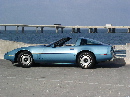




L98 Performance and 80 bhp

Thread Starter
Safety Car


Joined: May 2004
Posts: 4,469
Likes: 275
From: Naples FL
 L98 Performance and 80 bhp
I just ran across this article I wrote back in the day. It's still relevant and the engine has been used at any number of track days for several years now. The only problem was a rocker arm loosened up a few years back.
Richard Newton
Car Tech Stuff
Richard Newton
Car Tech Stuff

Team Owner

Joined: Aug 2005
Posts: 34,988
Likes: 515
From: Riverside County Southern California
Co-winner 2020 C4 of the Year - Modified
2018 Corvette of Year Finalist
2017 C4 of Year
2016 C7 of Year Finalist
St. Jude Donor '09 thru '20
Thread Starter
Safety Car
Joined: May 2004
Posts: 4,469
Likes: 275
From: Naples FL
I'll poke around and see if I can find some other articles. The car is a track only car right now. I've decided to stay with the L98 configuration. Actually I'm trying not to spend a ton of money on a car that gets driven less than 6 times a year.
The whole purpose of track days is to have fun. It's not racing.
Richard Newton
The whole purpose of track days is to have fun. It's not racing.
Richard Newton
Thread Starter
Safety Car
Joined: May 2004
Posts: 4,469
Likes: 275
From: Naples FL
Horsepower
299 @ 4700 rpm
Torque
339 @ 3400
What's interesting is at 2000 rpm I have 292 ft lbs of torque and it just builds. It starts to decline slowly at 3600 but it's still at 290 ft. lbs at 4800. At that point I'm running out of bhp as well.
Gains: The biggest horsepower gain was t 4700 (82 bhp). The biggest torque gain was also at 4700 (91 ft. lbs.)
Remember you brag about horsepower but you drive torque.
299 @ 4700 rpm
Torque
339 @ 3400
What's interesting is at 2000 rpm I have 292 ft lbs of torque and it just builds. It starts to decline slowly at 3600 but it's still at 290 ft. lbs at 4800. At that point I'm running out of bhp as well.
Gains: The biggest horsepower gain was t 4700 (82 bhp). The biggest torque gain was also at 4700 (91 ft. lbs.)
Remember you brag about horsepower but you drive torque.
Corvette Stories
The Best of Corvette for Corvette Enthusiasts

Top 10 Most Expensive Corvettes Ever Sold on Bring A Trailer
Brett Foote
10 Things Every Corvette Owner Needs (2026 Edition)
Michael S. Palmer
8 Most "Only Corvette Owners Understand" Quirks and Problems
Pouria Savadkouei
10 Reasons the C6 Z06 is Still A Performance Benchmark After 20 Years
Joe Kucinski
How Much Horsepower Every Corvette Engine "LOST" in 1972
Joe Kucinski
Top 10 DOs and DON'Ts for Protecting Your Convertible Top!
Michael S. Palmer
Top 10 Most Explosive Corvettes Ever Made: Power-to-Weight Ratio Ranked!
Joe Kucinski
150 hp to 1,250 hp: Every Corvette Generation Compared by the Specs That Matter
Joe Kucinski
8 Coolest Corvette Pace Cars (and Replicas) of All Time
Verdad Gallardo
Thread Starter
Safety Car
Joined: May 2004
Posts: 4,469
Likes: 275
From: Naples FL
The only time I really feel the need for more horsepower is on the back straight at Sebring. Then again since I'm only doing track days - and not racing it's not a big deal. Besides, if I had more power I would just need more brakes going into Turn 17.
Richard Newton
Richard Newton

Safety Car


Joined: Sep 2001
Posts: 4,157
Likes: 554
From: Glenbeulah Wi
The comment that you drive torque but brag about HP is missleading at best, and does not look at the whole picture. Take a look at the C5 vettes, no more torque then a L98 but a whole lot more HP and they are significantly faster.

Max G’s


Joined: Nov 2008
Posts: 2,751
Likes: 79
From: Monroe OH
NCM Sinkhole Donor
I agree, what really accelerates you is HP. HP is derived from torque and RPM, more HP means you have more torque at the given RPM. Sit down and do a calculation of torque at the rear tires (What really moves you) for all speeds based on the gear ratio and transmissions ratio of the car and the engine torque output. What you will quickly find out is higher HP provides you with higher rear wheel torque expecially when combined with the correct gear ratio.
The comment that you drive torque but brag about HP is missleading at best, and does not look at the whole picture. Take a look at the C5 vettes, no more torque then a L98 but a whole lot more HP and they are significantly faster.
The comment that you drive torque but brag about HP is missleading at best, and does not look at the whole picture. Take a look at the C5 vettes, no more torque then a L98 but a whole lot more HP and they are significantly faster.
Safety Car
Joined: Sep 2001
Posts: 4,157
Likes: 554
From: Glenbeulah Wi
Sorry guys but HP is not a measurable force. It is only a calculated number based off rpm and torque. Bottom line, you have to look at the application you wish to use your power for and what rpm range you will mostly be in and then decide where max torque would benefit you most, in the low to mid range coming out of a turn or near the top of the range at the end of the quarter mile?
Torque over the RPM range you operate in does result in the highest HP in that operating range. If are not looking for max acceleration then lugging the engine to power out of a corner will work best, but if you are looking for max acceleration downshift and use the power.
Race Director

Joined: Nov 2003
Posts: 12,221
Likes: 446
From: Overland Park Kansas
2020 Corvette of the Year Finalist (appearance mods)
C4 of Year Winner (appearance mods) 2019
I read thru the article and had a mixture of thoughts….
I was both happy and disappointed that someone else had utilized the service of honing on 113 cylinder heads. For my personal build, another build attracted my attention. It’s the Super Chevy 383 Stealth TPI Build. That build also used honing for the cylinder heads. Compared to modern offerings by AI, Dart, AFR, etc…I’ve often wondered how honing compared. (Really, I’ve wondered if any of these companies honed a set of 350 heads – then used them to model a CNC program for building their own? Which should provide a clue to who’s I’m thinking about! J) More importantly, cost and flow data would be interesting to know…which I’m surprised was not really addressed in your article. This was a huge part of the build without supporting info. (I felt the same about the 383 Stealth TPI Build.)
The issue of torque vs HP is often addressed in this forum – as the C4 generation had the unique inclusion of a torque motor (early C4s) and HP motor (late C4s). As such, it gives rise to a natural debate over the merits of each. In your article, it’s mentioned that 100mph is your threshold for addressing the need for HP. My personal observation – with my stock 350 – was the need for HP occurred much sooner. Of course, this depends on your driving habits and goals, but I was unable to out-pull a 3.2L Acura TL in the mid 2000’s. That meant a motor with only 56% the cubic inch displacement would not “yield” a competition for position on the highway. (This informal discovery was actually a “competition” in a rural area with a friend’s car. While I easily out-pulled him from a stoplight, I gained ZERO ground at WOT side-by-side when running 55-75mph. When you can’t “beat” a motor half the size on the highway, I’d submit that horsepower is the reason. I’d also submit that it could/should be considered well before the 100mph barrier described in your article.
And, I’m someone who’s more eager to talk about torque.
As with most of these types of articles, I assume yours was accepted to promote brands like COMP, ACCEL, TPIS, or even RPM Performance. The mention of their names provides more of a benefit to the publishers than the specifics of your combination provided to the reader. But, that’s OK….I think. It seemed like your general point was to talk about the expense – and even the life-long commitment to “relinquish” your modified car for specialized support/care. Depending on a person’s exact build, I don’t really agree with that either. It’s very easy (especially nowadays) to build a performance motor while retaining converters, AIR, and other factory equipment. As such, the car should not be so radically different that a good mechanic is unable to work on it – and fix any problem that you, the owner, may be unable/unwilling to address. I certainly would have no issue have any accessory replaced/repaired. I also wouldn’t hesitate to have a pistons, cylinder head gaskets, or injectors replaced after my modifications. Again, that’s assuming I was unwilling/unable to do these things myself. IOW, I don’t believe the car is any less “serviceable” than before. In this regard, I think you’re unnecessarily scaring potential builders.
If the issue is about tuning, even companies like PCM4Less can burn chips and have you performing in a way that stock diagnostic machines could still work for your benefit. Adding a custom chip should (mostly) be considered a “set it and forget about it” adventure. In my case, I learned tuning myself and didn’t feel the need to relegate this service for the rest of the car’s ownership. Learning to tune is something I encourage others to do!
When you got to the “boring part” – putting the motor together, I was bored. Mostly because the details of valves, rockers, and camshaft were a gratuitous pitch for COMP’s products. Nowadays, there are serveral choices and no one really benefits from pitching COMP or RPM Performance – except COMP and RPM Performance. By comparison, the 383 Stealth TPI Build is more informative with parts and results. Your article seemed more geared to cautioning about total expenditure, where to draw the line, and how you’ll lose the ability to provide ongoing support w/o upping the ante. While these are reasonable considerations for any potential builder, nothing of substance was really covered in the article. At least it raised the issue for readers to think about!
I finished the article wondering how much of that 8 grand was spent on the engine, how much (if any) work you did yourself, and how much money was spent beefing up the drivetrain. But, I did enjoy the overall conclusions about spending this money, the impact on family, and what it might cost per HP to build a performance engine. Generalities are hard to speak to but, if you spent $8k to get 80rwhp back then, you spent $100/hp. Since I paid somewhere between $60-$65 per HP, does that mean prices came down? Or, that 1/3rd of your price was in labor?
None of this means I didn’t enjoy reading the article or that I’m not glad you posted it. Anything that sparks debate/thought is definitely worthwhile. And, I think your article addresses the issue of TQ vs HP quite necessary. Though no real conclusion is there, you can see a few had fun with it. Though I built a torque motor – specifically for the application/goal of a single up/downshifting 6-spd street car, there’s no way you’ll convince me that anything other than correct gearing and HP are the best way to build the fastest car. Even on the street, tall gears and a spinning motor will destroy anyone from a stop. Obviously, as seen by the 3.2L vs 5.7L comparison having some cubes doesn’t hurt either. You might even say that same 3.2L vs 5.7L comparison shows that HP isn’t everything. But, if the 5.7 was built to spin up like the 3.2L was, you’d “own” the 3.2L motor across the board.
One final thought….shift points are usually chosen based on HP curves and ratings. So, L98TPI, it does show the value in the HP calculation…and that work over time (HP) is something you seriously need to look at.
BTW, Richard, that's a very nice/interesting websit you've got!

I was both happy and disappointed that someone else had utilized the service of honing on 113 cylinder heads. For my personal build, another build attracted my attention. It’s the Super Chevy 383 Stealth TPI Build. That build also used honing for the cylinder heads. Compared to modern offerings by AI, Dart, AFR, etc…I’ve often wondered how honing compared. (Really, I’ve wondered if any of these companies honed a set of 350 heads – then used them to model a CNC program for building their own? Which should provide a clue to who’s I’m thinking about! J) More importantly, cost and flow data would be interesting to know…which I’m surprised was not really addressed in your article. This was a huge part of the build without supporting info. (I felt the same about the 383 Stealth TPI Build.)
The issue of torque vs HP is often addressed in this forum – as the C4 generation had the unique inclusion of a torque motor (early C4s) and HP motor (late C4s). As such, it gives rise to a natural debate over the merits of each. In your article, it’s mentioned that 100mph is your threshold for addressing the need for HP. My personal observation – with my stock 350 – was the need for HP occurred much sooner. Of course, this depends on your driving habits and goals, but I was unable to out-pull a 3.2L Acura TL in the mid 2000’s. That meant a motor with only 56% the cubic inch displacement would not “yield” a competition for position on the highway. (This informal discovery was actually a “competition” in a rural area with a friend’s car. While I easily out-pulled him from a stoplight, I gained ZERO ground at WOT side-by-side when running 55-75mph. When you can’t “beat” a motor half the size on the highway, I’d submit that horsepower is the reason. I’d also submit that it could/should be considered well before the 100mph barrier described in your article.
And, I’m someone who’s more eager to talk about torque.
As with most of these types of articles, I assume yours was accepted to promote brands like COMP, ACCEL, TPIS, or even RPM Performance. The mention of their names provides more of a benefit to the publishers than the specifics of your combination provided to the reader. But, that’s OK….I think. It seemed like your general point was to talk about the expense – and even the life-long commitment to “relinquish” your modified car for specialized support/care. Depending on a person’s exact build, I don’t really agree with that either. It’s very easy (especially nowadays) to build a performance motor while retaining converters, AIR, and other factory equipment. As such, the car should not be so radically different that a good mechanic is unable to work on it – and fix any problem that you, the owner, may be unable/unwilling to address. I certainly would have no issue have any accessory replaced/repaired. I also wouldn’t hesitate to have a pistons, cylinder head gaskets, or injectors replaced after my modifications. Again, that’s assuming I was unwilling/unable to do these things myself. IOW, I don’t believe the car is any less “serviceable” than before. In this regard, I think you’re unnecessarily scaring potential builders.
If the issue is about tuning, even companies like PCM4Less can burn chips and have you performing in a way that stock diagnostic machines could still work for your benefit. Adding a custom chip should (mostly) be considered a “set it and forget about it” adventure. In my case, I learned tuning myself and didn’t feel the need to relegate this service for the rest of the car’s ownership. Learning to tune is something I encourage others to do!
When you got to the “boring part” – putting the motor together, I was bored. Mostly because the details of valves, rockers, and camshaft were a gratuitous pitch for COMP’s products. Nowadays, there are serveral choices and no one really benefits from pitching COMP or RPM Performance – except COMP and RPM Performance. By comparison, the 383 Stealth TPI Build is more informative with parts and results. Your article seemed more geared to cautioning about total expenditure, where to draw the line, and how you’ll lose the ability to provide ongoing support w/o upping the ante. While these are reasonable considerations for any potential builder, nothing of substance was really covered in the article. At least it raised the issue for readers to think about!
I finished the article wondering how much of that 8 grand was spent on the engine, how much (if any) work you did yourself, and how much money was spent beefing up the drivetrain. But, I did enjoy the overall conclusions about spending this money, the impact on family, and what it might cost per HP to build a performance engine. Generalities are hard to speak to but, if you spent $8k to get 80rwhp back then, you spent $100/hp. Since I paid somewhere between $60-$65 per HP, does that mean prices came down? Or, that 1/3rd of your price was in labor?
None of this means I didn’t enjoy reading the article or that I’m not glad you posted it. Anything that sparks debate/thought is definitely worthwhile. And, I think your article addresses the issue of TQ vs HP quite necessary. Though no real conclusion is there, you can see a few had fun with it. Though I built a torque motor – specifically for the application/goal of a single up/downshifting 6-spd street car, there’s no way you’ll convince me that anything other than correct gearing and HP are the best way to build the fastest car. Even on the street, tall gears and a spinning motor will destroy anyone from a stop. Obviously, as seen by the 3.2L vs 5.7L comparison having some cubes doesn’t hurt either. You might even say that same 3.2L vs 5.7L comparison shows that HP isn’t everything. But, if the 5.7 was built to spin up like the 3.2L was, you’d “own” the 3.2L motor across the board.
One final thought….shift points are usually chosen based on HP curves and ratings. So, L98TPI, it does show the value in the HP calculation…and that work over time (HP) is something you seriously need to look at.
BTW, Richard, that's a very nice/interesting websit you've got!
Thread Starter
Safety Car
Joined: May 2004
Posts: 4,469
Likes: 275
From: Naples FL
One of the items that makes it really difficult to compare this car to any other is that it's a dedicated track car. Even if it had things like lights and a/c it would still be a miserable car to drive on the street. One of the reasons it became a track car is that I simply went over the edge with modifications. My C4 is a perfect example how you really can't do both street and track equally well. Ok, some of the new Porsches and the new C7 will prove me wrong on that point.
I like torque because I like to come out of the turns quickly. Your speed at the end of any straight is determined by how well you exit the corner leading onto that straight.
Now comes the problem. I run Sebring 2 or 3 times a year. I'm ok on the front straight straight but miserable on the back straight. I just run out of power down that back straight. I could shift into 4th OD but turn 17 is a 3rd gear turn. Since I'm not racing I just sort of run up to 5500 in 4th and take it easy.
Homestead is a different animal. I actually think my car likes Homestead better. Or, I'm geared better for Homestead.
Richard Newton
I like torque because I like to come out of the turns quickly. Your speed at the end of any straight is determined by how well you exit the corner leading onto that straight.
Now comes the problem. I run Sebring 2 or 3 times a year. I'm ok on the front straight straight but miserable on the back straight. I just run out of power down that back straight. I could shift into 4th OD but turn 17 is a 3rd gear turn. Since I'm not racing I just sort of run up to 5500 in 4th and take it easy.
Homestead is a different animal. I actually think my car likes Homestead better. Or, I'm geared better for Homestead.
Richard Newton

Team Owner

Joined: Aug 2004
Posts: 21,543
Likes: 3,216
From: Park City Utah
Thread Starter
Safety Car
Joined: May 2004
Posts: 4,469
Likes: 275
From: Naples FL
Someone pointed out a few years ago that it's all about rpm. They looked at the F1 engine. A few years ago 12,000 was the maximum rpm in F1. Today it's maybe 17,000. The interesting point was that today's motors produce the same power at 12,000 as the old ones did. The difference is that they produce more power as the rpms increase. Interesting.
Richard Newton
Richard Newton
Race Director
Joined: Nov 2003
Posts: 12,221
Likes: 446
From: Overland Park Kansas
2020 Corvette of the Year Finalist (appearance mods)
C4 of Year Winner (appearance mods) 2019
There was a good thread (here) that described why staying in a lower gear longer would almost always win a race. It has to do with the torque-multiplication to the ground. When you couple the rear gear and transmission gear -- with the power the engine makes, that 300hp (in a lower gear) becomes even greater. So, when the 250hp motor has shifted, there's a night/day difference in torque multiplication for the 300hp motor. If it was behind, it will catch up.
Race Director
Joined: Nov 2003
Posts: 12,221
Likes: 446
From: Overland Park Kansas
2020 Corvette of the Year Finalist (appearance mods)
C4 of Year Winner (appearance mods) 2019
While I was trying to figure it out, here's a couple of threads on the hp vs tq issue...
http://forums.corvetteforum.com/c4-t...ower+gear+rpms
http://forums.corvetteforum.com/c4-t...ower+gear+rpms
http://forums.corvetteforum.com/c4-t...ower+gear+rpms
http://forums.corvetteforum.com/c4-t...ower+gear+rpms