





Crossfire tuning

Thread Starter
Racer


Joined: Jun 2012
Posts: 325
Likes: 36
From: Colorado Springs Colorado
 Crossfire tuning
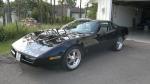
My 84 Vette is stock except for a Hypertech street runner chip, I installed a 1985 fuel pump and advanced the timing to eight degrees, now I am experimenting with the fuel pressure. Went to 13 pounds and it does not seems to be the right pressure(it stumbles a little under load) what would be the best combination of timing and pressure to go with? I am ordering a Renegade manifold for. a swap later.

Drifting


Joined: Mar 2015
Posts: 1,275
Likes: 165
From: Utah
You will need to play around with it to find what it wants.
also when upping the fuel pressure watch the injectors.
I use my timing light that has an adjustable advance to watch the injectors, turn the dial until you can see the spray pattern.
Make sure it's not looking lumpy or any fuel drips.
Next thing will be plugs and wires.
I also have my plugs set at like .35.
the car seemed to like that.
Next check the electronics for ignition, there is one inside of the distributor that people report an improvement when replacing.
My car had a napa part installed when i bought it, later i replaced with a DUI unit with no noticeable improvement over the napa premium that was in there.
Next thing that will mess with you is the knock sensor, it will cause the car to bog down if it senses knocks, i replaced mine for good measure.
the plug for the sensor was also deteriorated pretty badly so that got replaced as well...
also when upping the fuel pressure watch the injectors.
I use my timing light that has an adjustable advance to watch the injectors, turn the dial until you can see the spray pattern.
Make sure it's not looking lumpy or any fuel drips.
Next thing will be plugs and wires.
I also have my plugs set at like .35.
the car seemed to like that.
Next check the electronics for ignition, there is one inside of the distributor that people report an improvement when replacing.
My car had a napa part installed when i bought it, later i replaced with a DUI unit with no noticeable improvement over the napa premium that was in there.
Next thing that will mess with you is the knock sensor, it will cause the car to bog down if it senses knocks, i replaced mine for good measure.
the plug for the sensor was also deteriorated pretty badly so that got replaced as well...
Drifting
Joined: Mar 2015
Posts: 1,275
Likes: 165
From: Utah
I'll also note that i replaced every engine management related sensor before i messed with anything, not really any plan, but i figured the car was pretty old and pretty much everything was original.
And you will also want to learn how to read plugs, I'm pretty sure you will find it running a tad rich.
And you will also want to learn how to read plugs, I'm pretty sure you will find it running a tad rich.
Last edited by Gibbles; Oct 11, 2016 at 07:37 AM.

Team Owner


Joined: Aug 2004
Posts: 21,543
Likes: 3,216
From: Park City Utah
Thread Starter
Racer
Joined: Jun 2012
Posts: 325
Likes: 36
From: Colorado Springs Colorado
You will need to play around with it to find what it wants.
also when upping the fuel pressure watch the injectors.
I use my timing light that has an adjustable advance to watch the injectors, turn the dial until you can see the spray pattern.
Make sure it's not looking lumpy or any fuel drips.
Next thing will be plugs and wires.
I also have my plugs set at like .35.
the car seemed to like that.
Next check the electronics for ignition, there is one inside of the distributor that people report an improvement when replacing.
My car had a napa part installed when i bought it, later i replaced with a DUI unit with no noticeable improvement over the napa premium that was in there.
Next thing that will mess with you is the knock sensor, it will cause the car to bog down if it senses knocks, i replaced mine for good measure.
the plug for the sensor was also deteriorated pretty badly so that got replaced as well...
also when upping the fuel pressure watch the injectors.
I use my timing light that has an adjustable advance to watch the injectors, turn the dial until you can see the spray pattern.
Make sure it's not looking lumpy or any fuel drips.
Next thing will be plugs and wires.
I also have my plugs set at like .35.
the car seemed to like that.
Next check the electronics for ignition, there is one inside of the distributor that people report an improvement when replacing.
My car had a napa part installed when i bought it, later i replaced with a DUI unit with no noticeable improvement over the napa premium that was in there.
Next thing that will mess with you is the knock sensor, it will cause the car to bog down if it senses knocks, i replaced mine for good measure.
the plug for the sensor was also deteriorated pretty badly so that got replaced as well...
Thread Starter
Racer
Joined: Jun 2012
Posts: 325
Likes: 36
From: Colorado Springs Colorado
Will try 10 degrees, now that is a huge jump from the 6 degrees factory specs, will post what happens.Still have the egr valve( cleaned and new gasket ) Probably will delete it when go to the Renegade manifold.
Last edited by jose7740; Oct 11, 2016 at 12:09 PM. Reason: Add notes
Thread Starter
Racer
Joined: Jun 2012
Posts: 325
Likes: 36
From: Colorado Springs Colorado
Corvette Stories
The Best of Corvette for Corvette Enthusiasts

Top 10 Most Expensive Corvettes Ever Sold on Bring A Trailer
Brett Foote
10 Things Every Corvette Owner Needs (2026 Edition)
Michael S. Palmer
8 Most "Only Corvette Owners Understand" Quirks and Problems
Pouria Savadkouei
10 Reasons the C6 Z06 is Still A Performance Benchmark After 20 Years
Joe Kucinski
How Much Horsepower Every Corvette Engine "LOST" in 1972
Joe Kucinski
Top 10 DOs and DON'Ts for Protecting Your Convertible Top!
Michael S. Palmer
Top 10 Most Explosive Corvettes Ever Made: Power-to-Weight Ratio Ranked!
Joe Kucinski
150 hp to 1,250 hp: Every Corvette Generation Compared by the Specs That Matter
Joe Kucinski
8 Coolest Corvette Pace Cars (and Replicas) of All Time
Verdad Gallardo


Racer
Joined: Mar 2013
Posts: 462
Likes: 98
If the car stumbles or hesitates, there might be a slight difference between the opening of the front and rear throttle body throttle plates. There is a process for adjusting this, using either a water manometer or actual manometers. Also, if there is wear on the throttle bores where the rod goes through the throttle body, no amount of adjusting will fix it.
There is a whole bunch of good stuff on all this at this site
http://www.thecubestudio.com/Crossfi...estoration.htm
There is a whole bunch of good stuff on all this at this site
http://www.thecubestudio.com/Crossfi...estoration.htm
Thread Starter
Racer
Joined: Jun 2012
Posts: 325
Likes: 36
From: Colorado Springs Colorado
Basically what I am having is a very slight backfire at high rpm, the fuel pressure is at 12 now and I will go to 11 today and see how it runs, need to check the tbi's after that.
Le Mans Master

Joined: Oct 2002
Posts: 7,098
Likes: 378
From: Las Vegas - Just stop perpetuating myths please.
Without a dyno for tuning your doing the best you can by trail and error. Fuel pressure 9-13 psi. Base timing changes will shift the timing curve but not change the curve itself. To get performance you need to get rid of that stock smog tuned curve. From what I've been reading the '84 ECM is not very compatible with the only real-time tuner for it - the Ostrich. I'm reading there are later model ECM's for TBI that tune easier. If you want to go there you need to read up and ThirdGen.org has a lot of TBI info - search the archives.
Good luck.
Good luck.
Team Owner
Joined: Aug 2004
Posts: 21,543
Likes: 3,216
From: Park City Utah
 Back fire is symptomatic of a lean A/F Ratio (or an ignition issue) but relative to fueling, backfiring out the intake means it's not getting enough fuel.
That's not true. Especially where he's at w/basically stock engine. "Cranking on the distributor" will work absolutely fantastic.
Thread Starter
Racer
Joined: Jun 2012
Posts: 325
Likes: 36
From: Colorado Springs Colorado
Thread Starter
Racer
Joined: Jun 2012
Posts: 325
Likes: 36
From: Colorado Springs Colorado
Today I advanced the timing to 10 degrees and kept the pressure at 12, drove the car and it was responding really good, question now is if the stock throttle bodies and injectors will work good with the Renegade manifold, that is my next purchase, I do not have plans to change the camshaft for now and want to stay with the stock ecm.
Racer
Joined: Mar 2013
Posts: 462
Likes: 98
Back fire is symptomatic of a lean A/F Ratio (or an ignition issue) but relative to fueling, backfiring out the intake means it's not getting enough fuel.That's not true. Especially where he's at w/basically stock engine. "Cranking on the distributor" will work absolutely fantastic.
The L83 engine sets its own timing via the computer, and the knock sensor mounted in the engine on the passenger side. The user does have to set the base timing, with a lead at the distributor disconnected. This is important, and might be at least partially the cause of backfiring. I recommend setting the base timing per spec, and then reconnecting the lead at the distributor. Then with the timing light, you can see the computer is advancing the timing per its programming.
The Hypertech chip may or may not be right for your L83 engine. I can't recall if it was Hypertech, but at one of the aftermarket chip suppliers, I spoke with a tech who kept talking about a Mass Air Flow sensor. The L83 engine uses Speed Density, and does not have a Mass Air Flow Sensor. So, if you can make sure the Hypertech chip you have is actually correct for an L83 Crossfire engine. It might not be.
And before you get much further into this, I'd really recommend balancing the throttle bodies. I've had two Crossfire engines, one on a Collector's Edition 1982, and one on a 1984 Z51. Both had issues, worse on the 1982.
Other things to check include the throttle position sensor, if that is not set correctly, the computer will be working with bad data, and garbage in garbage out.
The computer in the 1982 is behind the driver's seat right next to the battery. This brilliant design move results in not only no real air flow for cooling the computer, it also provides ample opportunity for fumes from the battery to seriously corrode the computer and connections thereto. Ask me know I know.
So, I'd check the computer and connections to it. Might be surprised to see how much caked on minerals there are on and inside the computer. Mine was in very bad shape.
Also, there is a vacuum hose running from the manifold to the Manifold Absolute Pressure sensor mounted on the firewall. Critical that not be leaking or missing. In fact, any vacuum leak will play hell with a Crossfire set up, since the MAP sensor checks vacuum and in turn the computer uses that info (among other sensor inputs) to set injector pulse width...
Another problem might be the Coolant Temp Sensor at the front of the block. Some of these used a single wire, grounding thru the sensor body. Bad idea, corrosion sometimes interferes with proper grounding. A bad CTS can throw everything off, not only on the L83, but on the L98, say in a 1990 behaving badly (again, how would I know that...). If the CTS is not right and the computer always thinks the car is cold, the extra fuel could conceivably cause backfires out the exhaust. Just a thought.
Getting an L83 to run right can be a hair pulling experience, and at best seems to be iterative. If you have a factory service manual, you can pull codes off the computer which can be quite helpful.
Hope this helps a bit, the FSM and this forum have lots of good stuff on Crossfire/L83 - which when running right is better than I think most people give it credit for...
Racer
Joined: Mar 2013
Posts: 462
Likes: 98
Oops, sorry for all the 1982 specific stuff, you are dealing with an 84 - that computer as I'm sure you already know is under the dash not near a battery.
Still, I'd check the Hypertech chip just to be sure. Otherwise the sensors between 1982 and 1984 are pretty much the same. And balancing the throttle bodies on either model year can make a bad running car work surprisingly well, on or off idle.
And pulling the lead at the distributor when setting timing is a must.
Best Luck with this...interested to know how it turns out.
Still, I'd check the Hypertech chip just to be sure. Otherwise the sensors between 1982 and 1984 are pretty much the same. And balancing the throttle bodies on either model year can make a bad running car work surprisingly well, on or off idle.
And pulling the lead at the distributor when setting timing is a must.
Best Luck with this...interested to know how it turns out.

