





200+ MPH C4

Melting Slicks


Joined: Jun 2002
Posts: 2,168
Likes: 16
From: Phoenix AZ
 Re: 200+ MPH C4 (johnboy89)
I'm interested in the gearing part of the question asked in this post. I have the 4:10 gears in mine and dyno horsepower in the high 500's so I might have what it would take to reach that speed. At the Firebird main track in Chandler I get up to 140 on the straight (dragstrip portion of the track) and am in the bottom of 5th gear. I've never even used 6th. If the car revs to 7000 RPM, speeds of up to 180 seem possible. It scares me to think about how fast the driveshaft would be spinning at those speeds with the 4:10's though!
I've considered doing the Silver State Classic, too. Their website is http://www.silverstateclassic.com. If you have a roll cage, 5-point harness, fire system, fuel cell, ect. you can enter the really fast classes (150 mph +) I would want to change out the wheels from 11's to 9-1/2"s all around with some REALLY good tires that were X-rayed for defects and have the wheels magnafluxed to check for hairline cracks.
I've considered doing the Silver State Classic, too. Their website is http://www.silverstateclassic.com. If you have a roll cage, 5-point harness, fire system, fuel cell, ect. you can enter the really fast classes (150 mph +) I would want to change out the wheels from 11's to 9-1/2"s all around with some REALLY good tires that were X-rayed for defects and have the wheels magnafluxed to check for hairline cracks.

Thread Starter
Instructor

Joined: Jan 2003
Posts: 110
Likes: 0
From: Cleveland Ohio
Re: (bill mcdonald)
weight has nothing to do with top speed. It only effects how long it takes to get there.
In other words, all things being equal, the lighter car takes less horsepower to maintain say 200 MPH, as compared to a heavier car.
If that were not the case, then gravity would not have the ability to interact with things as it does. Weight (i.e., mass) is a variable with which gravity interacts. Once in motion, and in turn being acted upon by the friction produced by our atmosphere, a vehicle moves through the air relative to its mass, and the energy being produced (or consumed) to keep it in motion.
Thread Starter
Instructor
Joined: Jan 2003
Posts: 110
Likes: 0
From: Cleveland Ohio
Re: (johnboy89)
On the other hand, if you were to through Michael Jackson and a really fat guy off of a really high building, they would both hit the ground at the same time - that's due to a thing called 'terminal velocity'.
Sure, maybe Michael would scream louder - but they'd both arrive at the same time.
:thumbs:
Sure, maybe Michael would scream louder - but they'd both arrive at the same time.
:thumbs:

Intermediate
Joined: Jan 2003
Posts: 26
Likes: 1
From: oakville Ontario
Re: (johnboy89)
I will be trying it in about 2 months time. with a 3.73 my motor turning 7500 in 5th gear should put me at (if i remember right) 198-205 mph on my 19 inch wheels. The car is slammed very low and is set for high speed(suspension). My motor will put out 465 rwhp @ 7200 rpm, with 7600 set as redline. Im doing it on a local highway to.... LOL Last time i tried with the stock motor i hit 177 with bolt ons. Ill have the video mount etc ready. Get ready to see the video on Kazaa and on here as well! :cheers:

Burning Brakes


Joined: Aug 2000
Posts: 984
Likes: 1
From: Cincinnati OH
Re: 200+ MPH C4 (johnboy89)
It's impossible to answer the gearing part without knowing your power curve.
But anyways...
If a stock 300hp LT1's top speed is 165 and it happens right at it's power peak (close enough), then the exact same car should do 200 with about 535 hp, assuming 200 mph put's it right at it's power peak. Actually it would require a little more since rolling friction (as opposed to aerodynamic drag) would increase slightly at the higher speed, but not much.
Weight has very little to do with top speed when we are talking about 200+ mph. Almost all drag is aerodynamic drag for a C4 at those speeds, assuming we are talking about level ground. Weight would hugely affect top speed on a grade though.
But anyways...
If a stock 300hp LT1's top speed is 165 and it happens right at it's power peak (close enough), then the exact same car should do 200 with about 535 hp, assuming 200 mph put's it right at it's power peak. Actually it would require a little more since rolling friction (as opposed to aerodynamic drag) would increase slightly at the higher speed, but not much.
Weight has very little to do with top speed when we are talking about 200+ mph. Almost all drag is aerodynamic drag for a C4 at those speeds, assuming we are talking about level ground. Weight would hugely affect top speed on a grade though.
Team Owner


Joined: May 2001
Posts: 36,212
Likes: 2,511
From: ...tearing up the highways, one state at a time™®©
Re: 200+ MPH C4 (Zora)
My local dealer has what is claimed to be the second fastest Callaway ever built, no 1989-010, posted speeds are 0-60 in 4.1 and 215mph. quoted horse power is 584.
If you want it its yours for 40, k GPB :skep:
If you want it its yours for 40, k GPB :skep:
Skeptical huh... check out this link> http://www.corvetteactioncenter.com/...y/89_10tt.html
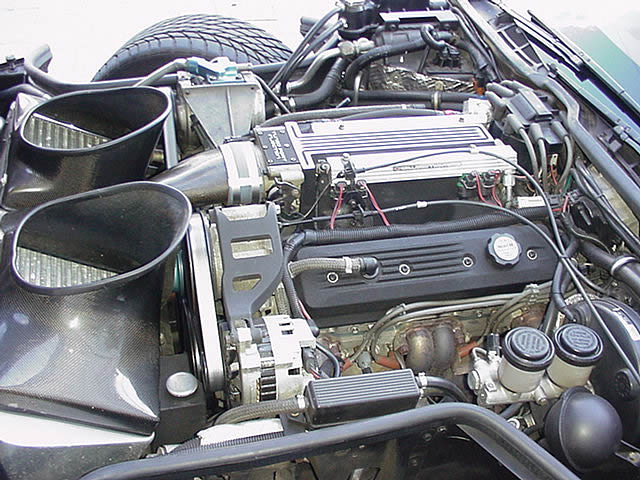
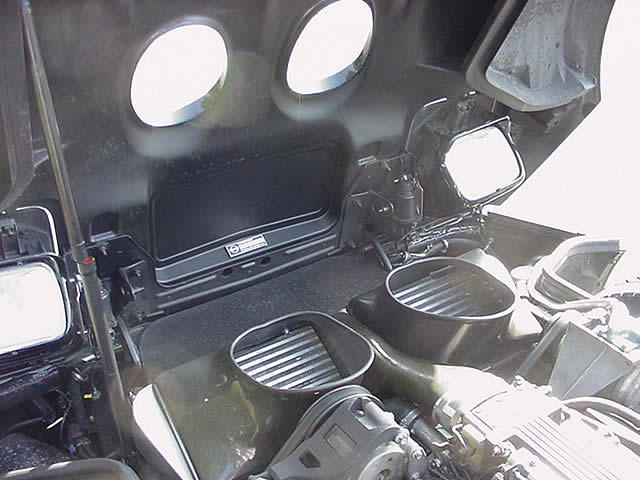
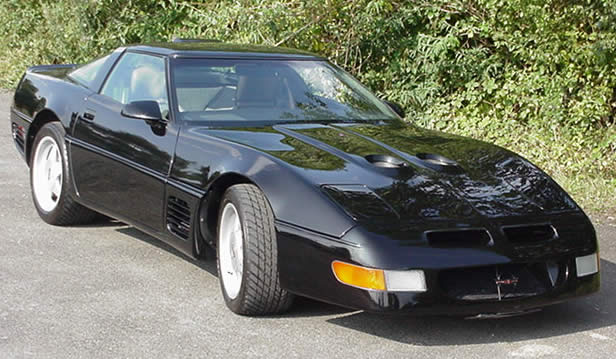
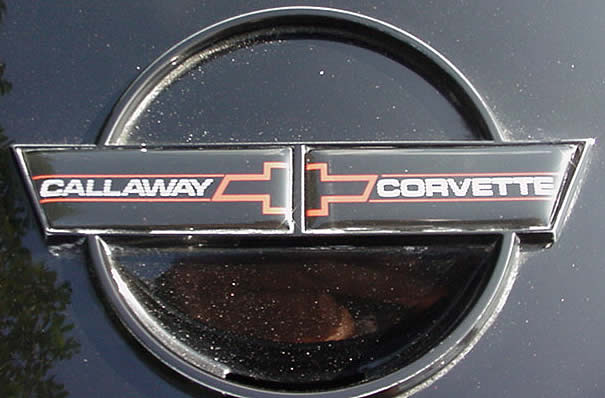
That car NEEDS to be back in America :)
Corvette Stories
The Best of Corvette for Corvette Enthusiasts

5 Best & 5 Worst Corvette Daily Drivers
Joe Kucinski
The Headlights of Every Corvette Generation Explained
Joe Kucinski
5 Best & 5 Most Overrated Corvette Track Packages of All Time!
Joe Kucinski
Every 2027 Corvette Engine Explained
Joe Kucinski
Designer Imagines A Corvette That Looks More Like a Corvette Than the Corvette
Verdad Gallardo
10 Ugly Corvettes That We Still Kinda Love
Joe Kucinski
Top 10 Most Expensive Corvettes Ever Sold on Bring A Trailer
Brett Foote
10 Things Every Corvette Owner Needs (2026 Edition)
Michael S. Palmer
8 Most "Only Corvette Owners Understand" Quirks and Problems
Pouria Savadkouei
Le Mans Master

Joined: Sep 2000
Posts: 6,473
Likes: 1
From: Cleveland
Cruise-In III Veteran
Cruise-In IV Veteran
Re: 200+ MPH C4 (*89x2*)
My local dealer has what is claimed to be the second fastest Callaway ever built, no 1989-010, posted speeds are 0-60 in 4.1 and 215mph. quoted horse power is 584.
Team Owner
Joined: May 2001
Posts: 36,212
Likes: 2,511
From: ...tearing up the highways, one state at a time™®©
Re: 200+ MPH C4 (Drewdog)
My local dealer has what is claimed to be the second fastest Callaway ever built, no 1989-010, posted speeds are 0-60 in 4.1 and 215mph. quoted horse power is 584.
:eek:
:eek:
Yep - The :bs Stops there :cheers:


Team Owner
Joined: May 2002
Posts: 24,337
Likes: 25
From: San Diego , CA Double Yellow DirtBags 1985..Z51..6-speed
Re: 200+ MPH C4 (DF)
You guys are mistaken...
Weight has virtually nothing to do with top speed.
The only affect it has would be a insignificantly larger tire contact patch with the road.. and possibly lower ride height (better for aero).
An object in motion will remain in motion unless acted upon by an external force. Gravity has no affect on the cars horizontal speed or acceleration, assuming flat ground. Gravity only affects the car in the vertical direction.. sidewall flex and tire friction.
Also, if Michael Jackson and a Fat guy jumped off a building of any height at the same time, they would hit at about the same time... Gravity accelerates everything at the same rate, no matter what they weigh. This is why gravity is a constant. If they both reached they're terminal velocities however, the fat guy would probably take longer to hit the ground.
You'd get to 200mph much cheaper by doing some body mods too. It seems like a cosmetically stock Corvette would generate dangerous lift at those speeds anyways.
[Modified by CentralCoaster, 4:56 AM 2/14/2003]
Weight has virtually nothing to do with top speed.
The only affect it has would be a insignificantly larger tire contact patch with the road.. and possibly lower ride height (better for aero).
An object in motion will remain in motion unless acted upon by an external force. Gravity has no affect on the cars horizontal speed or acceleration, assuming flat ground. Gravity only affects the car in the vertical direction.. sidewall flex and tire friction.
Also, if Michael Jackson and a Fat guy jumped off a building of any height at the same time, they would hit at about the same time... Gravity accelerates everything at the same rate, no matter what they weigh. This is why gravity is a constant. If they both reached they're terminal velocities however, the fat guy would probably take longer to hit the ground.
You'd get to 200mph much cheaper by doing some body mods too. It seems like a cosmetically stock Corvette would generate dangerous lift at those speeds anyways.
[Modified by CentralCoaster, 4:56 AM 2/14/2003]

Race Director


Joined: May 2001
Posts: 14,165
Likes: 9
Re: 200+ MPH C4 (vetracer)
I've never even used 6th. If the car revs to 7000 RPM, speeds of up to 180 seem possible. It scares me to think about how fast the driveshaft would be spinning at those speeds with the 4:10's though!

Melting Slicks
Joined: Jun 2000
Posts: 3,215
Likes: 6
From: Tampa Florida
Re: 200+ MPH C4 (johnboy89)
I believe just over 500 flywheel hp will do the trick.
As far as gearing goes...3.45's and 5th gear in the ZF will put you at 200 mph with 6800 rpm.
Sounds simple enough.
:)
As far as gearing goes...3.45's and 5th gear in the ZF will put you at 200 mph with 6800 rpm.
Sounds simple enough.
:)

Melting Slicks
Joined: Jan 2002
Posts: 2,784
Likes: 3
From: Atlanta GA
Re: 200+ MPH C4 (No Go)
I believe just over 500 flywheel hp will do the trick.
As far as gearing goes...3.45's and 5th gear in the ZF will put you at 200 mph with 6800 rpm.
Sounds simple enough.
:)
As far as gearing goes...3.45's and 5th gear in the ZF will put you at 200 mph with 6800 rpm.
Sounds simple enough.
:)

Race Director

Joined: Sep 2001
Posts: 14,686
Likes: 753
From: NEwhere Ohio
Re: (johnboy89)
Ok: The Michael Jackson and fat guy debate...
No they wouldnt hit at about the same time, unless you did this in a vacuum.
The fat guy would hit first and his guts would likely be splattered in a wider radius because he hit the ground at a faster terminal velocity.
This is because his greater mass allows himself to have less drag to the air resistance therby achieving a higher terminal velocity. Terminal velocities are different for different shaped (shape affects drag in air), different density (if its lighter than air, it will float ex. a blimp), and diferent mass objects.
Think about...You throw an ant off a cliff, it hits the ground and it starts walking around when it lands. Try it. You throw a person off the cliff and they splatter.
This is also why the 'penny' off the roof of the empire state building wont go through the roof of a car either like urban legend says it will. It would if our world did not have an atmosphere (air), but we'd all be dead because we couldnt breathe.
You see, theres some equation for calculating drag for falling objects in air that takes weight into effect. I cant remember it though.
No they wouldnt hit at about the same time, unless you did this in a vacuum.
The fat guy would hit first and his guts would likely be splattered in a wider radius because he hit the ground at a faster terminal velocity.
This is because his greater mass allows himself to have less drag to the air resistance therby achieving a higher terminal velocity. Terminal velocities are different for different shaped (shape affects drag in air), different density (if its lighter than air, it will float ex. a blimp), and diferent mass objects.
Think about...You throw an ant off a cliff, it hits the ground and it starts walking around when it lands. Try it. You throw a person off the cliff and they splatter.
This is also why the 'penny' off the roof of the empire state building wont go through the roof of a car either like urban legend says it will. It would if our world did not have an atmosphere (air), but we'd all be dead because we couldnt breathe.
You see, theres some equation for calculating drag for falling objects in air that takes weight into effect. I cant remember it though.

Drifting

Joined: Oct 2000
Posts: 1,396
Likes: 0
From: Sacramento CA
Re: 200+ MPH C4 (johnboy89)
I have a 90 ZR-1 Dynoed at 400RWHP even with an areodynamic nose 186 was all it would go in 5th. I held my foot to the floor for 2 miles after 180. If weight does not play a factor why is it that the masters of top speed street cars (Open Road Racers) make their cars as light as possibe. The C-4 I am making now should come in at 2700 lbs or less I hope. It has an all aluminum Katach motor making 588FWHP at 9.5:1 compression. The last owner Rick Doria(see a pervious post) had it in a other then gutted interior stock C4 hit 214. So with the 400-500 lbs saved we will see how high it goes in the Nevada Open Road Challange (this is the May edition of the Silver State)
Jeffy'
Jeffy'



Safety Car

Joined: Feb 2000
Posts: 4,564
Likes: 110
From: Austin Texas
Re: 200+ MPH C4 (Jeffyvette)
The weight DOES play into this. It is in how QUICKLY they can accelerate to speed after slowing for turns (I believe someone named Newton called this inertia). Faster acceleration brings your average speed up and the times down.
It doesn't have much at all to do with top-end sustained speed....just in how long it takes you to get there.
Aerodynamics & horsepower are the 2 biggest factors in top-end speed. Enough of either and you can do it easily.
[Modified by Joe90, 10:31 AM 2/15/2003]
It doesn't have much at all to do with top-end sustained speed....just in how long it takes you to get there.
Aerodynamics & horsepower are the 2 biggest factors in top-end speed. Enough of either and you can do it easily.
[Modified by Joe90, 10:31 AM 2/15/2003]
Melting Slicks
Joined: Jun 2000
Posts: 3,215
Likes: 6
From: Tampa Florida
Re: 200+ MPH C4 (Joe90)
Joe90 probably hit the nail on the head.
Weight isn't a factory when you have lots of room to do the acceleration-look at the Bonneville guys-those guys add weight for stability-on the order of thousands of pounds! But they don't do this for 90 odd miles with corners.
My simplistic comment was supposed to be understood at sarcastic...I think most realize this...:)
Weight isn't a factory when you have lots of room to do the acceleration-look at the Bonneville guys-those guys add weight for stability-on the order of thousands of pounds! But they don't do this for 90 odd miles with corners.
My simplistic comment was supposed to be understood at sarcastic...I think most realize this...:)