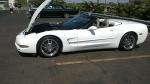
Although, I have the dreaded "early" 1998 model.





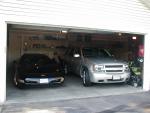



Does anyone else wait when starting your car?

Melting Slicks


Joined: Dec 2000
Posts: 3,280
Likes: 1,097
From: Pittsburgh PA

Instructor

Joined: Oct 2013
Posts: 106
Likes: 0
From: Camillus NY

Racer
Joined: Feb 2015
Posts: 255
Likes: 23
From: Ct

I enjoy watching it, too. Let it idle for a bit afterward and drive her real slow till I feel she ready to be riden. Corvettes have a real life quality that reminds me of the west and riding horses in some abstract way.
Last edited by Deneb; Jun 16, 2015 at 08:56 PM.
Corvette Stories
The Best of Corvette for Corvette Enthusiasts

Top 10 Most Expensive Corvettes Ever Sold on Bring A Trailer
Brett Foote
10 Things Every Corvette Owner Needs (2026 Edition)
Michael S. Palmer
8 Most "Only Corvette Owners Understand" Quirks and Problems
Pouria Savadkouei
10 Reasons the C6 Z06 is Still A Performance Benchmark After 20 Years
Joe Kucinski
How Much Horsepower Every Corvette Engine "LOST" in 1972
Joe Kucinski
Top 10 DOs and DON'Ts for Protecting Your Convertible Top!
Michael S. Palmer
Top 10 Most Explosive Corvettes Ever Made: Power-to-Weight Ratio Ranked!
Joe Kucinski
150 hp to 1,250 hp: Every Corvette Generation Compared by the Specs That Matter
Joe Kucinski
8 Coolest Corvette Pace Cars (and Replicas) of All Time
Verdad Gallardo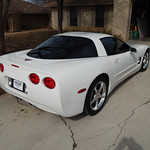
Pro


Joined: Feb 2014
Posts: 697
Likes: 7
From: Kansas City Missouri
I get in to start it I turn the ignition on and wait about 15 seconds for all the bells, whistles, pumps etc to settle down and then I fire her up.
Hey ... they have to wait for all the systems to power up in a fighter jet so why wouldn't it work on a c5?
Plus, it's kinda cool ...
Haha.
Hey ... they have to wait for all the systems to power up in a fighter jet so why wouldn't it work on a c5?
Plus, it's kinda cool ...
Haha.
Last edited by scarecrowkc5; Jun 16, 2015 at 11:52 PM.






Racer
Joined: May 2014
Posts: 361
Likes: 34
From: Central MA
I also wait for the gauge startup routine to finish with the thought of potential voltage drops and or spikes during cranking could generate false error codes or worse. I have seen in my computer electronics job IC devices work as intended until a voltage variation as little as 1/4 (.25V) or even less off from 5V fail. They are spec'd to run at 4.75V-%.25V but not always the case.



Race Director


Joined: Mar 2006
Posts: 15,449
Likes: 1,716
From: Everywhere and Nowhere at all


Melting Slicks
Joined: Jul 2013
Posts: 2,012
Likes: 23
From: Anaheim CA
Also, it appears the PCM and BCM both need to be running and communicating or the starter won't crank anyway. (Theft deterrent runs through the BCM, clutch/neutral enable runs through the PCM.)
Melting Slicks
Joined: Jul 2013
Posts: 2,012
Likes: 23
From: Anaheim CA
I also wait for the gauge startup routine to finish with the thought of potential voltage drops and or spikes during cranking could generate false error codes or worse. I have seen in my computer electronics job IC devices work as intended until a voltage variation as little as 1/4 (.25V) or even less off from 5V fail. They are spec'd to run at 4.75V-%.25V but not always the case.