



Fixed Orifice PCV "Valve"

Thread Starter
Le Mans Master


Joined: Mar 2002
Posts: 5,955
Likes: 161
From: PNW

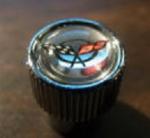
I went and bought one of these today. Don't know when I will install it.
I called SDPC engine builder who insists these be placed on their new engines. I asked if it was to help create vacuum for seating rings. The answer was no .... it is reccommended only because they have seen engines without it suck so much oil that a low engine oil condition occurred!!!!!!

DH
I called SDPC engine builder who insists these be placed on their new engines. I asked if it was to help create vacuum for seating rings. The answer was no .... it is reccommended only because they have seen engines without it suck so much oil that a low engine oil condition occurred!!!!!!
DH
If SDPC sees a big difference with the fixed orifice PCV unit then it's worth a try IMO. I'm going to try one with just my EE catch can in the dirty line and see what happens.
 How much was it? ... can't be more than $5 I would imagine.
Race Director


Joined: Dec 2000
Posts: 19,304
Likes: 85
From: San Diego CA
My Zee burns uses about 1 quart every 3500 miles. I've had an Elite Engineering catch can on it for about a year, and it might have caught about 1/4 quart in 3500 miles. So apparently, the other 3/4 qt must have been burned up by going past the rings, etc. It's also possible that the catch can isn't catching 100% of the oil heading to the intake manifold either.
I'm not too bothered about the oil use rate on my Zee, but it would be nice to cut it down even more, especially any oil going into the intake manifold if I can.
I'm not too bothered about the oil use rate on my Zee, but it would be nice to cut it down even more, especially any oil going into the intake manifold if I can.
If you want to go even further, add a Watts F501-02DH coalescing filter to catch the aerosols that the EE can will inevitably let pass. This is the filter assembly without the bracket, which is not needed if you were to connect it to the EE with a 1/4 MNPT pipe-to-pipe fitting.
Howie, I too, thought you had an 04; wouldn't that have the small orifice, already?

Team Owner


Joined: May 2004
Posts: 26,345
Likes: 232
From: SoCal
Thread Starter
Le Mans Master
Joined: Mar 2002
Posts: 5,955
Likes: 161
From: PNW
If you want to go even further, add a Watts F501-02DH coalescing filter to catch the aerosols that the EE can will inevitably let pass. This is the filter assembly without the bracket, which is not needed if you were to connect it to the EE with a 1/4 MNPT pipe-to-pipe fitting.
Thread Starter
Le Mans Master
Joined: Mar 2002
Posts: 5,955
Likes: 161
From: PNW
I think the 2004+ cars have the 2.5 mm (0.10 inch) orifice built into the PCV nose nipple coming off the right front corner of the valley cover.
Race Director
Joined: Dec 2000
Posts: 19,304
Likes: 85
From: San Diego CA

Dave

Melting Slicks


Joined: Apr 2007
Posts: 2,945
Likes: 1,115
From: Hereford AZ
Ok,
First, I don't disagree with ZeeO on the need for some way to reduce oil consumption or oil in the combustion process. I am not attempting to belittle the discussion, just exploring this with you guys. However, I think the intent, from a GM perspective is to consider that the PCV has two functions; it relieves internal combustion gases (here-to-for with vaccum) and, important to the manufacturer, more specifically to reduce emissions. To the point of ring seal or combustion gases; a couple of vents on the top of the engine or even a crankcase evap like that which drag racers used to use with tubes from the valve covers to the header collectors is sufficient. What LS enthusiests need is a system to relieve internal combustion gases without introducing excessive oil into the intake process. GM has evolved this from a variable PCV to a small orifice, to then, what my wife's CTS-V has, no PCV (but still crankcase ventilation).....the CTS-V LS2 has a tube which loops from the valley cover to the intake (behind the TB); then there is a small tube from the passenger side valve cover to the low side of the intake prior to the TB. This is the stock set up and the car does burn oil; about a quart every 5-6000 miles. I have emulated this set-up on my 418 L92 with higher compression, big street cam, and mods; it works well enough and I have no PCV. I will however add a catch can (when I drive the car more) for its obvious effectiveness. One last point regarding those concerned about emissions (of which I am not one), The OBDII ECM, in concert with modern fuel injection, greatly reduces emissions and is one of the reasons LS engines (and similar engines from other manufacturers) make more power than the old muscle cars. It is the reason American OHV V-8s overcame the 'smog era'. I know folks who have no cats, all AIR/EGR off their engine combinations, and through the use of good tuning still pass smog tests. (Although where I live in AZ, a Sherman tank is acceptable as we have no emission tests.)
Prost; Thanks
First, I don't disagree with ZeeO on the need for some way to reduce oil consumption or oil in the combustion process. I am not attempting to belittle the discussion, just exploring this with you guys. However, I think the intent, from a GM perspective is to consider that the PCV has two functions; it relieves internal combustion gases (here-to-for with vaccum) and, important to the manufacturer, more specifically to reduce emissions. To the point of ring seal or combustion gases; a couple of vents on the top of the engine or even a crankcase evap like that which drag racers used to use with tubes from the valve covers to the header collectors is sufficient. What LS enthusiests need is a system to relieve internal combustion gases without introducing excessive oil into the intake process. GM has evolved this from a variable PCV to a small orifice, to then, what my wife's CTS-V has, no PCV (but still crankcase ventilation).....the CTS-V LS2 has a tube which loops from the valley cover to the intake (behind the TB); then there is a small tube from the passenger side valve cover to the low side of the intake prior to the TB. This is the stock set up and the car does burn oil; about a quart every 5-6000 miles. I have emulated this set-up on my 418 L92 with higher compression, big street cam, and mods; it works well enough and I have no PCV. I will however add a catch can (when I drive the car more) for its obvious effectiveness. One last point regarding those concerned about emissions (of which I am not one), The OBDII ECM, in concert with modern fuel injection, greatly reduces emissions and is one of the reasons LS engines (and similar engines from other manufacturers) make more power than the old muscle cars. It is the reason American OHV V-8s overcame the 'smog era'. I know folks who have no cats, all AIR/EGR off their engine combinations, and through the use of good tuning still pass smog tests. (Although where I live in AZ, a Sherman tank is acceptable as we have no emission tests.)
Prost; Thanks
Thread Starter
Le Mans Master
Joined: Mar 2002
Posts: 5,955
Likes: 161
From: PNW
What LS enthusiests need is a system to relieve internal combustion gases without introducing excessive oil into the intake process. GM has evolved this from a variable PCV to a small orifice, to then, what my wife's CTS-V has, no PCV (but still crankcase ventilation).....the CTS-V LS2 has a tube which loops from the valley cover to the intake (behind the TB); then there is a small tube from the passenger side valve cover to the low side of the intake prior to the TB. This is the stock set up and the car does burn oil; about a quart every 5-6000 miles.
If you ran the PCV system without that fixed orifice, there would be way too much flow in the system and it would probably burn tons more oil than with the orifice in place.
Cars ran on the street need some kind of PCV system just to keep the innards of the engine clean. On a race car you can get away without a good PCV system because they typically get tore down on a regular basis, so sludge etc is no concern and because there are no emissions regulations. Some areas of the country do a visual inspection for emissions components, so going to a full race PCV system isn’t going to work well for some on the streets.
Last edited by ZeeOSix; Jan 2, 2008 at 12:34 AM.
Corvette Stories
The Best of Corvette for Corvette Enthusiasts

Every 2027 Corvette Engine Explained
Joe Kucinski
Designer Imagines A Corvette That Looks More Like a Corvette Than the Corvette
Verdad Gallardo
10 Ugly Corvettes That We Still Kinda Love
Joe Kucinski
Top 10 Most Expensive Corvettes Ever Sold on Bring A Trailer
Brett Foote
10 Things Every Corvette Owner Needs (2026 Edition)
Michael S. Palmer
8 Most "Only Corvette Owners Understand" Quirks and Problems
Pouria Savadkouei
10 Reasons the C6 Z06 is Still A Performance Benchmark After 20 Years
Joe Kucinski
How Much Horsepower Every Corvette Engine "LOST" in 1972
Joe Kucinski
Top 10 DOs and DON'Ts for Protecting Your Convertible Top!
Michael S. Palmer
Team Owner
Joined: May 2004
Posts: 26,345
Likes: 232
From: SoCal
My Zee burns uses about 1 quart every 3500 miles. I've had an Elite Engineering catch can on it for about a year, and it might have caught about 1/4 quart in 3500 miles. So apparently, the other 3/4 qt must have been burned up by going past the rings, etc. It's also possible that the catch can isn't catching 100% of the oil heading to the intake manifold either.
I'm not too bothered about the oil use rate on my Zee, but it would be nice to cut it down even more, especially any oil going into the intake manifold if I can.
I'm not too bothered about the oil use rate on my Zee, but it would be nice to cut it down even more, especially any oil going into the intake manifold if I can.

DH
Team Owner
Joined: May 2004
Posts: 26,345
Likes: 232
From: SoCal
DH -- what year is your Vette? I thought you already had the fixed orifice valley cover ... maybe I'm thinking of someone else.
If SDPC sees a big difference with the fixed orifice PCV unit then it's worth a try IMO. I'm going to try one with just my EE catch can in the dirty line and see what happens. How much was it? ... can't be more than $5 I would imagine.
If SDPC sees a big difference with the fixed orifice PCV unit then it's worth a try IMO. I'm going to try one with just my EE catch can in the dirty line and see what happens.
How much was it? ... can't be more than $5 I would imagine.The barbed end goes into a 3/8" hose. But the other end looks like its 1/2 to 5/8" ???????? Where does this go????????
DH
Team Owner
Joined: May 2004
Posts: 26,345
Likes: 232
From: SoCal
If indeed there is such a small oriface, this may explain why I get so much oil out the fresh air line (path of least resistance). So I could place a small restrictor in the fresh air line to match them up. But this fat, at one end piece isin't going to fit in any hose I have.
DH
Thread Starter
Le Mans Master
Joined: Mar 2002
Posts: 5,955
Likes: 161
From: PNW
Thread Starter
Le Mans Master
Joined: Mar 2002
Posts: 5,955
Likes: 161
From: PNW
Every time I check and clean my catch can I pour the oil out and measure the volume and record it so I can subtract that from what is used. I assume the difference is getting burned up past the rings … or not all oil in the PCV system is caught by the catch can.
Team Owner
Joined: May 2004
Posts: 26,345
Likes: 232
From: SoCal
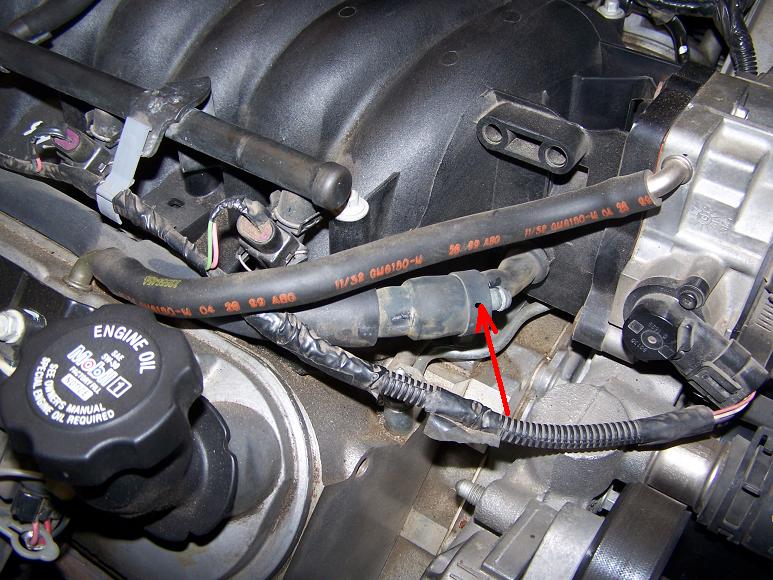
I guess I need to get one of these boot which I assume is 3/8 at the end if I want to try this in the fresh air line.
Have you ever seen a picture or schematic that actually shows this restriction oriface inside the valley cover.
I'd rather have the old PCV valve and my catchcans.
I'm really starting to think that this restrictive oriface is forcing the oil upstairs into the fresh air line. I know some C6Z06 which have the same fresh air line to the airbridge puke up oil !!!!!!!
DH
Pro


Joined: Jul 2007
Posts: 535
Likes: 1
From: San Diego CA
This is a good discussion and has inspired me to install a coalescing filter and monitor oil consumption on my '01 Z06. I haven't noticed any real consumption yet, but I haven't looked in the intake manifold, either. The fixed orifice PCV valve seems like a logical install at this point, also. I may install a compound gauge on the PCV line at some point to monitor pressure in the system (at idle and when revved in neutral, parked with hood up). Interesting concepts at work here, and zero oil consumption would be ideal, so the closer we can get our engines to it, the better.
Thread Starter
Le Mans Master
Joined: Mar 2002
Posts: 5,955
Likes: 161
From: PNW
Have you ever seen a picture or schematic that actually shows this restriction oriface inside the valley cover.
I'd rather have the old PCV valve and my catchcans.
I'm really starting to think that this restrictive oriface is forcing the oil upstairs into the fresh air line. I know some C6Z06 which have the same fresh air line to the airbridge puke up oil !!!!!!!
DH
I'd rather have the old PCV valve and my catchcans.
I'm really starting to think that this restrictive oriface is forcing the oil upstairs into the fresh air line. I know some C6Z06 which have the same fresh air line to the airbridge puke up oil !!!!!!!
DH
It does make sense that if the PCV's dirty line is more restrictive than the fresh air line that more oil vapors would backflow to the throttle body at WOT.
If you read the tech articles I linked to in Post #37, it makes it sound like the fixed orifice PCV unit was supposed to also help keep the backflow out of the fresh air line ... the articles say that backflow was causing the sticky throttle syndrome. Here's the links again.
http://www.mightyautoparts.com/pdf/articles/tt122.pdf
http://www.mightyautoparts.com/pdf/articles/tt118.pdf
DH - can you explain exactly what kind of setup you have on your dirty and fresh air lines when you were getting so much oil in the catch can.
Last edited by ZeeOSix; Jan 2, 2008 at 02:29 AM.
Race Director
Joined: Dec 2000
Posts: 19,304
Likes: 85
From: San Diego CA
This is a good discussion and has inspired me to install a coalescing filter and monitor oil consumption on my '01 Z06. I haven't noticed any real consumption yet, but I haven't looked in the intake manifold, either. The fixed orifice PCV valve seems like a logical install at this point, also. I may install a compound gauge on the PCV line at some point to monitor pressure in the system (at idle and when revved in neutral, parked with hood up). Interesting concepts at work here, and zero oil consumption would be ideal, so the closer we can get our engines to it, the better.
Thread Starter
Le Mans Master
Joined: Mar 2002
Posts: 5,955
Likes: 161
From: PNW
After thinking about all this, I'm now wondering if the location of the PCV valve (fixed orifice or spring loaded) in relation to the catch can has a bearing on how much oil is sucked in to the intake manifold.
Think about it ... if the catch can is between the intake manifold and the PCV unit, then the guts of the catch will see very high vacuum levels when the throttle is closed. This could mean that oil caught in the catch can could possibly be sucked out by the high vacuum levels ... especially if at high RPM and then the throttle gets chopped all the way closed. Also, if liquid oil did get sucked out of the catch can, that would essentially block the line for a short time, which could also cause excessive backflow down the fresh air line. This could be happening to guys on the track where the catch cans fill up some and they do a lot of high RPM throttle closing as they come in to tight corners, etc.
The 2004+ LSx engines with the built in orifice in the valley cover nipple would put the high vacuum on a catch can placed between the valley cover and intake manifold.
If the PCV unit is between the catch can and intake manifold, then the catch can sees a much less vacuum levels just like the crankcase. The 2001 to 2003 LS6 still has the external PCV valve, and therefore the catch can is placed between the engine and PCV valve, and doesn't get the high vacuum level at times of closed throttle. I'm wondering if that makes a difference on those setups?
The 2003 and older LS1s setups would put the catch can between the PCV valve and intake manifold, which means the catch can would have high vacuum levels at times of closed throttle.
So to summarize, the only catch can setup that naturally keeps possible high vacuum levels off the guts of the catch can would be the 2001 to 2003 LS6.
Humm … something else to ponder.

Think about it ... if the catch can is between the intake manifold and the PCV unit, then the guts of the catch will see very high vacuum levels when the throttle is closed. This could mean that oil caught in the catch can could possibly be sucked out by the high vacuum levels ... especially if at high RPM and then the throttle gets chopped all the way closed. Also, if liquid oil did get sucked out of the catch can, that would essentially block the line for a short time, which could also cause excessive backflow down the fresh air line. This could be happening to guys on the track where the catch cans fill up some and they do a lot of high RPM throttle closing as they come in to tight corners, etc.
The 2004+ LSx engines with the built in orifice in the valley cover nipple would put the high vacuum on a catch can placed between the valley cover and intake manifold.
If the PCV unit is between the catch can and intake manifold, then the catch can sees a much less vacuum levels just like the crankcase. The 2001 to 2003 LS6 still has the external PCV valve, and therefore the catch can is placed between the engine and PCV valve, and doesn't get the high vacuum level at times of closed throttle. I'm wondering if that makes a difference on those setups?
The 2003 and older LS1s setups would put the catch can between the PCV valve and intake manifold, which means the catch can would have high vacuum levels at times of closed throttle.
So to summarize, the only catch can setup that naturally keeps possible high vacuum levels off the guts of the catch can would be the 2001 to 2003 LS6.
Humm … something else to ponder.
Last edited by ZeeOSix; Jan 2, 2008 at 04:04 AM.