




Changing brake fluid

Race Director


Joined: Oct 2000
Posts: 14,064
Likes: 1,166
From: N. Alabama

I just skimmed this thread, and with all due respect most of you are as batshit crazy as my wife. While it wont hurt anything to have "extremely fresh" brake fluid, you don't drive around with the lid off the reservoir. If you do you're asking for a severe dose of reality.
For those reporting rusted pistons I have to ask if you're the original owner of the car. If your answer is "no", you quite simply don't know the history of the vehicle. Some previous owner / dipshit / dipshit mechanic might have left it parked with the brake fluid res cap sitting off for weeks, months, or years and caused serious water absortion. You simply don't know...
I've run vehicles from 250k - 500k miles with the original brake fluid. Never had a single hydraulic problem that wasn't caused by a brake booster or master cylinder seal failure EDIT: or a cut brake line.
For those reporting rusted pistons I have to ask if you're the original owner of the car. If your answer is "no", you quite simply don't know the history of the vehicle. Some previous owner / dipshit / dipshit mechanic might have left it parked with the brake fluid res cap sitting off for weeks, months, or years and caused serious water absortion. You simply don't know...
I've run vehicles from 250k - 500k miles with the original brake fluid. Never had a single hydraulic problem that wasn't caused by a brake booster or master cylinder seal failure EDIT: or a cut brake line.

BTW, I have done quite a bit of work on the car in my own garage. I removed the engine and transmission years ago and installed the double row cam chain to bring it up to date. That was probably 10 - 12 years ago. Not my first rodeo with autos.

Pro


Joined: Apr 2018
Posts: 563
Likes: 201
From: Montgomery City, MO
I posted my experience for those that like to learn from others' experiences and to learn about the nature of automotive systems. If you don't care to listen, I certainly don't care if you don't.
BTW, I have done quite a bit of work on the car in my own garage. I removed the engine and transmission years ago and installed the double row cam chain to bring it up to date. That was probably 10 - 12 years ago. Not my first rodeo with autos.
BTW, I have done quite a bit of work on the car in my own garage. I removed the engine and transmission years ago and installed the double row cam chain to bring it up to date. That was probably 10 - 12 years ago. Not my first rodeo with autos.
As I alluded to previously, I've owned two GM vehicles and one VAG (Volkswagen / Audi) that I've purchased new or second owner that had original brake fluid that survived > 10 years or 245k miles and never had a hydraulic issue. In fact, the Volkswagen still had the original brake fluid in it at 506k miles when the booster seal failed and subsequently destroyed the master cylinder seal.
If you want to change your brake fluid regularly I'm not discouraging that, only pointing out that it's utterly and completely unnecessary.
FWIW
Last edited by spfautsch; Dec 28, 2022 at 09:04 PM.
Race Director
Joined: Oct 2000
Posts: 14,064
Likes: 1,166
From: N. Alabama
I won't argue with that statement. Propylene glycol is extremely hygroscopic. I just think there's a little too much "fake news" here that's being propagated by some that's probably not worth being considered as gospel by all.
All this is essentially irrelevant as you're not the OP (original poster). I'd like to commend you on your ability to do your own wrenching, but you otherwise present nothing useful to the subject. In fact you're boasting working on a vehicle from a different manufacturer and from a completely different era. I understand that my attitude is abrasive, but what exactly is your point (rhetorical question). The fact that you own a sports car doesn't somehow make the laws of physics different.
As I alluded to previously, I've owned two GM vehicles and one VAG (Volkswagen / Audi) that I've purchased new or second owner that had original brake fluid that survived > 10 years or 245k miles and never had a hydraulic issue. In fact, the Volkswagen still had the original brake fluid in it at 506k miles when the booster seal failed and subsequently destroyed the master cylinder seal.
If you want to change your brake fluid regularly I'm not discouraging that, only pointing out that it's completely unnecessary.
FWIW
All this is essentially irrelevant as you're not the OP (original poster). I'd like to commend you on your ability to do your own wrenching, but you otherwise present nothing useful to the subject. In fact you're boasting working on a vehicle from a different manufacturer and from a completely different era. I understand that my attitude is abrasive, but what exactly is your point (rhetorical question). The fact that you own a sports car doesn't somehow make the laws of physics different.
As I alluded to previously, I've owned two GM vehicles and one VAG (Volkswagen / Audi) that I've purchased new or second owner that had original brake fluid that survived > 10 years or 245k miles and never had a hydraulic issue. In fact, the Volkswagen still had the original brake fluid in it at 506k miles when the booster seal failed and subsequently destroyed the master cylinder seal.
If you want to change your brake fluid regularly I'm not discouraging that, only pointing out that it's completely unnecessary.
FWIW

Instructor

Joined: Jun 2020
Posts: 245
Likes: 94
Originally Posted by spfautsch
If you want to change your brake fluid regularly I'm not discouraging that, only pointing out that it's utterly and completely unnecessary.
FWIW
If you're planning to take your car on a racetrack , please flush your brakes. Your mileage probably won't vary.

Melting Slicks

Joined: Sep 2021
Posts: 2,555
Likes: 1,213
most people say is to change the fuel filter. Other than possibly reducing the likelihood of being stranded due to a fueling issue, I ask why? It's a proven fact that, as virtually any filter traps impurities, it also filters better than new. Until it restricts flow of fuel, oil, transmission fluid, air, etc. That said, in my previous post I made note of the fact that 3 of my vehicles have traveled close to 1 million miles, all without a... ...fuel filter change...! Oil and transmission fluid/filter changes are obviously imperative. Air filter changes must also be made occasionally, in most cases.
Pro
Joined: Apr 2018
Posts: 563
Likes: 201
From: Montgomery City, MO

Advanced
Joined: Oct 2019
Posts: 64
Likes: 17
From: Massachusetts
Here is only one of many types to test for moisture in brake system.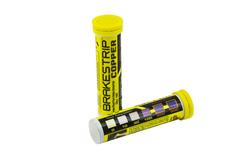
Phoenix Systems BrakeStrip Brake Fluid Test Strips 3001-B

Race Director

Joined: Oct 2004
Posts: 12,864
Likes: 4,667
Last edited by grinder11; Dec 30, 2022 at 04:19 PM.
Corvette Stories
The Best of Corvette for Corvette Enthusiasts

Top 10 Most Expensive Corvettes Ever Sold on Bring A Trailer
Brett Foote
10 Things Every Corvette Owner Needs (2026 Edition)
Michael S. Palmer
8 Most "Only Corvette Owners Understand" Quirks and Problems
Pouria Savadkouei
10 Reasons the C6 Z06 is Still A Performance Benchmark After 20 Years
Joe Kucinski
How Much Horsepower Every Corvette Engine "LOST" in 1972
Joe Kucinski
Top 10 DOs and DON'Ts for Protecting Your Convertible Top!
Michael S. Palmer
Top 10 Most Explosive Corvettes Ever Made: Power-to-Weight Ratio Ranked!
Joe Kucinski
150 hp to 1,250 hp: Every Corvette Generation Compared by the Specs That Matter
Joe Kucinski
8 Coolest Corvette Pace Cars (and Replicas) of All Time
Verdad Gallardo
Drifting


Joined: Sep 2009
Posts: 1,862
Likes: 594
From: Prescott, Arizona
"Curious, is there some kind of test for this requirement? If so, that would be a fantastic indicator (i.e. a measure of absorbed moisture content) for when to change your fluid."
Yes there are a number of brake fluid moisture analyzers available, here is one:
Whether any of them are reliable or accurate, you have to read the reviews.
Yes there are a number of brake fluid moisture analyzers available, here is one:

Whether any of them are reliable or accurate, you have to read the reviews.
Instructor
Joined: Jun 2020
Posts: 245
Likes: 94
Originally Posted by leadfoot4
28 replies, and so far, nobody has been able to answer my original question........

Race Director
Joined: Oct 2004
Posts: 12,864
Likes: 4,667
Here is only one of many types to test for moisture in brake system.
Phoenix Systems BrakeStrip Brake Fluid Test Strips 3001-B

Safety Car


Joined: Jan 2012
Posts: 3,956
Likes: 520
From: Da U.P.
As for those that seem to love old brake fluid, well, more power to you. You're probably the same as the ones who never ever flush power steering, diffs, transmissions, or anything else other than oil. Just because it keeps working with that old garbage fluid doesn't mean it's the right thing to do, and judging it by the fact that, by dumb luck, you haven't experienced a failure again isn't proof that it's the right thing to do. If you truly believe that, I challenge you to start neglecting engine oil changes and let me know how that works out.

Instructor
Joined: May 2008
Posts: 174
Likes: 45
From: Pahrump NV.
You can buy a New Master with a new reservoir fairly cheap. OR if your smart enough Master cylinders are fairly easy to rebuild then clean your reservoir before Bench bleeding.
I never drain mine if they are dark I replace it, With new or rebuilt unit after bench bleeding install it. Then continue to bleed all Calipers in order till each runs clear fluid out of it.

Thread Starter
Team Owner


Joined: May 2001
Posts: 87,367
Likes: 1,593
From: Western NY
Your Master cylinder shouldn't have dirty Oil in i EVER! it should be clear Maybe a Little Golden BUT defiantly not dark or Black If it is you should replace the master cylinder.
You can buy a New Master with a new reservoir fairly cheap. OR if your smart enough Master cylinders are fairly easy to rebuild then clean your reservoir before Bench bleeding.
I never drain mine if they are dark I replace it, With new or rebuilt unit after bench bleeding install it. Then continue to bleed all Calipers in order till each runs clear fluid out of it.
You can buy a New Master with a new reservoir fairly cheap. OR if your smart enough Master cylinders are fairly easy to rebuild then clean your reservoir before Bench bleeding.
I never drain mine if they are dark I replace it, With new or rebuilt unit after bench bleeding install it. Then continue to bleed all Calipers in order till each runs clear fluid out of it.
Race Director
Joined: Oct 2004
Posts: 12,864
Likes: 4,667
Just push more fluid through until you're confident the old stuff you couldn't suck out has been pushed through the bleeders. I have a syringe with a vacuum line hooked up and even that won't get in that front section to suck it dry. Take solace in the fact that the front of the reservoir is for the rear brakes.
As for those that seem to love old brake fluid, well, more power to you. You're probably the same as the ones who never ever flush power steering, diffs, transmissions, or anything else other than oil. Just because it keeps working with that old garbage fluid doesn't mean it's the right thing to do, and judging it by the fact that, by dumb luck, you haven't experienced a failure again isn't proof that it's the right thing to do. If you truly believe that, I challenge you to start neglecting engine oil changes and let me know how that works out.
As for those that seem to love old brake fluid, well, more power to you. You're probably the same as the ones who never ever flush power steering, diffs, transmissions, or anything else other than oil. Just because it keeps working with that old garbage fluid doesn't mean it's the right thing to do, and judging it by the fact that, by dumb luck, you haven't experienced a failure again isn't proof that it's the right thing to do. If you truly believe that, I challenge you to start neglecting engine oil changes and let me know how that works out.
 , and always replaced with clean fuel, which doesn't deteriorate unless car is stored. So not all of us ignore everything, though some probably do. Brake fluid (nope). Original master cylinder, too. Car stops just fine, and I take car out in the rain, maybe once a month, to "exercise" the ABS. 23 year old ABS unit, still works as new. So, not all is wrong in the braking department. Still stops hard from 130+mph down to 30mph. When you're doing 130-135mph, and have 1,000 ft until the pavement ends, it damn well better. If some people want to change brake fluid 1, 2, or 3 times each year, go for it....

EDIT: Forgot about the power steering. In the 3 cars, and nearly 1 million miles I posted about earlier, I've never bled/changed that, either. I have added fluid to the C5s power steering reservoir when I've changed cams, and lost some due to the rack being removed. But car still steers fine, and easy, with no leaks or hydraulic "moaning." So did the other 2, 400,000 mile Buick, 360,000 Jeep GC.
Last edited by grinder11; Jan 2, 2023 at 11:02 AM.
Melting Slicks
Joined: Sep 2021
Posts: 2,555
Likes: 1,213
Engine oil changes are a totally different thing. Please see my post above. BTW, I have changed my own trans fluid (ATF). I have changed my own diff fluid (gear lube). I've changed, and built my own engines. Fuel is changed more often than I'd like , and always replaced with clean fuel, which doesn't deteriorate unless car is stored. So not all of us ignore everything, though some probably do. Brake fluid (nope). Original master cylinder, too. Car stops just fine, and I take car out in the rain, maybe once a month, to "exercise" the ABS. 23 year old ABS unit, still works as new. So, not all is wrong in the braking department. Still stops hard from 130+mph down to 30mph. When you're doing 130-135mph, and have 1,000 ft until the pavement ends, it damn well better. If some people want to change brake fluid 1, 2, or 3 times each year, go for it....
EDIT: Forgot about the power steering. In the 3 cars, and nearly 1 million miles I posted about earlier, I've never bled/changed that, either. I have added fluid to the C5s power steering reservoir when I've changed cams, and lost some due to the rack being removed. But car still steers fine, and easy, with no leaks or hydraulic "moaning." So did the other 2, 400,000 mile Buick, 360,000 Jeep GC.
, and always replaced with clean fuel, which doesn't deteriorate unless car is stored. So not all of us ignore everything, though some probably do. Brake fluid (nope). Original master cylinder, too. Car stops just fine, and I take car out in the rain, maybe once a month, to "exercise" the ABS. 23 year old ABS unit, still works as new. So, not all is wrong in the braking department. Still stops hard from 130+mph down to 30mph. When you're doing 130-135mph, and have 1,000 ft until the pavement ends, it damn well better. If some people want to change brake fluid 1, 2, or 3 times each year, go for it....EDIT: Forgot about the power steering. In the 3 cars, and nearly 1 million miles I posted about earlier, I've never bled/changed that, either. I have added fluid to the C5s power steering reservoir when I've changed cams, and lost some due to the rack being removed. But car still steers fine, and easy, with no leaks or hydraulic "moaning." So did the other 2, 400,000 mile Buick, 360,000 Jeep GC.
Based on your posts filters get more efficient as they collect impurities and you never change fuel filters. But air & transmission filters get changed even though they get more efficient as they become clogged. And unfiltered things like rear end, brakes, and power steering don't get changed because... reasons.
As someone reading your posts I'm not able to apply your advice to other situations since they don't seem to make sense.

