




something to prevent hydrolocking??

Team Owner


Joined: Feb 2001
Posts: 27,254
Likes: 136
From: Short Hills, NJ

 Or any air intake changes for that matter.
If one is really that panicked/fear stricken by the big bad hydrolock monster then there is likely no CAI (or any performance modifications/changes) that will work for them.
Others choose not to live in such fear otherwise they'd probably be driving a full size truck instead of a low, small, light sports car.
No offense LOL.

Safety Car


Joined: May 2000
Posts: 4,827
Likes: 351
From: Albuquerque NM
Maybe.
And the fact is they also don't provide a direct path of cold air either, ultimately costing one the maximum performance gains that they desire in the process.
Ya can't have it both ways.
People need to prioritize and figure out exactly what 'performance to safety' ratio they're looking for.
EVERY air intake system (even the factory unit) is susceptible to permitting water in (yes, some more than others), if the puddle is big enough then NONE are truly immuned to hydrolocking.
And the fact is they also don't provide a direct path of cold air either, ultimately costing one the maximum performance gains that they desire in the process.
Ya can't have it both ways.
People need to prioritize and figure out exactly what 'performance to safety' ratio they're looking for.
EVERY air intake system (even the factory unit) is susceptible to permitting water in (yes, some more than others), if the puddle is big enough then NONE are truly immuned to hydrolocking.
With that in mind, after seeing first hand the downsides of this design, my priority was to get the air benefits while trying to minimize these risks. A K&N or a Halltech plus a Vette air scoop (or even just opening the shroud a little) with a Beehive does that with greatly reduced risks.
Team Owner
Joined: Feb 2001
Posts: 27,254
Likes: 136
From: Short Hills, NJ

There are barely a couple handfuls of naturally aspirated (supercharged/turbocharged cars obviously don't use traditional CAIs) C6s in the 10s.
Have you ever counted just how few of them are not using a Vararam?
Now, I suppose there are some who haven't even tested another brand to know for sure whether or not they'd still be just as fast (or faster) with it...but when you've already done what some consider to be 'the impossible' (ie: putting a barely bolt ons only LS2 into the 10s, or into the mid 10s in Dennis's case) then you become a lot less willing to stray from PROVEN results.

Safety Car
Joined: Apr 2009
Posts: 4,168
Likes: 3
From: Dyer IN
Its funny because import intakes have this:http://www.autoanything.com/air-filt...A2582A0A0.aspx
and corvettes have nothing.
and corvettes have nothing.

Drifting


Joined: Sep 2004
Posts: 1,912
Likes: 33
From: S.D. CA
If the Vararam is "prone to hydrolocking" then you must conceed that the seal quality must be good. Otherwise the water would come spilling out of the "poor quality" seals prior to entering the engine... correct?
So which is it...the quality sucks therefore its impossible to hydrolock the motor or it seals well and you should avoid crossing flooding rivers with it?
So which is it...the quality sucks therefore its impossible to hydrolock the motor or it seals well and you should avoid crossing flooding rivers with it?
Last edited by sallen619; Jul 17, 2011 at 04:40 PM. Reason: sp

Tech Contributor

Joined: Jul 2002
Posts: 14,950
Likes: 264
From: St. Louis, MO
St. Jude Donor '08
My friend Theofel came up with this idea...it's a removable plug that he takes out when daily driving.
I have a friend who hydrolocked with this type of intake, and another who hydrolocked with another similar cavity breather.. These bottom breathers are susceptible to water being scooped up by the air dam and filling the radiator cavity and thus getting sucked into the engine. Two examples on this board.
So that design isn't safe either.
Anyway, here is Theofel's idea, which is a good one.
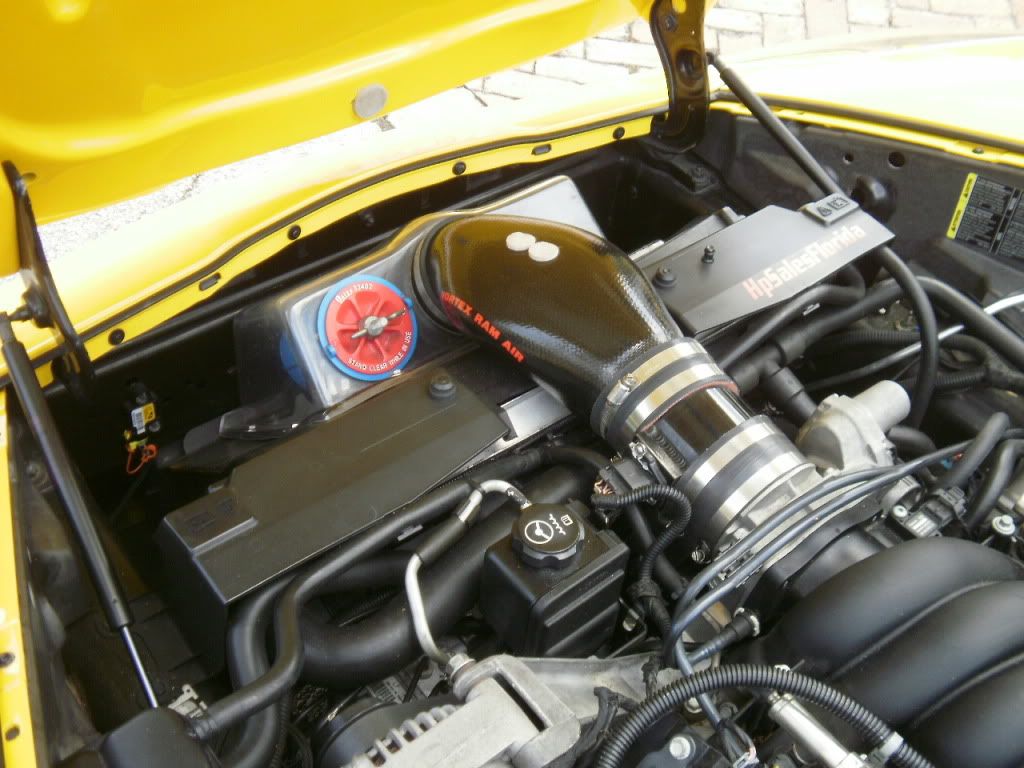
I have a friend who hydrolocked with this type of intake, and another who hydrolocked with another similar cavity breather.. These bottom breathers are susceptible to water being scooped up by the air dam and filling the radiator cavity and thus getting sucked into the engine. Two examples on this board.
So that design isn't safe either.
Anyway, here is Theofel's idea, which is a good one.
Team Owner
Joined: Feb 2001
Posts: 27,254
Likes: 136
From: Short Hills, NJ
If the Vararam is "prone to hydrolocking" then you must conceed that the seal quality must be good. Otherwise the water would come spilling out of the "poor quality" seals prior to entering the engine... correct?
So which is it...the quality sucks therefore its impossible to hydrolock the motor or it seals well and you should avoid crossing flooding rivers with it?
So which is it...the quality sucks therefore its impossible to hydrolock the motor or it seals well and you should avoid crossing flooding rivers with it?
 Excellent points LOL.


Team Owner
Joined: Sep 1999
Posts: 41,732
Likes: 1,718
From: Springfield MO
When you're driving down the street, how do you determine how deep the water puddle in front of you is, before you drive into it? 2"? 4"? 6"? I sure can't look at flowing water and tell how deep it is.
Corvette Stories
The Best of Corvette for Corvette Enthusiasts

Top 10 Most Expensive Corvettes Ever Sold on Bring A Trailer
Brett Foote
10 Things Every Corvette Owner Needs (2026 Edition)
Michael S. Palmer
8 Most "Only Corvette Owners Understand" Quirks and Problems
Pouria Savadkouei
10 Reasons the C6 Z06 is Still A Performance Benchmark After 20 Years
Joe Kucinski
How Much Horsepower Every Corvette Engine "LOST" in 1972
Joe Kucinski
Top 10 DOs and DON'Ts for Protecting Your Convertible Top!
Michael S. Palmer
Top 10 Most Explosive Corvettes Ever Made: Power-to-Weight Ratio Ranked!
Joe Kucinski
150 hp to 1,250 hp: Every Corvette Generation Compared by the Specs That Matter
Joe Kucinski
8 Coolest Corvette Pace Cars (and Replicas) of All Time
Verdad Gallardo
Team Owner
Joined: Feb 2001
Posts: 27,254
Likes: 136
From: Short Hills, NJ
Me either.
And that is why the more skilled Corvette drivers (or drivers of any car for that matter) slow down and simply creep through the puddle (if they can see it of course) regardless of how deep it does or does not appear to be and regardless of what air intake is or is not on their car...even if it results in angry horn honking traffic building up behind them.
Or they stop, back up and/or turn around and go back the way they came if conditions permit.
I have an almost paranoid mentality when it comes to driving. I ALWAYS approach streets/roads/highways as if EVERY driver is out to wreck my car

 so I tend to be ready for anything at any time (except for deer jumping into me out of no where LOL). I approach rain/potentially deep puddles/ice/snow the very same way.

Le Mans Master


Joined: Feb 2006
Posts: 5,762
Likes: 4
From: Chandler Arizona
Its funny because import intakes have this:http://www.autoanything.com/air-filt...A2582A0A0.aspx
and corvettes have nothing.
and corvettes have nothing.
Safety Car
Joined: May 2000
Posts: 4,827
Likes: 351
From: Albuquerque NM
If the Vararam is "prone to hydrolocking" then you must conceed that the seal quality must be good. Otherwise the water would come spilling out of the "poor quality" seals prior to entering the engine... correct?
So which is it...the quality sucks therefore its impossible to hydrolock the motor or it seals well and you should avoid crossing flooding rivers with it?
So which is it...the quality sucks therefore its impossible to hydrolock the motor or it seals well and you should avoid crossing flooding rivers with it?
As for performance, I was comparing it to other CAI's which don't have these design flaws. I only recall one person actually removing another brand CAI and using a VR. IIRC he only went 1 or 2 HUNDRETHS quicker which would be a statistical tie. ABSOLUTELY not worth the risks that this CAI bring with it.

Team Owner
Joined: Sep 1999
Posts: 41,732
Likes: 1,718
From: Springfield MO
Very often, you can't.
Me either.
And that is why the more skilled Corvette drivers (or drivers of any car for that matter) slow down and simply creep through the puddle (if they can see it of course) regardless of how deep it does or does not appear to be and regardless of what air intake is or is not on their car...even if it results in angry horn honking traffic building up behind them.
Or they stop, back up and/or turn around and go back the way they came if conditions permit.
I have an almost paranoid mentality when it comes to driving. I ALWAYS approach streets/roads/highways as if EVERY driver is out to wreck my car so I tend to be ready for anything at any time (except for deer jumping into me out of no where LOL). I approach rain/potentially deep puddles/ice/snow the very same way.
Me either.
And that is why the more skilled Corvette drivers (or drivers of any car for that matter) slow down and simply creep through the puddle (if they can see it of course) regardless of how deep it does or does not appear to be and regardless of what air intake is or is not on their car...even if it results in angry horn honking traffic building up behind them.
Or they stop, back up and/or turn around and go back the way they came if conditions permit.
I have an almost paranoid mentality when it comes to driving. I ALWAYS approach streets/roads/highways as if EVERY driver is out to wreck my car
so I tend to be ready for anything at any time (except for deer jumping into me out of no where LOL). I approach rain/potentially deep puddles/ice/snow the very same way.
Race Director

Joined: Sep 2007
Posts: 16,557
Likes: 2,108
From: Peoria/Phoenix AZ
C6 of Year Finalist (performance mods) 2019
Exactly my point. Everyone says to avoid the deep water puddles. That's well and great, if there is a marker showing how deep the puddle is. Or do they have an advance vehicle, that drives ahead of them measuring all the puddles and then radioing back to their Vette, as to which puddles are safe to drive through, and which ones are not and they should turn around.
In AZ there is a "Dumb Motorist" law that carries a steep fine if your vehicle attempts to go through flash flooded washes and gets stuck. The same logic of "don't be stupid" applies to drivers everywhere.

Le Mans Master
Joined: Dec 2004
Posts: 5,492
Likes: 808
From: West coast CA
If the Vararam is "prone to hydrolocking" then you must conceed that the seal quality must be good. Otherwise the water would come spilling out of the "poor quality" seals prior to entering the engine... correct?
So which is it...the quality sucks therefore its impossible to hydrolock the motor or it seals well and you should avoid crossing flooding rivers with it?
So which is it...the quality sucks therefore its impossible to hydrolock the motor or it seals well and you should avoid crossing flooding rivers with it?

Race Director
Joined: Apr 2005
Posts: 10,436
Likes: 4
From: Everett Wa
I think the whole issue has been blown out of proportion IMO. With my previous C6 I drove 200 miles in a tropical storm. A half inch of standing water on the freeway. Everytime a semi went by it was like getting hit by a firemans waterhose. No issues.
The fact is you need a wall of water at least 6 inches tall to even have a chance of ingesting water and you still need to that water to seal the intake to have a chance of raising it another 14 inches or so to get it into the motor. A puddle, a long one 3 inches deep might do it as the airdam can work as a plow and build a bow wave.
You can always build a vaccuum relief valve if you are worried. The valve opens up as soon as a vaccuum is detected, in the case of totally clogging the intake. The valve opens and you provides a path for air to enter the engine and the water to drain back the way it came.
The best thing, don't drive thru puddles deeper than 3 inches.
The fact is you need a wall of water at least 6 inches tall to even have a chance of ingesting water and you still need to that water to seal the intake to have a chance of raising it another 14 inches or so to get it into the motor. A puddle, a long one 3 inches deep might do it as the airdam can work as a plow and build a bow wave.
You can always build a vaccuum relief valve if you are worried. The valve opens up as soon as a vaccuum is detected, in the case of totally clogging the intake. The valve opens and you provides a path for air to enter the engine and the water to drain back the way it came.
The best thing, don't drive thru puddles deeper than 3 inches.
Team Owner
Joined: Feb 2001
Posts: 27,254
Likes: 136
From: Short Hills, NJ
That's where experience teaches you to to closely watch the cars around you, let them lead, ride the crown of the road, look way ahead for problems, always have an escape route plan, and know your own limitations.
In AZ there is a "Dumb Motorist" law that carries a steep fine if your vehicle attempts to go through flash flooded washes and gets stuck. The same logic of "don't be stupid" applies to drivers everywhere.
In AZ there is a "Dumb Motorist" law that carries a steep fine if your vehicle attempts to go through flash flooded washes and gets stuck. The same logic of "don't be stupid" applies to drivers everywhere.
I think the whole issue has been blown out of proportion IMO. With my previous C6 I drove 200 miles in a tropical storm. A half inch of standing water on the freeway. Everytime a semi went by it was like getting hit by a firemans waterhose. No issues.
The fact is you need a wall of water at least 6 inches tall to even have a chance of ingesting water and you still need to that water to seal the intake to have a chance of raising it another 14 inches or so to get it into the motor. A puddle, a long one 3 inches deep might do it as the airdam can work as a plow and build a bow wave.
The fact is you need a wall of water at least 6 inches tall to even have a chance of ingesting water and you still need to that water to seal the intake to have a chance of raising it another 14 inches or so to get it into the motor. A puddle, a long one 3 inches deep might do it as the airdam can work as a plow and build a bow wave.
Tech Contributor
Joined: Jul 2002
Posts: 14,950
Likes: 264
From: St. Louis, MO
St. Jude Donor '08
I think the whole issue has been blown out of proportion IMO. With my previous C6 I drove 200 miles in a tropical storm. A half inch of standing water on the freeway. Everytime a semi went by it was like getting hit by a firemans waterhose. No issues.
The fact is you need a wall of water at least 6 inches tall to even have a chance of ingesting water and you still need to that water to seal the intake to have a chance of raising it another 14 inches or so to get it into the motor. A puddle, a long one 3 inches deep might do it as the airdam can work as a plow and build a bow wave.
You can always build a vaccuum relief valve if you are worried. The valve opens up as soon as a vaccuum is detected, in the case of totally clogging the intake. The valve opens and you provides a path for air to enter the engine and the water to drain back the way it came.
The best thing, don't drive thru puddles deeper than 3 inches.
The fact is you need a wall of water at least 6 inches tall to even have a chance of ingesting water and you still need to that water to seal the intake to have a chance of raising it another 14 inches or so to get it into the motor. A puddle, a long one 3 inches deep might do it as the airdam can work as a plow and build a bow wave.
You can always build a vaccuum relief valve if you are worried. The valve opens up as soon as a vaccuum is detected, in the case of totally clogging the intake. The valve opens and you provides a path for air to enter the engine and the water to drain back the way it came.
The best thing, don't drive thru puddles deeper than 3 inches.
Very well said. I have had a Vararam for 6 years now in my daily driver in torrential S. Fla rain. I have had to avert routes only a couple of times. Big deal.
I will add....from the top of my head, the two friends who actually locked their engine had a different cavity style of CAI and it was indeed the lower air dam scooping up the water. One got lucky and after the engine died, he pulled the plugs the next day and it was fine. This happened in a parking lot, by the way.
I chose the Vararam precisely for this reason - it takes a pretty deep puddle to submerse it and it's less susceptible to the scooping effect of the airdam IMHO.
Last edited by Joe_G; Jul 19, 2011 at 01:55 PM.
Team Owner
Joined: Feb 2001
Posts: 27,254
Likes: 136
From: Short Hills, NJ
Routes that you might've still averted even if you were driving a stock Corvette.My choice of CAI (or 'free ram air' mod on my Z28) isn't what dictates how I handle my low slung cars in heavy rains/flooding, basic common sense does.

Advanced


Joined: Oct 2012
Posts: 98
Likes: 14
From: Buffalo ny
Its funny because import intakes have this:http://www.autoanything.com/air-filt...A2582A0A0.aspx
and corvettes have nothing.
and corvettes have nothing.
http://www.knfilters.com/search/prod...prod=RP-5135DK
Last edited by orripid; Jun 21, 2016 at 12:50 PM.