





Testing any catchcan system:

Track Junky


Joined: Jun 2007
Posts: 4,075
Likes: 36
From: Orlando Area
Tech Contributor

Yes I can buy into that as well, but what about oil temp? Maybe the LS3/7 two prong adapter does both and the three prong in the LS2 harness adds a "common" or "ground" to the circuit???
On the track, I need to know what my oil temps are doing more than oil level. I would hate to lose that feature.
On the track, I need to know what my oil temps are doing more than oil level. I would hate to lose that feature.
Track Junky
Joined: Jun 2007
Posts: 4,075
Likes: 36
From: Orlando Area
Tech Contributor
Sean,
I don't know if this helps your situation of the 3 Pin Engine Oil Level/Temperature Connector on you engine harness, vs the 2 Pin Connector on you tank. Keep in mind, this is from a 2006 Manual, but I can't imagine it would be too different.
As I sit here and type, I am thinking I should've looked up the LS7 2 Pin Connector. (it looks like it might be directly below the diagram that I took a picture of).
The 3 Pin Connector transmits signals for Oil Level (Brown), Oil Temp (Dark Green/White), and Low Reference (Tan). I don't know what low reference is but its shown on a bunch of over connectors too. Maybe someone else can add to that?
Is it possible the Connector on the tank is only for Engine Oil Level and that the temperature is not used or the signal comes from somewhere else? Or possibly the "Low Reference" is not needed on the 2 Pin sensor from the dry sump tank?
I can dig a little deeper in the manual when I'm back at the shop this week. I think once you figure out what wires from the engine harness go to what sensors, you could pretty easily modify your engine harness by building a custom harness using OEM connectors. I've had good luck w/ Caspers Electronics. They may not advertise the particular connector you need, but they've been very helpful for me in the past determining and finding the right connector and parts for me so I could build what I needed.
http://www.casperselectronics.com/st...b6a251fbdcd71f
I don't know if this helps your situation of the 3 Pin Engine Oil Level/Temperature Connector on you engine harness, vs the 2 Pin Connector on you tank. Keep in mind, this is from a 2006 Manual, but I can't imagine it would be too different.
As I sit here and type, I am thinking I should've looked up the LS7 2 Pin Connector. (it looks like it might be directly below the diagram that I took a picture of).
The 3 Pin Connector transmits signals for Oil Level (Brown), Oil Temp (Dark Green/White), and Low Reference (Tan). I don't know what low reference is but its shown on a bunch of over connectors too. Maybe someone else can add to that?
Is it possible the Connector on the tank is only for Engine Oil Level and that the temperature is not used or the signal comes from somewhere else? Or possibly the "Low Reference" is not needed on the 2 Pin sensor from the dry sump tank?
I can dig a little deeper in the manual when I'm back at the shop this week. I think once you figure out what wires from the engine harness go to what sensors, you could pretty easily modify your engine harness by building a custom harness using OEM connectors. I've had good luck w/ Caspers Electronics. They may not advertise the particular connector you need, but they've been very helpful for me in the past determining and finding the right connector and parts for me so I could build what I needed.
http://www.casperselectronics.com/st...b6a251fbdcd71f
Looks like the pic had LS7 oil temp sensor listed in the bottom, not level. That may be why its only a 2 prong. Just sent you a text about it, but please take a pic of the LS7 oil temp sensor when you have time (bottom half of the page).
Le Mans Master


Joined: May 2011
Posts: 5,022
Likes: 18
From: Tampa FL (formerly Justinjor)
Tech Contributor
St. Jude Donor '11-'12-'13-'14

Tech Contributor


Joined: Jul 2002
Posts: 14,950
Likes: 266
From: St. Louis, MO
St. Jude Donor '08
That car has R6 hoosiers on it, not drag radials:toe tap:
And it surely wan't created by an English major, perhaps not even by an English speaker!
Here's a much better poster.

We've really hacked this thread....perhaps we should delete our own posts in an otherwise useful thread...
And it surely wan't created by an English major, perhaps not even by an English speaker!
Here's a much better poster.
We've really hacked this thread....perhaps we should delete our own posts in an otherwise useful thread...
Le Mans Master
Joined: May 2011
Posts: 5,022
Likes: 18
From: Tampa FL (formerly Justinjor)
Tech Contributor
St. Jude Donor '11-'12-'13-'14
 Joe you crack me up.
Google image search: "because race car" then text me with your thoughts

The phrase is a pop culture/automotive culture long-running joke and people have made some clever pictures as a result

Tech Contributor
Joined: Jul 2002
Posts: 14,950
Likes: 266
From: St. Louis, MO
St. Jude Donor '08
 Dude I'm old...I'm not in the lexicon of today I'm afraid.
I just recently figured out where Mexico is!
Though I do, as a general rule, appreciate the queen's language and I do not tend to gravitate toward expressions that eschew common language tenets such as a subject requires a verb to make a point!
You're right though, quite a common thing! I read Jalopnik and hadn't see this.
Last edited by Joe_G; Apr 30, 2012 at 04:39 PM.
Le Mans Master
Joined: May 2011
Posts: 5,022
Likes: 18
From: Tampa FL (formerly Justinjor)
Tech Contributor
St. Jude Donor '11-'12-'13-'14
I love clever humor and those posters crack me up every time. I'm a grammar nut and perhaps that's why I like them so much.
Corvette Stories
The Best of Corvette for Corvette Enthusiasts

Every 2027 Corvette Engine Explained
Joe Kucinski
Designer Imagines A Corvette That Looks More Like a Corvette Than the Corvette
Verdad Gallardo
10 Ugly Corvettes That We Still Kinda Love
Joe Kucinski
Top 10 Most Expensive Corvettes Ever Sold on Bring A Trailer
Brett Foote
10 Things Every Corvette Owner Needs (2026 Edition)
Michael S. Palmer
8 Most "Only Corvette Owners Understand" Quirks and Problems
Pouria Savadkouei
10 Reasons the C6 Z06 is Still A Performance Benchmark After 20 Years
Joe Kucinski
How Much Horsepower Every Corvette Engine "LOST" in 1972
Joe Kucinski
Top 10 DOs and DON'Ts for Protecting Your Convertible Top!
Michael S. Palmer
Racer


Joined: Jan 2009
Posts: 321
Likes: 2
From: Southern NH
Thanks for the info Jimmy. Unfortunately, electrical is not my strong suit. I don't have the patience to sift through wiring diagrams to figure stuff like this out. In addition, I have procrastinated on this up to now - shame on me for that.
I would almost rather have the ability to track oil temp on the track then oil level. If you do get ambitious, I would truly appreciate your help with this. I was given the name of a couple contacts that I can speak with as well.
Time to get off my a$$ and get to the bottom of this I guess. Thanks for the kick in the pants!
Sean
I would almost rather have the ability to track oil temp on the track then oil level. If you do get ambitious, I would truly appreciate your help with this. I was given the name of a couple contacts that I can speak with as well.
Time to get off my a$$ and get to the bottom of this I guess. Thanks for the kick in the pants!
Sean
 ...use a dipstick???
The connector type is listed as a '2-Way F GT 150 Series, Sealed (BK)'. The GT series are pretty common, but it looks different the GT series Connector Kit purchased from Caspers. I think the "Sealed" portion of the description makes it a different connector.
Contact Caspers and tell them what you're looking for, a 2-Way F GT 150 Series, Sealed (BK) and I would email them this diagram. If they have it, buy a couple (practice pcs) along w/ whatever insulators and pins are needed. Get the decent crimp tool (PN 103001) for $31. When you're ready cut the factory 3-way connector, tape off and hide the brown wire in the loom, and crimp the new 2-way connector on the correct wires... Tan to position A, and Dark Green/White to position B. Then have a drink.

The one thing I was really looking for was like a signal reference range to compare between the wet sump pan sensor and the dry sump sensor. Like a sensor range of 0-5V or something. I'm not real familar w/ how that all works, but if I found something that showed they were I-dentical, that would have made me feel even more confident.
It seems logical that each of the 2 sensors would provide the same signal for the temperature to be interpretted by your cars ECM without having to adjust it...I just couldn't verify it.
Track Junky
Joined: Jun 2007
Posts: 4,075
Likes: 36
From: Orlando Area
Tech Contributor
Thanks jimmy, I was thinking of makingmy own harness adaptor instead of cutting. It would make me feel more comfortable that way. I would need one of each style of connector to do this, but that's not a big deal.
I will call Casper tomorrow. Thanks again!
I will call Casper tomorrow. Thanks again!
Racer
Joined: Jan 2009
Posts: 321
Likes: 2
From: Southern NH

Track Junky
Joined: Jun 2007
Posts: 4,075
Likes: 36
From: Orlando Area
Tech Contributor
Just got off the phone with Caspers. Sent them all information and pics and they will be making me a custom harness. I will keep,you updated with their response and pricing if anyone wants to know.
Thanks again Jimmy!
Thanks again Jimmy!

Track Junky
Joined: Jun 2007
Posts: 4,075
Likes: 36
From: Orlando Area
Tech Contributor
Confirmed from a GM representative this morning:
LS2 sensor is combination oil temp / level sensor.
Pin *******To *******************
A ***********ECM J2-33 *****Engine Oil Level Low
B ***********Cluster *************Engine Oil Temp Supply
C ***********Cluster *************Engine Oil Temp Sensor Return
LS3 sensor (in dry sump tank) is oil temp sensor only
Pin ********To
A ***********Cluster *************Engine Oil Temp Sensor Return
B ***********Cluster *************Engine Oil Temp Supply
There is no oil level sensor on dry sump engines.
Thanks for the help guys!
LS2 sensor is combination oil temp / level sensor.
Pin *******To *******************
A ***********ECM J2-33 *****Engine Oil Level Low
B ***********Cluster *************Engine Oil Temp Supply
C ***********Cluster *************Engine Oil Temp Sensor Return
LS3 sensor (in dry sump tank) is oil temp sensor only
Pin ********To
A ***********Cluster *************Engine Oil Temp Sensor Return
B ***********Cluster *************Engine Oil Temp Supply
There is no oil level sensor on dry sump engines.
Thanks for the help guys!

Pro

Joined: Jan 2008
Posts: 642
Likes: 48
From: New Jersey
Back to catch cans. I bought one of those cheapies - $20 shipped. As expected it was just an empty can with both connections on top. I added a 6" length of 3/8" brass tube with a bunch of 1/16" holes drilled into it to the inlet connection. Then also stuffed a couple copper scouring pads inside. So now the vapors come in thru the tube and disperse out into the copper filter. Only been a week so I have no results yet. Haven't seen any mention of mounting locations. Cool area better than near hot engine?
Drifting

Joined: Feb 2010
Posts: 1,527
Likes: 34
Back to catch cans. I bought one of those cheapies - $20 shipped. As expected it was just an empty can with both connections on top. I added a 6" length of 3/8" brass tube with a bunch of 1/16" holes drilled into it to the inlet connection. Then also stuffed a couple copper scouring pads inside. So now the vapors come in thru the tube and disperse out into the copper filter. Only been a week so I have no results yet. Haven't seen any mention of mounting locations. Cool area better than near hot engine?
Heres my mods to an used EE can:

and the ongoing improvements:

I don't want to be disrespectful to the OP and posting too much detail and going off bragging! If you care, you can feel free to PM me, to share what else I am doing!
Last edited by victorf; Nov 20, 2014 at 12:21 PM.

Racer
Joined: Sep 2012
Posts: 301
Likes: 0
From: Palmetto FL
St. Jude Donor '13
And for those that are not already convinced on the misinformation, or want to see how cans do or dont work (ALL cans, even a beer can w/2 fittings popped in will catch some oil due to condensation, but most let as much or more through into the intake air charge as they catch:
As for cans, here are the most common you will see and a detailed description on how they work, (and dont work).
We'll start with some of most common ebay/made in china ineffective cans that are really no more than a "empty beer can":
This one is very common and is generally bought from ebay, but several company also brand it. Comes with fittings, a universal braket, sight tube to see when it needs to emptied:
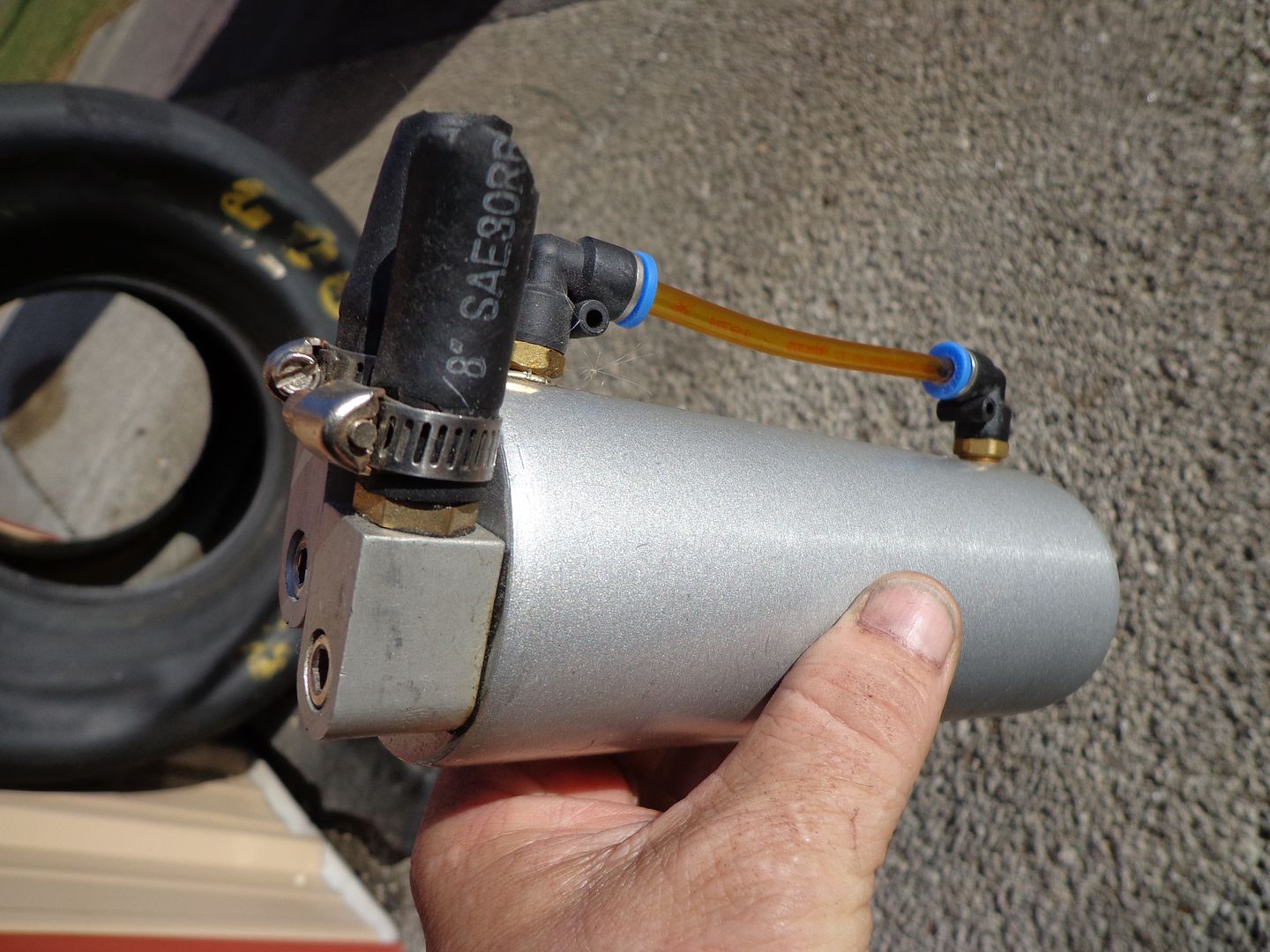
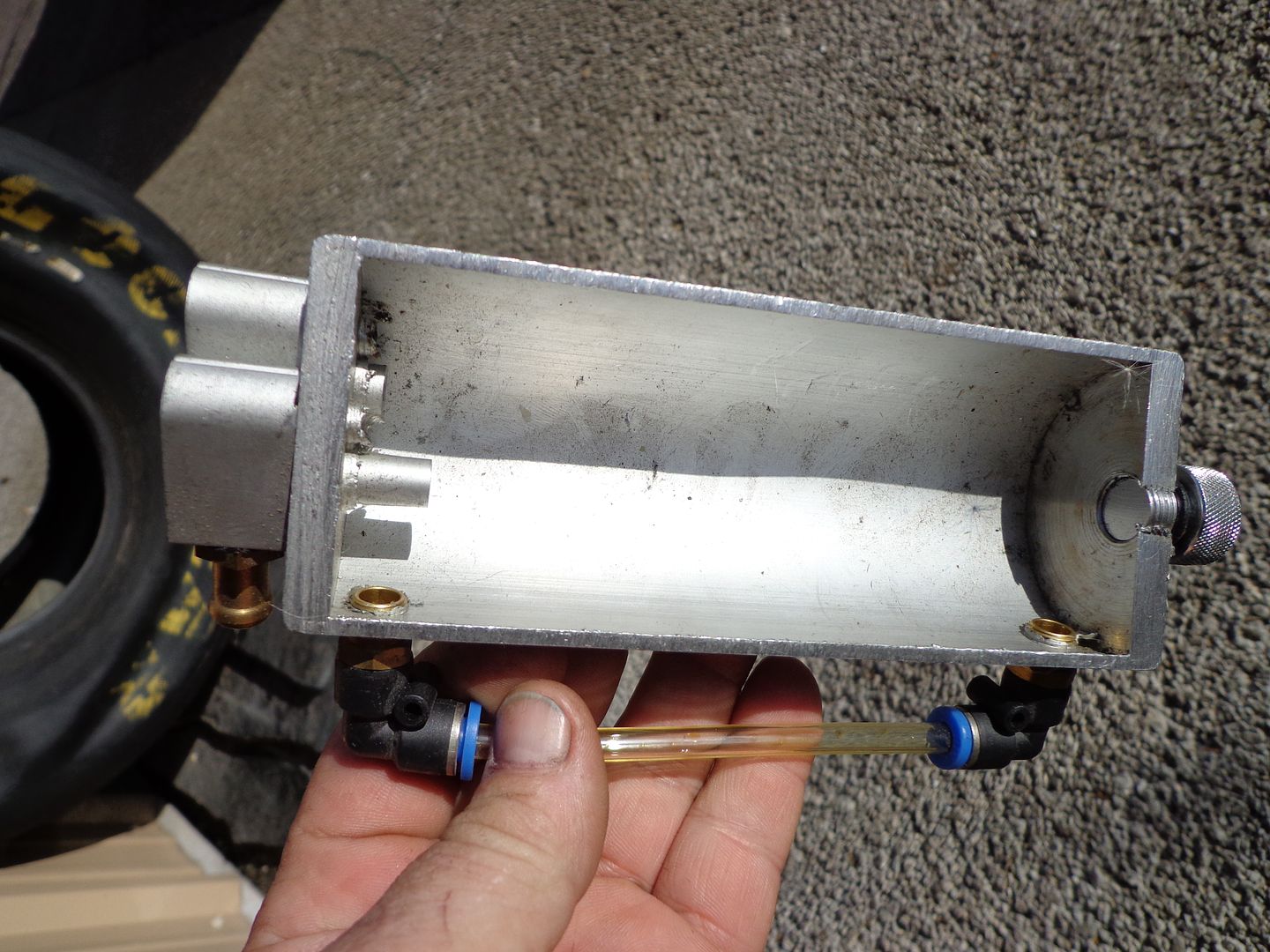
And the inside......notice not only is it completely an empty can, but the fittings are just punched in with metal filings hanging:
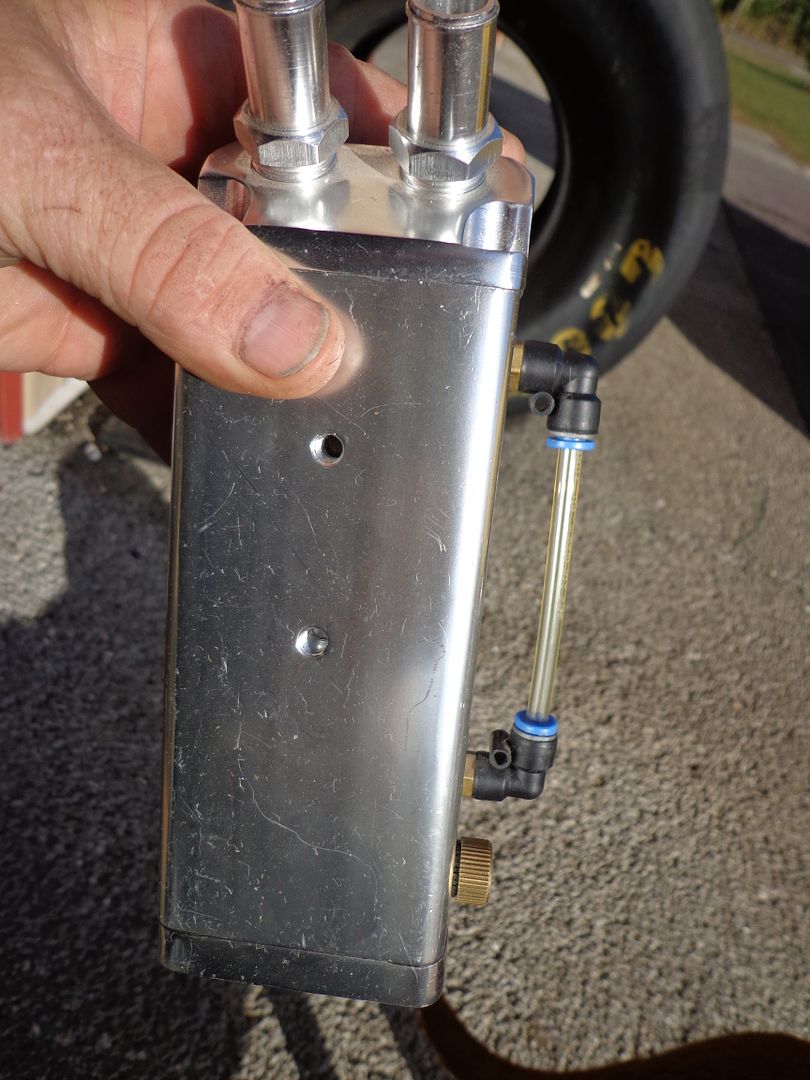
This is another Ebay/China cheapo. Looks nice, ends are milled from billet and the main body extruded aluminum. This can is very common and is seen in many colors and with over 20 companies branding it as "their own design". Search on ebay to see for yourself:
And as you can see, allthough it is a good size, and looks nice, just an empty can again. The majority of all vapors enter and do a quick U turn and exit:
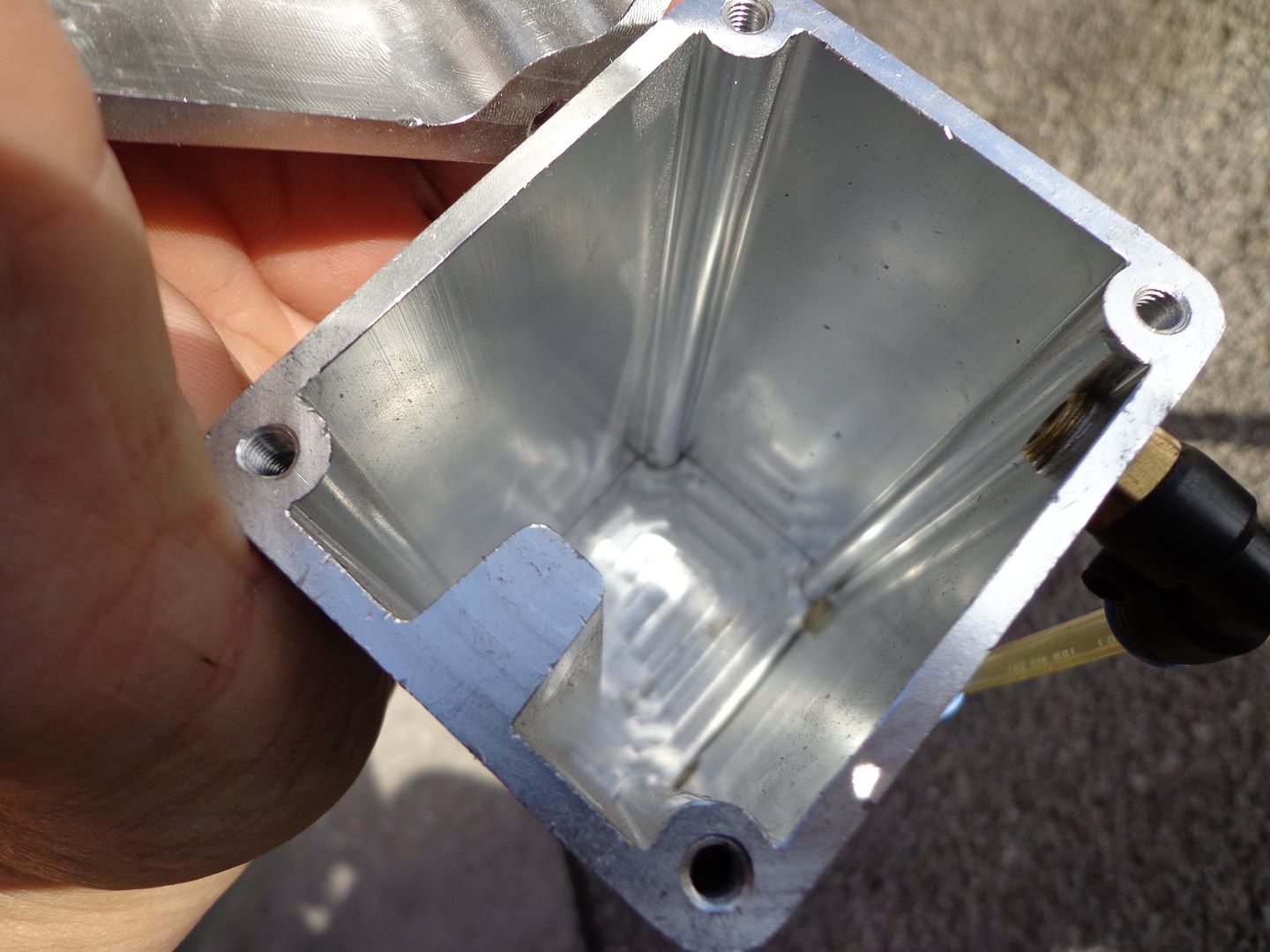
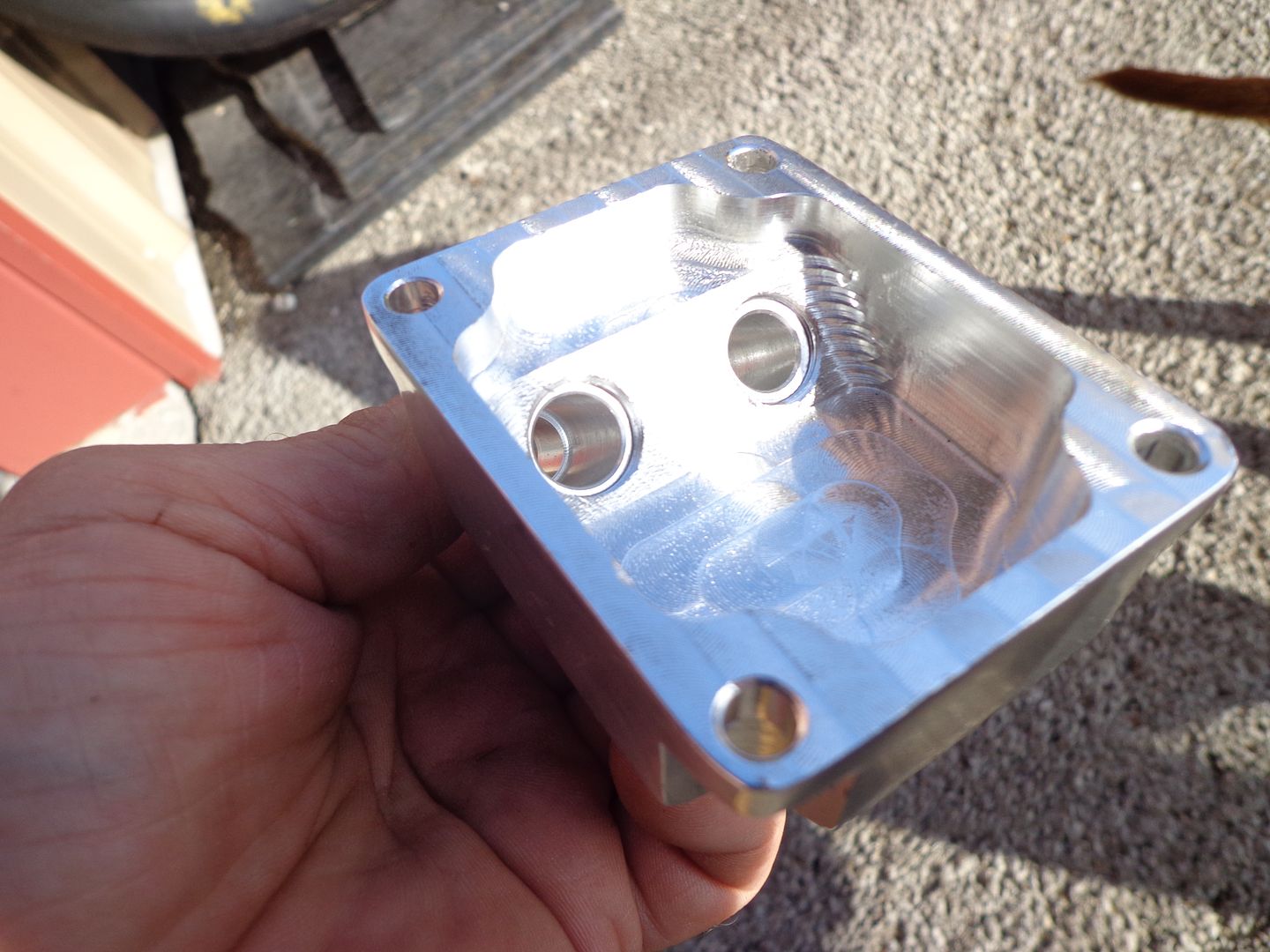
So again, no different than an empty "jumbo" beer can.
And now to another variation of ebay/china. Sight windows and can be had in several colors or a carbon fiber wrap:
Now the inside:
Bonded together with plastic resin...this insulates it greatly reducing the ability to condense oil vapors....and since it relies on the plastic to seal it this one had a good sized vacuum leak where it didnt get coated, and time will tell if this resin delaminates over time from the fuel/oil vapors. It also has what the instructions describe as a "Robber Strip".....not sure what that is:
Notice, if they would have designed it so the inlet tube protruded through the screen, it would actually have a bit better effectiveness, but since it terminates in the top the majority of the vapors just do a quick U turn back out.
Now on to one made in the USA, quality of the machining is top notch, excellent appearance, solid bracket. You will see dozens of variations of this with the appearance slightly different on the top and some cary very well known brands:
Now look closely at the internal design. There is no specified inlet or outlet, and when you unscrew it you see the vapors enter through one fitting, travel through coalscing media (so far so good) but it just U turns into the outlet side into more coalscing material which acts the same way as taking a wet wash cloth and holding it to your mouth and sucking on it...the liquid pull right through. So even though it looks awesome, and the machining is top notch, since it is so small the flow never slows enough to allow most droplets to fall out of suspension so they suck right into the other side and out the outlet.
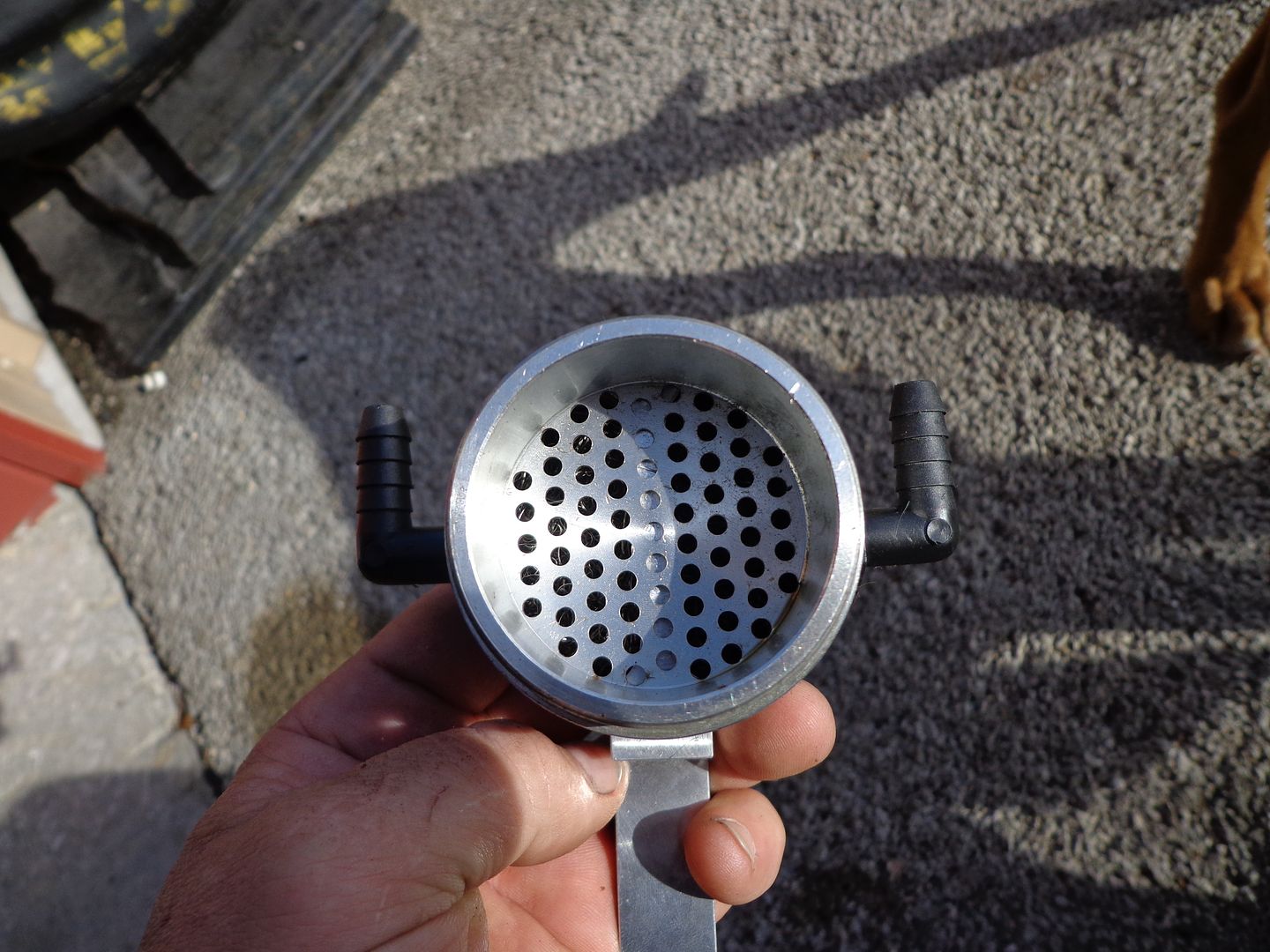
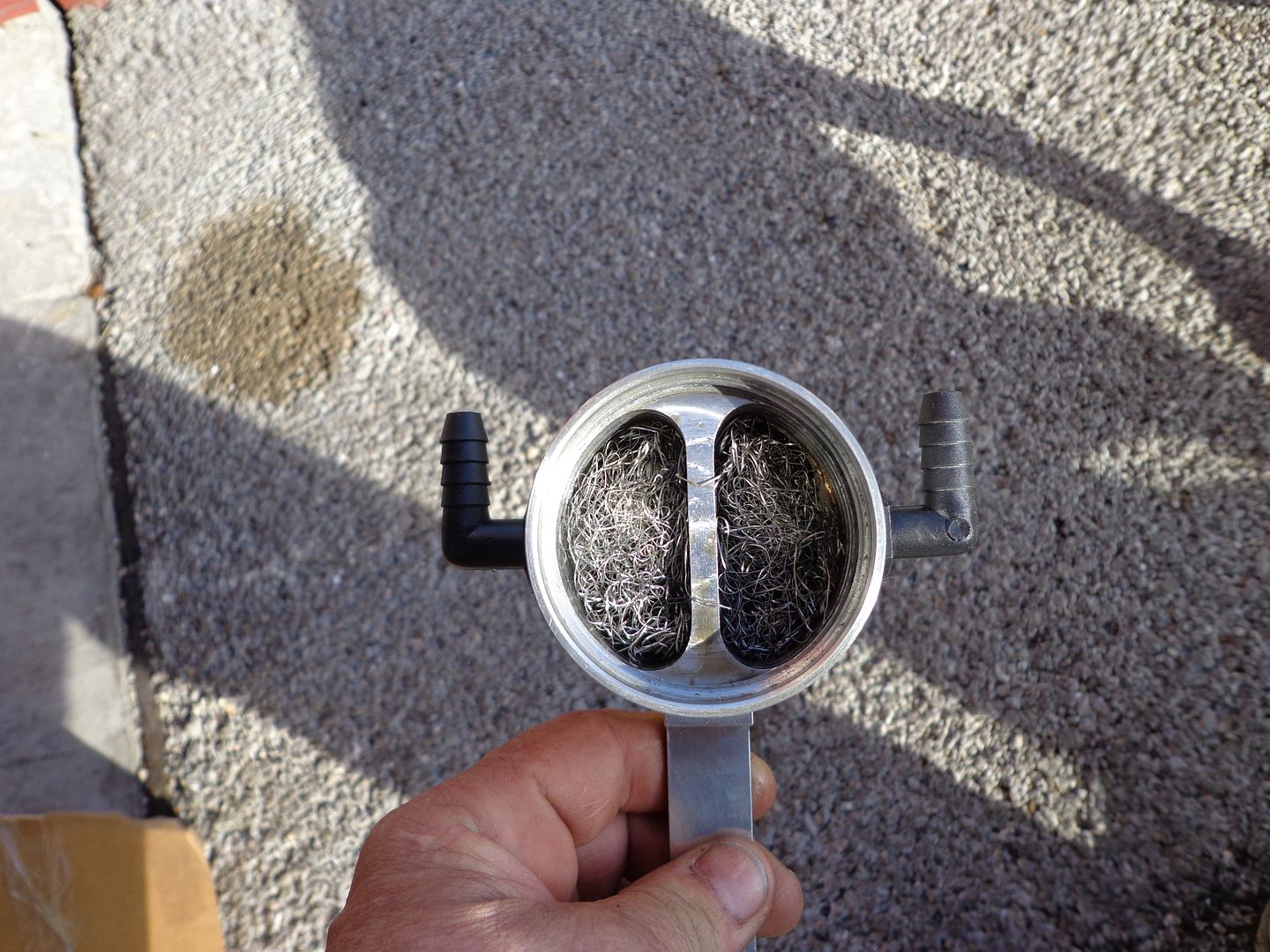
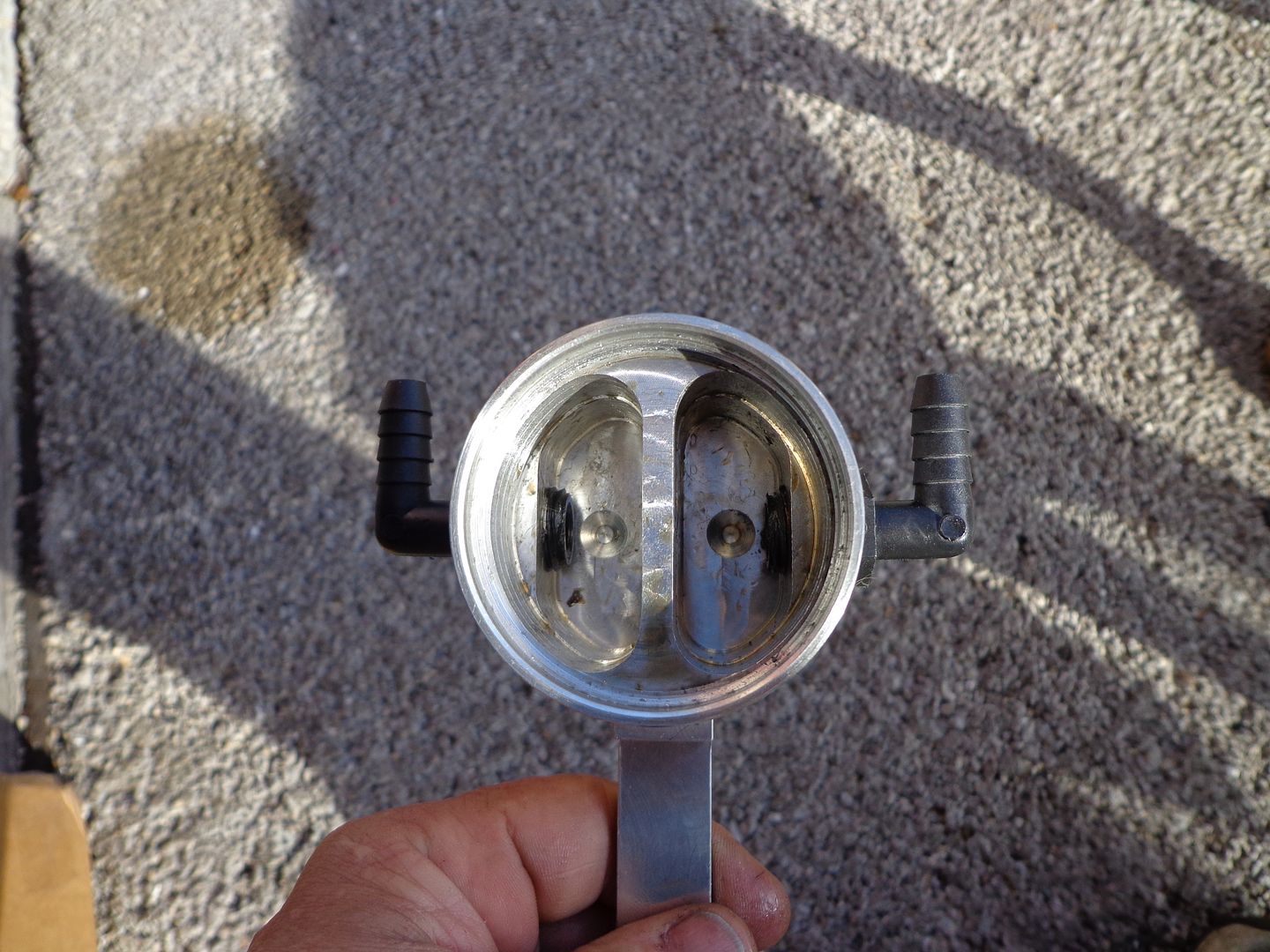
A can has to be large enough so the velocity, or the flow speed through the can slows enough for the condensed droplets to fall out of suspension and not carried through (take a straw and drip a small amount of water in a saucer, suck on the straw and it will draw the liquid up completely...similar to the dentist suction tube, now take a piece of garden hose and try the same....you wont get any, or almost no liquid due to the internal volumn of the hose/straw/container used as an oil separator.
Let me add in the home air compressor separators many use:
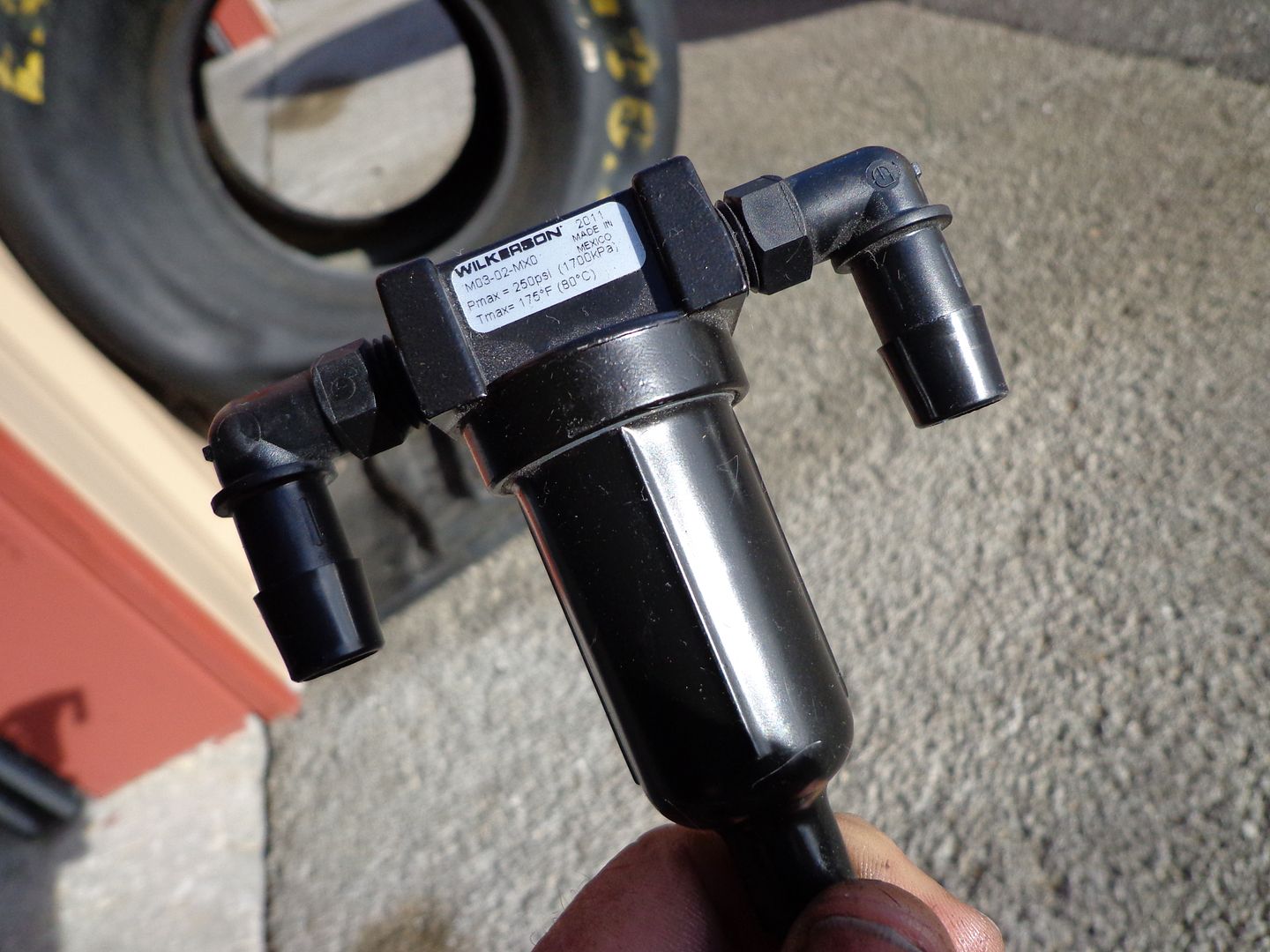
These will catch oil, but will saturate in a few hundred miles allowing all oil to pull through after it reaches saturation. As this one shows, this company adds a hose to the drain to return the contaminated oil to the crankcase reintroducing the damaging combustion byproducts into the engine oil accelerating wear and damage. All in not understanding all the purposes and functions of todays PCV systems.
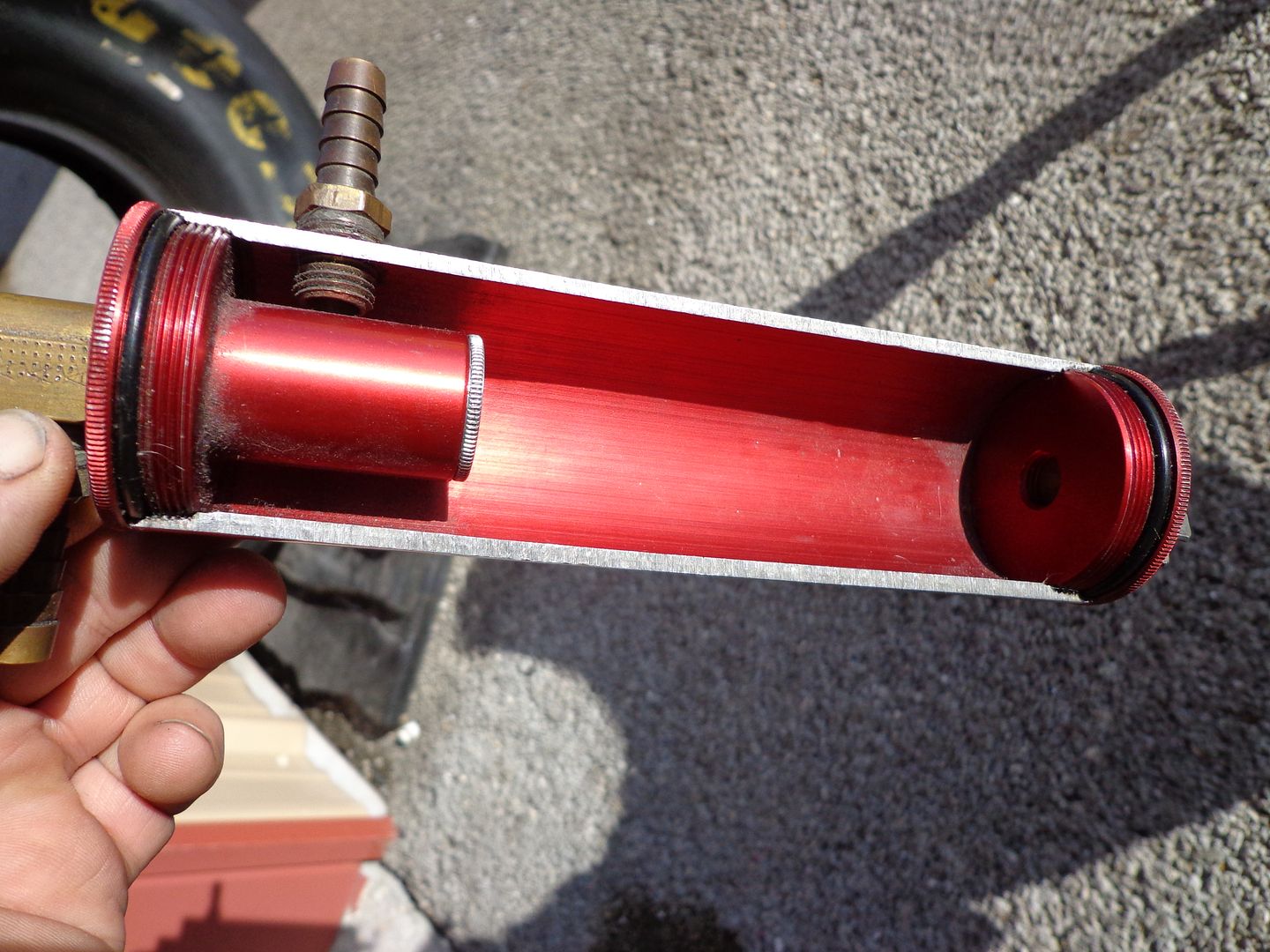
Now on to the ones that work. Starting with the one below (has several others that brand this unit). As you can see, the oil enters the top, passes through a small chamber with coalescing material that does a good job of separating the oil and as the flow pulls through, the larger droplets fall into the bottom for collection and only the smallesr ones get pulled through. Mainly because the outlet is only 1" from the droplets dripping out of the chamber as the speed of the flow will pull a small amount through. This is a very good functioning can and allows only 20% or so of pull through and is one we endorse as worth using on most NA applications, but any kind of FI or big cube build and it will allow even more pull through. Nice looking, durable, and functional for the reasons listed:
On to the next 2 that are excellent in function and quality. The Elite and the AMW. Both are slightly different in appearance, but both use the same basic very effective design internally. Even though from the outside they may look similar to the one with so many brands that does not work well, these work excellent:
First the Elite:
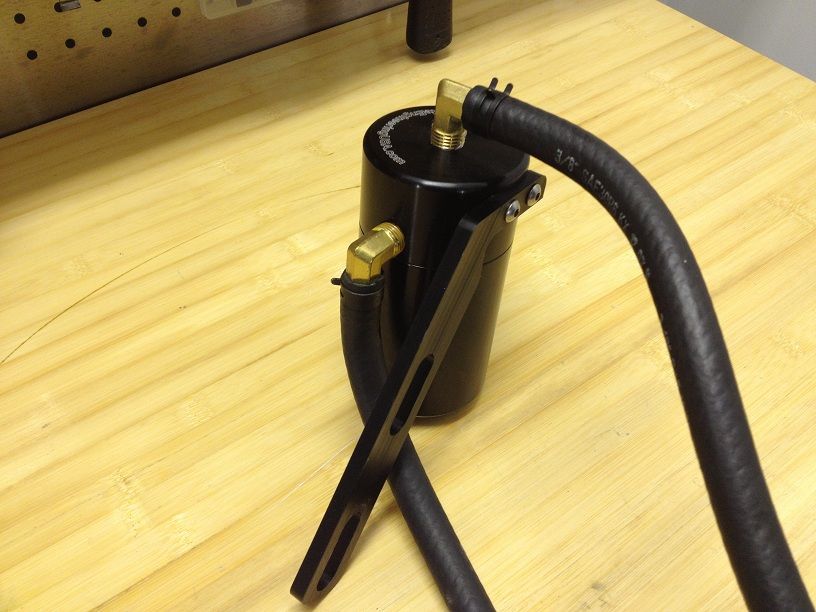
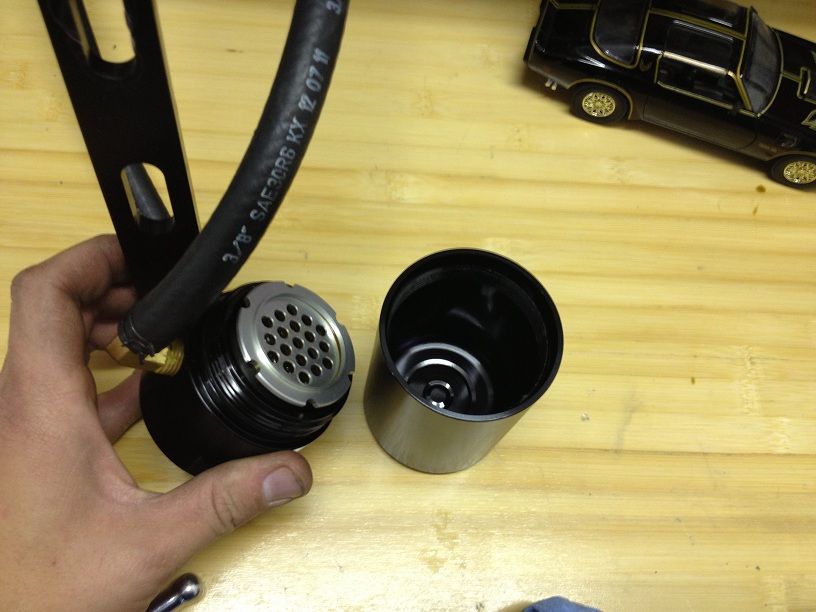
Look above closeley. The coalescing chamber is quite large and is very effective in trapping the oil from suspension and all but the smallest drops fall to the bottom where they are trapped to drain later. The outlet barb is app 2" from the bottom of the coalscing chamber so less chane for pull through. Great for NA and mild top mount SC applications. Excellent can we also endorse.
The AMW:
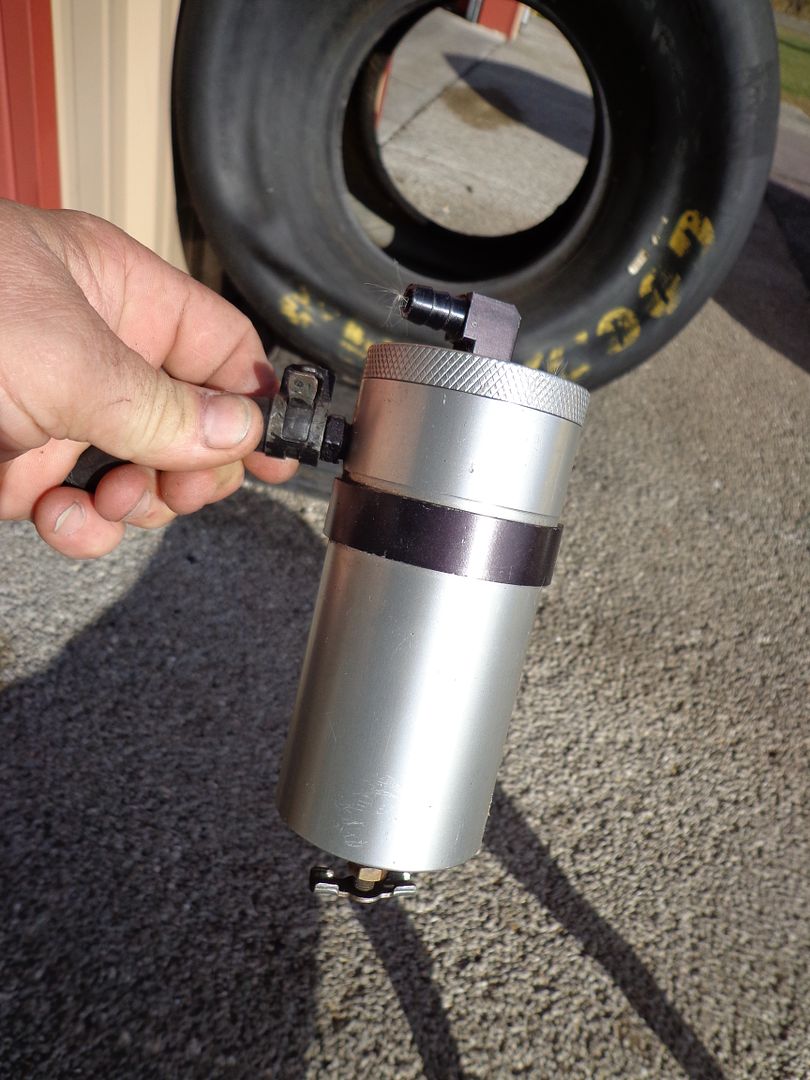
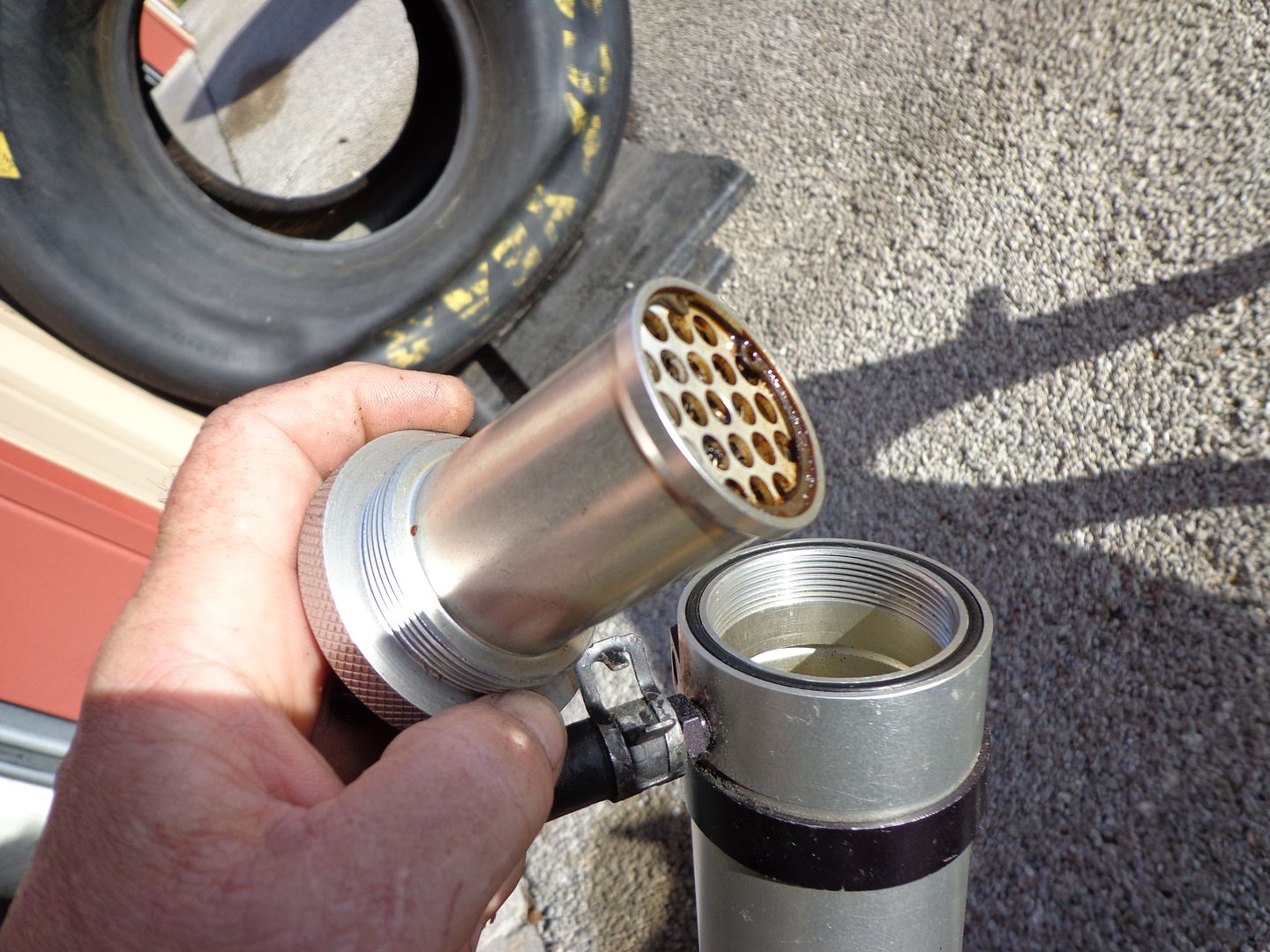
A bit different in appearance, but using the same internal principal of the Elite.....an excellent can that we also endorse.
These last 3 I want to point out are direct competitors of RX but are excellent (some of the ONLY ones worth purchasing out of the hundreds to choose from) and have our endorsement. Well worth buying and installing to prevent the issues described throughout this thread.
Now the RX can. Several things in this design are unlike any other on the market. The distance the oil laden fumes travel from entering, through 3 different chambers which each have a function, is over 9" so pull through from droplets falling to the bottom for collection is near impossible. It also is nearly 1 qt of internal volume (standard can, Monster is nearly 2 quarts) so the velocity, or speed of the flow can slow enough for even the smallest of droplets to fall out of suspension:
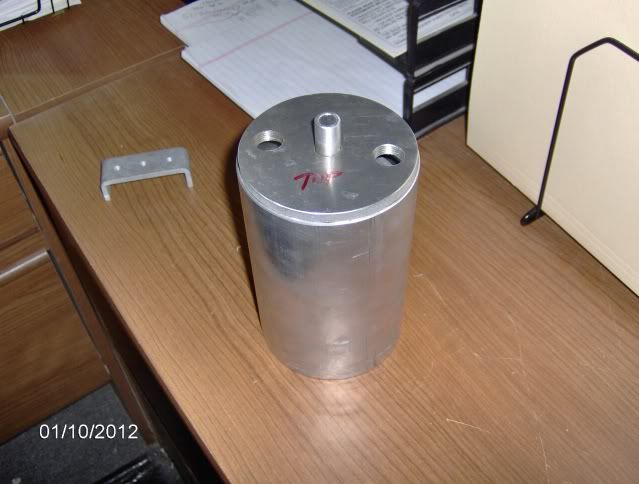
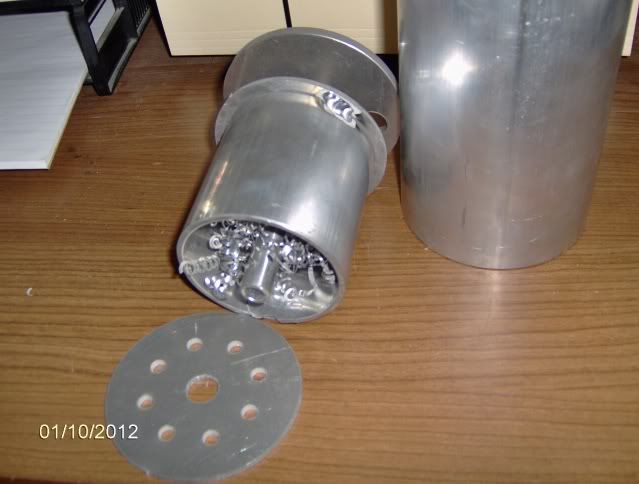
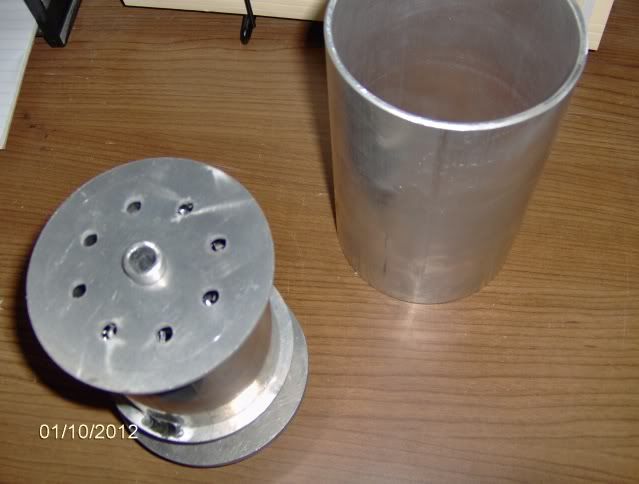
Follow the pictures below of a disected RX can. The vapors first enter the top center and travel down the dispersion tube that distributes the vapors evenly into the large coalescing chamber where 90% plus of the oil is separated from the vapors and can drop into the collection and condensing chamber. This uses the temprature differential to condense any oil still suspended into large enough drops that then collect on the outer cooling surface and drop to the bottom for collection. Then the vapors have to travel past a disc baffel into the separate outlet chamber where they have one final cooling step to allow any trace oil to condense befor exiting through a flow controlling checkvalve that prevents any back flow at WOT when intake vacuum is at its lowest level and also prevents the vapors from flowing through to fast.
The oil laden vapors at no time mix with crankcase vapors already cleaned as they exit. Every other design has points where the dirty, and cleaned vapors mingle so there is no way to separate 100% of the oil as some of the entering vapors are always mixing with the exiting vapors.
Now the Saikou Micchi is also a very effective functioning can but I dont have time to post all out there, but anyone that has visited in person has seen the examples of both. It cathces probably 90% plus in most applications.
Now,The RX dual valve (Monster can over 10# boost) is the ONLY can system on the market currently that provides proper crankcase evac and oil separation in both boost and non-boost operation. Every other application is only functional during non-boost with a turbo or centri blower (any system that pressurizes the intake manifold):
All we source, do a several hundred mile drive with a clear glass inline checkvalve installed between the can and the intake manifold vacuum barb and over this same drive route, with the same car (we know its consumption), and then judge the amount that pulled through and was caught in the clear glass filter. With the average empty/ebay/china can the filter is saturated in 50-100 miles beyound capacity showing 50-80% plus of the oil travels right through into the intake air charge.
The poor designed nice looking ones work a bit better, but still pull through 30% plus where the ones we endorse allow less than 10% pull through to under 5% which is excellent in eliminating most of the issues caused by oil ingestion into the intake air charge.
And more specific question, ask & I'll do my best to answer each accurately.
Top pics? Elite, AMW, Saikou Micchi and RX. There are a few other we have seen advertised that look like they will also be excellent in function, but we have yet to purchase, test, and dissect.
Also, the RX dual valve (Monster can for over 10# boost) is the ONLY catchcan system on the market that provides proper crankcase evacuation during both boost and non-boost operation. Every other one provides no oil separation/proper evacuation during boost:
www.RevXtreme.com 941-721-1826
As for cans, here are the most common you will see and a detailed description on how they work, (and dont work).
We'll start with some of most common ebay/made in china ineffective cans that are really no more than a "empty beer can":
This one is very common and is generally bought from ebay, but several company also brand it. Comes with fittings, a universal braket, sight tube to see when it needs to emptied:
And the inside......notice not only is it completely an empty can, but the fittings are just punched in with metal filings hanging:
This is another Ebay/China cheapo. Looks nice, ends are milled from billet and the main body extruded aluminum. This can is very common and is seen in many colors and with over 20 companies branding it as "their own design". Search on ebay to see for yourself:
And as you can see, allthough it is a good size, and looks nice, just an empty can again. The majority of all vapors enter and do a quick U turn and exit:
So again, no different than an empty "jumbo" beer can.
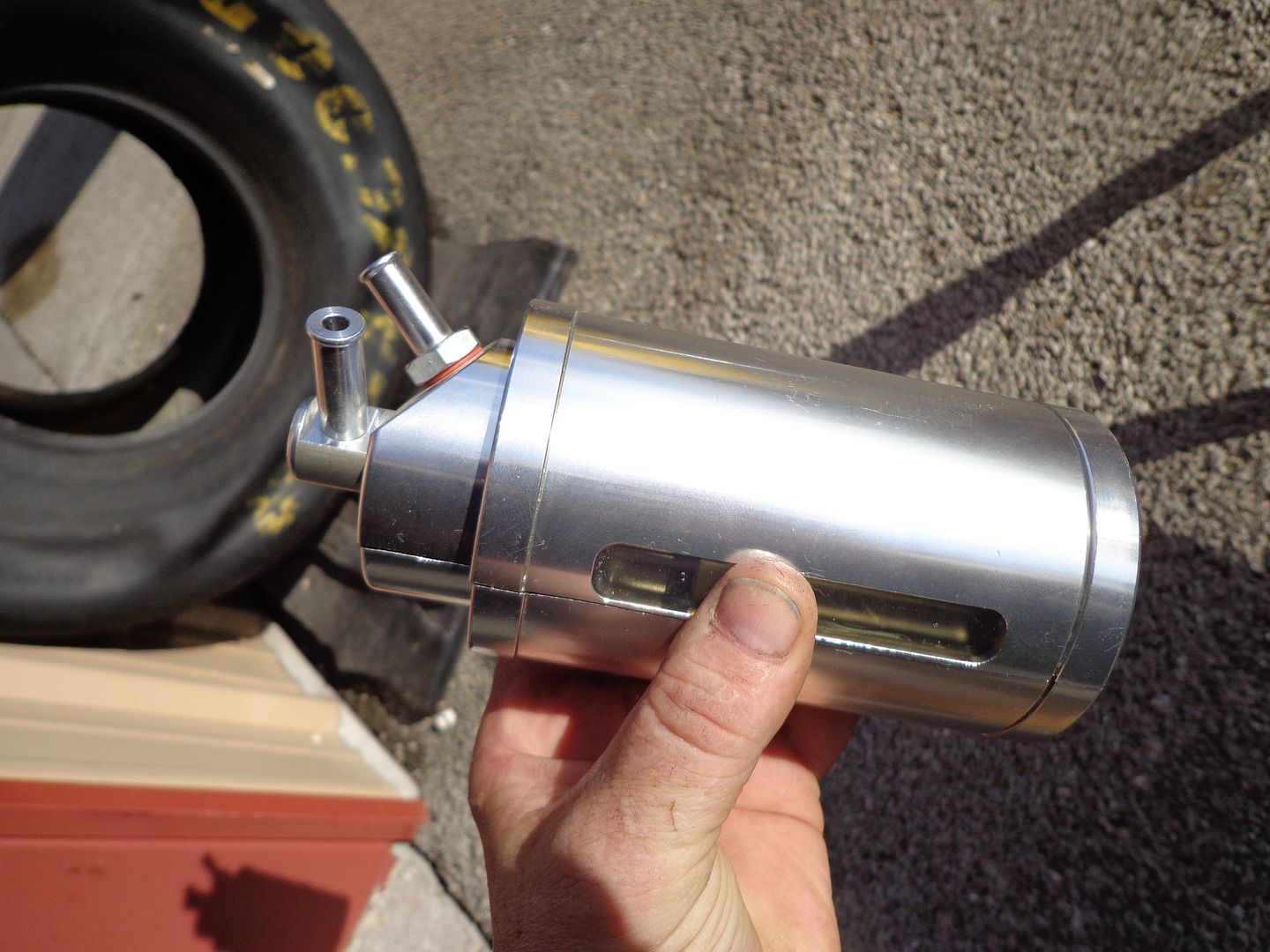
And now to another variation of ebay/china. Sight windows and can be had in several colors or a carbon fiber wrap:
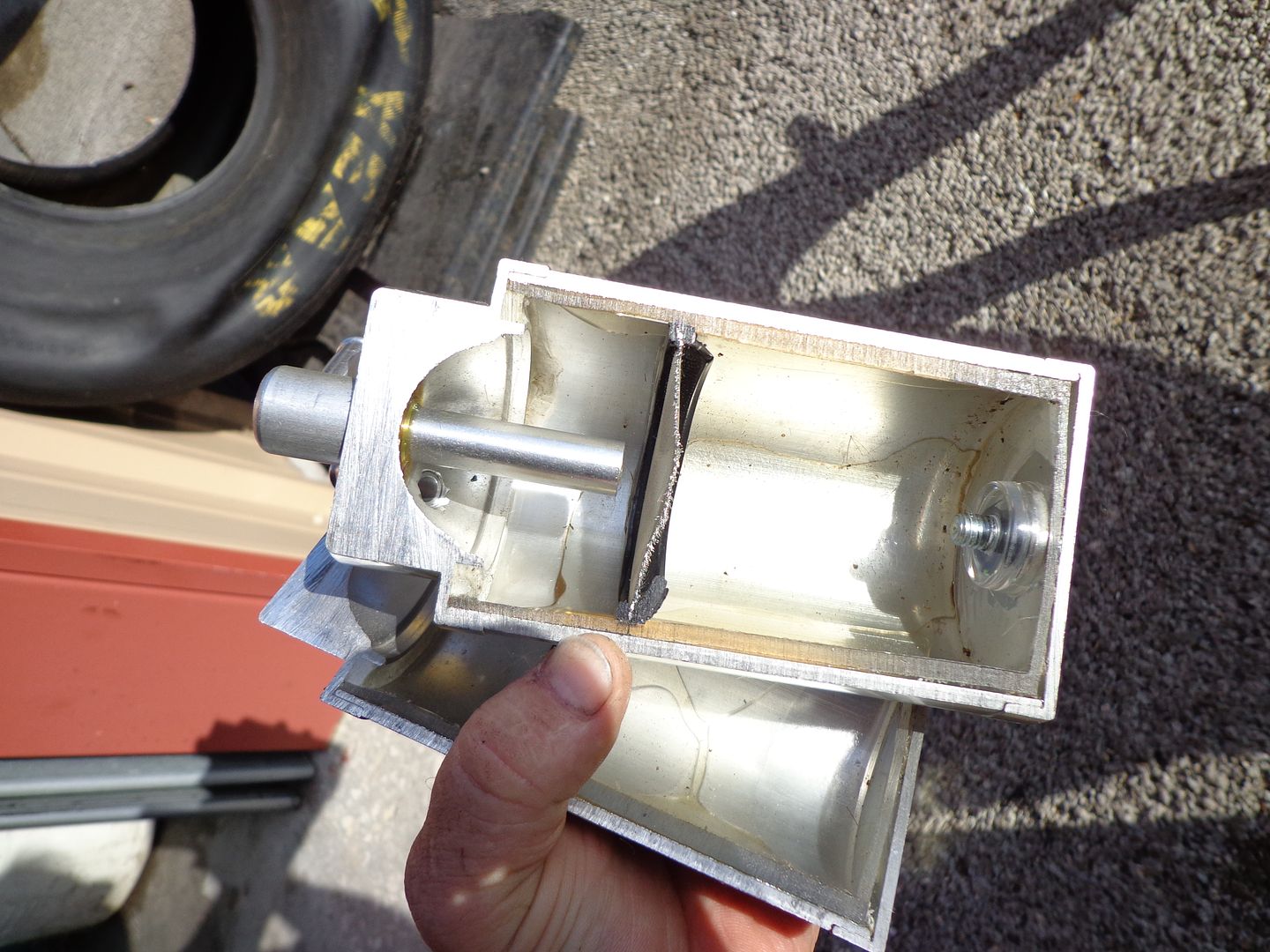
Now the inside:
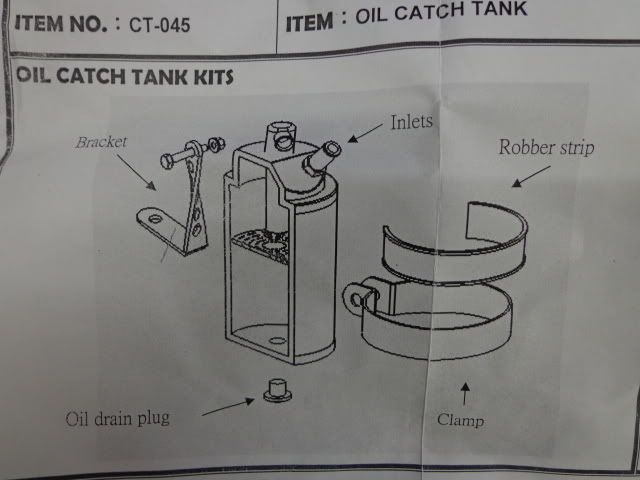
Bonded together with plastic resin...this insulates it greatly reducing the ability to condense oil vapors....and since it relies on the plastic to seal it this one had a good sized vacuum leak where it didnt get coated, and time will tell if this resin delaminates over time from the fuel/oil vapors. It also has what the instructions describe as a "Robber Strip".....not sure what that is:
Notice, if they would have designed it so the inlet tube protruded through the screen, it would actually have a bit better effectiveness, but since it terminates in the top the majority of the vapors just do a quick U turn back out.
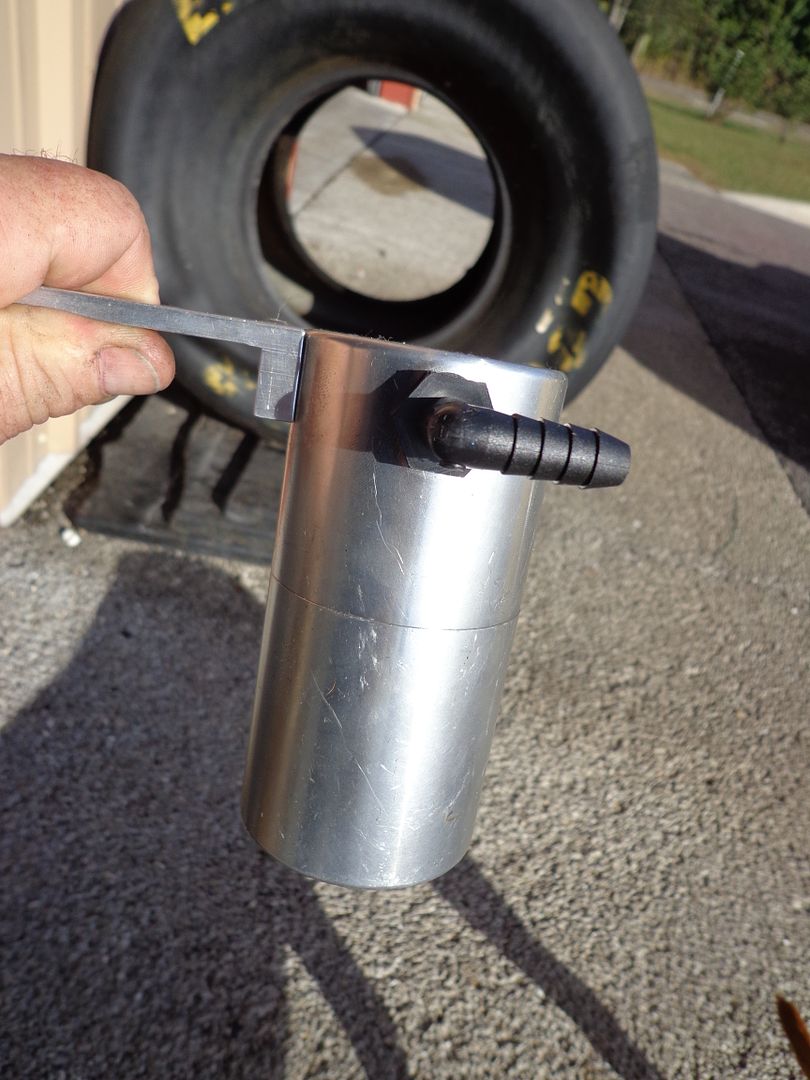
Now on to one made in the USA, quality of the machining is top notch, excellent appearance, solid bracket. You will see dozens of variations of this with the appearance slightly different on the top and some cary very well known brands:
Now look closely at the internal design. There is no specified inlet or outlet, and when you unscrew it you see the vapors enter through one fitting, travel through coalscing media (so far so good) but it just U turns into the outlet side into more coalscing material which acts the same way as taking a wet wash cloth and holding it to your mouth and sucking on it...the liquid pull right through. So even though it looks awesome, and the machining is top notch, since it is so small the flow never slows enough to allow most droplets to fall out of suspension so they suck right into the other side and out the outlet.
A can has to be large enough so the velocity, or the flow speed through the can slows enough for the condensed droplets to fall out of suspension and not carried through (take a straw and drip a small amount of water in a saucer, suck on the straw and it will draw the liquid up completely...similar to the dentist suction tube, now take a piece of garden hose and try the same....you wont get any, or almost no liquid due to the internal volumn of the hose/straw/container used as an oil separator.
Let me add in the home air compressor separators many use:
These will catch oil, but will saturate in a few hundred miles allowing all oil to pull through after it reaches saturation. As this one shows, this company adds a hose to the drain to return the contaminated oil to the crankcase reintroducing the damaging combustion byproducts into the engine oil accelerating wear and damage. All in not understanding all the purposes and functions of todays PCV systems.
Now on to the ones that work. Starting with the one below (has several others that brand this unit). As you can see, the oil enters the top, passes through a small chamber with coalescing material that does a good job of separating the oil and as the flow pulls through, the larger droplets fall into the bottom for collection and only the smallesr ones get pulled through. Mainly because the outlet is only 1" from the droplets dripping out of the chamber as the speed of the flow will pull a small amount through. This is a very good functioning can and allows only 20% or so of pull through and is one we endorse as worth using on most NA applications, but any kind of FI or big cube build and it will allow even more pull through. Nice looking, durable, and functional for the reasons listed:
On to the next 2 that are excellent in function and quality. The Elite and the AMW. Both are slightly different in appearance, but both use the same basic very effective design internally. Even though from the outside they may look similar to the one with so many brands that does not work well, these work excellent:
First the Elite:
Look above closeley. The coalescing chamber is quite large and is very effective in trapping the oil from suspension and all but the smallest drops fall to the bottom where they are trapped to drain later. The outlet barb is app 2" from the bottom of the coalscing chamber so less chane for pull through. Great for NA and mild top mount SC applications. Excellent can we also endorse.
The AMW:
A bit different in appearance, but using the same internal principal of the Elite.....an excellent can that we also endorse.
These last 3 I want to point out are direct competitors of RX but are excellent (some of the ONLY ones worth purchasing out of the hundreds to choose from) and have our endorsement. Well worth buying and installing to prevent the issues described throughout this thread.
Now the RX can. Several things in this design are unlike any other on the market. The distance the oil laden fumes travel from entering, through 3 different chambers which each have a function, is over 9" so pull through from droplets falling to the bottom for collection is near impossible. It also is nearly 1 qt of internal volume (standard can, Monster is nearly 2 quarts) so the velocity, or speed of the flow can slow enough for even the smallest of droplets to fall out of suspension:
Follow the pictures below of a disected RX can. The vapors first enter the top center and travel down the dispersion tube that distributes the vapors evenly into the large coalescing chamber where 90% plus of the oil is separated from the vapors and can drop into the collection and condensing chamber. This uses the temprature differential to condense any oil still suspended into large enough drops that then collect on the outer cooling surface and drop to the bottom for collection. Then the vapors have to travel past a disc baffel into the separate outlet chamber where they have one final cooling step to allow any trace oil to condense befor exiting through a flow controlling checkvalve that prevents any back flow at WOT when intake vacuum is at its lowest level and also prevents the vapors from flowing through to fast.
The oil laden vapors at no time mix with crankcase vapors already cleaned as they exit. Every other design has points where the dirty, and cleaned vapors mingle so there is no way to separate 100% of the oil as some of the entering vapors are always mixing with the exiting vapors.
Now the Saikou Micchi is also a very effective functioning can but I dont have time to post all out there, but anyone that has visited in person has seen the examples of both. It cathces probably 90% plus in most applications.
Now,The RX dual valve (Monster can over 10# boost) is the ONLY can system on the market currently that provides proper crankcase evac and oil separation in both boost and non-boost operation. Every other application is only functional during non-boost with a turbo or centri blower (any system that pressurizes the intake manifold):
All we source, do a several hundred mile drive with a clear glass inline checkvalve installed between the can and the intake manifold vacuum barb and over this same drive route, with the same car (we know its consumption), and then judge the amount that pulled through and was caught in the clear glass filter. With the average empty/ebay/china can the filter is saturated in 50-100 miles beyound capacity showing 50-80% plus of the oil travels right through into the intake air charge.
The poor designed nice looking ones work a bit better, but still pull through 30% plus where the ones we endorse allow less than 10% pull through to under 5% which is excellent in eliminating most of the issues caused by oil ingestion into the intake air charge.
And more specific question, ask & I'll do my best to answer each accurately.
Top pics? Elite, AMW, Saikou Micchi and RX. There are a few other we have seen advertised that look like they will also be excellent in function, but we have yet to purchase, test, and dissect.
Also, the RX dual valve (Monster can for over 10# boost) is the ONLY catchcan system on the market that provides proper crankcase evacuation during both boost and non-boost operation. Every other one provides no oil separation/proper evacuation during boost:
www.RevXtreme.com 941-721-1826
Last edited by Rev Xtreme; Jan 11, 2013 at 07:53 PM.

Melting Slicks

Joined: Dec 2006
Posts: 2,694
Likes: 106
.I'd choose either one based on chosen location. Where I put mine (next to hood hinge), only the AMW fits. But if I was installing it in the typical engine location, the EE bracket is a lot better, and would choose that one. In fact, that's the one I installed on both my LS1 and LS2 engines, since they didn't have the Helmholtz chamber. Both are the most expensive ones, but as the saying goes, you get what you pay for
 .
.
Last edited by JCtx; Jan 12, 2013 at 01:54 PM.