



Testing any catchcan system:
Drifting


Joined: Feb 2010
Posts: 1,527
Likes: 34

Few observation on the subject - but only focusing on unit machined from solid bar stock:
1. I do like the fine machine work from solid bar stock on both EE and AMW, as well as the take a part feature to verified cleanliness and avoid build up of varnish - that can only worsen over time. EE can has no drain hole to cause future leak - that is an additional +.
2. EE by nature of design, the inlet coalescing chamber housing flange acts as an baffle, outgoing vapor has to go through that flange, then into narrow passage before exit - thats a +. AMW doesn't have any flange baffle.
3. AMW has anti-creep up grooves on inside wall of reservoir, that is a +.
4. Distance between inlet/outlet of EE/AMW are too close to be effective - although EE has the advantage of the coalescing chamber housing flange to interrupt and slow down the existing flow.
5. Both EE/AMW coalescing chamber housing are too far off the bottom of the reservoir, thus not taking advantage on the available space to enhance the distance between inlet/outlet and at the same time, additional material, providing surface area to increase effectiveness of the condensation process of separate oil from blow bys.
---
With two simple internal (thin wall coalescing chamber housing extension and bored reservoir internal anti-creep up grooves) modification, I believe it has resolved and improved the above given flaws with my EE's functionality:

Additionally, I have worked on other external areas to isolate and eliminate direct engine heat conduction - to further enhance Catch Can's effectiveness.
---
IMO. Just to show no catch can is the best - but having one, especially the take apart variety, which enable 100% clean up, to positively eliminate varnish build up - is better than without one.
1. I do like the fine machine work from solid bar stock on both EE and AMW, as well as the take a part feature to verified cleanliness and avoid build up of varnish - that can only worsen over time. EE can has no drain hole to cause future leak - that is an additional +.
2. EE by nature of design, the inlet coalescing chamber housing flange acts as an baffle, outgoing vapor has to go through that flange, then into narrow passage before exit - thats a +. AMW doesn't have any flange baffle.
3. AMW has anti-creep up grooves on inside wall of reservoir, that is a +.
4. Distance between inlet/outlet of EE/AMW are too close to be effective - although EE has the advantage of the coalescing chamber housing flange to interrupt and slow down the existing flow.
5. Both EE/AMW coalescing chamber housing are too far off the bottom of the reservoir, thus not taking advantage on the available space to enhance the distance between inlet/outlet and at the same time, additional material, providing surface area to increase effectiveness of the condensation process of separate oil from blow bys.
---
With two simple internal (thin wall coalescing chamber housing extension and bored reservoir internal anti-creep up grooves) modification, I believe it has resolved and improved the above given flaws with my EE's functionality:
Additionally, I have worked on other external areas to isolate and eliminate direct engine heat conduction - to further enhance Catch Can's effectiveness.
---
IMO. Just to show no catch can is the best - but having one, especially the take apart variety, which enable 100% clean up, to positively eliminate varnish build up - is better than without one.
Last edited by victorf; Nov 20, 2014 at 12:11 PM.

Racer

Joined: Sep 2012
Posts: 301
Likes: 0
From: Palmetto FL
St. Jude Donor '13
You forgot to mention an important feature IMO, which only the AMW has (as far as I know): internal machining of rings inside the can (the top one is visible in your picture), which prevents oil from being sucked into the intake due to strong vacuum and/or when oil level is getting high. That's why I rated it over the EE, but those 2 are the top ones IMO (for a stock engine, obviously). Good job with the review  .
.
I'd choose either one based on chosen location. Where I put mine (next to hood hinge), only the AMW fits. But if I was installing it in the typical engine location, the EE bracket is a lot better, and would choose that one. In fact, that's the one I installed on both my LS1 and LS2 engines, since they didn't have the Helmholtz chamber. Both are the most expensive ones, but as the saying goes, you get what you pay for .
.
.I'd choose either one based on chosen location. Where I put mine (next to hood hinge), only the AMW fits. But if I was installing it in the typical engine location, the EE bracket is a lot better, and would choose that one. In fact, that's the one I installed on both my LS1 and LS2 engines, since they didn't have the Helmholtz chamber. Both are the most expensive ones, but as the saying goes, you get what you pay for
.Few observation on the subject - but only focusing on unit machined from solid bar stock:
1. I do like the fine machine work from solid bar stock on both EE and AMW, as well as the take a part feature to verified cleanliness and avoid build up of varnish - that can only worsen over time. EE can has no drain hole to cause future leak - that is an additional +.
There are no future leaks with any properly designed can, but the solid billet is always nice to look at. My posts are ALL on function, as that is the idea of a catchcan. Stop ALL the oil inghestion as even a small amount has a negative effect. And as stated, test ANY can as described. Very easy. I know you have your choice and you have all valid points as far as appearance, but this is function. The Elite & AMW are two of the best we endorse.
2. EE by nature of design, the inlet coalescing chamber housing flange acts as an baffle, outgoing vapor has to go through that flange, then into narrow passage before exit - thats a +. AMW doesn't have any flange baffle.
One of the features that make it work so well. Steve used his head on this design....just needs to be app twice the inner volumne to allow the flow to slow enough to not allow pull-through due to that alone.
3. AMW has anti-creep up grooves on inside wall of reservoir, that is a +.
Agreed again, but the size is the only thing really causing these to have any pull through.
4. Distance between inlet/outlet of EE/AMW are too close to be effective - although EE has the advantage of the coalescing chamber housing flange to interrupt and slow down the existing flow.
Again correct, not many have the understanding you do on the design and function side of cans...most just purchase by appearance or hype only.
5. Both EE/AMW coalescing chamber housing are too far off the bottom of the reservoir, thus not taking advantage on the available space to enhance the distance between inlet/outlet and at the same time, additional material, providing surface area to increase effectiveness of the condensation process of separate oil from blow bys.
To close and they dont leave room for collection though, so increase size and lower the chamber and that would be a big plus. Again kudu's to your understanding.
---
With two simple internal (thin wall coalescing chamber housing extension and bored reservoir internal anti-creep up grooves) modification, I believe it has resolved and improved the above given flaws with my EE's functionality:
http://i896.photobucket.com/albums/a...6/P1010334.jpg
Additionally, I have worked on other external areas to isolate and eliminate direct engine heat conduction - to further enhance Catch Can's effectiveness.
Your pics show excellent improvements...just make the housing larger in volumne, either longer or wider would work. Good job!
---
IMO. Just to show no catch can is the best - but having one, especially the take apart variety, which enable 100% clean up, to positively eliminate varnish build up - is better than without one.

1. I do like the fine machine work from solid bar stock on both EE and AMW, as well as the take a part feature to verified cleanliness and avoid build up of varnish - that can only worsen over time. EE can has no drain hole to cause future leak - that is an additional +.
There are no future leaks with any properly designed can, but the solid billet is always nice to look at. My posts are ALL on function, as that is the idea of a catchcan. Stop ALL the oil inghestion as even a small amount has a negative effect. And as stated, test ANY can as described. Very easy. I know you have your choice and you have all valid points as far as appearance, but this is function. The Elite & AMW are two of the best we endorse.
2. EE by nature of design, the inlet coalescing chamber housing flange acts as an baffle, outgoing vapor has to go through that flange, then into narrow passage before exit - thats a +. AMW doesn't have any flange baffle.
One of the features that make it work so well. Steve used his head on this design....just needs to be app twice the inner volumne to allow the flow to slow enough to not allow pull-through due to that alone.
3. AMW has anti-creep up grooves on inside wall of reservoir, that is a +.
Agreed again, but the size is the only thing really causing these to have any pull through.
4. Distance between inlet/outlet of EE/AMW are too close to be effective - although EE has the advantage of the coalescing chamber housing flange to interrupt and slow down the existing flow.
Again correct, not many have the understanding you do on the design and function side of cans...most just purchase by appearance or hype only.
5. Both EE/AMW coalescing chamber housing are too far off the bottom of the reservoir, thus not taking advantage on the available space to enhance the distance between inlet/outlet and at the same time, additional material, providing surface area to increase effectiveness of the condensation process of separate oil from blow bys.
To close and they dont leave room for collection though, so increase size and lower the chamber and that would be a big plus. Again kudu's to your understanding.
---
With two simple internal (thin wall coalescing chamber housing extension and bored reservoir internal anti-creep up grooves) modification, I believe it has resolved and improved the above given flaws with my EE's functionality:
http://i896.photobucket.com/albums/a...6/P1010334.jpg
Additionally, I have worked on other external areas to isolate and eliminate direct engine heat conduction - to further enhance Catch Can's effectiveness.
Your pics show excellent improvements...just make the housing larger in volumne, either longer or wider would work. Good job!
---
IMO. Just to show no catch can is the best - but having one, especially the take apart variety, which enable 100% clean up, to positively eliminate varnish build up - is better than without one.

As for the RX can, at 20-30K miles simply spray a can of break clean in the inlet and shake for a few minutes and the entire insides will be cleaned of varnish and deposits including the coalescing material, but I do agree that if it coul be opened like the EE or AMW it would be a plus.....but that will add app $30 each to the cost to manufacture, so there ls the rub. Cost is also where most base their decision to buy and thats why you see so many of these empty ebay/china cans on $50-100k cars out there.
victorf, you have my respect for the knowledge and understanding of all this....your one of the rare few that get it. My hats off to you.
ANd the others here that really understand this so well!!

SUBVETTE


Joined: Jul 2006
Posts: 3,841
Likes: 93
From: San Diego CA
Victorf -
wonderful design improvement to the EE can, which I also use. Maybe EE would be interested in your design for future manufacture. Just a thought. How far off the bottom of the can does the thin wall extension reach? Also have you had a chance to measure the change in the can's collection ability before and after your modification?
wonderful design improvement to the EE can, which I also use. Maybe EE would be interested in your design for future manufacture. Just a thought. How far off the bottom of the can does the thin wall extension reach? Also have you had a chance to measure the change in the can's collection ability before and after your modification?
Drifting
Joined: Feb 2010
Posts: 1,527
Likes: 34
We were using the large spiral waste from the lathe at the time the picture was taken, but cant get enough so we are using stainless or brass wool/mesh now. All seem to work very well. The MN/CCA uses scothbrite material and it also seems to work well.
You are correct! Also, we have 5 different brackets to choose from so location to mount is flexable, but the C5/C6 vette has very little room under the hood.
As for functionality in stopping any oil ingestion I would disagree, but taking all the features you have covered again, well done. It would be nice to see more actually understand all of this as you do...and almost NO tuner shops have a good grasp on function and importance of the crankcase evac system as most (no matter how big of a name) just vent excess pressure and break the systems ability to evacuate the damaging combustion byproducts out while still in a suspended state before the engine cools after shut down, and to see one of the biggest names in modern muscle car performance and top mount super charger installations make statements such as "the oil ingestion is good for a super charger so we do not believe in using a cathcan" just defies any logic, yet they have state of the art CNC machines, do awesome work in every other way, and build engines & tune with the best
As for the RX can, at 20-30K miles simply spray a can of break clean in the inlet and shake for a few minutes and the entire insides will be cleaned of varnish and deposits including the coalescing material, but I do agree that if it coul be opened like the EE or AMW it would be a plus.....but that will add app $30 each to the cost to manufacture, so there ls the rub. Cost is also where most base their decision to buy and thats why you see so many of these empty ebay/china cans on $50-100k cars out there.
victorf, you have my respect for the knowledge and understanding of all this....your one of the rare few that get it. My hats off to you.
ANd the others here that really understand this so well!!
You are correct! Also, we have 5 different brackets to choose from so location to mount is flexable, but the C5/C6 vette has very little room under the hood.
As for functionality in stopping any oil ingestion I would disagree, but taking all the features you have covered again, well done. It would be nice to see more actually understand all of this as you do...and almost NO tuner shops have a good grasp on function and importance of the crankcase evac system as most (no matter how big of a name) just vent excess pressure and break the systems ability to evacuate the damaging combustion byproducts out while still in a suspended state before the engine cools after shut down, and to see one of the biggest names in modern muscle car performance and top mount super charger installations make statements such as "the oil ingestion is good for a super charger so we do not believe in using a cathcan" just defies any logic, yet they have state of the art CNC machines, do awesome work in every other way, and build engines & tune with the best
As for the RX can, at 20-30K miles simply spray a can of break clean in the inlet and shake for a few minutes and the entire insides will be cleaned of varnish and deposits including the coalescing material, but I do agree that if it coul be opened like the EE or AMW it would be a plus.....but that will add app $30 each to the cost to manufacture, so there ls the rub. Cost is also where most base their decision to buy and thats why you see so many of these empty ebay/china cans on $50-100k cars out there.
victorf, you have my respect for the knowledge and understanding of all this....your one of the rare few that get it. My hats off to you.
ANd the others here that really understand this so well!!
My hat is off to you in return my friend. You never failed with an response from all my questions - some, I suspect, you already knew, that I had the answer.

Victorf -
wonderful design improvement to the EE can, which I also use. Maybe EE would be interested in your design for future manufacture. Just a thought. How far off the bottom of the can does the thin wall extension reach? Also have you had a chance to measure the change in the can's collection ability before and after your modification?
wonderful design improvement to the EE can, which I also use. Maybe EE would be interested in your design for future manufacture. Just a thought. How far off the bottom of the can does the thin wall extension reach? Also have you had a chance to measure the change in the can's collection ability before and after your modification?
So...I will not post specific on the forum so EE can take advantage of. Its something for me to know and for them to figure out themselves.
My findings on the post mods was to my satisfaction.
Drifting
Joined: Feb 2010
Posts: 1,527
Likes: 34
We were using the large spiral waste from the lathe at the time the picture was taken, but cant get enough so we are using stainless or brass wool/mesh now. All seem to work very well. The MN/CCA uses scothbrite material and it also seems to work well.
You are correct! Also, we have 5 different brackets to choose from so location to mount is flexable, but the C5/C6 vette has very little room under the hood.
As for functionality in stopping any oil ingestion I would disagree, but taking all the features you have covered again, well done. It would be nice to see more actually understand all of this as you do...and almost NO tuner shops have a good grasp on function and importance of the crankcase evac system as most (no matter how big of a name) just vent excess pressure and break the systems ability to evacuate the damaging combustion byproducts out while still in a suspended state before the engine cools after shut down, and to see one of the biggest names in modern muscle car performance and top mount super charger installations make statements such as "the oil ingestion is good for a super charger so we do not believe in using a cathcan" just defies any logic, yet they have state of the art CNC machines, do awesome work in every other way, and build engines & tune with the best
As for the RX can, at 20-30K miles simply spray a can of break clean in the inlet and shake for a few minutes and the entire insides will be cleaned of varnish and deposits including the coalescing material, but I do agree that if it coul be opened like the EE or AMW it would be a plus.....but that will add app $30 each to the cost to manufacture, so there ls the rub. Cost is also where most base their decision to buy and thats why you see so many of these empty ebay/china cans on $50-100k cars out there.
victorf, you have my respect for the knowledge and understanding of all this....your one of the rare few that get it. My hats off to you.
ANd the others here that really understand this so well!!
You are correct! Also, we have 5 different brackets to choose from so location to mount is flexable, but the C5/C6 vette has very little room under the hood.
As for functionality in stopping any oil ingestion I would disagree, but taking all the features you have covered again, well done. It would be nice to see more actually understand all of this as you do...and almost NO tuner shops have a good grasp on function and importance of the crankcase evac system as most (no matter how big of a name) just vent excess pressure and break the systems ability to evacuate the damaging combustion byproducts out while still in a suspended state before the engine cools after shut down, and to see one of the biggest names in modern muscle car performance and top mount super charger installations make statements such as "the oil ingestion is good for a super charger so we do not believe in using a cathcan" just defies any logic, yet they have state of the art CNC machines, do awesome work in every other way, and build engines & tune with the best
As for the RX can, at 20-30K miles simply spray a can of break clean in the inlet and shake for a few minutes and the entire insides will be cleaned of varnish and deposits including the coalescing material, but I do agree that if it coul be opened like the EE or AMW it would be a plus.....but that will add app $30 each to the cost to manufacture, so there ls the rub. Cost is also where most base their decision to buy and thats why you see so many of these empty ebay/china cans on $50-100k cars out there.
victorf, you have my respect for the knowledge and understanding of all this....your one of the rare few that get it. My hats off to you.
ANd the others here that really understand this so well!!
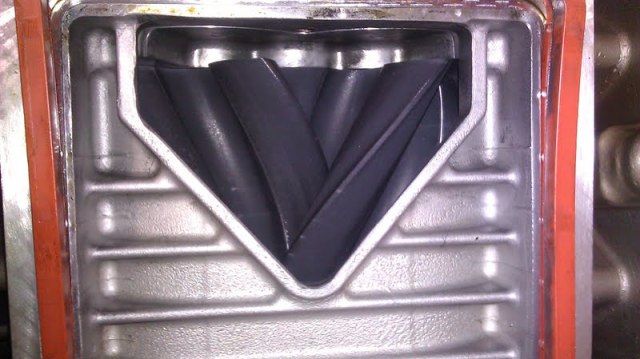
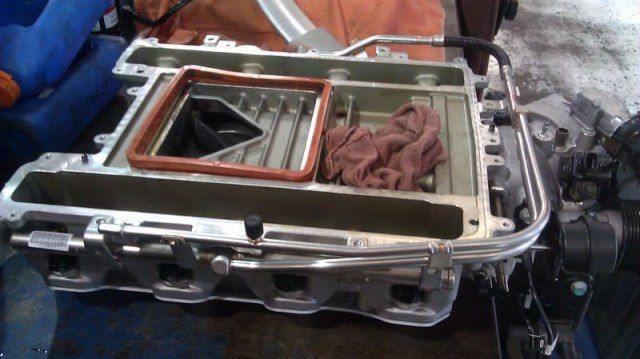
Here is a GM blower after 16k miles with the RX can from nearly day one:
Now look at a maggie intercooler after 16k miles w/out one:
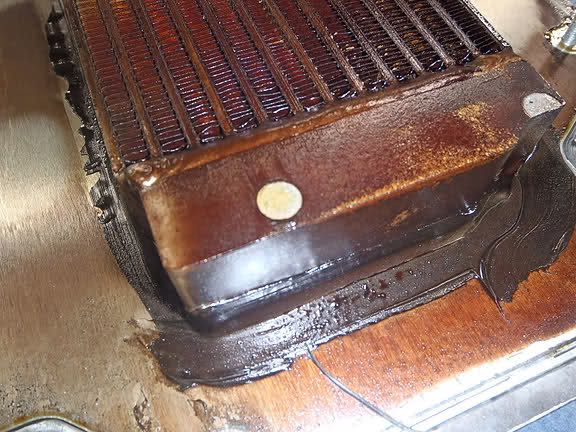
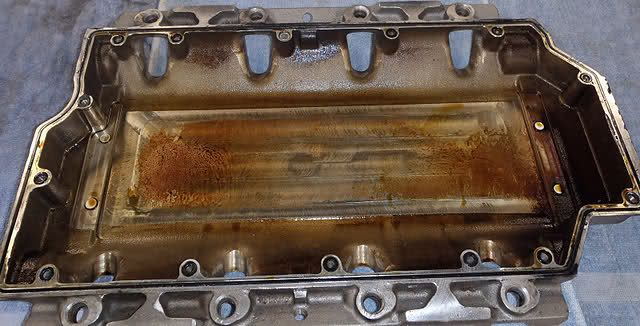
The intercooler has already lost much of its heat transfer ability with the varnish build up, and also the flow through is being restricted.
The blower rotors are finely balanced and since the deposits dont form evenlu, they are thrown off balance and bearing life is shortend as well.
Now look at a maggie intercooler after 16k miles w/out one:
The intercooler has already lost much of its heat transfer ability with the varnish build up, and also the flow through is being restricted.
The blower rotors are finely balanced and since the deposits dont form evenlu, they are thrown off balance and bearing life is shortend as well.
In accordance with Nuclear Power Standards - unless it is 100% visually verifiable, then anything else is a compromise in terms of cleanliness.
---
The photos on Maggie are nasty, imagine Maggie is contained by welding covers shut, induce Brake Clean into internal thru inlet, sloshing Brake Clean around, pour it out at outlet and call it a day.
Now, the aftermath is unverifiable internal cleanliness. Compounding the situation, now there will be residual Brake Clean that remains in all those cracks and crevices - which will eventually get sucked into engine internal.
Not a pretty picture.
---
From that above scenario, which pretty much equate to cleaning a welded shut Catch Can with Brake Clean to address cleanliness control.
I disagree using Brake Clean will be able to clean the internal. Sorry.
Thus why every Catch Can is a compromise.
Racer
Joined: Sep 2012
Posts: 301
Likes: 0
From: Palmetto FL
St. Jude Donor '13
Can't argue with that.
Do you think the market will bear the extra cost to machine these so they can be unscrewed for cleaning? In the past when we did polls it was resounding no......but were willing to do it if the price can be accepted.
Do you think the market will bear the extra cost to machine these so they can be unscrewed for cleaning? In the past when we did polls it was resounding no......but were willing to do it if the price can be accepted.
Drifting
Joined: Feb 2010
Posts: 1,527
Likes: 34
One exception is the shifter from MGW.
Or, if capable, make it yourself.
My best wishes for your product line.
Racer
Joined: Jan 2009
Posts: 321
Likes: 2
From: Southern NH
I can see it being pretty expensive for the basic can and then you'd got the other parts, brackets, etc.
btw, MGW shifters are machining art, very impressed w/ there quality as a shop.
Corvette Stories
The Best of Corvette for Corvette Enthusiasts

Every 2027 Corvette Engine Explained
Joe Kucinski
Designer Imagines A Corvette That Looks More Like a Corvette Than the Corvette
Verdad Gallardo
10 Ugly Corvettes That We Still Kinda Love
Joe Kucinski
Top 10 Most Expensive Corvettes Ever Sold on Bring A Trailer
Brett Foote
10 Things Every Corvette Owner Needs (2026 Edition)
Michael S. Palmer
8 Most "Only Corvette Owners Understand" Quirks and Problems
Pouria Savadkouei
10 Reasons the C6 Z06 is Still A Performance Benchmark After 20 Years
Joe Kucinski
How Much Horsepower Every Corvette Engine "LOST" in 1972
Joe Kucinski
