



Testing any catchcan system:

Thread Starter
Pro

Joined: Jan 2011
Posts: 633
Likes: 6
 Testing any catchcan system:
--------------------------------------------------------------------------------
The catch can test:
Now the explanation to follow is generic in nature and analysis of how a catch can should work, filter media can or not. & I'll go over the pros and cons of both. The administering of the testing was pretty straight forward and anyone could reasonably duplicate. A simple 3/8" inline clear glass fuel filter with the white element, $12 or so at any auto parts store, hooked inline between the the can outlet & the intake manifold. Install a clean filter for every can tested. Use the same vehicle for every can, and run the same route at speeds & style as close as possible. Make sure to include a stretch in the country you can run some WOT runs as well as semi aggressive cruising speeds (within the speed limit of course). I used a car with 189000 miles on it and run hard, low 11's NA and stock internals/LS6 intake, and patriot heads, so it made it easy to do in 200 miles a test.
See, the crankcase vapors should enter a inlet fitting on a catch can that will bring the vapors first, into an area that allows for two things, A: the vapors can cool, and this results in the oil vapor/mist condensing to droplets, that can then fall to the bottom of the can to be removed later, and B: slow the velocity of the vapors traveling through the can so the oil can fall out of suspension.
If a can is going to use a type of media/mesh to assist in condensing the vapor into droplets and causing some to actually condense right onto the mesh and drop of as larger droplets as they form.
The vapors should then flow through a main chamber (sizes & shapes vary greatly) where the vapor flow can slow even further and touch as much of the outer cooling surface as possible accelerating the droplet formation. Then the vapors will travel (again, as separate of a chamber as possible from the inlet chamber) through and up the outlet or main chamber (again, this is configured differently in different cans) to the outlet fitting where it exits. At this point of exit the vapor flow accelerates back to the same velocity it was when it entered and therefore any droplets anywhere near will be pulled out with the outgoing vapors.
Issues I see with each type of can, pros & cons:
A simple 1 pint to 1 qt fluid overflow catch can with an inlet & outlet fitting attached with NO internal baffling or filter media does catch a great deal of oil, but a fair amount still gets through as some of the vapors emerging travel right out that outlet fitting that is in many cases only an inch or two from each other. Impossible for it not to. The plus side of these is the amount of capacity, or volume, is large enough to allow the velocity of the flow down enough for the cooling oil vapors/mist to form droplets, and let them fall out of suspension so they can accumulate in the bottom without worry of any being pulled out the outlet. In tests, these surprised us as to how well they worked for so cheap of a price ($10-$50 on ebay, etc.) but with no baffling between the inlet & outlet and the closeness of each fitting they ALL allowed far to much through.
The "filter media" cans:
These are all very nicely made as for quality, and the filter media if placed in the right location and with a definite separation of the inlet & outlet via chambers or baffles, worked very well in condensing & capturing the oil droplets, but with one absolutely beautiful can I saw 2 main problems. Not with the theory, that is sound, but with the design of the can themselves. The worst of these were even some of the highest in price. They have the inlet & outlet fittings in a small top section of the can (these unscrewed to empty) with a condensing media in that top. The vapors flow from the inlet at full velocity, slow slightly while traveling through the media (where the oil does condense quite effectively) and right out the outlet pulling droplets off the condensing media! Defeating a sound principal by the design of the can. These awesome looking cans had the same or LESS effectiveness than the empty beer can with 2 fittings we tested. Out of these small cans the Elite was the best performer and our #1 recommendation for those wanting a small compact can the despite its size is very effective.
We also found that the overall size resulted in disassembling often on all but the tightest motors with little issue with oil ingestion. On a big cube or FI build these cans allowed almost as much through during operation as they actually caught. We further found that the oil was not dropping to the bottom of the can during engine operation, but mainly after shut down when there was no flow through them and the saturated media would drop clean.
There is one can though that addressed these issues to some extent and was in the middle of the price range we encountered. This being the Mike Norris/CCA can. It was the best of all the media cans by far letting very little pull through.
It has a long completely separate inlet chamber running down the center of it with the media in this inlet chamber. ALL vapors have to travel down this tube and cool as they do so. Then they pass through the condensing media which helps separate the oil even more. The vapors are then in the main chamber where droplets can accumulate and the velocity of the flow slows enough to allow them to drop out of suspension. They then flow up the outlet chamber cooling further and out the outlet.
Shortcomings are few in this can...the size is twice what most other media cans are which is a plus, but still to small overall to allow the vapor flow to slow enough for the maximum amount of oil droplets to fall out of suspension, and when the can is partially full of collected oil it caused the flow to "bubble" through the accumulation allowing the occasional droplet get through. This was only when left to fill this far (normal builds would not experience this I believe) or when it was a large cube or FI build where the extra blow by overtaxed it due to size. Not an issue with most looking for a good compact can that looks excellent in appearance.
Another plus of this brand was it has a bottom drain pet**** allowing drainage w/out disassembly.
Then the large capacity Saiku Micci & RX cans. These both are close in size, and use a unique perforated inlet dispersion tube that ensures the maximum amount of cooling surface area is contacted by the vapors as they flow from the perforated dispersion tube and swirl around the large cooling & collection chamber. The inlet and outlets of these cans are between 6 & 9” making pulling through nearly impossible. The velocity of the flow also slows enough to allow nearly all of the oil droplets to fall out of suspension, with the remainder collecting on the outer cooling surface. That is where the 2 brands differ. The RX can has a disc baffled separate outlet chamber that segregates the vapors that are entering the cooling chamber and the outlet chamber, and then the RX can incorporates a poly positive closing check valve that also controls the amount of flow (same as a PCV valve would), and no media material.
The Saiku Micchi has only simple inlet & outlet open fittings same as the other cans, and recently added a condensing media to the outlet chamber actually CAUSING more oil to pas through much as the very small media cans did. I'm assuming the can designer (a small operation as I understand) felt pressured to add it as the small less effective media cans claim this feature as what makes theirs "the best" and has never done the extensive in-depth testing we did. and used good theory behind the design, but since the media was added to the outlet chamber the tests found oil getting through where the earlier versions did not. The negative on these cans is the size as some have tight spaces to mount in and may not want the larger cans due to asthetics or the location they choose to mount them in. The RX can also has a slight noise that the integrated checkvalves produce that some dont care for. This is easily replaced with a plain fitting included with each can if desired.
Now be aware, an engine with excessive blow by & crankcase pressure would overwhelm every can we tested, and most were very acceptable with a stock or mild build as far as removing the suspended oil and keeping most out of the intake air charge, but the smaller the can, and those with the inlet & outlet sharing a common chamber, etc. were overwhelmed with any large cube or above average boost/FI build.
The small media cans with separate inlet & outlet chambers were quite a bit more effective in mild builds letting almost no oil thorough unless it was an engine with an internal issue (valley cover baffle failure/defect, pinched ring land, damaged piston or excessive ring/piston/bore wear). The ones with the inlet & outlet close together with nothing but the media were the worst period. Even though these caught plenty of oil when opened to examine & empty, the inline filter installed between the can outlet & the intake manifold vacuum nipple would show saturation.
The Mike Norris/CCA can was completely effective at all levels of operation with mild builds and performed well with all up until a large FI build or radical big cube test and then only a small amount was getting through. Increase the size by another pint allowing the velocity of flow to slow even further, add a integrated check valve with flow control, and it would be second to none.
So want to see just how well that can you bought really works no matter how “nice” it looks?
Simply make the trip to your local parts store, but a clear glass 3/8” inline fuel filter and place it inline between the cans outlet and the intake manifold vacuum nipple and you just have to run it 50 miles or so to see if the can is allowing oil pull through or not, and how good or bad it actually works. All can claim what they want....but the proof is in actually testing them to see and rely on our biased claims on who's the best!
So do the test, close your ears to any of us with a sales pitch, and actually test your can to see what it is doing for you and hopefully you can see for yourself.
It makes no difference how much or how little a can catches as all motors are different, and the driving done will vary the amount ingested and thus trapped.
The other factor is the rings seating properly. As your new motor breaks in the consumbtion will go down.
The catch can test:
Now the explanation to follow is generic in nature and analysis of how a catch can should work, filter media can or not. & I'll go over the pros and cons of both. The administering of the testing was pretty straight forward and anyone could reasonably duplicate. A simple 3/8" inline clear glass fuel filter with the white element, $12 or so at any auto parts store, hooked inline between the the can outlet & the intake manifold. Install a clean filter for every can tested. Use the same vehicle for every can, and run the same route at speeds & style as close as possible. Make sure to include a stretch in the country you can run some WOT runs as well as semi aggressive cruising speeds (within the speed limit of course). I used a car with 189000 miles on it and run hard, low 11's NA and stock internals/LS6 intake, and patriot heads, so it made it easy to do in 200 miles a test.
See, the crankcase vapors should enter a inlet fitting on a catch can that will bring the vapors first, into an area that allows for two things, A: the vapors can cool, and this results in the oil vapor/mist condensing to droplets, that can then fall to the bottom of the can to be removed later, and B: slow the velocity of the vapors traveling through the can so the oil can fall out of suspension.
If a can is going to use a type of media/mesh to assist in condensing the vapor into droplets and causing some to actually condense right onto the mesh and drop of as larger droplets as they form.
The vapors should then flow through a main chamber (sizes & shapes vary greatly) where the vapor flow can slow even further and touch as much of the outer cooling surface as possible accelerating the droplet formation. Then the vapors will travel (again, as separate of a chamber as possible from the inlet chamber) through and up the outlet or main chamber (again, this is configured differently in different cans) to the outlet fitting where it exits. At this point of exit the vapor flow accelerates back to the same velocity it was when it entered and therefore any droplets anywhere near will be pulled out with the outgoing vapors.
Issues I see with each type of can, pros & cons:
A simple 1 pint to 1 qt fluid overflow catch can with an inlet & outlet fitting attached with NO internal baffling or filter media does catch a great deal of oil, but a fair amount still gets through as some of the vapors emerging travel right out that outlet fitting that is in many cases only an inch or two from each other. Impossible for it not to. The plus side of these is the amount of capacity, or volume, is large enough to allow the velocity of the flow down enough for the cooling oil vapors/mist to form droplets, and let them fall out of suspension so they can accumulate in the bottom without worry of any being pulled out the outlet. In tests, these surprised us as to how well they worked for so cheap of a price ($10-$50 on ebay, etc.) but with no baffling between the inlet & outlet and the closeness of each fitting they ALL allowed far to much through.
The "filter media" cans:
These are all very nicely made as for quality, and the filter media if placed in the right location and with a definite separation of the inlet & outlet via chambers or baffles, worked very well in condensing & capturing the oil droplets, but with one absolutely beautiful can I saw 2 main problems. Not with the theory, that is sound, but with the design of the can themselves. The worst of these were even some of the highest in price. They have the inlet & outlet fittings in a small top section of the can (these unscrewed to empty) with a condensing media in that top. The vapors flow from the inlet at full velocity, slow slightly while traveling through the media (where the oil does condense quite effectively) and right out the outlet pulling droplets off the condensing media! Defeating a sound principal by the design of the can. These awesome looking cans had the same or LESS effectiveness than the empty beer can with 2 fittings we tested. Out of these small cans the Elite was the best performer and our #1 recommendation for those wanting a small compact can the despite its size is very effective.
We also found that the overall size resulted in disassembling often on all but the tightest motors with little issue with oil ingestion. On a big cube or FI build these cans allowed almost as much through during operation as they actually caught. We further found that the oil was not dropping to the bottom of the can during engine operation, but mainly after shut down when there was no flow through them and the saturated media would drop clean.
There is one can though that addressed these issues to some extent and was in the middle of the price range we encountered. This being the Mike Norris/CCA can. It was the best of all the media cans by far letting very little pull through.
It has a long completely separate inlet chamber running down the center of it with the media in this inlet chamber. ALL vapors have to travel down this tube and cool as they do so. Then they pass through the condensing media which helps separate the oil even more. The vapors are then in the main chamber where droplets can accumulate and the velocity of the flow slows enough to allow them to drop out of suspension. They then flow up the outlet chamber cooling further and out the outlet.
Shortcomings are few in this can...the size is twice what most other media cans are which is a plus, but still to small overall to allow the vapor flow to slow enough for the maximum amount of oil droplets to fall out of suspension, and when the can is partially full of collected oil it caused the flow to "bubble" through the accumulation allowing the occasional droplet get through. This was only when left to fill this far (normal builds would not experience this I believe) or when it was a large cube or FI build where the extra blow by overtaxed it due to size. Not an issue with most looking for a good compact can that looks excellent in appearance.
Another plus of this brand was it has a bottom drain pet**** allowing drainage w/out disassembly.
Then the large capacity Saiku Micci & RX cans. These both are close in size, and use a unique perforated inlet dispersion tube that ensures the maximum amount of cooling surface area is contacted by the vapors as they flow from the perforated dispersion tube and swirl around the large cooling & collection chamber. The inlet and outlets of these cans are between 6 & 9” making pulling through nearly impossible. The velocity of the flow also slows enough to allow nearly all of the oil droplets to fall out of suspension, with the remainder collecting on the outer cooling surface. That is where the 2 brands differ. The RX can has a disc baffled separate outlet chamber that segregates the vapors that are entering the cooling chamber and the outlet chamber, and then the RX can incorporates a poly positive closing check valve that also controls the amount of flow (same as a PCV valve would), and no media material.
The Saiku Micchi has only simple inlet & outlet open fittings same as the other cans, and recently added a condensing media to the outlet chamber actually CAUSING more oil to pas through much as the very small media cans did. I'm assuming the can designer (a small operation as I understand) felt pressured to add it as the small less effective media cans claim this feature as what makes theirs "the best" and has never done the extensive in-depth testing we did. and used good theory behind the design, but since the media was added to the outlet chamber the tests found oil getting through where the earlier versions did not. The negative on these cans is the size as some have tight spaces to mount in and may not want the larger cans due to asthetics or the location they choose to mount them in. The RX can also has a slight noise that the integrated checkvalves produce that some dont care for. This is easily replaced with a plain fitting included with each can if desired.
Now be aware, an engine with excessive blow by & crankcase pressure would overwhelm every can we tested, and most were very acceptable with a stock or mild build as far as removing the suspended oil and keeping most out of the intake air charge, but the smaller the can, and those with the inlet & outlet sharing a common chamber, etc. were overwhelmed with any large cube or above average boost/FI build.
The small media cans with separate inlet & outlet chambers were quite a bit more effective in mild builds letting almost no oil thorough unless it was an engine with an internal issue (valley cover baffle failure/defect, pinched ring land, damaged piston or excessive ring/piston/bore wear). The ones with the inlet & outlet close together with nothing but the media were the worst period. Even though these caught plenty of oil when opened to examine & empty, the inline filter installed between the can outlet & the intake manifold vacuum nipple would show saturation.
The Mike Norris/CCA can was completely effective at all levels of operation with mild builds and performed well with all up until a large FI build or radical big cube test and then only a small amount was getting through. Increase the size by another pint allowing the velocity of flow to slow even further, add a integrated check valve with flow control, and it would be second to none.
So want to see just how well that can you bought really works no matter how “nice” it looks?
Simply make the trip to your local parts store, but a clear glass 3/8” inline fuel filter and place it inline between the cans outlet and the intake manifold vacuum nipple and you just have to run it 50 miles or so to see if the can is allowing oil pull through or not, and how good or bad it actually works. All can claim what they want....but the proof is in actually testing them to see and rely on our biased claims on who's the best!
So do the test, close your ears to any of us with a sales pitch, and actually test your can to see what it is doing for you and hopefully you can see for yourself.
It makes no difference how much or how little a can catches as all motors are different, and the driving done will vary the amount ingested and thus trapped.
The other factor is the rings seating properly. As your new motor breaks in the consumbtion will go down.

Tech Contributor


Joined: Jul 2002
Posts: 14,950
Likes: 266
From: St. Louis, MO
St. Jude Donor '08
Great post as usual Bat Car.
Two questions. Old school cars always had a PCV valve. What is the function of the valve, and do you recommend putting one in line from the catch can to the intake?
Two questions. Old school cars always had a PCV valve. What is the function of the valve, and do you recommend putting one in line from the catch can to the intake?
Thread Starter
Pro
Joined: Jan 2011
Posts: 633
Likes: 6
Have not seen any issues with the media degrading....just a small amount of oil pull through due to the inlet & oulet being so close to each other. The media is a scotchbrite material and is easy to replace. Great overall can. :thumbsup:
1: The valley cover vent on LS6 and newer LS motors has a fixed orfice. This is to restrictive when running a built motor or a FI application so I reccomend pulling from the rear of the drivers side valve cover and capping the valley tube (on stock bolt on engines the valley vent is fine) so the PCV will control the amount of flow so it is not a wide open pull that would actually pull in even more oil.
2: The correct type of valve will act as a oneway checkvalve (the standard metal PCV valves do not close and seal very well, we use a poly type that does both) preventing reversion, or "back-flow" at WOT.
Good questions. Keep them coming.
Thread Starter
Pro
Joined: Jan 2011
Posts: 633
Likes: 6
Here is a picture of several different cans cut apart or dissasembled:
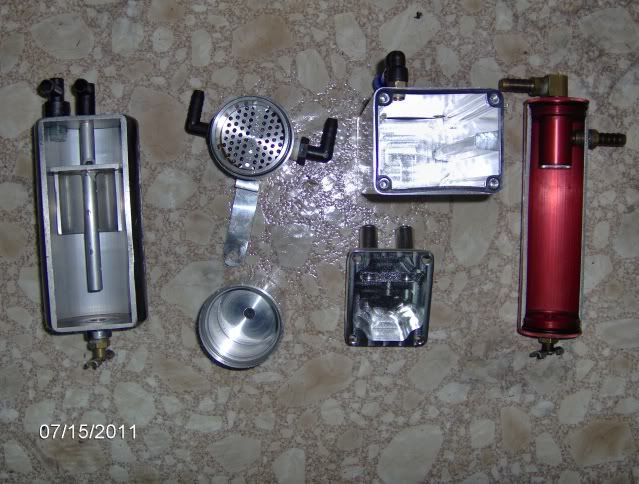
On the right you see one of the best functioning (sold with many labels) media cans. The outlet is app 1" from the inlet so it allows a small amount of oil to "pull through" as it drips out of the media chamber.
Next from the right is a beautifull CNC'd can from Ebay. As you can se it is just a liquid overflow can with 2 fittings in the top.....just an empty can that most of the vapors entering are pulled right out with at best 50% caught through condensation.
just left of it is one of the nicest looking, quality cans around....excelent machining and appearance. The problem here is both the inlet & outlet are in the same chamber with stainless mesh with a small separating barrier. It catches very little while the car is running as it is to small to allow the flow (velocity) to slow enough to allow the oil droplets to fall out of suspension as it is sucked right out the outlet. It catches most of the oil in the lower chamber after the car is shut off and the mesh that has saturated drips off and can collect. This unit also collects only 50-60% of the oil allowing far to much to pull through (as the test will show).
On the far left is the RX can. It uses no filter media as after it becomes saturated it allows small droplets to be pulled off the media and out the outlet. The Saikou Micchi is a similar concept with a perforated dispersion tube but has no separate chambers, diverter tube, or integrated flow controlling checkvalve. In tests though the Saikou Micchi caught app the same amount as the RX with neither allowing no, or almost no pull through.
TEST your cans function if you have any doubt. Even a beer can we added 2 fittings to caught app the same as a few of the higher priced on the market.
On the right you see one of the best functioning (sold with many labels) media cans. The outlet is app 1" from the inlet so it allows a small amount of oil to "pull through" as it drips out of the media chamber.
Next from the right is a beautifull CNC'd can from Ebay. As you can se it is just a liquid overflow can with 2 fittings in the top.....just an empty can that most of the vapors entering are pulled right out with at best 50% caught through condensation.
just left of it is one of the nicest looking, quality cans around....excelent machining and appearance. The problem here is both the inlet & outlet are in the same chamber with stainless mesh with a small separating barrier. It catches very little while the car is running as it is to small to allow the flow (velocity) to slow enough to allow the oil droplets to fall out of suspension as it is sucked right out the outlet. It catches most of the oil in the lower chamber after the car is shut off and the mesh that has saturated drips off and can collect. This unit also collects only 50-60% of the oil allowing far to much to pull through (as the test will show).
On the far left is the RX can. It uses no filter media as after it becomes saturated it allows small droplets to be pulled off the media and out the outlet. The Saikou Micchi is a similar concept with a perforated dispersion tube but has no separate chambers, diverter tube, or integrated flow controlling checkvalve. In tests though the Saikou Micchi caught app the same amount as the RX with neither allowing no, or almost no pull through.
TEST your cans function if you have any doubt. Even a beer can we added 2 fittings to caught app the same as a few of the higher priced on the market.
Drifting


Joined: Feb 2010
Posts: 1,527
Likes: 34
Here is a picture of several different cans cut apart or dissasembled:
On the right you see one of the best functioning (sold with many labels) media cans. The outlet is app 1" from the inlet so it allows a small amount of oil to "pull through" as it drips out of the media chamber.
Next from the right is a beautifull CNC'd can from Ebay. As you can se it is just a liquid overflow can with 2 fittings in the top.....just an empty can that most of the vapors entering are pulled right out with at best 50% caught through condensation.
just left of it is one of the nicest looking, quality cans around....excelent machining and appearance. The problem here is both the inlet & outlet are in the same chamber with stainless mesh with a small separating barrier. It catches very little while the car is running as it is to small to allow the flow (velocity) to slow enough to allow the oil droplets to fall out of suspension as it is sucked right out the outlet. It catches most of the oil in the lower chamber after the car is shut off and the mesh that has saturated drips off and can collect. This unit also collects only 50-60% of the oil allowing far to much to pull through (as the test will show).
On the far left is the RX can. It uses no filter media as after it becomes saturated it allows small droplets to be pulled off the media and out the outlet. The Saikou Micchi is a similar concept with a perforated dispersion tube but has no separate chambers, diverter tube, or integrated flow controlling checkvalve. In tests though the Saikou Micchi caught app the same amount as the RX with neither allowing no, or almost no pull through.
TEST your cans function if you have any doubt. Even a beer can we added 2 fittings to caught app the same as a few of the higher priced on the market.
On the right you see one of the best functioning (sold with many labels) media cans. The outlet is app 1" from the inlet so it allows a small amount of oil to "pull through" as it drips out of the media chamber.
Next from the right is a beautifull CNC'd can from Ebay. As you can se it is just a liquid overflow can with 2 fittings in the top.....just an empty can that most of the vapors entering are pulled right out with at best 50% caught through condensation.
just left of it is one of the nicest looking, quality cans around....excelent machining and appearance. The problem here is both the inlet & outlet are in the same chamber with stainless mesh with a small separating barrier. It catches very little while the car is running as it is to small to allow the flow (velocity) to slow enough to allow the oil droplets to fall out of suspension as it is sucked right out the outlet. It catches most of the oil in the lower chamber after the car is shut off and the mesh that has saturated drips off and can collect. This unit also collects only 50-60% of the oil allowing far to much to pull through (as the test will show).
On the far left is the RX can. It uses no filter media as after it becomes saturated it allows small droplets to be pulled off the media and out the outlet. The Saikou Micchi is a similar concept with a perforated dispersion tube but has no separate chambers, diverter tube, or integrated flow controlling checkvalve. In tests though the Saikou Micchi caught app the same amount as the RX with neither allowing no, or almost no pull through.
TEST your cans function if you have any doubt. Even a beer can we added 2 fittings to caught app the same as a few of the higher priced on the market.
From the stand point of construction, the sectioned view clearly shown the superior design. At this point, personally, I am leaning heavily onto he RX. However, there is one new design coming to the market, but with months of development and unanswered questions regarding to its construction details... Well....
Anyhow, a big
on not just pushing for a product, rather, with nothing to hide, clearly shown with sectioned view to demonstrate functionality.Right on!
Thread Starter
Pro
Joined: Jan 2011
Posts: 633
Likes: 6
There are other improvements that can be implemented into the RX can but the cost involved is not what the market seems to want. The dual can system is great for the road race crowd that are really dealing w/issues.
Remember though, ANY can is better than no can.
Remember though, ANY can is better than no can.
Drifting
Joined: Feb 2010
Posts: 1,527
Likes: 34
Feel free to PM or post here! TIA!
Corvette Stories
The Best of Corvette for Corvette Enthusiasts

5 Best & 5 Worst Corvette Daily Drivers
Joe Kucinski
The Headlights of Every Corvette Generation Explained
Joe Kucinski
5 Best & 5 Most Overrated Corvette Track Packages of All Time!
Joe Kucinski
Every 2027 Corvette Engine Explained
Joe Kucinski
Designer Imagines A Corvette That Looks More Like a Corvette Than the Corvette
Verdad Gallardo
10 Ugly Corvettes That We Still Kinda Love
Joe Kucinski
Top 10 Most Expensive Corvettes Ever Sold on Bring A Trailer
Brett Foote
10 Things Every Corvette Owner Needs (2026 Edition)
Michael S. Palmer
8 Most "Only Corvette Owners Understand" Quirks and Problems
Pouria Savadkouei
Thread Starter
Pro
Joined: Jan 2011
Posts: 633
Likes: 6
Larger unit (the more internal area, the slower the velocity of the vapors through and the easier for the oil to drop out of suspension), using a stainless steel checkvalve (adds $30-40) VS the poly one now used, etc.
Drifting
Joined: Feb 2010
Posts: 1,527
Likes: 34


3rd Gear

Joined: Apr 2012
Posts: 3
Likes: 0
Hopefully nobody gets mad at me bumping this again but I joined this forum to see if this is a good idea or not.
I have a used CCA catch can that I got off another forum. I read this very good thread about the ups and downs of catch cans. I saw that the only drawback to the CCA catch can was that the middle cylinder was to close to the output of the can. I had some clear 1"OD 3/4" ID hose and thought this would be a good fix.
I might cut it shorter because it might be too long but it if you keep it low enough on the center cylinder (see picture) it clears the output of the can. Let me know what you think.
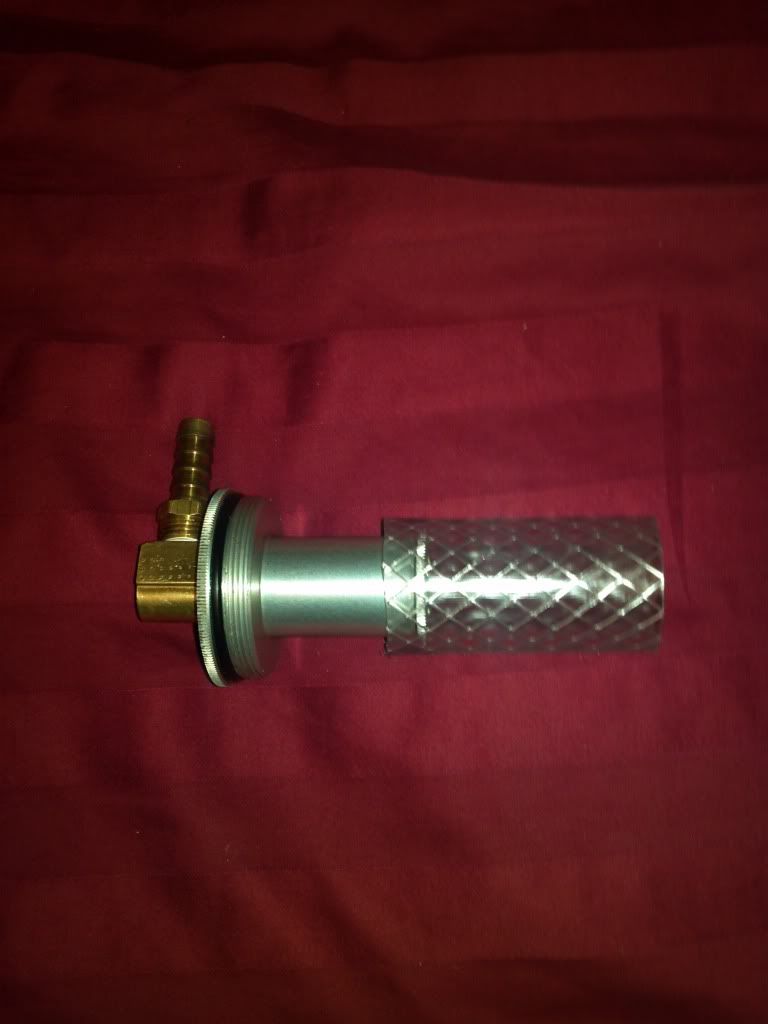
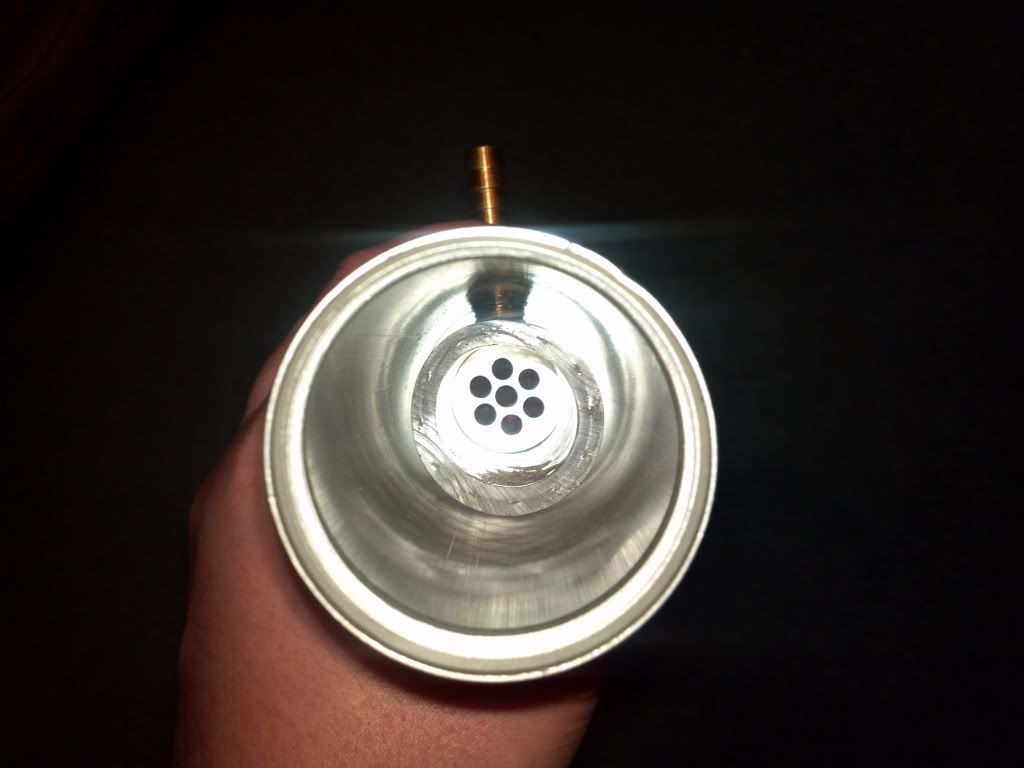
I have a used CCA catch can that I got off another forum. I read this very good thread about the ups and downs of catch cans. I saw that the only drawback to the CCA catch can was that the middle cylinder was to close to the output of the can. I had some clear 1"OD 3/4" ID hose and thought this would be a good fix.
I might cut it shorter because it might be too long but it if you keep it low enough on the center cylinder (see picture) it clears the output of the can. Let me know what you think.

Race Director

Joined: Dec 2000
Posts: 19,304
Likes: 85
From: San Diego CA
Guys, just to add my two cents.....
There is actually an ideal gas velocity range that encourages inertial impaction of oil droplets. Too slow and small droplets squirm their way around the typically large wire mesh. Too fast and oil is allowed to retrain into the air flow.
Every catch can is a compromise in one way or another but as was mentioned above, keep the can (and blowby gasses) as cool as possible. Mounting a catch can to the engine with a metal bracket is simply not a good way to do this.
There is actually an ideal gas velocity range that encourages inertial impaction of oil droplets. Too slow and small droplets squirm their way around the typically large wire mesh. Too fast and oil is allowed to retrain into the air flow.
Every catch can is a compromise in one way or another but as was mentioned above, keep the can (and blowby gasses) as cool as possible. Mounting a catch can to the engine with a metal bracket is simply not a good way to do this.

Drifting

Joined: Oct 2006
Posts: 1,340
Likes: 6
From: Redmond WA
Guys, just to add my two cents.....
There is actually an ideal gas velocity range that encourages inertial impaction of oil droplets. Too slow and small droplets squirm their way around the typically large wire mesh. Too fast and oil is allowed to retrain into the air flow.
Every catch can is a compromise in one way or another but as was mentioned above, keep the can (and blowby gasses) as cool as possible. Mounting a catch can to the engine with a metal bracket is simply not a good way to do this.
There is actually an ideal gas velocity range that encourages inertial impaction of oil droplets. Too slow and small droplets squirm their way around the typically large wire mesh. Too fast and oil is allowed to retrain into the air flow.
Every catch can is a compromise in one way or another but as was mentioned above, keep the can (and blowby gasses) as cool as possible. Mounting a catch can to the engine with a metal bracket is simply not a good way to do this.

Pro

Joined: Oct 2011
Posts: 696
Likes: 94
From: NC
Actually a catch can is only needed due to the poorly designed baffle system in the valve cover. I was shocked at the amount of oil in my TB and intake. When I changed my valve covers I saw why simply sucking air into the intake caused this. I fabricated a baffle in the oil fill tube ran a line from here to the intake. I made a catch can and put it in line just to see if the baffle worked. I have had absolutely NO oil in it.
So unless the can is properly designed and maintained you will still get oil ingested.
The old school PCV valves were necessary due to engine backfire. Not that common anymore and the TB blade takes care of this.
So unless the can is properly designed and maintained you will still get oil ingested.
The old school PCV valves were necessary due to engine backfire. Not that common anymore and the TB blade takes care of this.

Former Vendor
Joined: Apr 2006
Posts: 2,470
Likes: 2
From: Portland OR
St. Jude Donor '10-'11-'12
Holy revival of a dead self promoting thread batman !!!

We have our can coming and it has been tested better than anything we have seen on the market yet. Not pictured above our design is patent pending application.
We have our can coming and it has been tested better than anything we have seen on the market yet. Not pictured above our design is patent pending application.