






160 Deg Stat.

Drifting


Joined: Jul 2011
Posts: 1,825
Likes: 443
From: Boca Raton Florida

As there are myriad of factors involved in engine design and operational factors (water/oil temps for one, like the author says, if it was easy, we all would be doing it), here is one approach from the oil temperatures side of the things (for the ones who want to know the scientific side of things). Some you might already seen/familiar with this, I was not, and to my amazement (contrary to my long time beliefs, some 40 years of hot roding), I learned boat load of stuff. Again this is one piece in the whole puzzle of performance VS reliability/longevity, I am not putting this here to argue with anyone, as everyone's needs and applications are different (Street driven VS track, or both) hopefully armed also with this information, you can make the ultimate decision as to what is best for you (including what kind of oil).
http://www.bobistheoilguy.com/motor-oil-101/
And this goes from 101 all the way up to 109 with a exam and graduation at the end for the ones so inclined. It is free (and cheaper that staying at holiday express)...
http://www.bobistheoilguy.com/motor-oil-101/
And this goes from 101 all the way up to 109 with a exam and graduation at the end for the ones so inclined. It is free (and cheaper that staying at holiday express)...

Pro

Joined: Dec 2011
Posts: 640
Likes: 0
If 160 is good then why not 150 or 100 or removed completely?
The engine is designed for certain temps and expansion. And it needs to be at the designed operating temp.
If 200+ is too hot then the engineers would have increased cooling capacity to prevent higher temps. Instead upwards of 230 is common on higher powered LSx on a race track. So why use a 160 thermostat. By 180 it's wide open. At 210 the 160tstat is no different than the stock. At 230 both tstats are wide open and are equal.
200 is more than enough heat for hvac.
The engine is designed for certain temps and expansion. And it needs to be at the designed operating temp.
If 200+ is too hot then the engineers would have increased cooling capacity to prevent higher temps. Instead upwards of 230 is common on higher powered LSx on a race track. So why use a 160 thermostat. By 180 it's wide open. At 210 the 160tstat is no different than the stock. At 230 both tstats are wide open and are equal.
200 is more than enough heat for hvac.
Last edited by ryker; Feb 22, 2012 at 09:30 PM.

Safety Car


Joined: Nov 2011
Posts: 3,715
Likes: 343
From: Norman OK
Ryker coolant temps are also a function in the HVAC system, too cool and the heater will not be able to produce desireable heat.
Once again you are skipping over the primary function of the stock stat, it is part of the emmission control system.
Once again you are skipping over the primary function of the stock stat, it is part of the emmission control system.

Team Owner


Joined: May 2004
Posts: 26,345
Likes: 232
From: SoCal

Safety Car


Joined: May 2000
Posts: 4,827
Likes: 352
From: Albuquerque NM
If 160 is good then why not 150 or 100 or removed completely?
The engine is designed for certain temps and expansion. And it needs to be at the designed operating temp.
If 200+ is too hot then the engineers would have increased cooling capacity to prevent higher temps. Instead upwards of 230 is common on higher powered LSx on a race track. So why use a 160 thermostat. By 180 it's wide open. At 210 the 160tstat is no different than the stock. At 230 both tstats are wide open and are equal.
200 is more than enough heat for hvac.
The engine is designed for certain temps and expansion. And it needs to be at the designed operating temp.
If 200+ is too hot then the engineers would have increased cooling capacity to prevent higher temps. Instead upwards of 230 is common on higher powered LSx on a race track. So why use a 160 thermostat. By 180 it's wide open. At 210 the 160tstat is no different than the stock. At 230 both tstats are wide open and are equal.
200 is more than enough heat for hvac.
Safety Car
Joined: Nov 2011
Posts: 3,715
Likes: 343
From: Norman OK
Correct, the lowest on point in the stock calibration is 192°. With that the stock calibration does not even start to command the fan until 199° and even then it is only around 15% of fan speed at that point. The ECM lets the motor get to 221° before it even gets into any serious fan speed.
Corvette Stories
The Best of Corvette for Corvette Enthusiasts

Top 10 Most Expensive Corvettes Ever Sold on Bring A Trailer
Brett Foote
10 Things Every Corvette Owner Needs (2026 Edition)
Michael S. Palmer
8 Most "Only Corvette Owners Understand" Quirks and Problems
Pouria Savadkouei
10 Reasons the C6 Z06 is Still A Performance Benchmark After 20 Years
Joe Kucinski
How Much Horsepower Every Corvette Engine "LOST" in 1972
Joe Kucinski
Top 10 DOs and DON'Ts for Protecting Your Convertible Top!
Michael S. Palmer
Top 10 Most Explosive Corvettes Ever Made: Power-to-Weight Ratio Ranked!
Joe Kucinski
150 hp to 1,250 hp: Every Corvette Generation Compared by the Specs That Matter
Joe Kucinski
8 Coolest Corvette Pace Cars (and Replicas) of All Time
Verdad Gallardo
Team Owner
Joined: May 2004
Posts: 26,345
Likes: 232
From: SoCal
Correct, the lowest on point in the stock calibration is 192°. With that the stock calibration does not even start to command the fan until 199° and even then it is only around 15% of fan speed at that point. The ECM lets the motor get to 221° before it even gets into any serious fan speed.

DH

Drifting
Joined: Apr 2006
Posts: 1,276
Likes: 5
From: Ambler Pa.
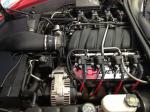
 The fan is pointless @ 75 mph, But since the fan will will get the stop command rather quickly at that speed, they did not spend the money to include an override function.
Instructor

Joined: Nov 2011
Posts: 191
Likes: 8
From: Athens Alabama
Wow I cant believe I read the whole thing
I had bought a 160 thermostat earlier, I just have not installed it. I have a diablo tune on my Z06 and was interested in this post. I do want to thank everyone for thier information. If getting a little spirited makes you want to remove someone from your list, then I would say you are foolish to remove a big source of FREE information. The bottom line is because there are so many variables with any automobile the only way of really telling if something works or not is by testing it. I am going to go with Chuck on this one, because real life experience is a much better learning tool than anything you can read in a book.


Pro

Joined: Jan 2008
Posts: 642
Likes: 48
From: New Jersey
FWIW - it takes at least 40% fan on to keep the temp from rising. Anything below that seems useless as the temp will keep rising. That's on my stock ls7. Other engines may be different. So I have my fan setting for 20% at 192, 40% at 196, 60% at 200 etc. This is with a 160 stat.
Racer
Joined: Dec 2006
Posts: 343
Likes: 1
From: Houston TX
To understand the benefits of lower operating temps we need to remember what is actually happening inside the engine. Combustion of gasoline produces PRESSURE and heat. The PRESSURE of combustion is applied against the piston and turned into power. The heat of combustion goes right out the tail pipe (unless utilized by a turbocharger....)
FACT: The piston driven internal combustion engine is probably one of the most thermally inefficient designs out there. It is not designed to turn heat into power, it uses the PRESSURE from combustion to make power. This is vastly different from a turbine which employs a much higher thermal efficiency.
Now what does that have to do with thermostats.... Well with an engine that makes power from pressure, obviously increasing the pressure will net you more power. How do we do that. Well we can change the valve events, we can increase the compression ratio of the engine, change displacement, etc. but assuming we don’t want to go there... changing the ignition timing of the engine will also allow for better combustion and more PRESSURE produced in the combustion chamber = more power. A hotter combustion chamber is more susceptible to pre-ignition. By lowering the combustion chamber temps we can introduce more ignition timing into the engine and produce more PRESSURE in the combustion cycle that will net more power. Granted it is not a huge gain, but it is real.
The argument of well then why not run your engine at 100 degrees always comes up here and I think is covered well in the metal temp discussions. The engine needs to be up to temp to ensure proper wear and tear.
Excessive heat will lead to metal fatigue and pre-ignition. There is no 'good reason' to run an engine at 200+ degrees. The magic number (where all factors balance out) seems to be around 180. My car with a 160 deg t-stat runs at 178 and will creep to 185 on a hot day.
FACT: The piston driven internal combustion engine is probably one of the most thermally inefficient designs out there. It is not designed to turn heat into power, it uses the PRESSURE from combustion to make power. This is vastly different from a turbine which employs a much higher thermal efficiency.
Now what does that have to do with thermostats.... Well with an engine that makes power from pressure, obviously increasing the pressure will net you more power. How do we do that. Well we can change the valve events, we can increase the compression ratio of the engine, change displacement, etc. but assuming we don’t want to go there... changing the ignition timing of the engine will also allow for better combustion and more PRESSURE produced in the combustion chamber = more power. A hotter combustion chamber is more susceptible to pre-ignition. By lowering the combustion chamber temps we can introduce more ignition timing into the engine and produce more PRESSURE in the combustion cycle that will net more power. Granted it is not a huge gain, but it is real.
The argument of well then why not run your engine at 100 degrees always comes up here and I think is covered well in the metal temp discussions. The engine needs to be up to temp to ensure proper wear and tear.
Excessive heat will lead to metal fatigue and pre-ignition. There is no 'good reason' to run an engine at 200+ degrees. The magic number (where all factors balance out) seems to be around 180. My car with a 160 deg t-stat runs at 178 and will creep to 185 on a hot day.
Drifting
Joined: Apr 2006
Posts: 1,276
Likes: 5
From: Ambler Pa.
To understand the benefits of lower operating temps we need to remember what is actually happening inside the engine. Combustion of gasoline produces PRESSURE and heat. The PRESSURE of combustion is applied against the piston and turned into power. The heat of combustion goes right out the tail pipe (unless utilized by a turbocharger....)
FACT: The piston driven internal combustion engine is probably one of the most thermally inefficient designs out there. It is not designed to turn heat into power, it uses the PRESSURE from combustion to make power. This is vastly different from a turbine which employs a much higher thermal efficiency.
Now what does that have to do with thermostats.... Well with an engine that makes power from pressure, obviously increasing the pressure will net you more power. How do we do that. Well we can change the valve events, we can increase the compression ratio of the engine, change displacement, etc. but assuming we don’t want to go there... changing the ignition timing of the engine will also allow for better combustion and more PRESSURE produced in the combustion chamber = more power. A hotter combustion chamber is more susceptible to pre-ignition. By lowering the combustion chamber temps we can introduce more ignition timing into the engine and produce more PRESSURE in the combustion cycle that will net more power. Granted it is not a huge gain, but it is real.
The argument of well then why not run your engine at 100 degrees always comes up here and I think is covered well in the metal temp discussions. The engine needs to be up to temp to ensure proper wear and tear.
Excessive heat will lead to metal fatigue and pre-ignition. There is no 'good reason' to run an engine at 200+ degrees. The magic number (where all factors balance out) seems to be around 180. My car with a 160 deg t-stat runs at 178 and will creep to 185 on a hot day.
FACT: The piston driven internal combustion engine is probably one of the most thermally inefficient designs out there. It is not designed to turn heat into power, it uses the PRESSURE from combustion to make power. This is vastly different from a turbine which employs a much higher thermal efficiency.
Now what does that have to do with thermostats.... Well with an engine that makes power from pressure, obviously increasing the pressure will net you more power. How do we do that. Well we can change the valve events, we can increase the compression ratio of the engine, change displacement, etc. but assuming we don’t want to go there... changing the ignition timing of the engine will also allow for better combustion and more PRESSURE produced in the combustion chamber = more power. A hotter combustion chamber is more susceptible to pre-ignition. By lowering the combustion chamber temps we can introduce more ignition timing into the engine and produce more PRESSURE in the combustion cycle that will net more power. Granted it is not a huge gain, but it is real.
The argument of well then why not run your engine at 100 degrees always comes up here and I think is covered well in the metal temp discussions. The engine needs to be up to temp to ensure proper wear and tear.
Excessive heat will lead to metal fatigue and pre-ignition. There is no 'good reason' to run an engine at 200+ degrees. The magic number (where all factors balance out) seems to be around 180. My car with a 160 deg t-stat runs at 178 and will creep to 185 on a hot day.
 My observations exactly.


Melting Slicks


Joined: Sep 2006
Posts: 3,248
Likes: 265
From: Louisville Ky NCM Lifetime Member 429 (Member Since 1993)
St. Jude Donor '12-'13, '16
I had bought a 160 thermostat earlier, I just have not installed it. I have a diablo tune on my Z06 and was interested in this post. I do want to thank everyone for thier information. If getting a little spirited makes you want to remove someone from your list, then I would say you are foolish to remove a big source of FREE information. The bottom line is because there are so many variables with any automobile the only way of really telling if something works or not is by testing it. I am going to go with Chuck on this one, because real life experience is a much better learning tool than anything you can read in a book.
yeah, this thread will make your head spin.I would rather go with a proven source than one or two individual's hiding behind what the call "science". One "ugly" graph proves nothing. I will stick with Chuck as well.
Instructor
Joined: Nov 2011
Posts: 191
Likes: 8
From: Athens Alabama
I finally did install the thermostat and am glad I did. I have had zero problems, and the water temp runs 178 degrees at cruise. It gets pretty hot here in Alabama. I did not reprogram the fans, I have a manual fan switch but rarely use it. Has soon as I get moving the engine cools right down. I like having the engine running cooler so it stays in the higher state of tune.
