



Break 'em in the right way

Team Owner


Joined: Aug 2004
Posts: 21,543
Likes: 3,216
From: Park City Utah

" I will stay old school. No offense, but I like the insurance of the old ways. "
It implies that they AREN'T "thinking", and that they're just doing what they've always done because that's the way they've always done it. Everyone has a right to their opinion, but hopefully their opinion is backed up by more than, "...because that's how I've always done it."

Le Mans Master


Joined: Dec 2004
Posts: 5,759
Likes: 539
From: AZ
St. Jude Donor '06-'08-'10-'11-'12-'13 '14-'15-'16-'17-'18-'19
Right. I seriously hope that you didn't think that I was serious. I doubt it too. But when someone says,
" I will stay old school. No offense, but I like the insurance of the old ways. "
It implies that they AREN'T "thinking", and that they're just doing what they've always done because that's the way they've always done it. Everyone has a right to their opinion, but hopefully their opinion is backed up by more than, "...because that's how I've always done it."
" I will stay old school. No offense, but I like the insurance of the old ways. "
It implies that they AREN'T "thinking", and that they're just doing what they've always done because that's the way they've always done it. Everyone has a right to their opinion, but hopefully their opinion is backed up by more than, "...because that's how I've always done it."

Melting Slicks

Joined: Nov 2013
Posts: 2,016
Likes: 73
From: Texas
Right. I seriously hope that you didn't think that I was serious. I doubt it too. But when someone says,
" I will stay old school. No offense, but I like the insurance of the old ways. "
It implies that they AREN'T "thinking", and that they're just doing what they've always done because that's the way they've always done it. Everyone has a right to their opinion, but hopefully their opinion is backed up by more than, "...because that's how I've always done it."
" I will stay old school. No offense, but I like the insurance of the old ways. "
It implies that they AREN'T "thinking", and that they're just doing what they've always done because that's the way they've always done it. Everyone has a right to their opinion, but hopefully their opinion is backed up by more than, "...because that's how I've always done it."
As I said a sample of one isn’t too meaningful. In my small sample, I once sold a very pristine 82 Mustang GT. People who bought it turned it over to their teenage boy. Last it was seen it was blowing lots of blue smoke. When I had it, it never used oil. Kid must have horsewhipped it. Don

Pro


Joined: May 2007
Posts: 511
Likes: 12
From: Parkville Maryland
I horse whipped my VW from the time I bought it used to the day I got rid of it and it never burned oil but, I also know how to rev match to the next gear and never over rev'd the engine. Never used the engine as a brake either, thats what brakes are for. From one wheel burnouts to red lining every gear to banging the next gear and chirping tires, that car never skipped a beat through its 10000 mile oil changes. Was a fun car to "horse whip"
Lift throttle over steer XD so much fun
There is a difference to banging gears and shifting a little slower to sync engine and transmission speed to have a smooth and positive shift.
Lift throttle over steer XD so much fun
There is a difference to banging gears and shifting a little slower to sync engine and transmission speed to have a smooth and positive shift.

Drifting


Joined: Dec 2010
Posts: 1,779
Likes: 1,554
From: Las Vegas NV
When I bought my C6, I drove it out of the dealer showroom, straight HERE...
2000' vertical rise over 5.1 miles...and look at the curves! That was my car's "break in". .
2000' vertical rise over 5.1 miles...and look at the curves! That was my car's "break in". .
Team Owner
Joined: Aug 2004
Posts: 21,543
Likes: 3,216
From: Park City Utah

Scraping the splitter.

Joined: Jun 2005
Posts: 8,111
Likes: 1,029
St. Jude Donor '13-'14-'15
Corvette Stories
The Best of Corvette for Corvette Enthusiasts

Top 10 Most Expensive Corvettes Ever Sold on Bring A Trailer
Brett Foote
10 Things Every Corvette Owner Needs (2026 Edition)
Michael S. Palmer
8 Most "Only Corvette Owners Understand" Quirks and Problems
Pouria Savadkouei
10 Reasons the C6 Z06 is Still A Performance Benchmark After 20 Years
Joe Kucinski
How Much Horsepower Every Corvette Engine "LOST" in 1972
Joe Kucinski
Top 10 DOs and DON'Ts for Protecting Your Convertible Top!
Michael S. Palmer
Top 10 Most Explosive Corvettes Ever Made: Power-to-Weight Ratio Ranked!
Joe Kucinski
150 hp to 1,250 hp: Every Corvette Generation Compared by the Specs That Matter
Joe Kucinski
8 Coolest Corvette Pace Cars (and Replicas) of All Time
Verdad Gallardo
Drifting
Joined: Dec 2010
Posts: 1,779
Likes: 1,554
From: Las Vegas NV
Same carbon rotors and pads as the ZR1. The GM break-in calls for 50 accelerations to 60+ mph with hard stops, then a steady speed cooling period. It keeps the pads from "outgassing" later when used on the track. There was a significant increase in braking action after the break-in.
Race Director

Joined: Jun 2001
Posts: 10,084
Likes: 3,056
From: CA
Even with a tachometer that shows a redline of 4400 rpm for the first 500 miles, we still have the same "know it alls" claiming you don't need to break in the engine.  The engineers couldn't have made this any more obvious short of putting the words "DUNCE" in the redline area.
Michael
The engineers couldn't have made this any more obvious short of putting the words "DUNCE" in the redline area.Michael

Drifting
Joined: Sep 2013
Posts: 1,259
Likes: 24
Even with a tachometer that shows a redline of 4400 rpm for the first 500 miles, we still have the same "know it alls" claiming you don't need to break in the engine. The engineers couldn't have made this any more obvious short of putting the words "DUNCE" in the redline area.
Michael
The engineers couldn't have made this any more obvious short of putting the words "DUNCE" in the redline area.Michael
 Some of the keyboard legends come up with the most ridiculous and unfounded baloney. How the "drive it like you stole it" break-in procedure came about is beyond my comprehension. I think some of this junk must be juvenile babble from latch key kids!
Drifting
Joined: Dec 2010
Posts: 1,779
Likes: 1,554
From: Las Vegas NV
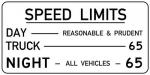
Anybody notice that the recent posts in this forum from both the Bondurant and Ron Fellows Schools mentioned that their C7s were or would be ready for courses "after they got them broken in"? Dang, guess GM forgot to tell them they were wasting their time.

Le Mans Master

Joined: Oct 2007
Posts: 6,149
Likes: 11
From: Greater Detroit Metro MI, when I'm not travelling.
Same carbon rotors and pads as the ZR1. The GM break-in calls for 50 accelerations to 60+ mph with hard stops, then a steady speed cooling period. It keeps the pads from "outgassing" later when used on the track. There was a significant increase in braking action after the break-in.
Bedding in brakes has to do with transferring brake pad material to the rotor and burnishing the surfaces of both.

Le Mans Master


Joined: Jul 2005
Posts: 5,328
Likes: 405
All I can tell you as an old (65) petroleum chemist, who has spent a lot of time with engines, metal surfaces take time to seat, even newly machined surfaces. This time is needed even with the newer oils, such as Mobil 1, which keep engine parts away from each other more with a 400% increase in shear-strength. If someone thinks this occurs in a few hundred miles, then I think it will be hard for my personal experience to replicate that thinking. When you look at these mating surfaces under an electron microscope, as I have, after various mileage, you clearly see why engines need time to break in. So for me, I will stick with my oil changes at 1,000 or less miles with a new engine, and at 3,000 miles with a new engine, and at 6,000 miles with a new engine. Then, and only then, will I go to the extended ranges refereed in the owners manual. And, my break in speeds will not be at speeds above highway speed limits and I will shift in the lower RPM ranges. Others can do what they want, and believe what they want, but for me, being involved in over 40 years of this stuff, buying engines from people like John Lingenfelter and building engines myself, I will follow the old school route. I was even talking with a guy last week who said to not prelude a new cam because the new oils do not require it. Huh? Really? Oh well, I like letting the "new" thinkers peal the dollars from their wallets instead of mine. I will stay old school. No offense, but I like the insurance of the old ways. But then I baby ever Vette I have ever owned... because that is the kind of guy I like to be.
The tires take about 200 miles for the mold release to come off, this is true any time you get new tires. The brakes and manual/auto transmission clutches take about 200 miles to burnish in to their steel mating surfaces. The gears in manual/auto transmissions are involute helical cut gears with pure rolling at the pitch line and don't require any break in. The ring and pinion gears in the differential are the biggest concern which is why they don't want you going full throttle or above a certain speed and want you to vary your speed. There is a lot of sliding action at the gear tooth interface of a hypoid gear set and excess force (full throttle) or force applied over a long period (high speeds) generates a lot of heat at the high spots on the gears which changes the molecular structure of the metal resulting in an early failure. Varying your speed allows load to be removed from the gears for a slight cooling affect.
For the engine...it's already broken in before you get it. In the old days ('60s) when cast iron rings were used and oil technology was nowhere close to what it is today, there was a break in period for the rings to seat and a good reason for the first oil change to be at 500 miles. Today, GM uses moly rings on a cylinder wall with a plateau finish hone...the rings seat instantly and the plateau finish closely resembles the surface finish desired for seated rings. You're not much older than me and I've been using moly rings/plateau finishes for 30 years so you should be familiar with them. As far as the rest of the engine goes, the main/rod/cam bearing have hydrodynamic lubrication...they won't touch except during starting with zero oil pressure. There are roller bearings at the lifters and rocker arms. The pistons are installed with a negative piston to cylinder wall clearance...yes, the measured piston diameter is larger than the bore. How do they do it??? There is an anti-friction coating applied to the piston skirt in the barrel area that abrades away in the first 200 or so revolutions. So what major parts have I missed? There is nothing in the engine requiring a break in...drive it hard or easy, you're not going to hurt the engine.
Oils today are lightyears ahead of yesteryear and so are oil filters. Good quality oil filters today have a Beta 7 rating of 75 which means they are 98.7% effective at removing particles 7 microns and larger on a multi-pass test. You can change your oil as often as you want, all you're doing is wasting money but if it makes you feel better rock on.

Team Owner
Joined: Aug 2004
Posts: 21,543
Likes: 3,216
From: Park City Utah
The break in procedure in the owner's manual is good to follow but keep in mind two things...first, the procedure is for the whole car and not the engine; second, it's fairly conservative which is ok.
For the engine...it's already broken in before you get it. There is nothing in the engine requiring a break in...drive it hard or easy, you're not going to hurt the engine.
Oils today are lightyears ahead of yesteryear and so are oil filters.
For the engine...it's already broken in before you get it. There is nothing in the engine requiring a break in...drive it hard or easy, you're not going to hurt the engine.
Oils today are lightyears ahead of yesteryear and so are oil filters.
Drifting
Joined: Dec 2010
Posts: 1,779
Likes: 1,554
From: Las Vegas NV
Pappy