




Best Catch Can for Supercharged Base

I'm Batman..


Joined: Apr 2014
Posts: 6,142
Likes: 921
From: Lehigh Acres FL
Tech Contributor

Sorry guys, we have been very busy at the shop and not spending enough time on the forums to answer questions or to even show some of our new products and packages.
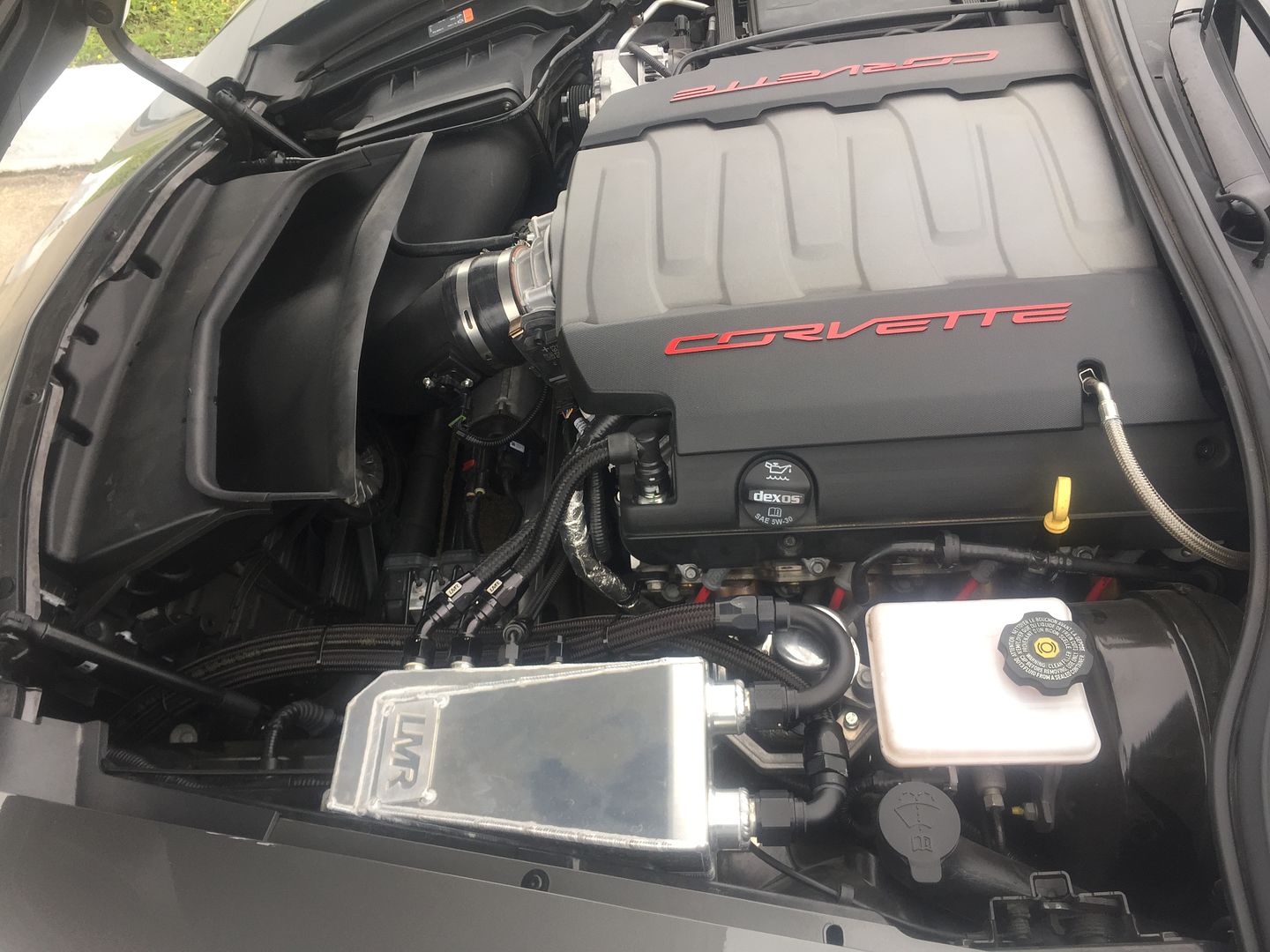
Yes, our breather system is pricey and I apologize about having to raise the price due to our relocation system. It was just the right thing to do since it was 50/50 with customers asking about the smell in the cab with AC on and sitting in traffic. If I owned the Earls fittings and Pro lite hose we use in the relocation kit I would not have to charge so much. Any one of you can look up what a -12AN earls fitting cost(they are not cheap), but we only use the best of the best products.
(1 fitting from summit close to $50 plus shipping)
http://www.summitracing.com/parts/ear-at818012erl
Our customers spend top dollar for superior products, we can not have any issues when customers take their cars on 30 min sessions, 5 times a weekend on a road course. We manufacture our products and put together our performance packages to perform at the highest level with strength and durability. We know our customers will push and enjoy their cars like they were built for.
We do have them in stock ready to ship in both Aluminum and black powder coated.
Steven Fereday
Yes, our breather system is pricey and I apologize about having to raise the price due to our relocation system. It was just the right thing to do since it was 50/50 with customers asking about the smell in the cab with AC on and sitting in traffic. If I owned the Earls fittings and Pro lite hose we use in the relocation kit I would not have to charge so much. Any one of you can look up what a -12AN earls fitting cost(they are not cheap), but we only use the best of the best products.
(1 fitting from summit close to $50 plus shipping)
http://www.summitracing.com/parts/ear-at818012erl
Our customers spend top dollar for superior products, we can not have any issues when customers take their cars on 30 min sessions, 5 times a weekend on a road course. We manufacture our products and put together our performance packages to perform at the highest level with strength and durability. We know our customers will push and enjoy their cars like they were built for.
We do have them in stock ready to ship in both Aluminum and black powder coated.
Steven Fereday
can you advise on what the cost would be to update my original release kit without the revisions so it has the revisions with the quick connect clips on the lines as well as the rerouting for the smell issue? thanks
Anthony

Racer

Joined: Oct 2014
Posts: 455
Likes: 23
Sorry guys, we have been very busy at the shop and not spending enough time on the forums to answer questions or to even show some of our new products and packages.
Yes, our breather system is pricey and I apologize about having to raise the price due to our relocation system. It was just the right thing to do since it was 50/50 with customers asking about the smell in the cab with AC on and sitting in traffic. If I owned the Earls fittings and Pro lite hose we use in the relocation kit I would not have to charge so much. Any one of you can look up what a -12AN earls fitting cost(they are not cheap), but we only use the best of the best products.
(1 fitting from summit close to $50 plus shipping)
http://www.summitracing.com/parts/ear-at818012erl
Our customers spend top dollar for superior products, we can not have any issues when customers take their cars on 30 min sessions, 5 times a weekend on a road course. We manufacture our products and put together our performance packages to perform at the highest level with strength and durability. We know our customers will push and enjoy their cars like they were built for.
We do have them in stock ready to ship in both Aluminum and black powder coated.
Steven Fereday
Yes, our breather system is pricey and I apologize about having to raise the price due to our relocation system. It was just the right thing to do since it was 50/50 with customers asking about the smell in the cab with AC on and sitting in traffic. If I owned the Earls fittings and Pro lite hose we use in the relocation kit I would not have to charge so much. Any one of you can look up what a -12AN earls fitting cost(they are not cheap), but we only use the best of the best products.
(1 fitting from summit close to $50 plus shipping)
http://www.summitracing.com/parts/ear-at818012erl
Our customers spend top dollar for superior products, we can not have any issues when customers take their cars on 30 min sessions, 5 times a weekend on a road course. We manufacture our products and put together our performance packages to perform at the highest level with strength and durability. We know our customers will push and enjoy their cars like they were built for.


We do have them in stock ready to ship in both Aluminum and black powder coated.
Steven Fereday
Racer
Joined: Mar 2014
Posts: 407
Likes: 15
Raise prices I understand. $450 increase for 2 $47 fittings. Black powered coated was $50 now it's $100. I just don't understand how the price increase can be so much. Is it because you have to make up some of the money you sold at when customers were getting the option with the fittings before? Never seen such a increase of almost double the price.

Drifting


Joined: Jan 2005
Posts: 1,827
Likes: 301
From: Tucson Arizona
St. Jude Donor '08
What is the least expensive system for a supercharged engine that;
-does not vent to the atmosphere
-collects the majority of oil that would otherwise
reach the valves/combustion chamber?
-does not vent to the atmosphere
-collects the majority of oil that would otherwise
reach the valves/combustion chamber?

Melting Slicks

Joined: Dec 2004
Posts: 3,120
Likes: 119
St. Jude Donor '10
Raise prices I understand. $450 increase for 2 $47 fittings. Black powered coated was $50 now it's $100. I just don't understand how the price increase can be so much. Is it because you have to make up some of the money you sold at when customers were getting the option with the fittings before? Never seen such a increase of almost double the price.
Road draft tube
The first refinement in crankcase ventilation was the road draft tube, which is a pipe running from a high location contiguous to the crankcase (such as the side of the engine block, or the valve cover on an overhead valve engine) down to an open end facing down and located in the vehicle's slipstream. When the vehicle is moving, airflow across the open end of the tube creates a draft that pulls gases out of the crankcase. The high location of the engine end of the pipe minimizes liquid oil loss. An air inlet path to the crankcase, called the breather and often incorporated into the oil filler cap, meant that when a draft was generated at the tube, fresh air swept through the crankcase to clear out the blow-by gases.[2]
The road draft tube, though simple, has shortcomings: it does not function when the vehicle is moving too slowly to create a draft, so postal and other slow-moving delivery vehicles tended to suffer rapid buildup of engine sludge due to poor crankcase ventilation. And non-road vehicles such as boats never generated a draft on the tube, no matter how fast they were going.[2] The draft tube discharged the crankcase gases, composed largely of unburnt hydrocarbons, directly into the air. This created pollution as well as objectionable odors.[2] Moreover, the draft tube could become clogged with snow or ice, in which case crankcase pressure would build and cause oil leaks and gasket failure.
And how they found it kept engine oil clean longer and drastically extended engine life and reduced wear...they discovered this by pure accident as they designed the PCV system as an emissions device only at the time not realizing the results of crankcase evacuation VS just venting pressure:
Positive crankcase ventilation (PCV)[edit]
During World War II a different type of crankcase ventilation had to be invented to allow tank engines to operate during deep fording operations, where the normal draft tube ventilator would have allowed water to enter the crankcase and destroy the engine.[4] The PCV system and its control valve were invented to meet this need, but no need for it on automobiles was recognized.
In 1952, Professor A. J. Haagen-Smit, of the California Institute of Technology at Pasadena, postulated that unburned hydrocarbons were a primary constituent of smog, and that gasoline powered automobiles were a major source of those hydrocarbons. After some investigation by the GM Research Laboratory (led by Dr. Lloyd L. Withrow), it was discovered in 1958 that the road draft tube was a major source—about half—of the hydrocarbons coming from the automobile. GM's Cadillac Division, which had built many tanks during WWII, recognized that installation of PCV on vehicles could bring the first major reduction in automotive hydrocarbon emissions. After confirming the PCV valve's effectiveness at hydrocarbon reduction, GM offered the PCV solution to the entire U.S. automobile industry, royalty free, through its trade association, the Automobile Manufacturers Association (AMA).[citation needed] The PCV system thus became the first real vehicle emissions control device.
Positive crankcase ventilation was first installed on a widespread basis by law on all new 1961-model cars first sold in California. The following year, New York required it. By 1964, most new cars sold in the U.S. were so equipped by voluntary industry action so as not to have to make multiple state-specific versions of vehicles. PCV quickly became standard equipment on all vehicles worldwide because of its benefits not only in emissions reduction but also in engine internal cleanliness and oil lifespan.[2][5]
In 1967, several years after its introduction into production, the PCV system became the subject of a U.S. federal grand jury investigation, when it was alleged by some industry critics that the AMA was conspiring to keep several such smog reduction devices on the shelf to delay additional smog control. After eighteen months of investigation by U.S. Attorney Samuel Flatow, the grand jury returned a "no-bill" decision, clearing the AMA, but resulting in a "Consent Decree" that all U.S. automobile companies agreed not to work jointly on smog control activities for a period of ten years.[citation needed]
In the decades since, legislation and regulation of vehicular emissions has tightened substantially, and the toxic emissions of cars and light trucks have decreased substantially. Today's petrol engines continue to use PCV systems.
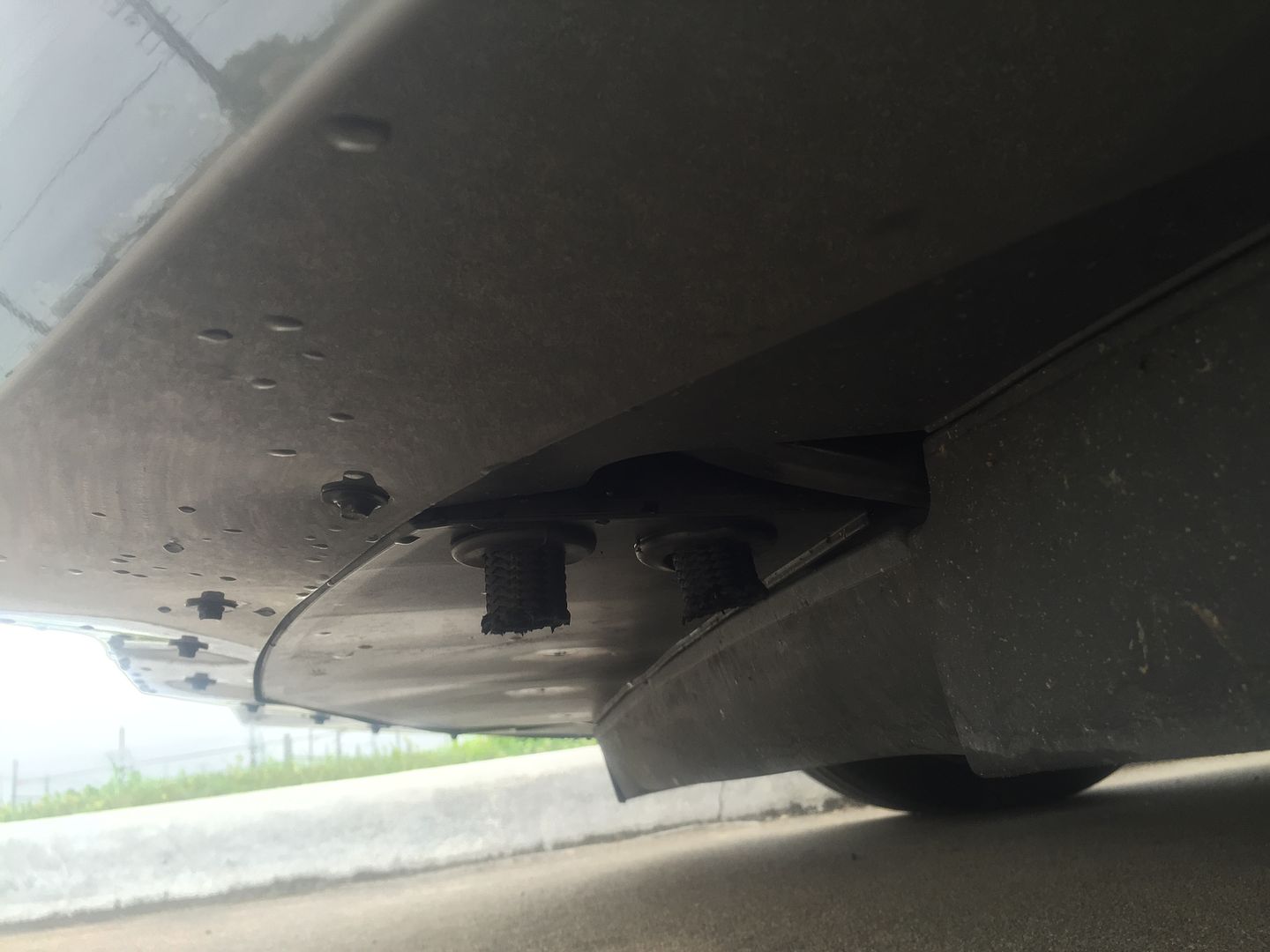
I would also add (and the pictures show NO inline filtration!) that if you study the Venturi effect, you will find that with 2 hoses in the air stream passing at speed, they will NOT produce the same amount of suction. One will always be stronger than the other and over power the other so it will act as a vacuum at speed and suck that dirt/sand/dust/water up into the crankcase...someone really should have researched that design before releasing it to the public. Just look close at the picture of the hose ends, you can see the dirt/etc. already caking the ends from the oil residue that coats them. Over time, take the hoses loose from the tank and you will see dirt at the tank end as well. Even adding a inline filter to each line that filter would clog in short order due to the amount of dirt entering.

Last edited by COSPEED; Jul 26, 2015 at 01:10 PM.
Melting Slicks
Joined: Dec 2004
Posts: 3,120
Likes: 119
St. Jude Donor '10
knowing something and caring are two different things. i could give a sht about warranty or emissions. i'm not sitting in colorado toking it up and hugging trees. around here we drill for oil and fill the skies with diesel.
anyways, the mighty mouse does not vent to atmosphere without significant pressure and my truck intake is bone dry with the can, what else should the can be doing for me?
anyways, the mighty mouse does not vent to atmosphere without significant pressure and my truck intake is bone dry with the can, what else should the can be doing for me?
Can you please explain in detail how this works without shortening engine life and increasing internal wear? That would be a huge help as I have not only gone into great detail, but have also provided reference documents as well that support all I have stated, and tons more is available out there for any wishing to research. Pleas enlighten me as I am sure you would have done much research into this before installing it on a $50-$100k car of course. And what I just saw in the pictures is very alarming.
 Just let me know if what I have provided already is not enough...the industry white papers out there have all the data you could want.
Also, I just typed in "www.bestcatchcan.com" and that domain name is taken....

Last edited by COSPEED; Jul 26, 2015 at 01:22 PM.

Race Director


Joined: Jul 2007
Posts: 10,961
Likes: 2,643
From: Texas Hill Country
seems like in today's day and age people would do a little bit of research before sounding the alarms, but then again, people are still just....people.
WOW OH WOW OH MY GOSH I HAVE NO IDEA WHAT BREATHER DOES WHAT, DID I MENTION I SELL A DIFFERENT BREATHER??? let me reference something that doesn't even apply to the current conversation!
not very becoming of a vendor, imo. if you want to sell your wares on this site it might take a little more tact, grace, and politic.....chicken little and negative nancy never made very good salespeople. probably not your intention, but just how it's coming off. just trying to help, i love skiing and want the colorado economy to thrive.
WOW OH WOW OH MY GOSH I HAVE NO IDEA WHAT BREATHER DOES WHAT, DID I MENTION I SELL A DIFFERENT BREATHER??? let me reference something that doesn't even apply to the current conversation!
not very becoming of a vendor, imo. if you want to sell your wares on this site it might take a little more tact, grace, and politic.....chicken little and negative nancy never made very good salespeople. probably not your intention, but just how it's coming off. just trying to help, i love skiing and want the colorado economy to thrive.
Melting Slicks
Joined: Dec 2004
Posts: 3,120
Likes: 119
St. Jude Donor '10
seems like in today's day and age people would do a little bit of research before sounding the alarms, but then again, people are still just....people.
WOW OH WOW OH MY GOSH I HAVE NO IDEA WHAT BREATHER DOES WHAT, DID I MENTION I SELL A DIFFERENT BREATHER??? let me reference something that doesn't even apply to the current conversation!
not very becoming of a vendor, imo. if you want to sell your wares on this site it might take a little more tact, grace, and politic.....chicken little and negative nancy never made very good salespeople. probably not your intention, but just how it's coming off. just trying to help, i love skiing and want the colorado economy to thrive.
WOW OH WOW OH MY GOSH I HAVE NO IDEA WHAT BREATHER DOES WHAT, DID I MENTION I SELL A DIFFERENT BREATHER??? let me reference something that doesn't even apply to the current conversation!
not very becoming of a vendor, imo. if you want to sell your wares on this site it might take a little more tact, grace, and politic.....chicken little and negative nancy never made very good salespeople. probably not your intention, but just how it's coming off. just trying to help, i love skiing and want the colorado economy to thrive.
Corvette Stories
The Best of Corvette for Corvette Enthusiasts

Top 10 Most Expensive Corvettes Ever Sold on Bring A Trailer
Brett Foote
10 Things Every Corvette Owner Needs (2026 Edition)
Michael S. Palmer
8 Most "Only Corvette Owners Understand" Quirks and Problems
Pouria Savadkouei
10 Reasons the C6 Z06 is Still A Performance Benchmark After 20 Years
Joe Kucinski
How Much Horsepower Every Corvette Engine "LOST" in 1972
Joe Kucinski
Top 10 DOs and DON'Ts for Protecting Your Convertible Top!
Michael S. Palmer
Top 10 Most Explosive Corvettes Ever Made: Power-to-Weight Ratio Ranked!
Joe Kucinski
150 hp to 1,250 hp: Every Corvette Generation Compared by the Specs That Matter
Joe Kucinski
8 Coolest Corvette Pace Cars (and Replicas) of All Time
Verdad Gallardo
Race Director
Joined: Jul 2007
Posts: 10,961
Likes: 2,643
From: Texas Hill Country
It should be pulling vacuum/suction at all times....not just venting pressure when it builds enough. It is stopping oil from entering the intake, but at the expense of the engine over time. It also has no separator on the clean side, so oil would get pushed out that adapter on the oil fill cap into the main air filter and enter there as the pressure will seek the path of least resistance in that time before it builds enough to open the breather vent.. So your telling me it allows a good deal of pressure to build first before it vents the vapors to the atmosphere? Allowing ANY crankcase pressure is not good as it stress's the seals and gasket's as well as the added parasitic loss caused by the pistons fighting it on their down stroke.
Race Director
Joined: Jul 2007
Posts: 10,961
Likes: 2,643
From: Texas Hill Country
Is the earth flat, too?
Small suggestion....stop trying to discredit or disparage other products in order to sell your own. I haven't even considered visiting your website, just FYI. Your posts are putting up walls, not opening doors.
Last edited by Higgs Boson; Jul 26, 2015 at 01:27 PM.
Melting Slicks
Joined: Dec 2004
Posts: 3,120
Likes: 119
St. Jude Donor '10
What's lacking here is your experience with a new engine. Lots of old info based on LS motors....actually based on Gen 1 small block chevys!
Is the earth flat, too?
Small suggestion....stop trying to discredit or disparage other products in order to sell your own. I haven't even considered visiting your website, just FYI. Your posts are putting up walls, not opening doors.
Is the earth flat, too?
Small suggestion....stop trying to discredit or disparage other products in order to sell your own. I haven't even considered visiting your website, just FYI. Your posts are putting up walls, not opening doors.


Melting Slicks
Joined: Dec 2004
Posts: 3,120
Likes: 119
St. Jude Donor '10
Yet another good industry article on the functions and workings of proper crankcase evacuation. And today modern engines need ALL the functions far more than the old engines of the 60's than rarely lasted more than 50k miles without needing a rebuild:
Why a PCV system is needed
Positive crankcase ventilation (PCV) is needed to help remove the acidic gaseous buildup inside the crank case. This is caused by combustion gas blowby around the rings as well as fumes released as the oil gets hot. It also helps ring seal by creating a slight vacuum below the rings.
[edit]History
Before the PCV system road draft tubes were used. This basically vented the gasses directly to the atmosphere. This was major source of smog in big cities and an initiative was launched to solve this. GM invented the PCV system and "gave" it to other manufacturers to use. This was the first emissions control device on automobiles and it drastically reduced the smog problem.
[edit]Typical configuration and components
There are only a few components involved in the PCV system.
A breather is located in one valve cover through a rubber grommet. This allows fresh air to enter the engine. There are two popular ways to do this.
A tube that connects the valve cover to the air filter.
Or a small air filter/breather that pushes directly into the hole in the valve cover.
The PCV valve itself is located on top of the valve cover opposite the one with the fresh air intake, usually through a rubber grommet.
The area inside the valve cover below where the grommet is located should be baffled. This helps to avoid oil getting sucked into the PCV valve.
A rubber hose that connects the PCV valve a vacuum source, usually at the front of a carb or into the plenum area of the intake, not routed into an individual intake runner.
This setup allows fresh air to enter one side of the engine, go through crankcase, and be introduced into the intake tract.
You should avoid attaching the breather tube and PCV to the same valve cover. This will not vent enough of the combustion gases.
Why a PCV system is needed
Positive crankcase ventilation (PCV) is needed to help remove the acidic gaseous buildup inside the crank case. This is caused by combustion gas blowby around the rings as well as fumes released as the oil gets hot. It also helps ring seal by creating a slight vacuum below the rings.
[edit]History
Before the PCV system road draft tubes were used. This basically vented the gasses directly to the atmosphere. This was major source of smog in big cities and an initiative was launched to solve this. GM invented the PCV system and "gave" it to other manufacturers to use. This was the first emissions control device on automobiles and it drastically reduced the smog problem.
[edit]Typical configuration and components
There are only a few components involved in the PCV system.
A breather is located in one valve cover through a rubber grommet. This allows fresh air to enter the engine. There are two popular ways to do this.
A tube that connects the valve cover to the air filter.
Or a small air filter/breather that pushes directly into the hole in the valve cover.
The PCV valve itself is located on top of the valve cover opposite the one with the fresh air intake, usually through a rubber grommet.
The area inside the valve cover below where the grommet is located should be baffled. This helps to avoid oil getting sucked into the PCV valve.
A rubber hose that connects the PCV valve a vacuum source, usually at the front of a carb or into the plenum area of the intake, not routed into an individual intake runner.
This setup allows fresh air to enter one side of the engine, go through crankcase, and be introduced into the intake tract.
You should avoid attaching the breather tube and PCV to the same valve cover. This will not vent enough of the combustion gases.

Team Owner


Joined: May 1999
Posts: 34,551
Likes: 505
From: Auburn Hills MI
So I put 2000 miles on my car in the past 2 weeks.
I planned on changing the oil every 2500 miles or so due to contamination.
Do I want to spend 1100 on a system, no I do not.
What else is there that is an alternative that works? The Z06 sounds like an OEM solution however its a bit off putting when the vendor takes the stance they do against someone else product.
I planned on changing the oil every 2500 miles or so due to contamination.
Do I want to spend 1100 on a system, no I do not.
What else is there that is an alternative that works? The Z06 sounds like an OEM solution however its a bit off putting when the vendor takes the stance they do against someone else product.
Melting Slicks
Joined: Dec 2004
Posts: 3,120
Likes: 119
St. Jude Donor '10
Yet another good industry article on the functions and workings of proper crankcase evacuation. And today modern engines need ALL the functions far more than the old engines of the 60's than rarely lasted more than 50k miles without needing a rebuild:
Why a PCV system is needed
Positive crankcase ventilation (PCV) is needed to help remove the acidic gaseous buildup inside the crank case. This is caused by combustion gas blowby around the rings as well as fumes released as the oil gets hot. It also helps ring seal by creating a slight vacuum below the rings.
[edit]History
Before the PCV system road draft tubes were used. This basically vented the gasses directly to the atmosphere. This was major source of smog in big cities and an initiative was launched to solve this. GM invented the PCV system and "gave" it to other manufacturers to use. This was the first emissions control device on automobiles and it drastically reduced the smog problem.
[edit]Typical configuration and components
There are only a few components involved in the PCV system.
A breather is located in one valve cover through a rubber grommet. This allows fresh air to enter the engine. There are two popular ways to do this.
A tube that connects the valve cover to the air filter.
Or a small air filter/breather that pushes directly into the hole in the valve cover.
The PCV valve itself is located on top of the valve cover opposite the one with the fresh air intake, usually through a rubber grommet.
The area inside the valve cover below where the grommet is located should be baffled. This helps to avoid oil getting sucked into the PCV valve.
A rubber hose that connects the PCV valve a vacuum source, usually at the front of a carb or into the plenum area of the intake, not routed into an individual intake runner.
This setup allows fresh air to enter one side of the engine, go through crankcase, and be introduced into the intake tract.
You should avoid attaching the breather tube and PCV to the same valve cover. This will not vent enough of the combustion gases.
Why a PCV system is needed
Positive crankcase ventilation (PCV) is needed to help remove the acidic gaseous buildup inside the crank case. This is caused by combustion gas blowby around the rings as well as fumes released as the oil gets hot. It also helps ring seal by creating a slight vacuum below the rings.
[edit]History
Before the PCV system road draft tubes were used. This basically vented the gasses directly to the atmosphere. This was major source of smog in big cities and an initiative was launched to solve this. GM invented the PCV system and "gave" it to other manufacturers to use. This was the first emissions control device on automobiles and it drastically reduced the smog problem.
[edit]Typical configuration and components
There are only a few components involved in the PCV system.
A breather is located in one valve cover through a rubber grommet. This allows fresh air to enter the engine. There are two popular ways to do this.
A tube that connects the valve cover to the air filter.
Or a small air filter/breather that pushes directly into the hole in the valve cover.
The PCV valve itself is located on top of the valve cover opposite the one with the fresh air intake, usually through a rubber grommet.
The area inside the valve cover below where the grommet is located should be baffled. This helps to avoid oil getting sucked into the PCV valve.
A rubber hose that connects the PCV valve a vacuum source, usually at the front of a carb or into the plenum area of the intake, not routed into an individual intake runner.
This setup allows fresh air to enter one side of the engine, go through crankcase, and be introduced into the intake tract.
You should avoid attaching the breather tube and PCV to the same valve cover. This will not vent enough of the combustion gases.
Race Director
Joined: Jul 2007
Posts: 10,961
Likes: 2,643
From: Texas Hill Country
Ugh. I'm trying to help you. Are you here to repost information that's been on Google for many years or are you a vendor that is here to sell parts??
If you just want to word vomit all over catch can threads then by all means, knock yourself out.
You can question my background if you wish but you did not answer my questions, what is your experience with an LMR can? As long as you dodge the real questions, my experience is irrelevant to the conversation because there is no conversation. Anyone can find every word you are posting on google.....what do YOU have to say?
If you want to tell us about your good standing with the SAE, post your name and membership information.
If you just want to word vomit all over catch can threads then by all means, knock yourself out.
You can question my background if you wish but you did not answer my questions, what is your experience with an LMR can? As long as you dodge the real questions, my experience is irrelevant to the conversation because there is no conversation. Anyone can find every word you are posting on google.....what do YOU have to say?
If you want to tell us about your good standing with the SAE, post your name and membership information.
Race Director
Joined: Jul 2007
Posts: 10,961
Likes: 2,643
From: Texas Hill Country
How many bays do you have in your shop? How many cars have you had on your dyno? What system/software do you use to calibrate your engine builds?
Last edited by Higgs Boson; Jul 26, 2015 at 02:03 PM.
Burning Brakes


Joined: Mar 2014
Posts: 1,064
Likes: 152
Do tell us "dummies" that are having an LMR catch can installed this very week on a boosted car WHY we shouldn't use one of their kits? I know of several tuners and installers all over the country that are using their catch can! Tell me what I should know and why I shouldn't use one of their kits? Thanks, no sarcasm intended as I'm all in on this debate.

Racer
Joined: Oct 2005
Posts: 296
Likes: 12
From: Edmonds WA
So.... after reading this thread, I would come to the conclusion: LMR great for DI valves and not so good for long term engine life... except if I want to change oil every 1,000 miles.
Win goes to Colorado Speed?
Any other take on this subject.....
Win goes to Colorado Speed?
Any other take on this subject.....

Drifting
Joined: Jun 2015
Posts: 1,574
Likes: 554
Ugh. I'm trying to help you. Are you here to repost information that's been on Google for many years or are you a vendor that is here to sell parts??
If you just want to word vomit all over catch can threads then by all means, knock yourself out.
You can question my background if you wish but you did not answer my questions, what is your experience with an LMR can? As long as you dodge the real questions, my experience is irrelevant to the conversation because there is no conversation. Anyone can find every word you are posting on google.....what do YOU have to say?
If you want to tell us about your good standing with the SAE, post your name and membership information.
If you just want to word vomit all over catch can threads then by all means, knock yourself out.
You can question my background if you wish but you did not answer my questions, what is your experience with an LMR can? As long as you dodge the real questions, my experience is irrelevant to the conversation because there is no conversation. Anyone can find every word you are posting on google.....what do YOU have to say?
If you want to tell us about your good standing with the SAE, post your name and membership information.
Just posting up that there is at least one person on the forum that tends to disagree with you other than coSPEED. I found his technical arguments while not well placed for salesmanship, do point out the weakness in the LMR and other vendor catch can systems that are open vented to atmosphere and why one would not want to do that. Your continued personal attacks on a vendor are most disconcerting. Disagree with his technical arguments if you will but you do not need to continually banter back with rude comments. I for one am finding it tiring. Post something technical or fact based in rebuttal for a change.
Really, its pretty obvious that you bought a product from a vendor, paid a large sum of hard earned money for it only to have another vendor present a technical reason your purchase might not have been the best one. You have stated over and over that you disagree but have yet to present a single argument why.
I like the looks of the products LMR is building, obviously of top notch quality and craftsmanship, but that does not mean they work correctly. And my experience with these systems shows open breathers are not a wise long term solution for street driven cars. If I saw one on a car I was thinking of purchasing, would immediately disqualify that car. Damage is already done and I would not want it.
Race Director
Joined: Jul 2007
Posts: 10,961
Likes: 2,643
From: Texas Hill Country
Just posting up that there is at least one person on the forum that tends to disagree with you other than coSPEED. I found his technical arguments while not well placed for salesmanship, do point out the weakness in the LMR and other vendor catch can systems that are open vented to atmosphere and why one would not want to do that. Your continued personal attacks on a vendor are most disconcerting. Disagree with his technical arguments if you will but you do not need to continually banter back with rude comments. I for one am finding it tiring. Post something technical or fact based in rebuttal for a change.
Really, its pretty obvious that you bought a product from a vendor, paid a large sum of hard earned money for it only to have another vendor present a technical reason your purchase might not have been the best one. You have stated over and over that you disagree but have yet to present a single argument why.
I like the looks of the products LMR is building, obviously of top notch quality and craftsmanship, but that does not mean they work correctly. And my experience with these systems shows open breathers are not a wise long term solution for street driven cars. If I saw one on a car I was thinking of purchasing, would immediately disqualify that car. Damage is already done and I would not want it.
Really, its pretty obvious that you bought a product from a vendor, paid a large sum of hard earned money for it only to have another vendor present a technical reason your purchase might not have been the best one. You have stated over and over that you disagree but have yet to present a single argument why.
I like the looks of the products LMR is building, obviously of top notch quality and craftsmanship, but that does not mean they work correctly. And my experience with these systems shows open breathers are not a wise long term solution for street driven cars. If I saw one on a car I was thinking of purchasing, would immediately disqualify that car. Damage is already done and I would not want it.
I did say in this and/or in other threads about the same old topic, that venting to atmosphere will require more frequent oil changes. Every 1000 miles? No....no way. I also said I have an Rx can and I have a Mighty Mouse can on my truck. I did not have good luck with the RX can on my C7, had issues with it leaking, had to get a replacement drain valve and I am also not sure it didn't contribute to additional crankcase pressure, but that's a different topic. I also had a second Rx can on my old truck.
I do not run a vent to atmosphere can on my daily/truck. I pull a vacuum. My C7, as stated, is not a daily driver, and when it's driven....it's Driven. Oil gets hot and the VTA can keeps any and all anything out of my intake. I never said the LMR is the right choice for everyone all the time, it's not.
Again, if someone wants to make baseless claims, like the LMR can "is the same thing as a draft tube," I am going to call you out. That's not an attack, my friend. I never told him he is dumb and ugly.....that would be an attack. And even if I did say that, how much validity would it have seeing as I have no clue what he looks like or what his IQ score is.
What I see is an internet parts website which may or may not have a warehouse disparaging other vendors products with false claims backed by zero real world experience with the product. That's the problem in this thread.
There are no "winners" in threads like these. I don't work for a vendor or sell anything online. I've been in the auto industry a long time but have not and will not ask for anyone on this website's business because this is my passion and hobby, not a money making proposition for me. I answer all texts and email asking for help on tunes or other things regarding GM products here and on other forums for no reason other than to help out if I can.
Having a vendor that registered a year ago use copy/paste info from Google to tell people who may or may not know better that a product from a preexisting good reputation vendor that actually builds cars rather than just drop ships parts is going to be asked to prove his claims.....that has not been done and I doubt it will.
Sorry you feel the way you do but it doesn't change anything. BTW, all it takes to be a good standing member of the SAE is $85.....
Last edited by Higgs Boson; Jul 26, 2015 at 02:51 PM.