



manual 60' list....

Thread Starter
Melting Slicks


Joined: Nov 2009
Posts: 2,536
Likes: 15

Also I'll add getting a clutch that 60' the best may not last the longest. I believe rattg ram twin organic only held up to 20 passes. I dont claim to be a great, but did put all the different combos in the 1.5x just had to make little driving adjustments for it to happen. Sincerely, Chris
It would be interesting to hear every bodies opinion on the weight issue....regardless of clutch manufacture or base material. Some is good put to much of a good thing is bad....LOL

Dig


Joined: Jan 2006
Posts: 5,479
Likes: 1,137
From: Port Saint Lucie FLORIDA & HONDURAS
How about light weight rotating assembly rods pistons etc ?! Lighter is better. Would this be true and equal with a flywheel/clutch ?
I love the motor singing up there with a light flywheel
I love the motor singing up there with a light flywheel

Race Director


Joined: Dec 2006
Posts: 12,389
Likes: 2,910
From: Fort Worth, Texas
[B]
yep...yeah I hear ya..........heavier is easier....but is it quicker with an experienced driver ??
It would be interesting to hear every bodies opinion on the weight issue....regardless of clutch manufacture or base material. Some is good put to much of a good thing is bad....LOL
yep...yeah I hear ya..........heavier is easier....but is it quicker with an experienced driver ??
It would be interesting to hear every bodies opinion on the weight issue....regardless of clutch manufacture or base material. Some is good put to much of a good thing is bad....LOL
Thread Starter
Melting Slicks
Joined: Nov 2009
Posts: 2,536
Likes: 15
The lighter clutch has to be launched at a higher rpm to cut the same 60' from my experience, this of course induces more heat from more slippage necessary to match wheel speed with engine rpms. A lighter clutch also makes it easier to bog the car or blow the tires off depending of course on your power curve and the track prep. If you always run at track rentals then it may be easier to be consistent. The 22lb clutch was great for road racing because of the faster acceleration/deceleration and rev matching, but not drag racing imho. The dyno gains of the super light clutch didn't show up at the track.
LOL...just like everything in life....moderation is key...LOL...To light and it sounds like a F1 car leaving the pits (reving to 6k just to move the car an inch)..go the other way (heavy) and it hits like a ton of bricks...jumping out of the hole.
"Flywheels in motion tend to remain in motion."
"Flywheels at rest tend to remain at rest."
"It is hard to stop a flywheel, the heavier it is, the harder yet."
"And it is rotational inertia (moment of inertia) times rpm that gives you the kinetic energy." (Power= T * rpm)
Good read.....
http://www.popularhotrodding.com/fea...e/viewall.html
Thanks.............
Thread Starter
Melting Slicks
Joined: Nov 2009
Posts: 2,536
Likes: 15
The flywheel is primarily an inertia device. As the flywheel spins it stores energy or inertia that helps move the mass of the vehicle as you engage the clutch.
Factory flywheels are designed to apply the optimum amount of stored energy to provide good drivability for the vehicle. Vehicles with smaller engines have relatively heavy flywheels due to the extra inertia needed for a smooth transition to engagement. Reducing the weight of the flywheel, while increasing performance, could reduce the drivability of the vehicle.
Under racing conditions, the flywheel weight can be used to control the inertia applied to the drivetrain. For instance, if a vehicle tends to ‘bog’ upon engagement of the clutch, increasing the flywheel weight will increase the inertia needed to launch the vehicle smoothly. Too much flywheel weight may cause excessive inertia to be applied, causing the tires to spin. Reducing flywheel weight under this condition will reduce the inertia applied to the vehicle and allow smoother acceleration.
Aluminum flywheels are used in drag racing high horsepower applications which require the clutch to slip as the vehicle leaves the line. Steel flywheels are used primarily in street driven vehicles.
Other load factors can effect flywheel selection, such as rear gearing or transmission gearing. With the abundance of gearing choices available today, it is possible to use almost any flywheel if the proper selection of gears is made. This was not always the case – in the 70’s when the gearing choices were not available, racers had no choice but to use the flywheel weight to control the vehicles on launch. It is more efficient to use a light flywheel and proper gearing than to use tall gearing and a heavier flywheel.
What is the rear end gearing? Lower (higher numerically) gears will make engaging the clutch easier, while higher gearing requires the clutch to be slipped more on takeoff for a smooth transition.
Selecting the proper flywheel helps you achieve the drivability you desire for your vehicle. Heavy street cars will benefit from a heavier flywheel to generate the inertia to get you moving. An aluminum flywheel will not generate as much inertia to move the vehicle, and thus it would be necessary to slip the clutch more on takeoff. Some street vehicles may benefit from a lighter flywheel, but only if there is enough rear gear to help you transition the clutch smoothly without excessive slippage.
Remember what the flywheel’s job is – to help you get the car accelerating smoothly. If you have ever driven a vehicle and tried to pull off in second gear, you know you had to slip the clutch significantly more to get moving than if you started in low. This is the same effect you would notice if the flywheel is too light.~per Pat Norcia
Factory flywheels are designed to apply the optimum amount of stored energy to provide good drivability for the vehicle. Vehicles with smaller engines have relatively heavy flywheels due to the extra inertia needed for a smooth transition to engagement. Reducing the weight of the flywheel, while increasing performance, could reduce the drivability of the vehicle.
Under racing conditions, the flywheel weight can be used to control the inertia applied to the drivetrain. For instance, if a vehicle tends to ‘bog’ upon engagement of the clutch, increasing the flywheel weight will increase the inertia needed to launch the vehicle smoothly. Too much flywheel weight may cause excessive inertia to be applied, causing the tires to spin. Reducing flywheel weight under this condition will reduce the inertia applied to the vehicle and allow smoother acceleration.
Aluminum flywheels are used in drag racing high horsepower applications which require the clutch to slip as the vehicle leaves the line. Steel flywheels are used primarily in street driven vehicles.
Other load factors can effect flywheel selection, such as rear gearing or transmission gearing. With the abundance of gearing choices available today, it is possible to use almost any flywheel if the proper selection of gears is made. This was not always the case – in the 70’s when the gearing choices were not available, racers had no choice but to use the flywheel weight to control the vehicles on launch. It is more efficient to use a light flywheel and proper gearing than to use tall gearing and a heavier flywheel.
What is the rear end gearing? Lower (higher numerically) gears will make engaging the clutch easier, while higher gearing requires the clutch to be slipped more on takeoff for a smooth transition.
Selecting the proper flywheel helps you achieve the drivability you desire for your vehicle. Heavy street cars will benefit from a heavier flywheel to generate the inertia to get you moving. An aluminum flywheel will not generate as much inertia to move the vehicle, and thus it would be necessary to slip the clutch more on takeoff. Some street vehicles may benefit from a lighter flywheel, but only if there is enough rear gear to help you transition the clutch smoothly without excessive slippage.
Remember what the flywheel’s job is – to help you get the car accelerating smoothly. If you have ever driven a vehicle and tried to pull off in second gear, you know you had to slip the clutch significantly more to get moving than if you started in low. This is the same effect you would notice if the flywheel is too light.~per Pat Norcia
Thread Starter
Melting Slicks
Joined: Nov 2009
Posts: 2,536
Likes: 15
But during the shift phase the heavier clutch and flywheel can pay back a greater amount of stored energy than the light weight setup can.
If more rpm is used with the setup then the difference in stored energy can be compensated for.
The $64,000 question is does the stored energy of the heavier setup, which is available for launch and each subsequent upward shift, compensate for the reduced output during the clutch engagement periods.
I only scenario I could see where a heavier flywheel would payoff is when the first gear is very high and there is no chance of a decent 60' time without the aid of a massive amount of stored flywheel energy.
I will get back to you on my outcome.....
 .....and obviously this is not only affected by the mass involved but also by the distance from the center of rotation....thus the slower it can be accelerated by a given torque... ~per D.V.
Thanks..............
Race Director
Joined: Dec 2006
Posts: 12,389
Likes: 2,910
From: Fort Worth, Texas
Exactly, you have a good grasp now just put it to practice. Looking forward to your results, let me know if you come down this way.
So........while the clutch is fully engaged the use of a light weight clutch and flywheel assembly is definitely advantageous.
But during the shift phase the heavier clutch and flywheel can pay back a greater amount of stored energy than the light weight setup can.
If more rpm is used with the setup then the difference in stored energy can be compensated for.
The $64,000 question is does the stored energy of the heavier setup, which is available for launch and each subsequent upward shift, compensate for the reduced output during the clutch engagement periods.
I only scenario I could see where a heavier flywheel would payoff is when the first gear is very high and there is no chance of a decent 60' time without the aid of a massive amount of stored flywheel energy.
I will get back to you on my outcome..........and obviously this is not only affected by the mass involved but also by the distance from the center of rotation....thus the slower it can be accelerated by a given torque... ~per D.V.
Thanks..............
But during the shift phase the heavier clutch and flywheel can pay back a greater amount of stored energy than the light weight setup can.
If more rpm is used with the setup then the difference in stored energy can be compensated for.
The $64,000 question is does the stored energy of the heavier setup, which is available for launch and each subsequent upward shift, compensate for the reduced output during the clutch engagement periods.
I only scenario I could see where a heavier flywheel would payoff is when the first gear is very high and there is no chance of a decent 60' time without the aid of a massive amount of stored flywheel energy.
I will get back to you on my outcome.....
.....and obviously this is not only affected by the mass involved but also by the distance from the center of rotation....thus the slower it can be accelerated by a given torque... ~per D.V.Thanks..............
Corvette Stories
The Best of Corvette for Corvette Enthusiasts

Top 10 Most Expensive Corvettes Ever Sold on Bring A Trailer
Brett Foote
10 Things Every Corvette Owner Needs (2026 Edition)
Michael S. Palmer
8 Most "Only Corvette Owners Understand" Quirks and Problems
Pouria Savadkouei
10 Reasons the C6 Z06 is Still A Performance Benchmark After 20 Years
Joe Kucinski
How Much Horsepower Every Corvette Engine "LOST" in 1972
Joe Kucinski
Top 10 DOs and DON'Ts for Protecting Your Convertible Top!
Michael S. Palmer
Top 10 Most Explosive Corvettes Ever Made: Power-to-Weight Ratio Ranked!
Joe Kucinski
150 hp to 1,250 hp: Every Corvette Generation Compared by the Specs That Matter
Joe Kucinski
8 Coolest Corvette Pace Cars (and Replicas) of All Time
Verdad Gallardo


Thread Starter
Melting Slicks
Joined: Nov 2009
Posts: 2,536
Likes: 15
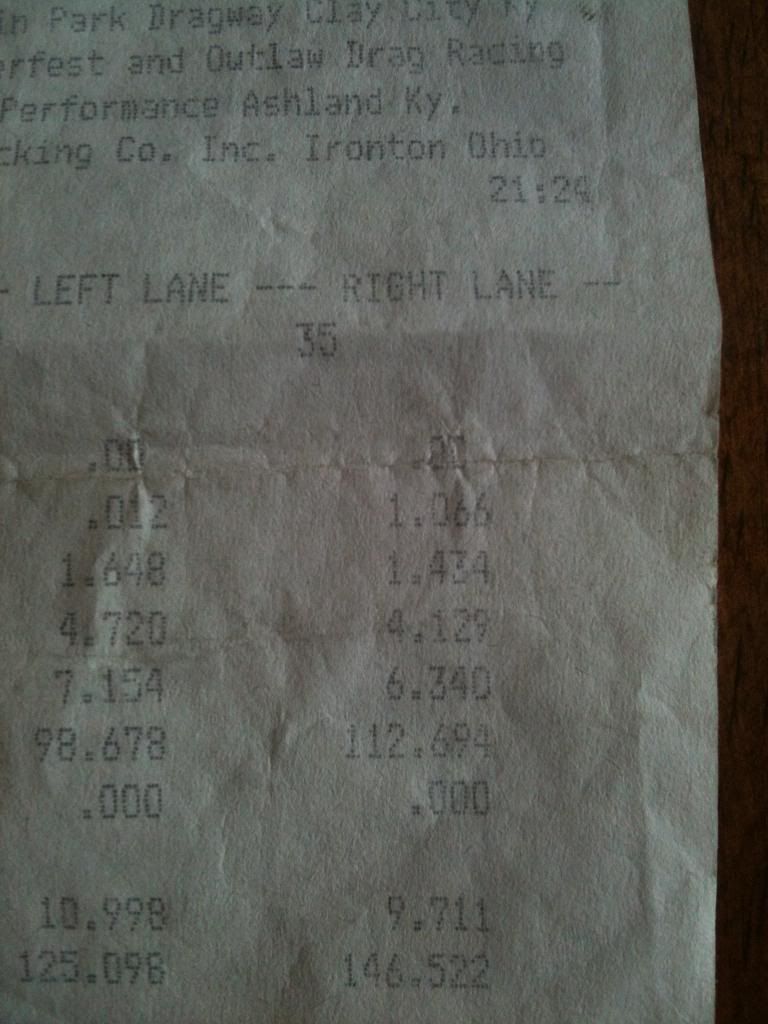
I just hated sifting through the original 60' list trying to decide who was auto and was not. And by the way Capthuff does an excellent job with the list and his plate is full.And if anyone has a 60 to add just post it......and I will update it.
Thanks............






Race Director
Joined: Dec 2006
Posts: 12,389
Likes: 2,910
From: Fort Worth, Texas
Brings back some memories, a few updates as you said you'd be back later and it's 2015 lol...
https://www.corvetteforum.com/forums/c6-z06-discussion/2780168-10-369-in-1000ft-da-1-45-60ft.html
https://www.corvetteforum.com/forums/c6-z06-discussion/1794944-the-c6-z06-fast-list-83.html#post1585505061
https://www.corvetteforum.com/forums/c6-tech-performance/3558451-new-6-speed-c6z-na-stock-bottom-record.html#post1588202727
https://www.corvetteforum.com/forums/c6-z06-discussion/3557495-canadian-c6-z06-n-a-cam-only-new-pb.html#post1588188313
Post 1805
https://www.corvetteforum.com/forums/c6-z06-discussion/1794944-the-c6-z06-fast-list-91.html#post1589098510
Post 1796
https://www.corvetteforum.com/forums/c6-z06-discussion/1794944-the-c6-z06-fast-list-90.html#post1589077532
Post 1587
https://www.corvetteforum.com/forums/c6-z06-discussion/1794944-the-c6-z06-fast-list-80.html#post1584465878
Post 1740
https://www.corvetteforum.com/forums/c6-z06-discussion/1794944-the-c6-z06-fast-list-87.html#post1587778025
Post 7
https://www.corvetteforum.com/forums/c6-z06-discussion/1794944-the-c6-z06-fast-list.html#post1561648101
Post 1774
https://www.corvetteforum.com/forums/c6-z06-discussion/1794944-the-c6-z06-fast-list-89.html#post1588286387
Need a c7 section as well now...
https://www.corvetteforum.com/forums/c7-z06-discussion/3606303-fasterproms-worlds-first-9-second-2015-c7-z06-9-87-138mph.html
https://www.corvetteforum.com/forums/c6-z06-discussion/2780168-10-369-in-1000ft-da-1-45-60ft.html
https://www.corvetteforum.com/forums/c6-z06-discussion/1794944-the-c6-z06-fast-list-83.html#post1585505061
https://www.corvetteforum.com/forums/c6-tech-performance/3558451-new-6-speed-c6z-na-stock-bottom-record.html#post1588202727
https://www.corvetteforum.com/forums/c6-z06-discussion/3557495-canadian-c6-z06-n-a-cam-only-new-pb.html#post1588188313
Post 1805
https://www.corvetteforum.com/forums/c6-z06-discussion/1794944-the-c6-z06-fast-list-91.html#post1589098510
Post 1796
https://www.corvetteforum.com/forums/c6-z06-discussion/1794944-the-c6-z06-fast-list-90.html#post1589077532
Post 1587
https://www.corvetteforum.com/forums/c6-z06-discussion/1794944-the-c6-z06-fast-list-80.html#post1584465878
Post 1740
https://www.corvetteforum.com/forums/c6-z06-discussion/1794944-the-c6-z06-fast-list-87.html#post1587778025
Post 7
https://www.corvetteforum.com/forums/c6-z06-discussion/1794944-the-c6-z06-fast-list.html#post1561648101
Post 1774
https://www.corvetteforum.com/forums/c6-z06-discussion/1794944-the-c6-z06-fast-list-89.html#post1588286387
Need a c7 section as well now...
https://www.corvetteforum.com/forums/c7-z06-discussion/3606303-fasterproms-worlds-first-9-second-2015-c7-z06-9-87-138mph.html
Last edited by PRE-Z06; May 23, 2015 at 11:03 AM.