When you click on links to various merchants on this site and make a purchase, this can result in this site earning a commission. Affiliate programs and affiliations include, but are not limited to, the eBay Partner Network.
I am interested to know about 1969 Corvette or c3 chrome bumpers in general real factory documents and numbers matching. How do i know what is real and what is not?.
If you have any examples of real documentation, VIN plates. build plates, engine pads, casting numbers, casting dates etc that you can show me. Please PM me or post on this thread.
I am interested to know about 1969 Corvette or c3 chrome bumpers in general real factory documents and numbers matching. How do i know what is real and what is not?.
If you have any examples of real documentation, VIN plates. build plates, engine pads, casting numbers, casting dates etc that you can show me. Please PM me or post on this thread.
Thanks
Hi Chevy Corvette,
My advice to you would be to educate yourself as much as possible on the 69(as you indicate as your preferred C3). There are many great reading materials and restoration guides available to you. These will have sample photos of the documentation you're interested in. Also use this forum to its fullest potential by researching past threads on the 69. There have also been tons of threads on vin numbers and Trim Tags, with photos. Also, join a local Corvette club in your area. You'll meet many knowledgeable corvette gurus there. I've included some of my favorite go to reference materials below. If restoration and documentation are your thing, I suggest you join the NCRS. You don't need to own a Vette to belong. Don't forget, the internet 'Google' can be a very good resource for you to use. Remember, that many of the concerns and questions you have regarding the 69' and the C3 generation are shared with you by MANY others.
Just some suggestions.
Happy Holidays!
Jimmy
Hi Chevy Corvette,
My advice to you would be to educate yourself as much as possible on the 69(as you indicate as your preferred C3). There are many great reading materials and restoration guides available to you. These will have sample photos of the documentation you're interested in. Also use this forum to its fullest potential by researching past threads on the 69. There have also been tons of threads on vin numbers and Trim Tags, with photos. Also, join a local Corvette club in your area. You'll meet many knowledgeable corvette gurus there. I've included some of my favorite go to reference materials below. If restoration and documentation are your thing, I suggest you join the NCRS. You don't need to own a Vette to belong. Don't forget, the internet 'Google' can be a very good resource for you to use. Remember, that many of the concerns and questions you have regarding the 69' and the C3 generation are shared with you by MANY others.
Just some suggestions.
Happy Holidays!
Jimmy
The 1969 Corvette came with a tank (build) sticker. No, it's not foolproof, but that is where I would start if I were looking.
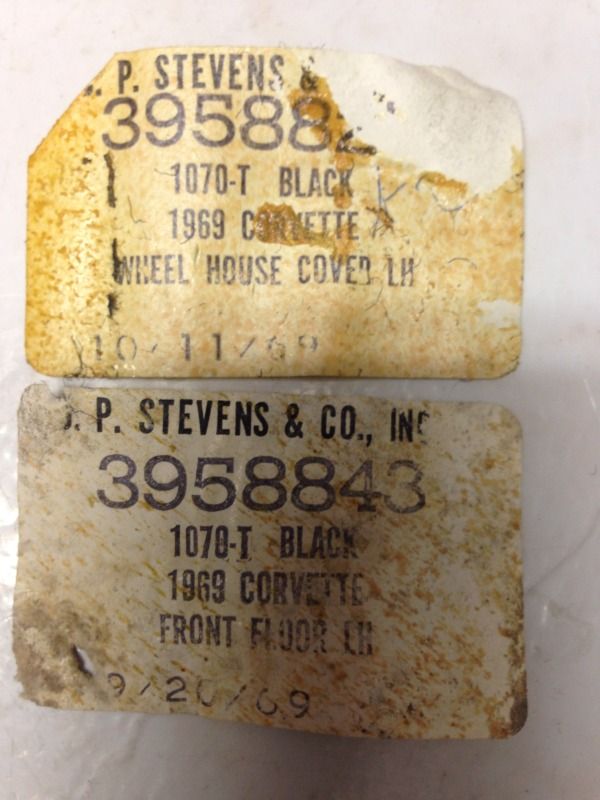
In 69 almost everything had some sort of code or stamp on it besides the normal engine/trans/rear/frame stamps. It seems GM was date code crazy and it must have kept more than a few guys employed. They even put stamps and date codes on all the interior carpet pieces and inside the seat covers on my 69. Heck, even the radiators have metal code tags.
Hi Michael,
"any examples of real documentation"
Here're photos of the Window Sticker and the Build Sheet from my 71.
I'm pretty sure they're real.
Folks sometime combine "Documentation" and "Glove Box Items" when talking about a car's documentation…. I think they're 2 very different things
Jimmy's photo of literature is pretty complete… maybe add the NCRS Technical Information Manual & Judging Guide to those shown. The 69 Guidebook Mike posted would likely be very interesting for you.
Regards,
Alan
I'll add to this thread soon. Just a little busy right now with work but I want to post some real docs next to clearly fake docs and go into some more detail about what you really need to do to determine a real GM printed or at least a document printed on what they used at the time. There is a big difference between modern document prints and printed forms from 40-50 years ago. The forgers also use old typewrites but that still doesn't match the high speed printers if you know what to look for. I highly doubt, but can't totally dismiss the document producers going to ancient high speed printers for authenticity. You would have to know how to program it correctly, and the cost is probably pretty high, not cost effective.
Also, they can't erase all the garbage docs out there and I have a database of many 69s with the bad docs as well as good docs. So if the same cars show up with new improved documents I can track that also.
Last edited by ed427vette; Dec 14, 2016 at 02:31 PM.
If someone was going to print a fake why bother with doing one for a base engine car... kind of like counterfitting dollar bills
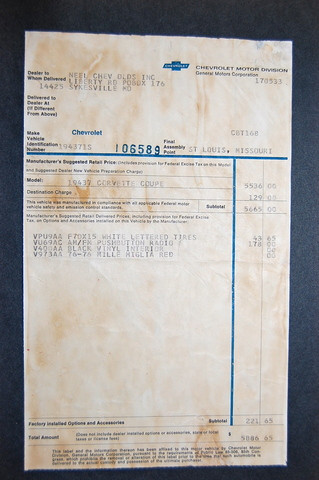
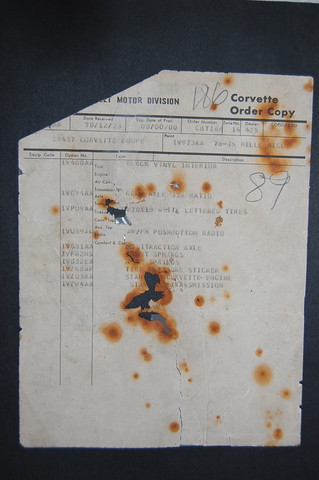
It's totally fake. There are a million things wrong with it but one of my favorites is the PU9 white stripe tires.... No such option. The white stripe tires are PT7 not PU9. PU9 is raised white letter tires.
This copy even has the nice perforated edges. But people don't realize how easy that is to do with a $3.00 perforation knife you can buy at any craft store.
A base motor car with fake docs. I have a pic of the window sticker and its just as bad with the same incorrect RPO on it.
Here are two of my favorite fake documents. These belongs to the supposed Berger Corvette that has been on the market for last few years for some outrageous amount of money. Again, there are a million things wrong with each one, but does anything in particular pop out to anyone? Tell us what you think is wrong.
Wow date codes on the interior carpet pieces. I have much to learn. I am going to load up on some books.
What does some of the information on the top of the tank sticker mean?. I understand the zone number and dealer number information can be found through the NCRS. What about the hand written numbers in pencil?.
...What about the hand written numbers in pencil?...
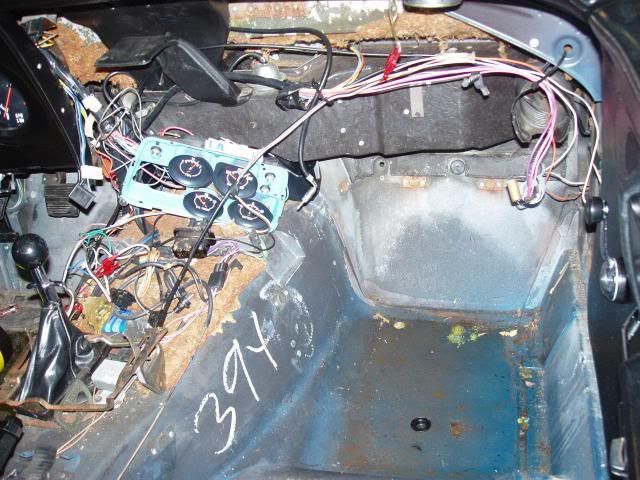
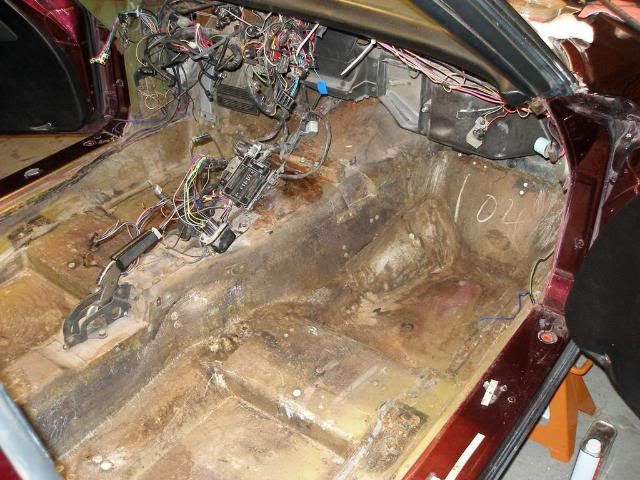
Job Number. This was an in house informal method of keeping up with partially assembled cars. Job Numbers usually ranged 1 to 500, in sequence, then start over again at 1. For some model years, the job number has no correlation to the VIN. For other model years you can subtract the last three digits of the VIN from 500 and get the job number.
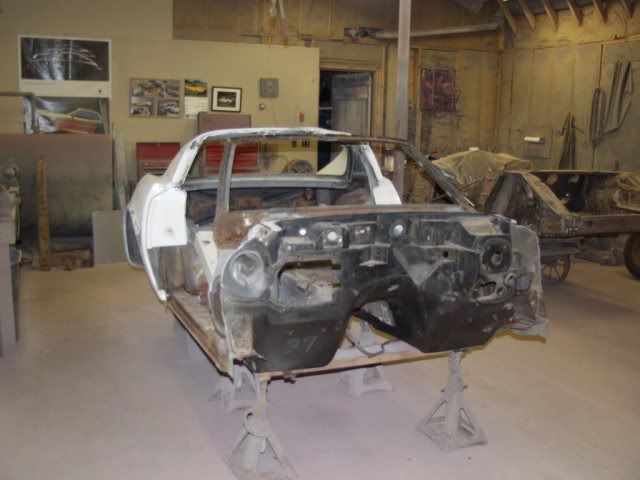
Job numbers are common on the rear wall of the underbody, passenger's side of the tranny hump, and passenger's side toe kick under the hood.
394 on tranny hump:
104 on toe kick of an AT car (alternate position):
Good call on wanting the 1969 Corvette. I wanted one when I started this journey seven years ago as I love the body style. I did end up buying a 68 thinking there is not that much different in the two years. I was wrong as I soon found out how many one off parts are on the 68 compared to the 69. I still love my car, don't get me wrong, but all the 69's I looked at were out of my price range.
Anyway, one of things I think some car owners shoot themselves in the foot over are the matching numbers and what exactly does it mean? I bought my car before I found this website and looked at 25-30 Vettes from 68 to 72 before I got my 68. Even with my limited knowledge I gained looking at them, most of the fake ones jumped out at me. There are good fakes out there and Bubba style fakes out there, most were really good cars, but not how they rolled off the assembly line.
The 1969 Corvette you are looking for is almost fifty years old now. These were sold as performance vehicles and driven hard by somebody. The proverbial little old lady who only drove on Sunday, drove it hard on the track at some point during its life. The ones I saw that I thought were "matching numbers" were at a steep premium for them. There out there, but there out there.
Good luck with your search, look at a lot of them if you can and choose wisely.
Hi CC,
The Bizzoco 1969 Corvette Guidebook has a section on the paperwork generated in order to get a car into production at St.Louis. It describes the documents used in the plant and also what went along with the car to the dealer.
The book has it's 'limitations' but I'm sure you'll find it informative and interesting. It's worth the effort to try to find. (Maybe Crane Corvettes in California?)
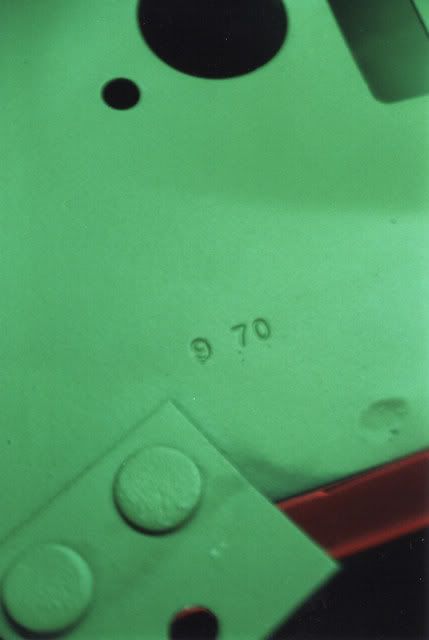
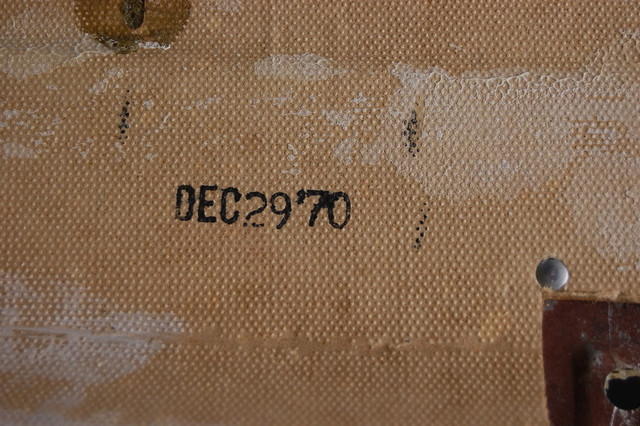
Here's an example of a date stamp located on the left side hinge pillar that's part of the underbody reinforcement (birdcage). It's one that's not too often seen in photos.
I'm not sure if it's the date this particular piece was made or when the birdcage was assembled? I'm leaning toward it being when the piece was made because I can't image there was space to allow complete cages to be sitting around for months before they were used.
Regards,
Alan
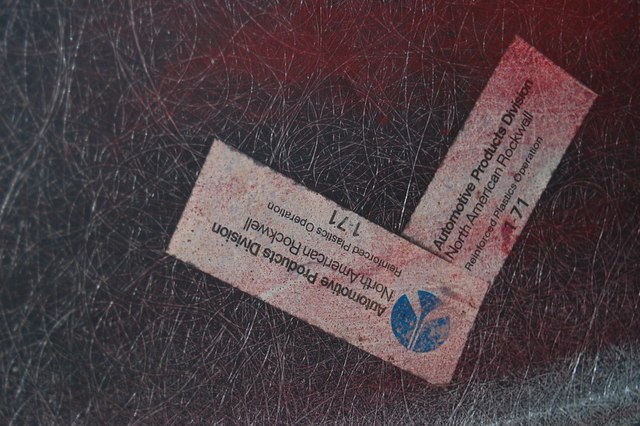
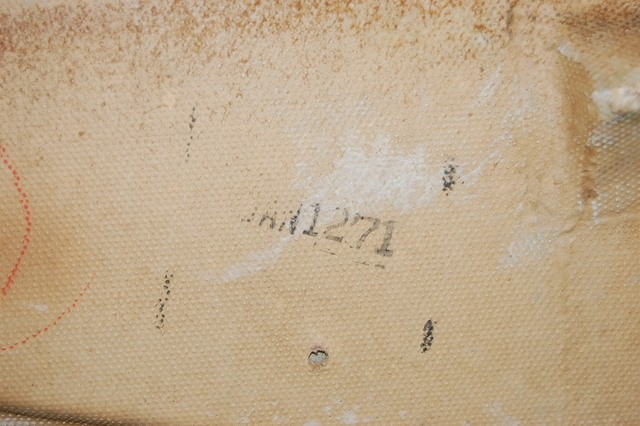
Some date 'appropriate' parts for a mid January 71 built car (F14).
Underside of the hood surround.
The door panels (one only 2 days before the trim tag date). Note the similar marks lift by the corners (?) of the stamp.
Ed I love the knowledge you have and I would want to have your opinion on any high dollar car I was looking at. I do hope however that some of what is known on how to spot fake paperwork is retained. If not we are just showing the counterfeiters where their mistakes are and they will get better. As a buyer I would want to post what the seller is showing as original and get an opinion from someone such as yourself on it's authenticity. An up or down so to speak. I do not want those producing the fake papers to get better. Thanks as always for your opinions and knowledge.
My response was not directed at the OP as all of us want more info. I'm quite sure however our friend in Florida and other places that produce the fake documents look at every thread like this to improve their "work."











 Real Documentation and Numbers Matching