When you click on links to various merchants on this site and make a purchase, this can result in this site earning a commission. Affiliate programs and affiliations include, but are not limited to, the eBay Partner Network.
I just finished getting my 69 back together (long story but it continues) and still have a problem with the headlight switch/intsrument panel lights. When I turn on the switch, the dash lights will work briefly but then shut off. I checked my dash ground and it is fine. The wiring harness I installed several years ago was new. What I have noticed is that the light switch starts heating up to a level thats almost too hot to touch. I have tested it with 2 different switches and get same result. Please help.
Update: The fuse for the instrument lights was blown. However, the light switch still gets very hot. I have read the other posts regarding this issue and my dimmer is turned completely counter clockwise (full brightness). When I first turn on lights, it is cool but gradually starts getting warmer and warmer in the area with the pink dot in the attached picture
Andy, it sounds like you need to install the headlight relays. This is a very common problem. Check the current thread in C3 Tech/Performance titled: Hi beam lights off and on ???
Easy fix. Good luck, Greg
Lets figure out what is causing the problem first-
When you say getting hot-is that just with the low beams on?
if so-first try disconnecting the low beam headlights at the headlight - then see if the switch gets hot.
If it still gets hot- go to the dimmer switch and disconnect it.Then if it's getting hot-might just be bad switch. I realize you have tried a couple- but it seems a lot repos are just junk.
If it doesn't get hot with the headlights disconnected- check your grounds at the front. Then plug passenger light-check for heat then the driver side.
The relays Greg spoke of might be the ticket- or a good used OEM.
The contacts in your headlamp switch are getting corroded. That builds resistance...and THAT builds HEAT! You can try to disassemble the switch, clean the contacts and put some non-conductive grease on them (to prevent contact with the air), before rebuilding it. OR you can purchase a "new" switch--which MAY or MAY NOT have grease on its contacts.
Either of the above choices keep the entire headlamp current flowing through the switch.
The other option is to get the current OUT of that switch by installing a relay which will handle the current. The headlamp switch will then just turn on the relay, and that takes very little current. This is a better fix, if you can do some simple electrical work.
Are you having the issue only with your dash lights or is it also the headlights? Are you using stock lighting in the dash harness and/or are the headlights OEM type lights or some aftermarket upgrade?
7T1Vette, Been a while since Ive been on here but I remember you from way back. The switches I am using were brand new several years ago. I was having the problem at that time as well.
Hammerhead Fred. They dash lights are staying on now. When I originally had the problem, I recall that the headlights would actually start turning off then back on. These are all OEM lights.
Richard454 I am going to go through the procedure you suggest later this afternoon.
You are aware that that is a specially shaped metal strap that is providing GROUND to the headlight switch when it is installed in your dash panel. And that metal strap is bolted to your speedometer gauge housing and goes between the headlight switch and dash panel.
NOT saying that this is your problem....but loosing ground at any electrical component can cause it to 'hunt' for a ground through another unused circuit.
It seems that if you cannot find the problem..and do not at to get more headlight switches... your car is a good candidate for headlight relays that many people have gone to installing.
So I went through the procedure suggested by Richard454.
With low beams disconnected - still gets hot
With low beams connected and high beams disconnected - still gets hot
with both high and low disconnected - NOT hot
with dimmer switch disconnected - no lights - NOT hot
with dimmer switch connected and passenger side high and low disconnected and drivers side high and low connected - still gets hot
with dimmer switch connected and driver side high and low disconnected and passenger side high and low connected - still gets hot
I checked ground connections and all are in place. To be clear, in case I am unaware of where they are located, I have one connected to drivers side pillar just behind headlight switch. there are 2 connected to radiator frame on drivers side. The metal piece is in place that grounds the switch itself to the speedometer.
does anyone else have there headlight switch accessible to see if theirs gets hot in the same place? When I say hot, its a gradual process. I hold meaty part of the inside of my thumb on the switch and can feel it start to heat. Usually takes about 2 minuets before I have to remove my hand. I dont think it is so hot that it would cause a burn but its still very hot. Am I being too cautious?
Or...keep getting in headlight switches till you find one that does not get hot...and hope in time...that it does not get hot.
Something inside your headlight switch is not right...due to previous comment mentioning this...there is resistance building up in it. Or it can be the actual terminal that is in your headlight connector is not tight when it is slid onto the headlight terminal.
One by one...you can remove these terminals in your wiring harness connector and manfully slide them onto your headlight switch terminals and 'feel' the amount of grip they have.
If you have them all removed and installed on your headlight switch in the correct locations and it is still getting hot...then it would tell me you have an issue inside the switch.
I will post a photo later today on a 1977 that caught fire in this EXACT same area. The headlight switch as the culprit.
Seems like I need to go with the relays. I just hate splicing the wiring harness but id rather be confident in the headlights working as well as peace of mind that it wont catch fire. Thanks All
I would think the wiring in your 77 is very similar to that in my 76. There are three wires to the dimmer switch lt. grn, tan and lt blu. The light green wire goes to the high beams and the tan wire goes to the low beams. the light blue is power from the headlight switch. I cut the ly. grn and tan wires across from the alternator and right above the harness is where I mounted the relays. I believe I got the relays from eBay but I purchased an inline 25 amp fuse with 12 gauge wire attached. One end of the wire is mounted on the output lug of the alternator and the other end goes to terminal 30 on both relays.
I can post pictures and a wiring diagram if it will help.
Each relay should be able to carry 30 amp load. You cannot stick a 10 amp (or less) relay in this circuit. The lamp load isn't that high...but you want some "safety factor" in the relays you use.
These are the type of relays I used, but I did change the wiring somewhat
https://www.ebay.com/itm/DNF-2-Pair-...gAAOSwo3pWguZK
And here are pictures of the finished installation. I came off the alternator lug since I didn't want to run wire all of the way to the starter solenoid and besides it's the same electrical point. I'll probably get some argument on that statement, but I was taught that in 1962 going through ground radar repair school in the Marine Corps.
The 'good' thing about you installing relays is that you can get to the wires rather easily. And mount the relay on the left inner skirt right near the alternator area.
That way...the power you get off the alternator does not have far to go and the wires for the low and high beam are in the harness for your forward wring.
Keep mind that if you use the stud terminal on the back of your alternator to attach another wire to supply power to your relays. That I would advise using a fusible link or any other method to protect that circuit. I prefer fusible links...some may like a circuit breakers..and others use a fuse.
IF you are pulling power off of your horn relay...that buss bar is already protected so no need to add a fuse, etc. as long as the wire coming from your starter has a fusible link still in it. You can if you choose for added protection. The gauge size of fusible link is 4 gauge sizes smaller than the wire you are attaching it to an should not be longer than 6 inches long and do not wrap it up in a harness, leave it exposed outside your harness wrap.
I also suggest obtaining relays and connectors that are salad so no dirt or moisture can get to them. There is another thread that recently discussed this.




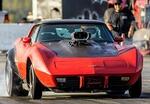




 hot headlight switch




















 X2.
X2.