




Accessory vacuum

Thread Starter
Instructor

Joined: Aug 2016
Posts: 172
Likes: 2
 Accessory vacuum
Hi all,
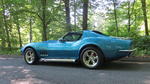
Car has finally turned up!!!
Following >3 months between warehousing and containerage - it was a surprisingly easy start with a some fresh fuel in the tank and a bit down the carb... so now parked in the garage and am assessing what i've actually bought!
first ask; the engine pulls 12-13 HG at idle - is this enough to run the factory lights and wiper door smoothly? - neither are fitted at the moment - I was slightly concerned this was because the engine had no vacuum - but now not sure as 12-13 HG isnt terrible?
many thanks for thoughts!
David
Car has finally turned up!!!
Following >3 months between warehousing and containerage - it was a surprisingly easy start with a some fresh fuel in the tank and a bit down the carb... so now parked in the garage and am assessing what i've actually bought!
first ask; the engine pulls 12-13 HG at idle - is this enough to run the factory lights and wiper door smoothly? - neither are fitted at the moment - I was slightly concerned this was because the engine had no vacuum - but now not sure as 12-13 HG isnt terrible?
many thanks for thoughts!
David
Thread Starter
Instructor
Joined: Aug 2016
Posts: 172
Likes: 2
I don't know whether it can be tuned out, or has vacuum leak (I've had it in my garage about 4 hours!) - but suspect that the combination of big heads, intake runners etc and a cam which certainly isn't a std grind are the culprits rather than an issue with the engine..
Race Director


Joined: May 2006
Posts: 18,734
Likes: 2,582
what is the idle speed when you are taking the readings?
do you have points?
if you have points have you set the dwell?
have you checked the timing at idle with the vacuum advance disconnected?
have you attempted to adjust the idle mixture screws?
do you have points?
if you have points have you set the dwell?
have you checked the timing at idle with the vacuum advance disconnected?
have you attempted to adjust the idle mixture screws?

Drifting


Joined: Jul 2006
Posts: 1,259
Likes: 154
From: Deplorableville Nebraska
engine pulls 12-13 HG at idle - is this enough to run the factory lights and wiper door smoothly?


Race Director

Joined: Apr 2009
Posts: 19,294
Likes: 2,754
From: Charlotte NC

Possibly try to see if you can get the vacuum reading higher...but that will all depend if the engine will allow you to do it. A vacuum ague...as you more than likely know will be your 'best friend' here when setting the idle mixture and timing,
And I am also sure you know when you are attempting to tune your engine....make sure you take the vacuum supply for the headlights and wiper door/HVAC out of the equation. And I have also removed the hose to the brake booster and capped it off. Because on rare occasions...it is leaking.
For what it is worth....I just had to repair a vacuum storage tank for a 1969 ...because it had splits in the steel and would NOT hold any more than 11 inches of vacuum.
DUB
Last edited by DUB; Dec 5, 2016 at 06:39 PM.

Team Owner


Joined: Jan 2006
Posts: 37,637
Likes: 3,118
From: Crossville TN
Factory produced Chevy engine will pull from 15-21" Hg, depending on how aggressive the cam is. Base level engine will pull 19-21" when new. Used base engines which do not have serious problems with valves/cam should produce 17" Hg or more.
To assess how much vacuum your engine is capable of producing, you need to disconnect [and cap off any open lines/fittings] ALL vacuum supply lines from the carb and intake manifold; then test for vacuum level at idle. If that measured value is significantly higher than what you have now, you need to diagnose and repair any leaking vacuum lines or leaking components. In general, the components and lines in the vacuum system should not lose more than 1-2" Hg vacuum when all are installed. The components most likely to be leaking are: the vacuum check valve, the headlamp and wiper door relays (the actuator cans may leak also, but the relays are the MOST likely of those two); the wiper safety switch (under the right-side wiper); vacuum brake booster (if you have power brakes).
To find those problem areas, do the "baseline" vacuum test first. Then add vacuum line back...one at a time...checking to see if the vacuum level stays nearly the same (no additional leaks in that added line), or if it drops significantly. If it drops, block off lines/components in that string until you identify the leak areas; then resolve them.
The process is pretty simple. You just need some caps to plug off open fittings, a couple of hand operated squeeze clamps (so you can block off vacuum without removing a vacuum line), and a vacuum gauge...which you already have.
Good luck.
To assess how much vacuum your engine is capable of producing, you need to disconnect [and cap off any open lines/fittings] ALL vacuum supply lines from the carb and intake manifold; then test for vacuum level at idle. If that measured value is significantly higher than what you have now, you need to diagnose and repair any leaking vacuum lines or leaking components. In general, the components and lines in the vacuum system should not lose more than 1-2" Hg vacuum when all are installed. The components most likely to be leaking are: the vacuum check valve, the headlamp and wiper door relays (the actuator cans may leak also, but the relays are the MOST likely of those two); the wiper safety switch (under the right-side wiper); vacuum brake booster (if you have power brakes).
To find those problem areas, do the "baseline" vacuum test first. Then add vacuum line back...one at a time...checking to see if the vacuum level stays nearly the same (no additional leaks in that added line), or if it drops significantly. If it drops, block off lines/components in that string until you identify the leak areas; then resolve them.
The process is pretty simple. You just need some caps to plug off open fittings, a couple of hand operated squeeze clamps (so you can block off vacuum without removing a vacuum line), and a vacuum gauge...which you already have.
Good luck.
Last edited by 7T1vette; Dec 5, 2016 at 06:46 PM.
Race Director
Joined: Apr 2009
Posts: 19,294
Likes: 2,754
From: Charlotte NC
I just posted this thread.
It may or may not help others.
https://www.corvetteforum.com/forums...post1593656974
DUB
It may or may not help others.
https://www.corvetteforum.com/forums...post1593656974
DUB
Corvette Stories
The Best of Corvette for Corvette Enthusiasts

Top 10 Most Expensive Corvettes Ever Sold on Bring A Trailer
Brett Foote
10 Things Every Corvette Owner Needs (2026 Edition)
Michael S. Palmer
8 Most "Only Corvette Owners Understand" Quirks and Problems
Pouria Savadkouei
10 Reasons the C6 Z06 is Still A Performance Benchmark After 20 Years
Joe Kucinski
How Much Horsepower Every Corvette Engine "LOST" in 1972
Joe Kucinski
Top 10 DOs and DON'Ts for Protecting Your Convertible Top!
Michael S. Palmer
Top 10 Most Explosive Corvettes Ever Made: Power-to-Weight Ratio Ranked!
Joe Kucinski
150 hp to 1,250 hp: Every Corvette Generation Compared by the Specs That Matter
Joe Kucinski