






 This is a very good suggestion.

Strange fuel leak

Thread Starter
Advanced

Joined: Oct 2017
Posts: 82
Likes: 14
From: Cambridge United Kingdom
 Strange fuel leak
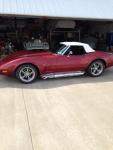
I bought myself a very nice 1971 350 automatic at the weekend, I have only driven it 5 times and it has a strange fuel leak problem.
There is no problem when the engine is running but twice after I have parked her up fuel (I guess about 1/2 a pint) drips out onto the floor and then stops, the first time it did it overnight in my garage so I couldn't see where it came from but the second time I had just got out of the car and I saw the petrol dripping out (quite quickly). I don't know where it originates from but it ends up coming out of a chasis crossmember just behind the front wheel on the drivers side, which is strange as the pump and fuel line from the tank run along the passenger side as far as I know. The car is standard apart from an Edelbrock carb & intake manifold and the filler cap is a sealed, non vented type.
Any ideas gentlemen please?
Nick.
There is no problem when the engine is running but twice after I have parked her up fuel (I guess about 1/2 a pint) drips out onto the floor and then stops, the first time it did it overnight in my garage so I couldn't see where it came from but the second time I had just got out of the car and I saw the petrol dripping out (quite quickly). I don't know where it originates from but it ends up coming out of a chasis crossmember just behind the front wheel on the drivers side, which is strange as the pump and fuel line from the tank run along the passenger side as far as I know. The car is standard apart from an Edelbrock carb & intake manifold and the filler cap is a sealed, non vented type.
Any ideas gentlemen please?
Nick.
Le Mans Master


Joined: Aug 2017
Posts: 8,336
Likes: 2,810
From: Cool Northern Michigan
Vapor Canister perhaps. Look inside the cove on drivers side. Not sure if the 71s had them. From that, is a return line to tank leaking maybe?
Last edited by HeadsU.P.; Oct 31, 2017 at 10:05 AM.
Thread Starter
Advanced
Joined: Oct 2017
Posts: 82
Likes: 14
From: Cambridge United Kingdom

Le Mans Master

Joined: Aug 2006
Posts: 7,427
Likes: 1,560
From: mount holly NC
2025 c3 ('74-'82) of the Year Finalist - Unmodified
2019 C3 of Year Finalist (appearance mods)
You may need this part.
https://willcoxcorvette.com/corvette...or-valve-70-74
The fuel separator is on the top left side of the tank.
It allows vapor to pass to the charcoal canister but no liquid fuel.
Also don't fill the tank to the very top.
The fuel separator is on the top left side of the tank.
It allows vapor to pass to the charcoal canister but no liquid fuel.
Also don't fill the tank to the very top.
Thread Starter
Advanced
Joined: Oct 2017
Posts: 82
Likes: 14
From: Cambridge United Kingdom
https://willcoxcorvette.com/corvette...or-valve-70-74
The fuel separator is on the top left side of the tank.
It allows vapor to pass to the charcoal canister but no liquid fuel.
Also don't fill the tank to the very top.
The fuel separator is on the top left side of the tank.
It allows vapor to pass to the charcoal canister but no liquid fuel.
Also don't fill the tank to the very top.
Corvette Stories
The Best of Corvette for Corvette Enthusiasts

Top 10 Most Expensive Corvettes Ever Sold on Bring A Trailer
Brett Foote
10 Things Every Corvette Owner Needs (2026 Edition)
Michael S. Palmer
8 Most "Only Corvette Owners Understand" Quirks and Problems
Pouria Savadkouei
10 Reasons the C6 Z06 is Still A Performance Benchmark After 20 Years
Joe Kucinski
How Much Horsepower Every Corvette Engine "LOST" in 1972
Joe Kucinski
Top 10 DOs and DON'Ts for Protecting Your Convertible Top!
Michael S. Palmer
Top 10 Most Explosive Corvettes Ever Made: Power-to-Weight Ratio Ranked!
Joe Kucinski
150 hp to 1,250 hp: Every Corvette Generation Compared by the Specs That Matter
Joe Kucinski
8 Coolest Corvette Pace Cars (and Replicas) of All Time
Verdad Gallardo
Tech Contributor

Joined: Aug 1999
Posts: 15,175
Likes: 3,989
From: Connecticut, USA
Most likely that is what it is, the check isn't working, you fill it up it creeps down, you top it off and so on. Happened to me last year with my 72. I haven't had the time to replace it, so I fill it until it reaches the base of the neck and stop. When it's correctly working you can fill and it won't drain down right away. I figure I'll do it when I replace the exhaust I don't like all that much. Fill it when you go out for a drive and you'll be ok.
Thread Starter
Advanced
Joined: Oct 2017
Posts: 82
Likes: 14
From: Cambridge United Kingdom
Thanks
Thanks for all the advice guys, I have to say I'm well impressed to get so many replies so quickly, if I put the same post on the U.K. club forum I'd be lucky to get one reply in a week!
Probably because there are so few of these beautiful cars over here!
Nick
Probably because there are so few of these beautiful cars over here!
Nick

Team Owner


Joined: Sep 2006
Posts: 31,278
Likes: 4,372
From: Westminster Maryland
Hi Nicky,
Welcome!
AND a 71 in the U.K.!! NICE!!!
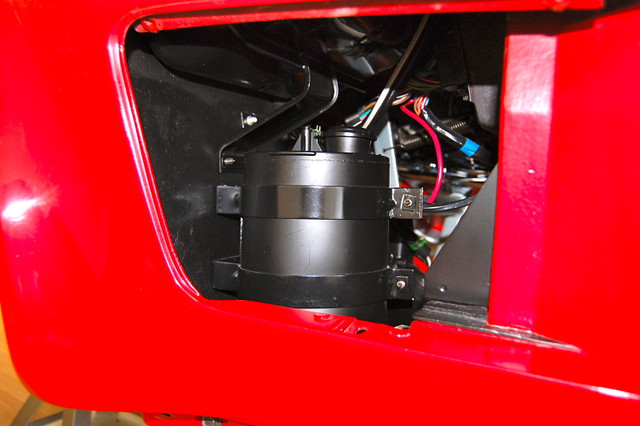
Perhaps you might want to remove the left side egg crate grill.
This will give you a good look at the canister.
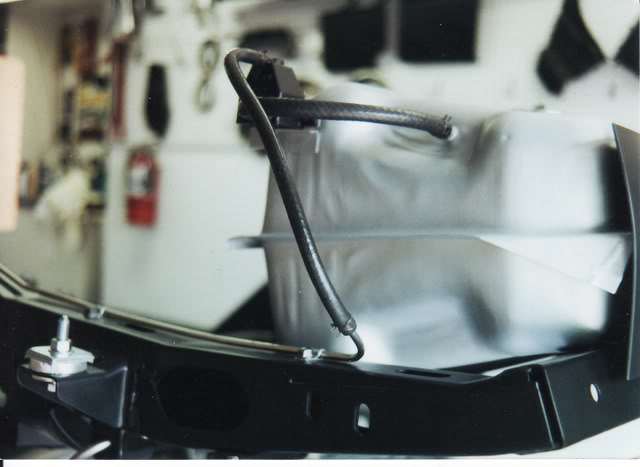
I'll post a picture of the vapor separator on the tank too.
Regards,
Alan
The vapor canister.
Are the 2 rubber lines properly run from the canister cap and top to the carburetor?
The separator at the tank.
You can also see the vapor line running forward to the canister.
Welcome!
AND a 71 in the U.K.!! NICE!!!
Perhaps you might want to remove the left side egg crate grill.
This will give you a good look at the canister.
I'll post a picture of the vapor separator on the tank too.
Regards,
Alan
The vapor canister.
Are the 2 rubber lines properly run from the canister cap and top to the carburetor?
The separator at the tank.
You can also see the vapor line running forward to the canister.
Last edited by Alan 71; Oct 31, 2017 at 03:12 PM.
Thread Starter
Advanced
Joined: Oct 2017
Posts: 82
Likes: 14
From: Cambridge United Kingdom
Tanks Alan
[QUOTE=Alan 71;1595872420]Hi Nicky,
Welcome!
AND a 71 in the U.K.!! NICE!!!
Perhaps you might want to remove the left side egg crate grill.
This will give you a good look at the canister.
I'll post a picture of the vapor separator on the tank too.
Regards,
Alan
The vapor canister.
Are the 2 rubber lines properly run from the canister cap and top to the carburetor?
The separator at the tank.
You can also see the vapor line running forward to the canister?
Welcome!
AND a 71 in the U.K.!! NICE!!!
Perhaps you might want to remove the left side egg crate grill.
This will give you a good look at the canister.
I'll post a picture of the vapor separator on the tank too.
Regards,
Alan
The vapor canister.
Are the 2 rubber lines properly run from the canister cap and top to the carburetor?
The separator at the tank.
You can also see the vapor line running forward to the canister?
- Thanks very much for the info Alan, I'll check it out at the weekend and let you know how I get on.

Race Director


Joined: Apr 2009
Posts: 19,294
Likes: 2,754
From: Charlotte NC
I will 'say' this.
IF you get your problem solved by either a correct fuel cap (vented) that is not holding pressure in the tank. And your fuel leaks stop. I would disconnect the rubber hose that goes to the charcoal canister...and ALSO remove the fuel hose where the vapor line goes to your fuel tank area and blow air through it CAREFULLY and use COMMON SENSE due to you are messing around with fuel.
Reason being....due to this line should NOT have raw fuel in it...and seeing how it now does.....and you do not get the fuel out...the fuel that remains in the line will turn to varnish in time..and thus...effect the flow of this line. AND...if it happens again...and then THAT fuel turns to varnish...you can plug up the line....and then what happens is that moisture stays or gets in that line..and when it freezes....the line splits....and then when it thaws...you now have a raw fuel smell in your garage.
I have replaced many vapor return lines that they are not fun to do..and just trying to save anyone who reads this from that FUN.
DUB
IF you get your problem solved by either a correct fuel cap (vented) that is not holding pressure in the tank. And your fuel leaks stop. I would disconnect the rubber hose that goes to the charcoal canister...and ALSO remove the fuel hose where the vapor line goes to your fuel tank area and blow air through it CAREFULLY and use COMMON SENSE due to you are messing around with fuel.
Reason being....due to this line should NOT have raw fuel in it...and seeing how it now does.....and you do not get the fuel out...the fuel that remains in the line will turn to varnish in time..and thus...effect the flow of this line. AND...if it happens again...and then THAT fuel turns to varnish...you can plug up the line....and then what happens is that moisture stays or gets in that line..and when it freezes....the line splits....and then when it thaws...you now have a raw fuel smell in your garage.
I have replaced many vapor return lines that they are not fun to do..and just trying to save anyone who reads this from that FUN.
DUB

Team Owner

Joined: Jan 2006
Posts: 37,637
Likes: 3,118
From: Crossville TN
The correct fuel cap for a '71 is a non-vented cap. The '71 has a vapor canister on it and that canister is the vent for the fuel tank. If you put a vented cap on it, you will negate any benefit of the canister at collecting fuel fumes.
But, you do have a problem and you need to identify the cause and resolve it. If putting the vented cap on temporarily will prevent raw fuel spillage in the engine compartment, so be it. But try to find the actual CAUSE of the leak, rather than just masking the problem.
But, you do have a problem and you need to identify the cause and resolve it. If putting the vented cap on temporarily will prevent raw fuel spillage in the engine compartment, so be it. But try to find the actual CAUSE of the leak, rather than just masking the problem.

Team Owner


Joined: Jun 2001
Posts: 23,375
Likes: 1,067
From: Virginia USA
The correct fuel cap for a '71 is a non-vented cap. The '71 has a vapor canister on it and that canister is the vent for the fuel tank. If you put a vented cap on it, you will negate any benefit of the canister at collecting fuel fumes.
But, you do have a problem and you need to identify the cause and resolve it. If putting the vented cap on temporarily will prevent raw fuel spillage in the engine compartment, so be it. But try to find the actual CAUSE of the leak, rather than just masking the problem.
But, you do have a problem and you need to identify the cause and resolve it. If putting the vented cap on temporarily will prevent raw fuel spillage in the engine compartment, so be it. But try to find the actual CAUSE of the leak, rather than just masking the problem.
DUB is correct, use major caution when messing with the fuel system Especially fuel vapors. Liquid fuel doesn't burn as easily as fuel vapors. If you do plan on keeping it in the garage and get fuel vapor smell I hope your hot water heater is not LP gas and if it is and it's in the garage I hope it's at least 2 feet above the garage floor and in its own storage closet. Gas vapor is heavier than air but can accumulate.
The fuel vapor separator also has a check valve in it I believe so if fuel happens to get into the separator it won't go into the vapor return line up the the charcoal canister. You can see that the outlet of the fuel vapor separator on the tank is higher than the top of the tank. This alone should prevent raw fuel from getting into vapor return line. I never fully fill my tank up. I leave about a 1/4 to 1/2 inch lower than the top of the tank.
When the fuel vapor system or EEC (evaporative emission control) is working correctly you will get next to no fuel smell in the garage.
Last edited by theandies; Nov 1, 2017 at 03:44 AM.
Race Director
Joined: Apr 2009
Posts: 19,294
Likes: 2,754
From: Charlotte NC
Hopefully it is know by all of those concerned that a 'vented' cap...DOES NOT vent fumes out through cap.
A vented cap allows air to be pulled in though the cap....into the fuel tank. And the air being pulled into the fuel tank is done with the emissions EVAP system
DUB
A vented cap allows air to be pulled in though the cap....into the fuel tank. And the air being pulled into the fuel tank is done with the emissions EVAP system
DUB
Team Owner
Joined: Jan 2006
Posts: 37,637
Likes: 3,118
From: Crossville TN
Yes, we know that DUB. But a "closed system" is a "closed system" -- until it's not. Perhaps the system would work OK with a vented cap. But then, why would GM specify a non-vented cap, if it wasn't needed?
The only things a vented cap might prevent are a collapsing fuel tank or a prevention of fuel flow from the tank because of internal negative pressure.
The only things a vented cap might prevent are a collapsing fuel tank or a prevention of fuel flow from the tank because of internal negative pressure.
Thread Starter
Advanced
Joined: Oct 2017
Posts: 82
Likes: 14
From: Cambridge United Kingdom
Thanks for all the advice
Thanks for all the advice about my petrol dripping issue, it turns out that the fuel vapour separator valve is knackered and it's only an issue if i fill the tank right to the top. I've order a new valve and will simply only fill the tank 3/4 full until I get round to fitting it.
Once again thanks for all your advice.
Nick
Once again thanks for all your advice.
Nick
Thread Starter
Advanced
Joined: Oct 2017
Posts: 82
Likes: 14
From: Cambridge United Kingdom
Indeed Alan, I see from the forum that some people have managed it without dropping the fuel tank so fingers crossed! Nick
Last edited by Nicky B; Nov 9, 2017 at 07:50 AM.